



Marketing channels are the pathways businesses use to deliver their products, services, and brand messages to consumers. Just as there are different ways to send a package—from delivering it yourself to using a courier—marketing channels vary widely, each with unique advantages. Multiple channels allow companies to maximize reach and engagement with diverse audiences.

In this blog, you will learn about what marketing channels are, the different types available, why they are critical to your business success, and see concrete examples of how they are used. Understanding these facets will help you choose and optimize channels for your strategy effectively.
What Are Marketing Channels?
Marketing channels are the avenues or routes through which businesses communicate their value proposition to their target customers. They encompass the people, organizations, and activities involved in moving a product or service from the producer to the consumer.
A practical analogy is mailing a package: the various ways you can get it from your location to the recipient, whether by post office, courier, or personal delivery, represent different channels.
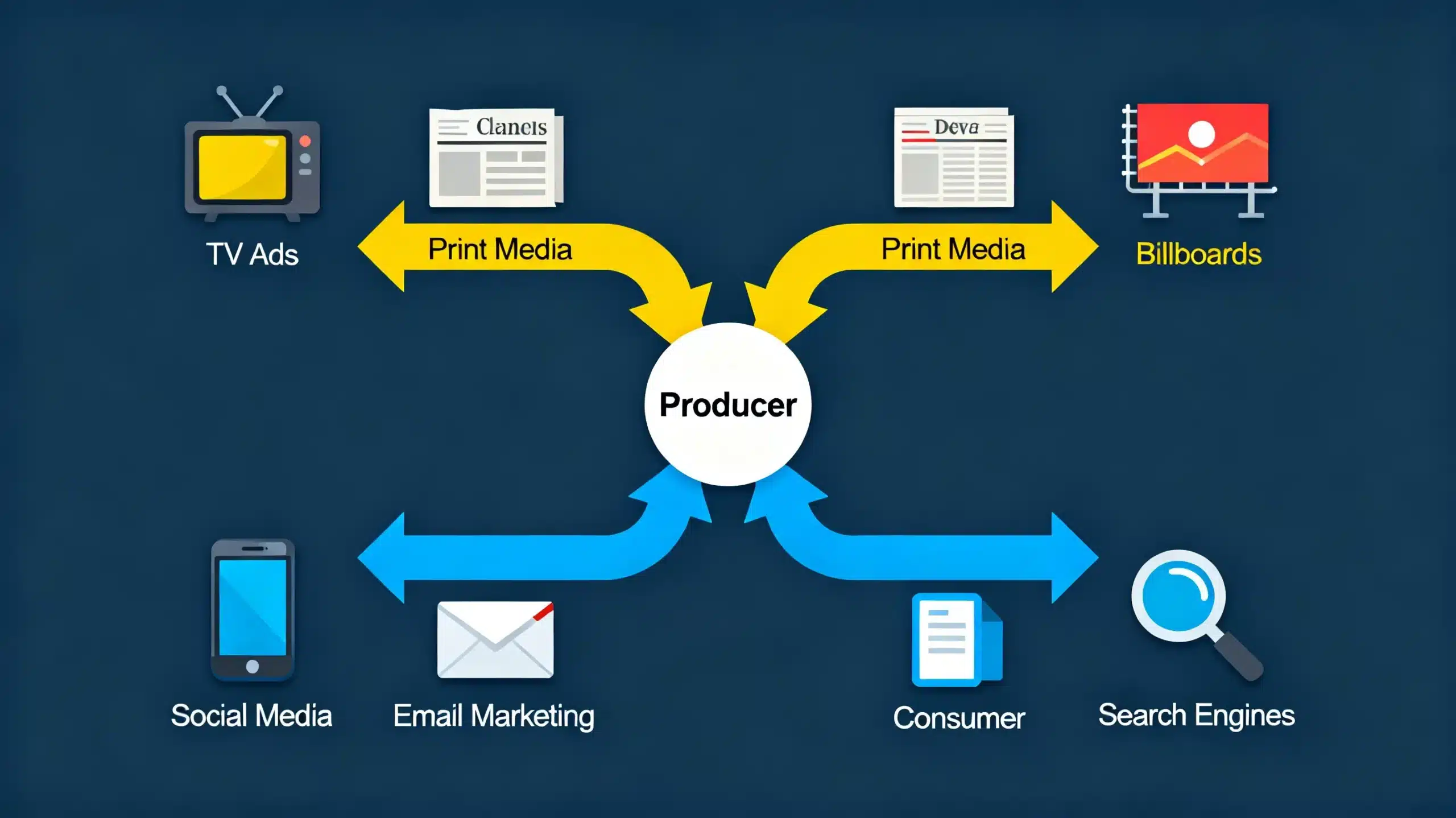
How Marketing Channels Work
Marketing channels operate by connecting producers with consumers. The flow typically involves:
- Producer/Manufacturer creates the product or service.
- The product passes through a channel – this can include wholesalers, retailers, brokers, or digital platforms.
- Finally, the consumer receives the product or service.
Each stakeholder in this chain adds value, whether by facilitating distribution, enhancing accessibility, or providing additional services such as customer support.
Marketing Channels vs. Distribution Channels
While the terms are often used interchangeably, distribution channels typically refer more narrowly to physical or logistical channels for delivering a product. In contrast, marketing channels include communication channels (like advertising, social media) that promote the product.
Types of Marketing Channels
Marketing channels are broadly divided into two main categories: traditional marketing channels and digital marketing channels. Both have distinct methods, advantages, and play complementary roles in a business’s marketing strategy.
Traditional Marketing Channels
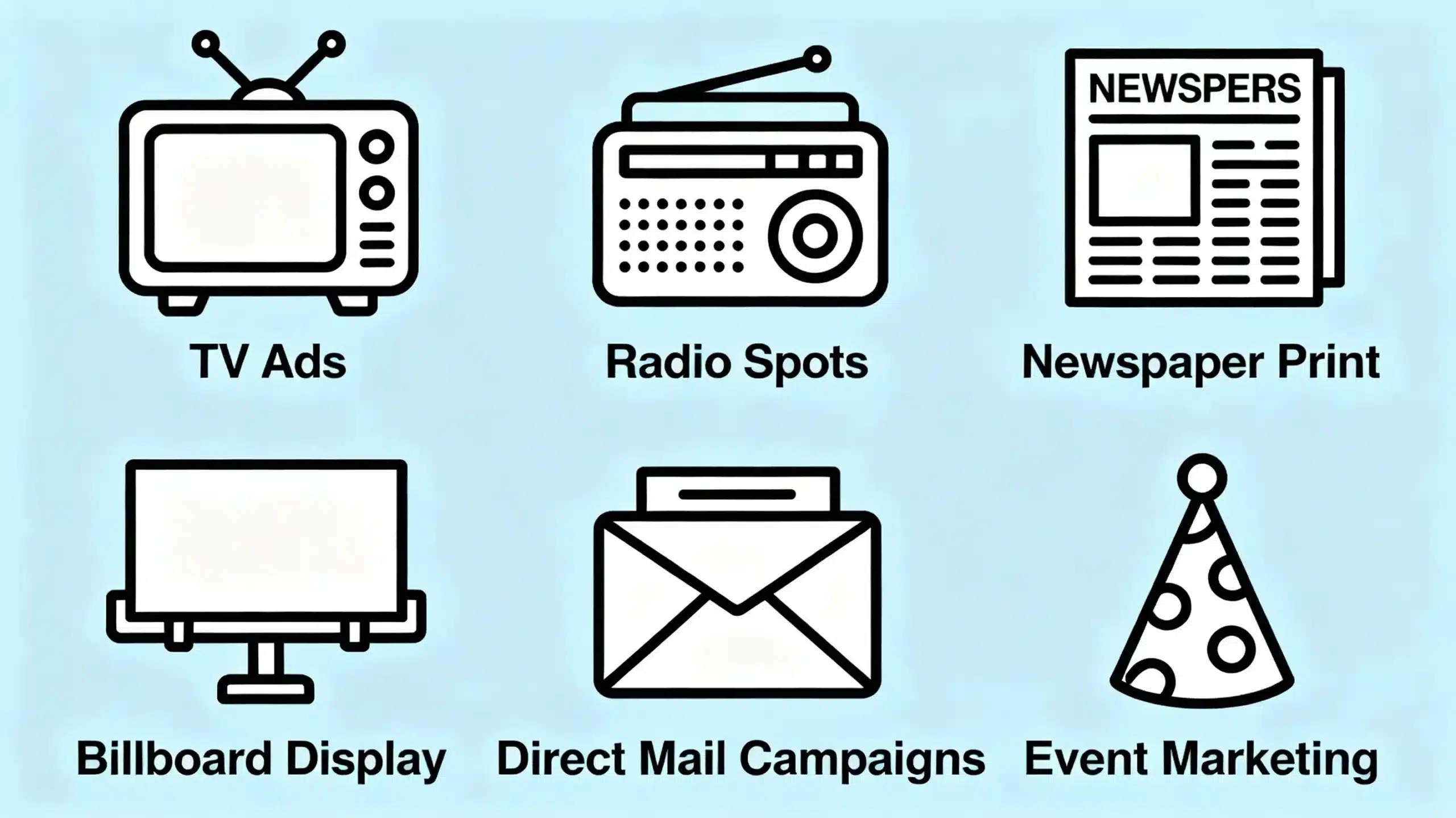
Traditional marketing channels are offline methods that predate digital marketing. They include:
- Print media: Newspapers, magazines, brochures, and flyers provide tangible advertising space.
- Broadcast media: Television and radio commercials reach broad audiences through audio-visual storytelling.
- Direct mail and telemarketing: Personalized outreach via postal mail or phone calls.
- Billboards and out-of-home advertising: Large-scale advertising in public spaces.
- Events and word-of-mouth: Physical gatherings and personal recommendations build relationships.
Digital Marketing Channels
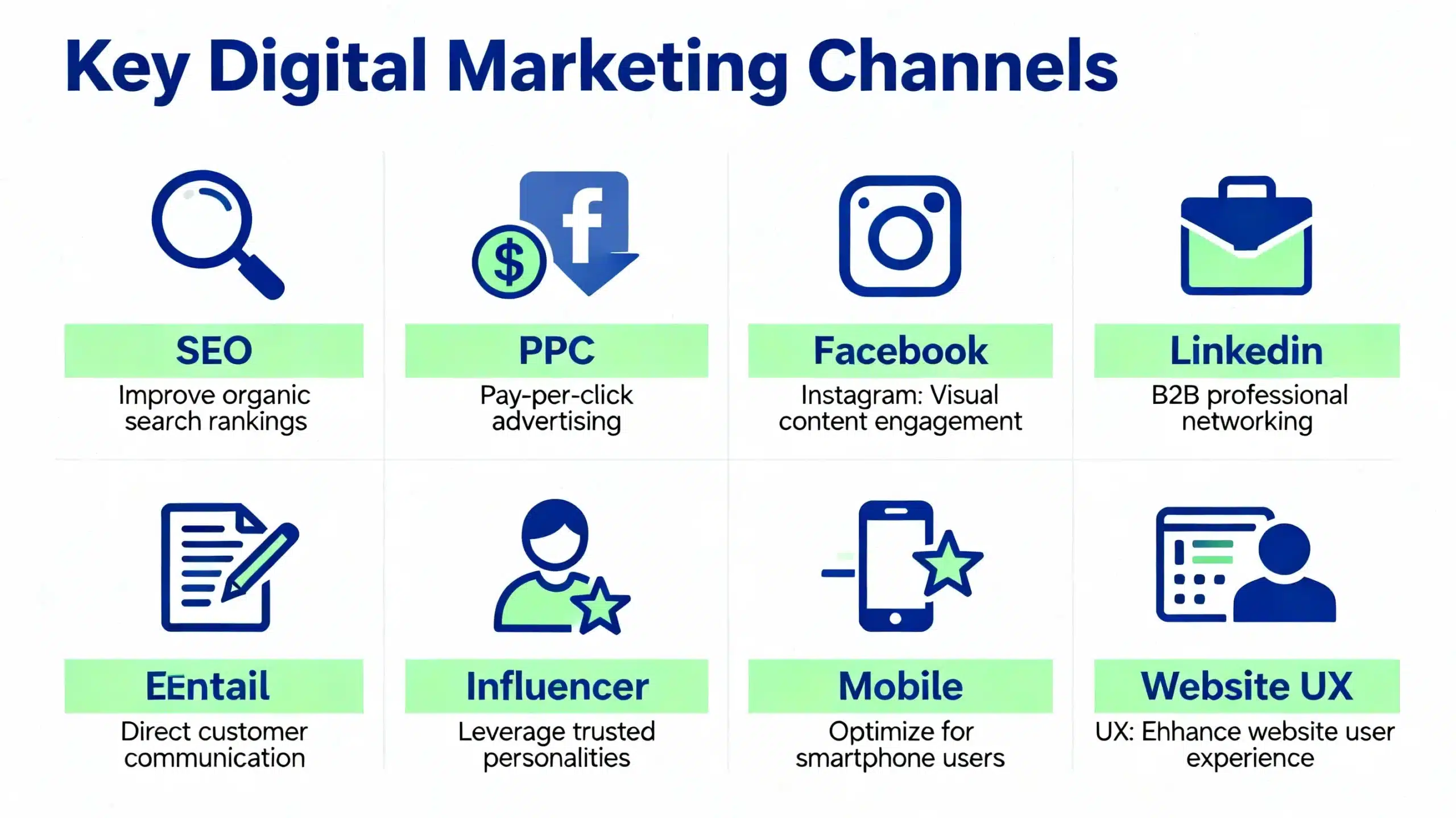
Digital marketing channels leverage technology and the internet, including:
- SEO and organic search: Optimizing website content to rank prominently on search engines.
- PPC advertising: Paid placements like Google Ads to appear in search results for targeted keywords.
- Social media marketing: Engagement through platforms like Facebook, Instagram, LinkedIn, and TikTok.
- Email marketing: Sending targeted emails to leads and customers to nurture and convert.
- Content marketing: Blogs, videos, podcasts, and other informative materials that attract and retain audiences.
- Influencer and affiliate marketing: Partnering with individuals or businesses to promote products authentically.
- Mobile marketing: SMS campaigns, mobile apps, and push notifications.
- Web design and user experience: Optimizing websites to convert visitors into customers.
The Four Core Distribution Channel Types
Understanding core distribution models is essential:
- Direct selling: Companies sell directly to consumers without intermediaries.
- Selling through intermediaries: Products sell through retailers or wholesalers to reach customers.
- Dual distribution: Using both direct and intermediary channels simultaneously.
- Reverse channels: Handling returns, recalls, or recycling products back to the company.
Why Marketing Channels Matter: Importance & Benefits
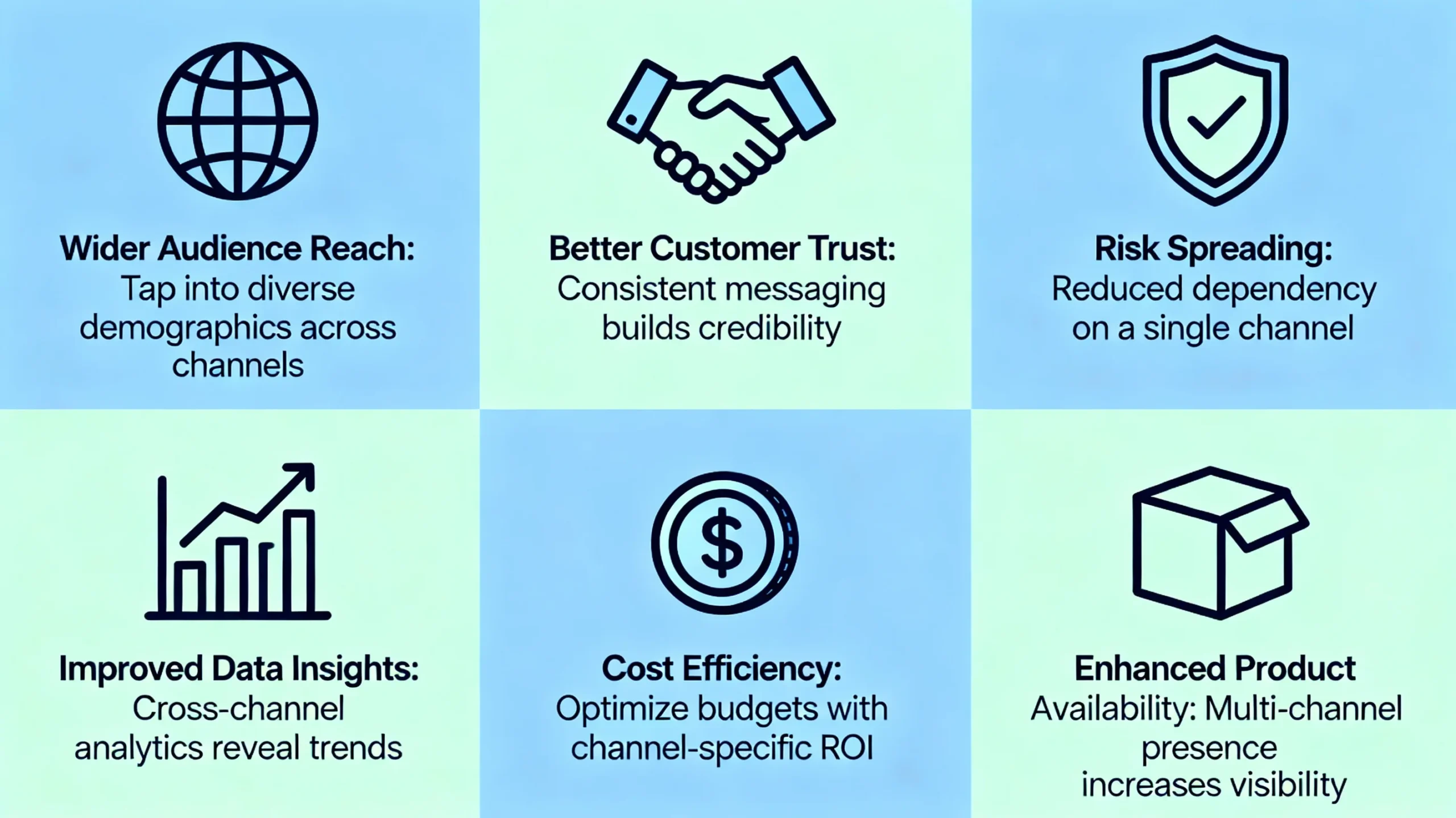
Reaching a Wider Audience
Marketing channels enable businesses to connect with a broader and diverse audience than possible through a single method. By using multiple channels, companies can expand their geographic footprint and tap into different demographic segments, resulting in greater discovery and higher potential sales.
Building Customer Relationships
Channels allow direct and indirect interactions leading to stronger customer trust and loyalty. Intermediaries can offer dedicated support, and digital channels facilitate regular communication, feedback, and personalized experiences that deepen relationships.
Risk Distribution and Revenue Diversification
Relying on a single channel poses risks; changes in algorithms, market preferences, or channel policies can dramatically impact sales. Diversification across channels mitigates risk and provides multiple streams of revenue, increasing business resilience.
Cost Efficiency and Time Savings
Channels like intermediaries can reduce operational costs by taking over logistics, customer service, and inventory management. Digital automation tools in email marketing or PPC advertising save time and reduce the resource burden.
Data and Customer Insights
Each channel provides valuable data on consumer behavior, preferences, and engagement patterns. Businesses can leverage this intelligence to refine marketing strategies, personalize outreach, and stay competitive.
Improving Product Availability and Delivery
Channels ensure products are conveniently available to customers where and when they want them. Efficient stock management and on-time delivery improve customer satisfaction and repeat business.
Examples of Marketing Channels
B2C Marketing Channel Examples
- E-commerce platforms: Online marketplaces like Amazon allow businesses to sell directly to consumers worldwide.
- Social media campaigns: Brands use Instagram and Facebook ads targeted by demographics and interests.
- Content marketing: YouTube product reviews or blogs educating consumers about product benefits.
- Email newsletters: Personalized promotions sent regularly to nurture brand loyalty.
- Influencer partnerships: Collaborations with popular social figures to reach niche audiences authentically.
B2B Marketing Channel Examples
- LinkedIn marketing: Ads, posts, and networking to reach professionals and decision-makers.
- Industry webinars: Hosting events to educate prospects and generate leads.
- White papers and case studies: Content offering in-depth information that builds credibility.
- Email outreach: Tailored communication nurturing leads down the sales funnel.
- Account-Based Marketing (ABM): Targeting specific high-value clients with personalized campaigns.
Emerging Marketing Channels
- TikTok and short-form video: Rapidly growing platform for reaching younger audiences with creative content.
- Podcasts: Audio content that builds engaged communities.
- Voice search optimization: Catering to smart speaker and voice assistant users.
- Micro-influencers: Partnering with smaller influencers delivering high engagement.
- Personalized marketing automation: AI-driven messaging tailored to user behavior.
How to Choose the Right Marketing Channels for Your Business
Understand Your Target Audience
Knowing who your customers are — their demographics, interests, and preferred platforms — helps select channels where they are most active and receptive.
Analyze Competitor Channels
Researching your competitors’ channel strategies reveals effective channels and gaps you can exploit.
Consider Your Budget and Resources
Some channels require substantial investment, while others are more cost-effective. Align channel selection with your budget and operational capabilities.
Test and Measure Performance
Always track key metrics such as reach, engagement, and conversion rate. Use A/B testing to optimize channel effectiveness and continually refine your approach.
Best Practices for Multi-Channel Marketing Strategy
Maintain Brand Consistency Across Channels
Ensure that your messaging, design, and tone remain uniform across all channels to build reliable brand recognition and trust.
Create Integrated Campaigns
Coordinate campaigns so that different channels complement each other, resulting in a cohesive customer experience and improved attribution.
Leverage Data for Personalization
Segments your audience and personalize messages intelligently using data insights to increase relevance and conversion rates.
Conclusion
Marketing channels are vital tools in a company’s arsenal for reaching customers, building relationships, and driving sales. By understanding the types of channels, their importance, and real-world applications, businesses can craft effective strategies tailored to their needs. Start by experimenting with a few channels, then expand and optimize for maximum impact to grow your brand and revenue in 2025 and beyond.
Frequently Asked Questions (FAQs)
1. What are marketing channels?
Marketing channels are the pathways and platforms businesses use to deliver products, services, and promotional messages to their customers. These include both traditional methods like retail stores and digital platforms such as social media and email.
2. What are the different types of marketing channels?
Marketing channels are generally categorized into traditional channels (print, TV, direct mail, events) and digital channels (SEO, PPC, social media, email marketing, content marketing). Additionally, distribution can be direct, through intermediaries, or dual.
3. Why are multiple marketing channels important?
Using multiple channels helps businesses reach diverse audiences, reduces dependency on a single source, improves customer engagement, and increases the chance of conversions by offering various touchpoints.
4. How do I choose the right marketing channels for my business?
Start by understanding your target audience’s preferences, analyze your competitors’ channels, consider your budget, and align channel choice with your marketing goals. Testing and data analysis help refine your mix.
5. What are some examples of effective marketing channels for B2C businesses?
Common B2C marketing channels include e-commerce platforms like Amazon, social media advertising, content marketing via blogs and videos, email newsletters, and influencer collaborations.
6. What marketing channels work best for B2B companies?
LinkedIn marketing, webinars, white papers, email outreach, and account-based marketing (ABM) are popular and effective B2B channels focused on professional audiences and relationship-building.
7. Are traditional marketing channels still relevant?
Yes, traditional channels like TV, radio, direct mail, and events remain valuable, especially for local targeting, brand awareness, and demographics less engaged online.
8. How can marketing channels be integrated effectively?
Integrated multi-channel campaigns ensure consistent messaging across channels, working together to guide customers through awareness, consideration, and conversion stages while providing a cohesive brand experience.

Passionate about blogging and focused on elevating brand visibility through strategic SEO and digital marketing. Always tuned in to the latest trends, I’m dedicated to maximizing engagement and delivering measurable ROI in the dynamic world of digital marketing. Let’s connect and unlock new opportunities together!