


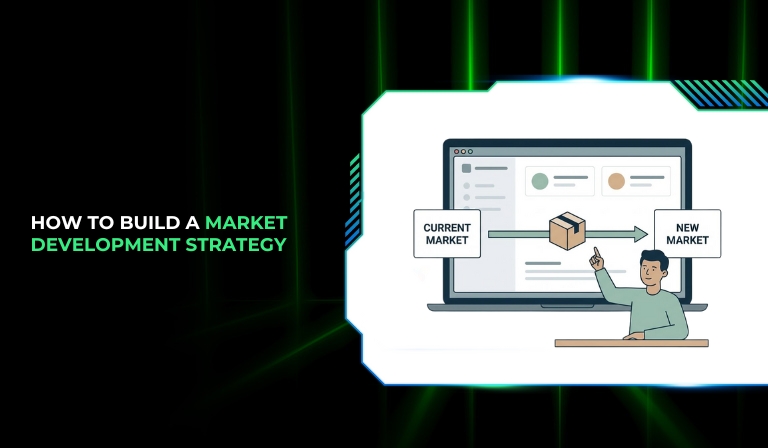
A market development strategy is a growth approach focused on selling existing products or services to a new market—often a new geographic area or a new customer segment.
This guide follows a structured process to help plan, launch, and evaluate market development in a way that ties actions to measurable goals.

What is Market Development Strategy?
Market development is commonly presented as expanding into new markets with existing products.
It is often explained using the Ansoff Matrix (also called the Product/Market Expansion Grid), where market development is one of four growth options.
- Market development focuses on reaching new audiences or new locations without requiring a brand-new core product.
- Common forms can include geographic expansion and franchising.
Market Development vs. Related Strategies
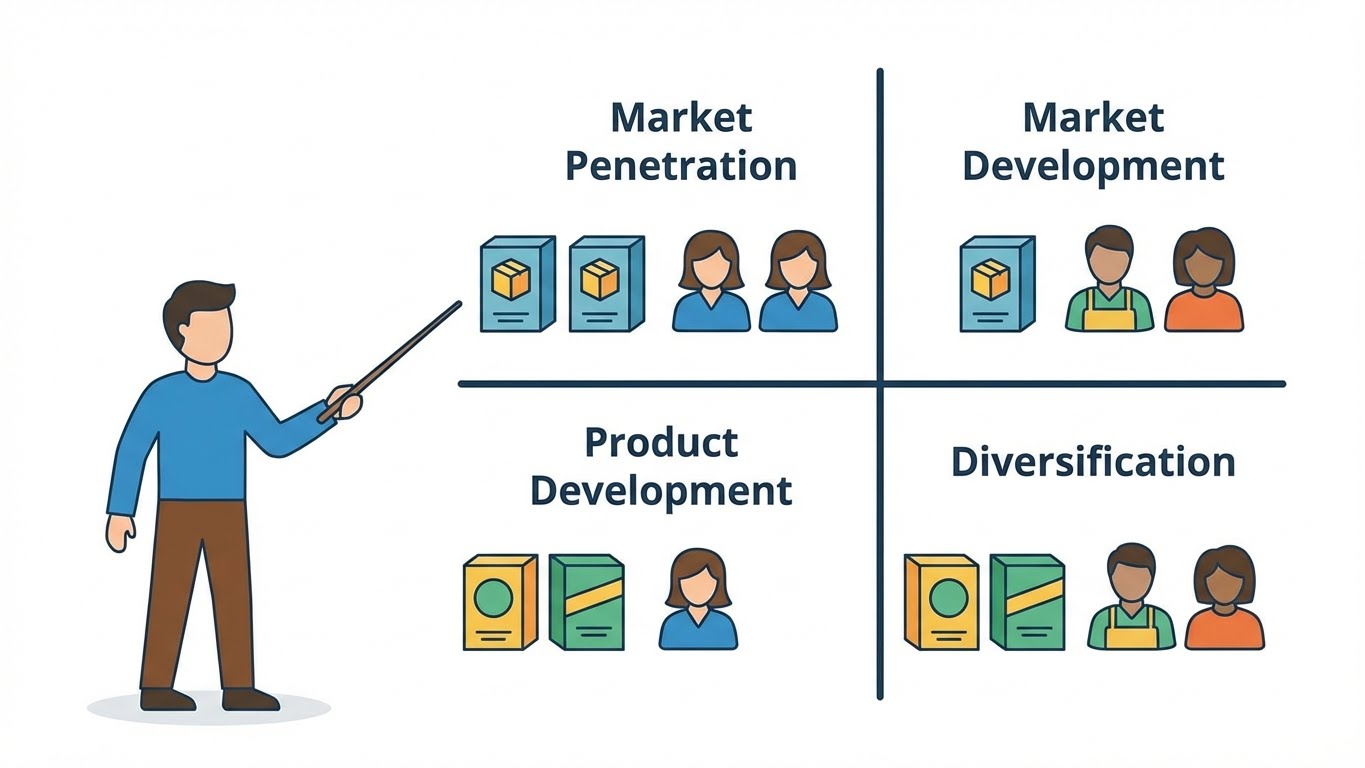
Market development is often compared with other Ansoff Matrix growth paths, especially because the key difference is whether the market is new or existing, and whether the product is new or existing.
| Strategy | What changes? | What stays the same? | Typical risk level (relative) |
| Market penetration | Sales effort within current market | Market + product remain familiar | Lower (relative) |
| Market development | The market is new | Product/service remains the same | Moderate (relative) |
| Product development | The product is new/modified | Market remains the same | Higher (relative) |
| Diversification | Market and product are both new | Neither market nor product is familiar | Highest (relative) |
Pre-Strategy Assessment: Understanding Your Starting Point
Before setting goals and executing campaigns, it helps to evaluate current performance and the readiness to expand into a new market.
Planning and research are typically positioned as prerequisites before moving into execution.
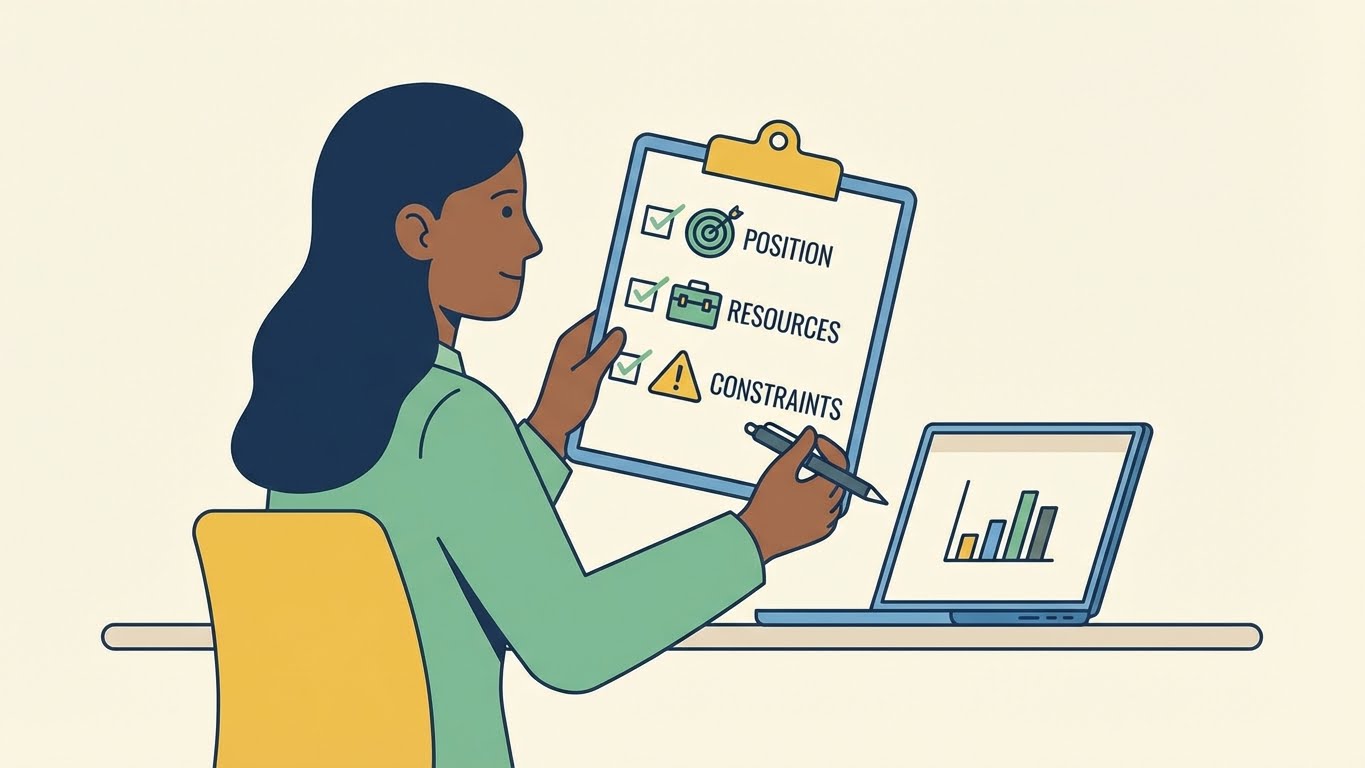
Analyze Your Current Market Position
This step clarifies what’s working now and what capabilities will be required to expand.
- Review current performance and whether growth is plateauing in the existing market.
- Identify internal requirements needed for expansion (people, processes, budget, tools).
- Estimate whether the expansion effort is worthwhile before committing significant resources.
Research Your Development Opportunities
Market development opportunities should be grounded in research into audience fit and competitive realities.
- Review buyer personas (and create new ones if the new market is meaningfully different).
- Use structured analysis frameworks (for example SWOT or Porter’s Five Forces) to understand competition and positioning.
- Survey customers and prospects (when feasible) to validate assumptions and refine messaging.
Step 1: Set Specific Goals and Objectives
Goals make market development measurable and help teams align on what success looks like.
They also help prioritize initiatives when resources are limited.
- Define what success means in measurable terms (for example: revenue, leads, pipeline, sign-ups, or expansion coverage).
- Set a timeframe so progress can be evaluated.
- Align goals to the broader business strategy so teams aren’t optimizing for the wrong outcomes.
Step 2: Conduct Comprehensive Market Research

Market research helps reduce the risk of entering a new market based on assumptions.
It also helps identify gaps, opportunities, and constraints that can shape positioning, channels, and execution.
Research Methods
Use a mix of qualitative and quantitative methods to validate demand and refine strategy.
- Customer interviews to understand needs and decision criteria.
- Surveys to gather pattern-level insights.
- Competitive analysis using frameworks like SWOT and/or Porter’s Five Forces.
What to Research
Research should be practical: focus on what will change decisions and reduce uncertainty.
- Who the buyers are in the new market (and how they differ from the current market).
- What problems matter most and how buyers evaluate solutions.
- Who competitors are, what they claim, and how they go to market.
- What barriers exist (for example operational, regulatory, or adoption-related).
Step 3: Define Your Target Market
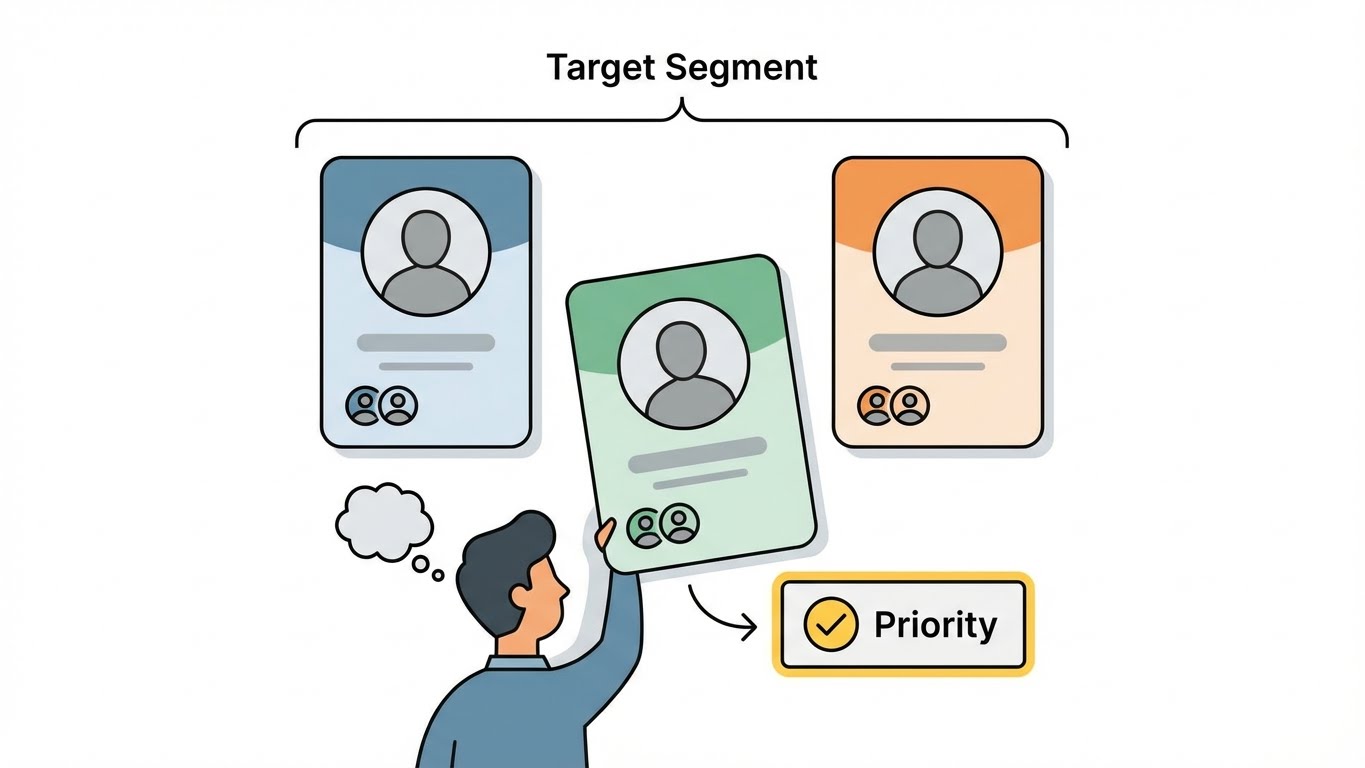
Once research is collected, clearly define the target market so the strategy stays focused.
This step prevents broad targeting that leads to generic messaging and weak conversion.
Create Detailed Customer Personas
Personas translate research into an actionable view of the ideal customer in the new market.
- Document motivations, context, and buying triggers relevant to the new market.
- Capture decision roles (who influences vs. who approves).
- Maintain and update personas as new information is learned.
Identify Market Segments
Segmentation helps prioritize which portions of the new market to enter first.
- Segment by geography when expansion is location-based.
- Segment by customer type and use case where needs vary.
- Choose priority segments based on fit and feasibility.
Analyze Customer Needs
Needs analysis connects research to messaging, positioning, and campaign execution.
- Identify key pain points and desired outcomes.
- Map common objections and evaluation criteria.
- Convert insights into messaging themes that can be used across channels.
Step 4: Develop a Unique Value Proposition
A value proposition clarifies why the target market should choose your offering, especially where alternatives already exist.
It should connect directly to the customer’s problem and show differentiation.
- Explain the primary benefit in simple language.
- Clarify what makes the offering different (proof, approach, feature, service level, specialization).
- Tie the value proposition to the most important segment-specific pain point.
Step 5: Identify Potential Distribution Channels
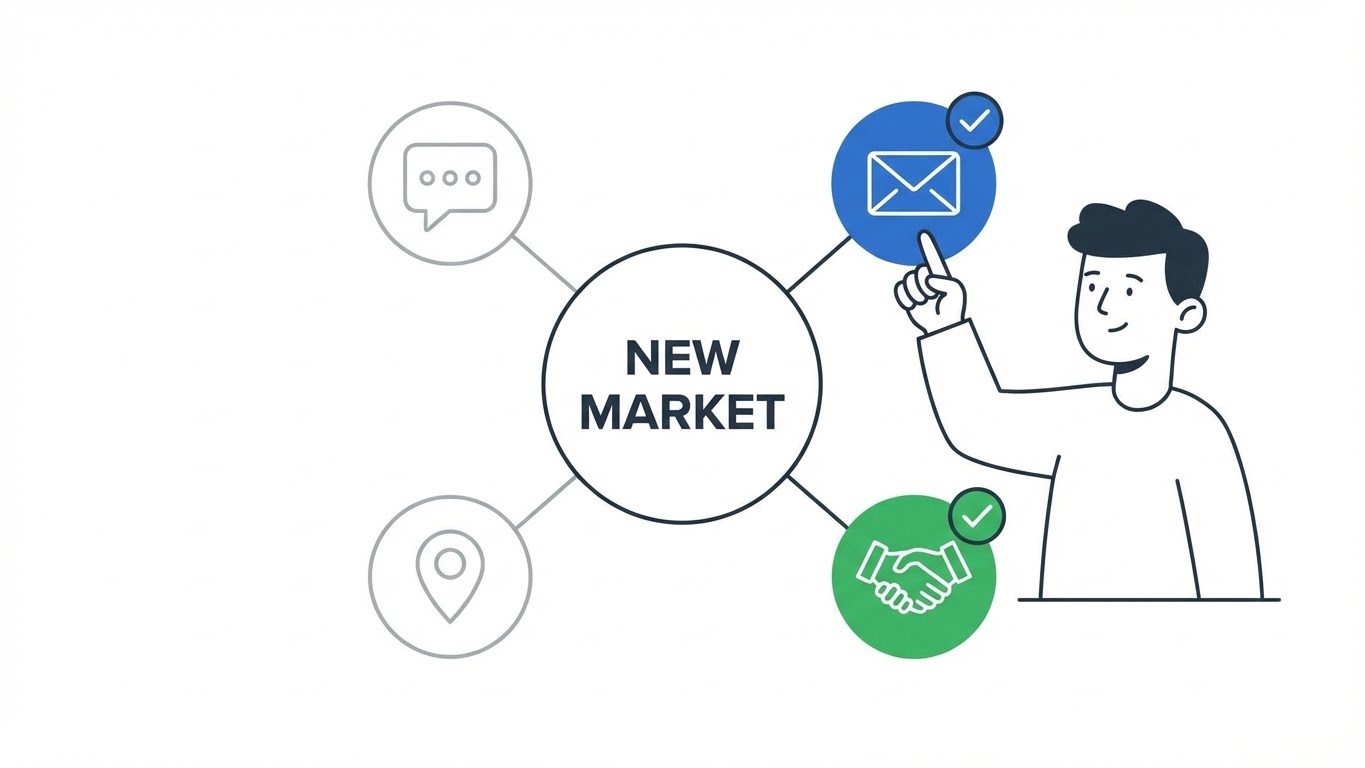
Distribution channels are the routes used to reach and convert the new market.
Channel selection should match audience behavior and the resources available.
Channel Options
Choose channels based on where the target audience pays attention and how they prefer to learn and buy.
- Social media.
- Email marketing.
- Partnerships with other businesses.
- Local marketing initiatives (where relevant).
- Content and SEO (where relevant).
Channel Selection Criteria
Channel selection improves when it is tied to research, budgets, and measurable outcomes.
- Audience-channel fit (where the segment actually engages).
- Cost and time to generate results.
- Ability to measure outcomes and iterate.
Multi-Channel Strategy
A multi-channel approach can reduce reliance on a single channel and improve learning speed.
- Start with a small set of priority channels.
- Keep messaging consistent while adapting creative to each channel format.
- Adjust investments based on performance.
Step 6: Develop a Pricing Strategy
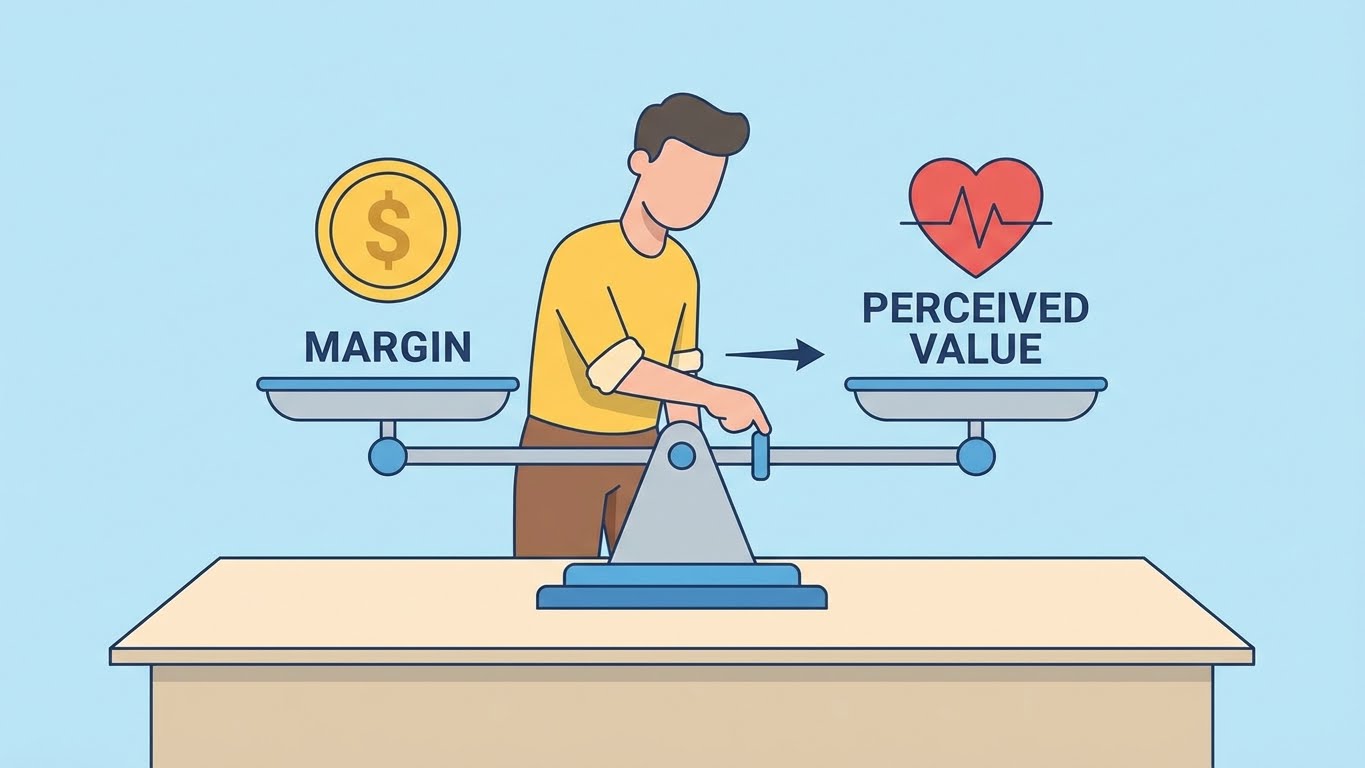
Pricing can influence positioning, adoption, and perceived value in a new market.
It should align with the market’s expectations while supporting sustainable margins.
Pricing Models to Consider
Pricing models should be chosen based on market expectations and the nature of the offering.
- Value-based approaches (aligning price to perceived value).
- Subscription models (where ongoing value is delivered).
- Market-informed pricing (using competitive and customer willingness-to-pay insights).
Pricing Decision Factors
Pricing decisions should reflect both internal and external realities.
- Costs to deliver and support the offering.
- Competitive landscape and typical price ranges.
- Perceived value in the new market and willingness to pay.
Testing and Optimization
Pricing often improves through structured testing and iterative refinement.
- Pilot pricing in a segment or region before scaling.
- Monitor conversion and retention signals.
- Adjust pricing as competitive conditions and positioning evolve.
Step 7: Create Promotional Materials and Campaigns
Promotion translates strategy into market-facing execution.
Strong campaign assets and messaging make it easier for the new market to understand value quickly.
Campaign Planning Elements
Campaign plans keep teams aligned during launch.
- Define campaign objectives and how success will be measured.
- Create a timeline and responsibilities across teams.
- Ensure internal alignment before launch.
Content and Creative Development
Build assets that fit the selected channels and reflect the value proposition.
- Channel-specific creatives and copy.
- Landing pages or destination experiences aligned to the offer.
- Partnership assets when collaborations are part of the plan.
Campaign Messaging
Messaging should emphasize differentiation and connect to the market’s needs.
- Lead with the main customer problem and outcome.
- Reinforce differentiation consistently.
- Use research-derived language where possible.
Step 8: Monitor and Measure Strategy Effectiveness
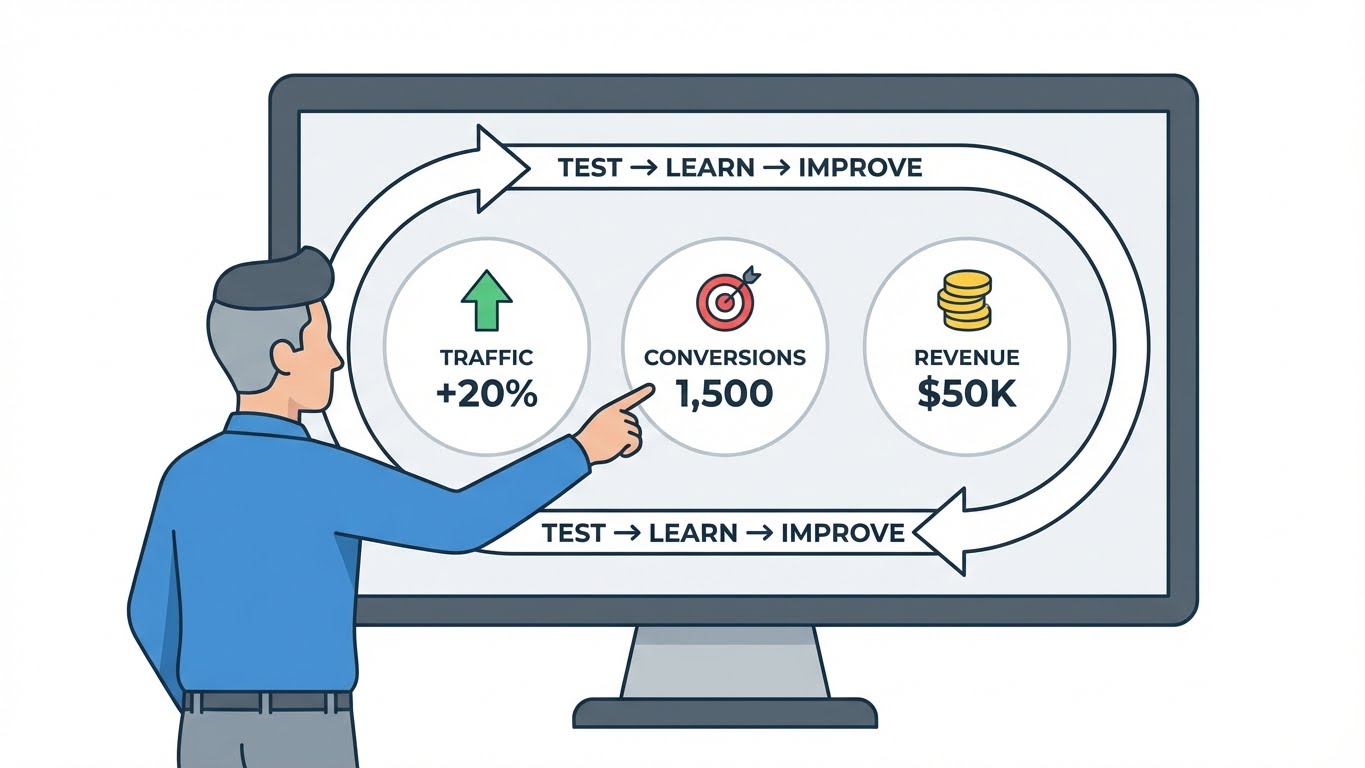
Measurement makes market development a learning system rather than a one-time launch.
Tracking results early helps determine whether projections are realistic and what needs refinement.
Key Performance Indicators (KPIs) to Track
Choose KPIs that match the goals defined earlier.
- Website traffic and source mix.
- Engagement signals (where relevant).
- Conversion rates (lead, trial, signup, or purchase).
- Sales outcomes (pipeline, revenue, win rates) where applicable.
Measurement Tools and Methods
Set up measurement so results can be evaluated shortly after launch.
- Collect sales and performance data as soon as possible after launch.
- Use consistent reporting that stakeholders can understand.
- Pair quantitative results with customer feedback.
Analysis and Optimization
Optimization improves the strategy based on evidence, not opinions.
- Identify what is working and what is not.
- Iterate on messaging, channels, and targeting.
- Stay agile and pivot when needed.
Go-to-Market Execution Phase
Go-to-market execution is the coordination layer that turns strategy into reality.
It typically involves internal alignment and readiness across marketing, sales, and operations.
Pre-Launch Activities
Pre-launch activities reduce execution risk.
- Campaign planning and stakeholder alignment.
- Sales planning (targets, enablement, and readiness).
- Internal updates so teams know timing and expectations.
Launch Timeline
A launch timeline coordinates the release of campaigns and availability in the new market.
- Define launch milestones and owners.
- Coordinate marketing and sales motions.
- Begin measurement immediately after launch.
Team Coordination
Coordination helps ensure consistent execution.
- Align on goals, responsibilities, and reporting cadence.
- Maintain internal communication during launch.
- Keep success criteria consistent across teams.
Common Challenges and How to Overcome Them
Market development introduces uncertainty and operational complexity.
Preparation, testing, and iteration help reduce avoidable risk.
- Investing without validation: Do research first to avoid expanding into a weak-fit market.
- Internal misalignment: Use clear planning artifacts and ownership structures.
- Weak differentiation: Make the value proposition clear and consistent across channels.
- Failure to iterate: Test, learn, and adjust rather than forcing a failing approach.
Key Takeaways and Benefits of Market Development Strategy
Market development can create new revenue opportunities by expanding into new audiences or regions.
It can also support long-term resilience by reducing dependence on a single market.
- Competitive edge through earlier entry and clearer positioning.
- Risk reduction through preparation and testing.
- More learning and experimentation that can improve marketing and product decisions.
Conclusion
Building a market development strategy requires research, clear targeting, differentiation, coordinated go-to-market execution, and ongoing measurement.
When treated as an iterative process, the strategy becomes easier to refine based on real performance data and market feedback.