


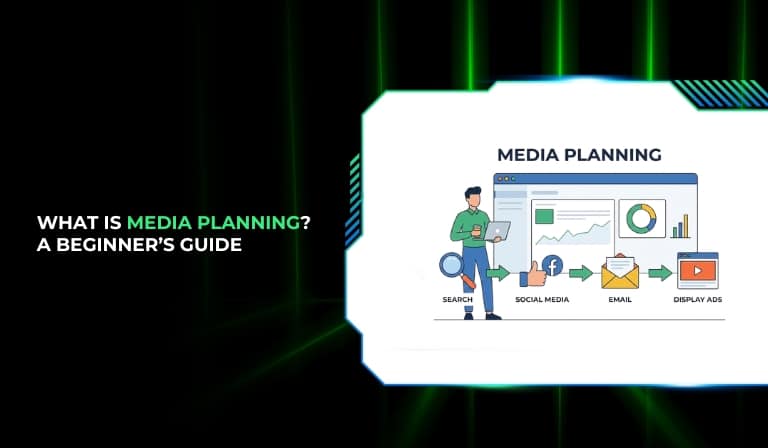
In a world where your audience is constantly online, simply “doing marketing” is no longer enough. To get real results from your campaigns, you need a clear, strategic plan for where, when, and how you show up in front of the right people. That’s where media planning comes in.

This beginner’s guide breaks down exactly what media planning is, why it matters, the key components of a media plan, and how you can build one step by step—even if you’re just getting started.
What Is Media Planning?
Media Planning Explained Simply
Media planning is the process of deciding what you will promote, who you want to reach, where you will reach them (channels), when you will run your campaigns, and how you will allocate your budget and creative assets. In simple terms, it is the blueprint for how your marketing message travels from your brand to your audience.
While media buying focuses on executing campaigns and purchasing actual ad placements, media planning is all about strategy—making the decisions that guide those purchases and activities.
The Core Purpose of Media Planning
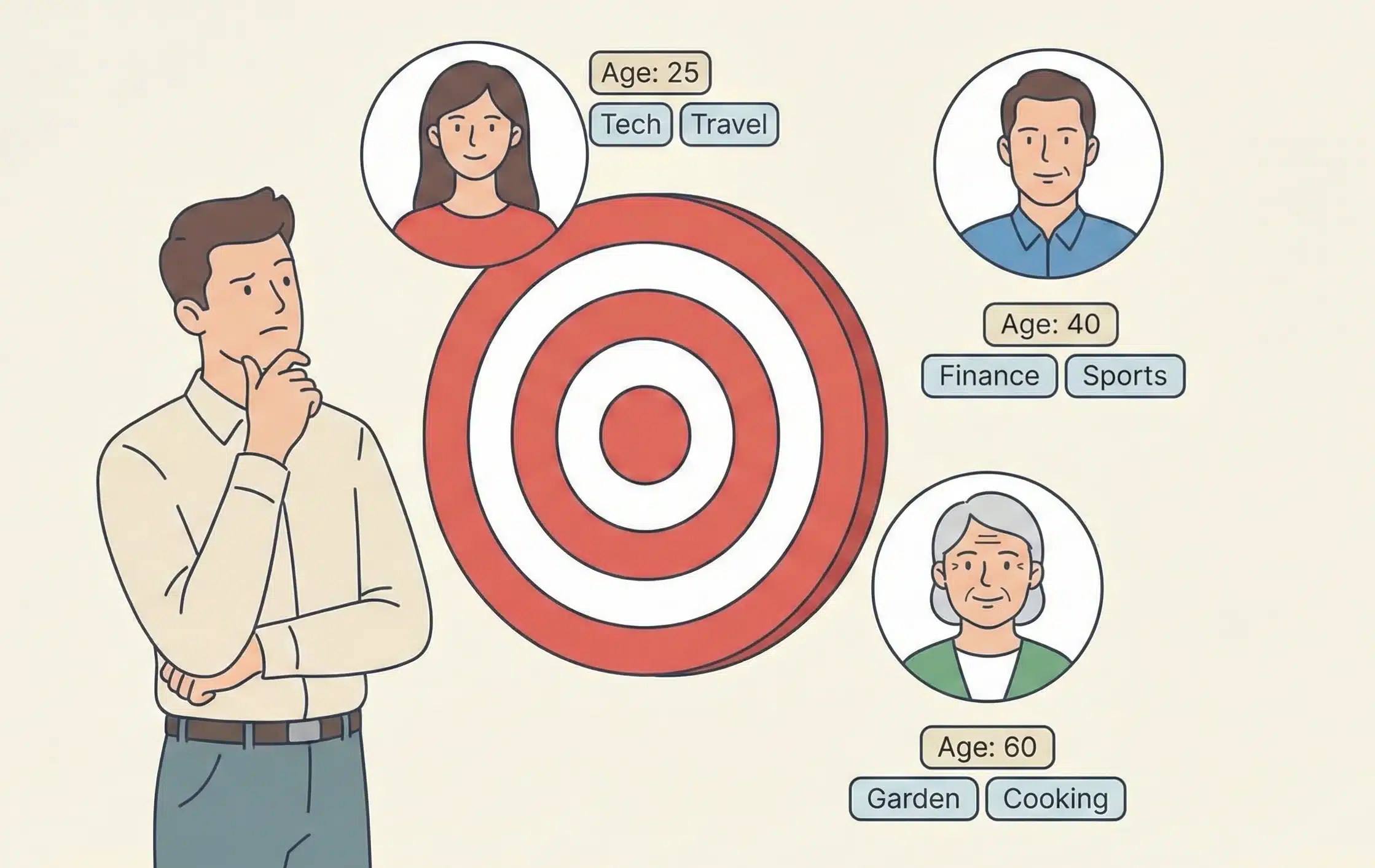
The goal of media planning is to connect your message with the right people at the right time on the right platforms, using the right budget. It answers the “5 Ws” of your media efforts:
- What are you promoting (product, service, offer, brand)?
- Where will you show up (search, social media, email, display, offline, etc.)?
- When will you run your campaigns (dates, seasons, time of day)?
- Who are you targeting (demographics, interests, behaviors)?
- How will you reach them (formats, creative messages, budget mix)?
Without media planning, you risk wasting budget on the wrong channels, reaching the wrong audience, or running campaigns that never get enough visibility to perform.
Why Is Media Planning Important?
How Media Planning Impacts Your Results
Thoughtful media planning has a direct impact on your marketing performance:
- It helps maximize ROI by putting your money into the channels and placements that are most likely to reach your ideal customers.
- It ensures budget efficiency, so you’re not overspending in one area while neglecting another.
- It improves targeting and timing, increasing the odds that your message appears when your audience is most receptive.
- It gives you a clear framework for testing, measuring, and optimizing.
In other words, media planning turns random marketing activity into a structured, measurable strategy.
Common Mistakes Beginners Make
Beginners often struggle with media planning because they:
- Jump straight into running ads without a plan.
- Fail to define clear goals (for example, awareness vs conversions).
- Choose channels based on trends, not audience data.
- Spread their budget too thin across too many platforms.
- Ignore performance data and keep repeating the same mistakes.
A solid media plan helps you avoid these pitfalls from day one.
The Three Types of Media You Need to Know
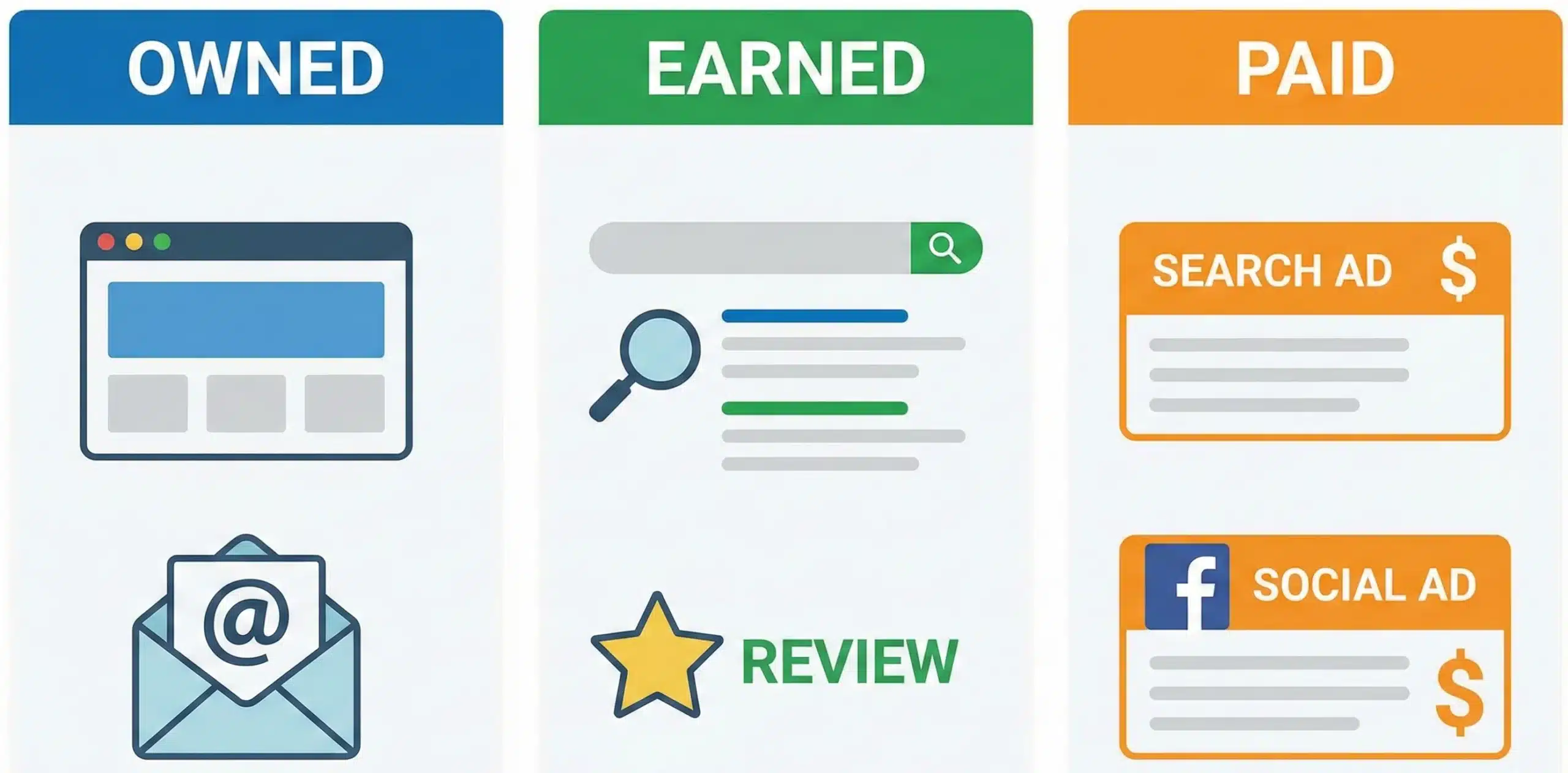
Before building a plan, you need to understand the three main media categories you can use: owned, earned, and paid.
1. Owned Media
Owned media includes all the channels and assets you control directly. Examples include:
- Your website and blog
- Your mobile app
- Your email list and newsletters
- Your physical location or office signage
- Your brand’s own social media profiles
Because you own these channels, you don’t have to pay to access them, but you do need to invest time and resources into creating content and experiences that perform well.
2. Earned Media
Earned media refers to exposure you earn rather than buy or own. Examples include:
- Organic search visibility (via SEO)
- Mentions in articles, blogs, or news sites
- Customer reviews and testimonials
- Social media shares and user-generated content
You can’t directly control earned media, but you can influence it by offering great products or services, optimizing for search, and encouraging reviews and engagement.
3. Paid Media
Paid media includes any channel where you pay to gain visibility or reach. Examples include:
- Search ads (like Google Ads)
- Social media ads (Meta, LinkedIn, X, etc.)
- Display and banner ads
- Sponsored content and native ads
- Video ads (YouTube, streaming platforms)
Paid media is typically the fastest way to increase reach, but it is also the most dependent on your budget and your ability to optimize campaigns effectively.
Key Components of a Media Plan
A strong media plan typically includes the following components.
1. Target Audience Definition
You must know who you are trying to reach. This includes:
- Demographics (age, gender, income, location)
- Firmographics for B2B (industry, company size, role)
- Psychographics (interests, values, motivations)
- Behaviors (purchase history, online habits, device usage)
Many marketers turn these details into personas—fictional profiles representing key audience segments.
2. Marketing Objectives and Goals
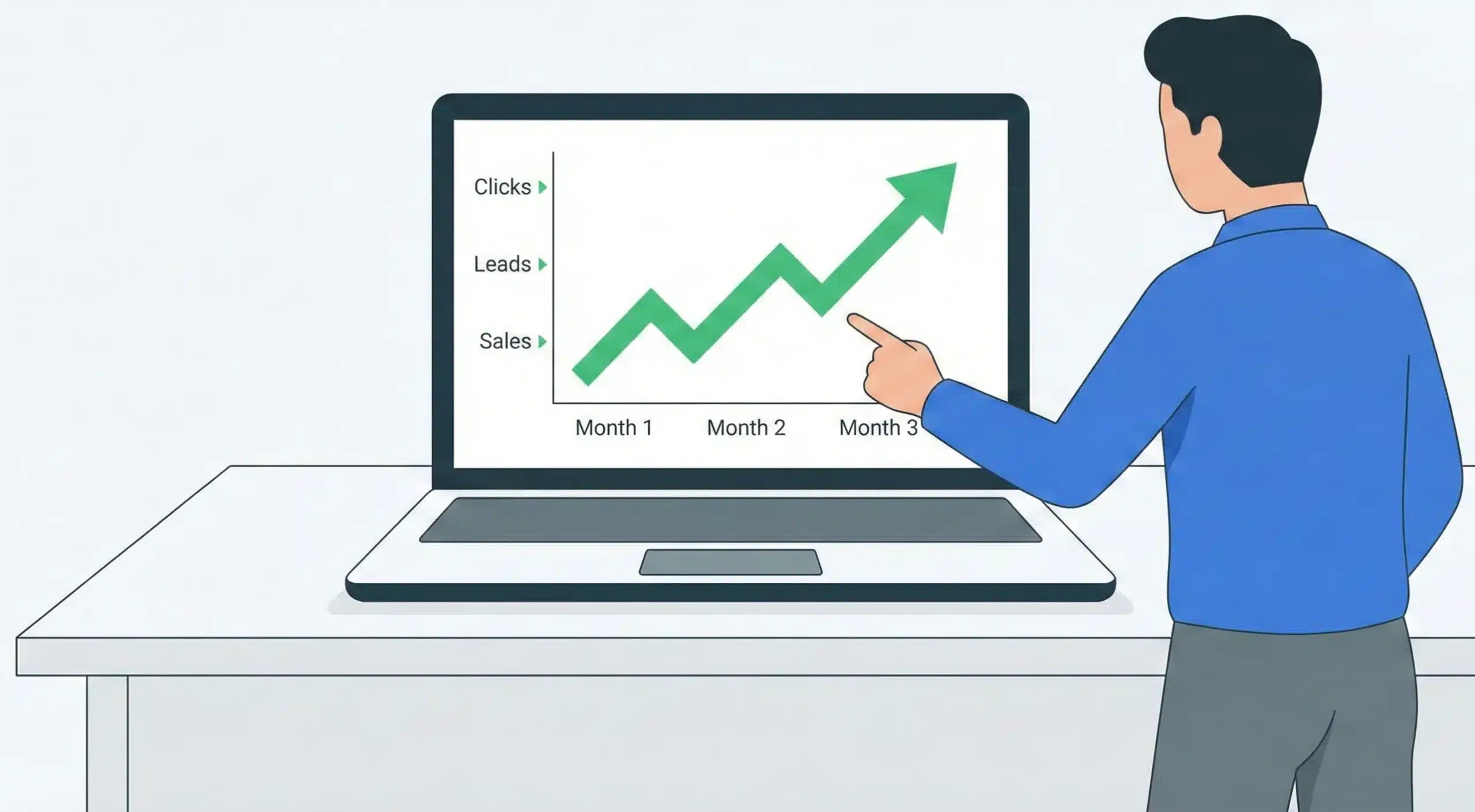
Your media plan should tie directly to your marketing objectives. Examples include:
- Increasing brand awareness in a new market
- Driving traffic to a specific landing page
- Generating qualified leads
- Boosting online sales
- Growing email subscribers or demo requests
For each objective, define clear KPIs (key performance indicators), such as impressions, clicks, conversions, cost per acquisition, or return on ad spend.
3. Media Channel Selection
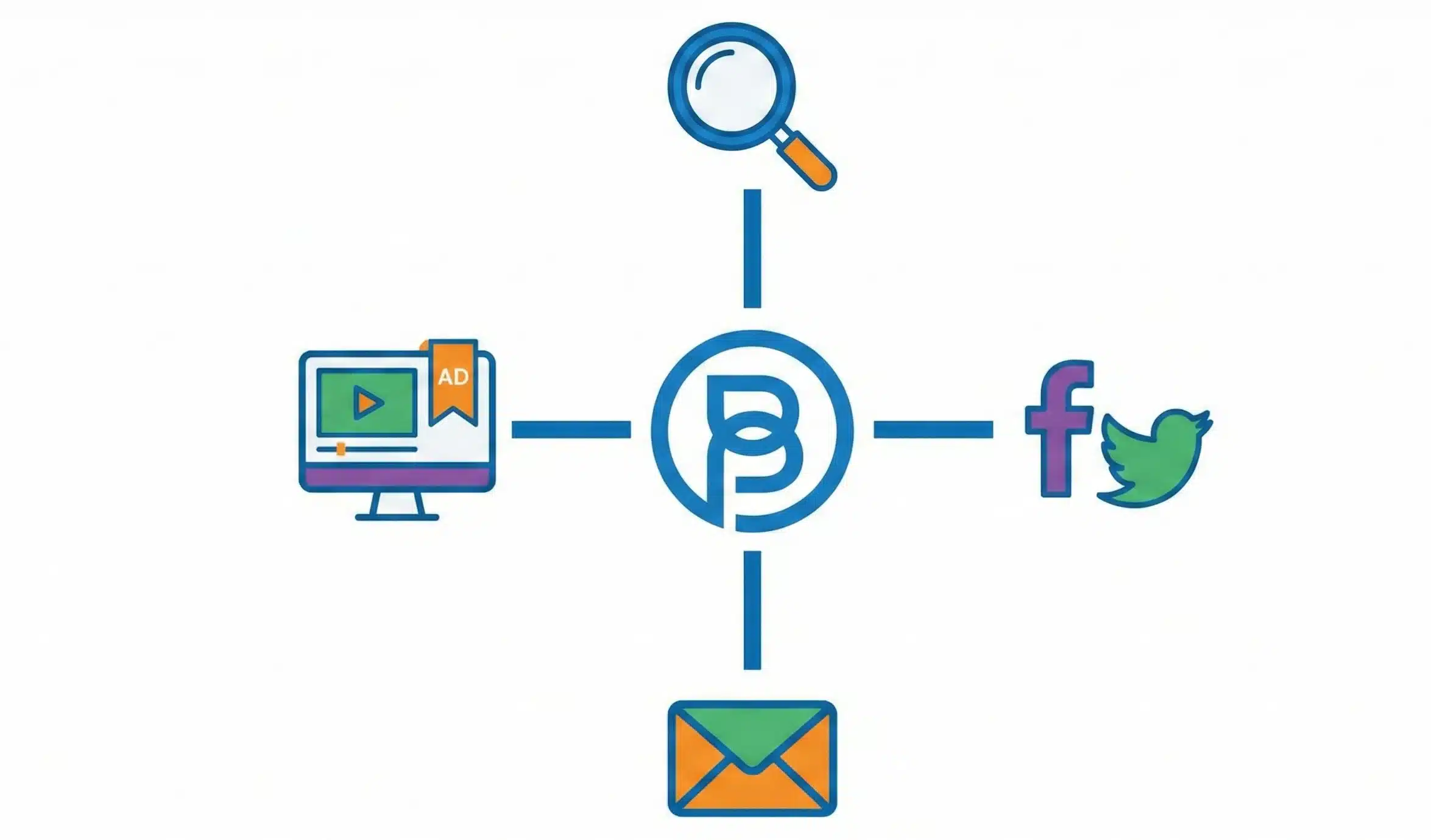
Once you know your audience and goals, you can shortlist the most relevant channels. For example:
- Search ads and SEO for high-intent prospects actively looking for solutions.
- Social media for awareness, engagement, and retargeting.
- Email marketing for nurturing and retention.
- Display and video for reach and storytelling.
The channels you choose should align with where your audience spends time and how they prefer to consume information.
4. Budget Allocation
Budget allocation focuses on how much you will invest and where:
- Total campaign budget
- Budget split across channels (e.g., 40% search, 30% social, 20% display, 10% experimentation)
- Daily, weekly, or monthly caps
- Flexibility for reallocating budget based on performance
Good media planning always leaves room for testing and optimization.
5. Messaging and Creative Strategy
Your media plan should outline what kind of message and creative formats you will use:
- Core value proposition and key messages
- Tone and positioning (educational, aspirational, urgent, etc.)
- Formats: text ads, image ads, video, carousels, long-form content, etc.
- Adaptations by platform (creative that fits search vs social vs email)
Consistency across channels is important, but each platform may need a tailored presentation.
6. Scheduling and Frequency
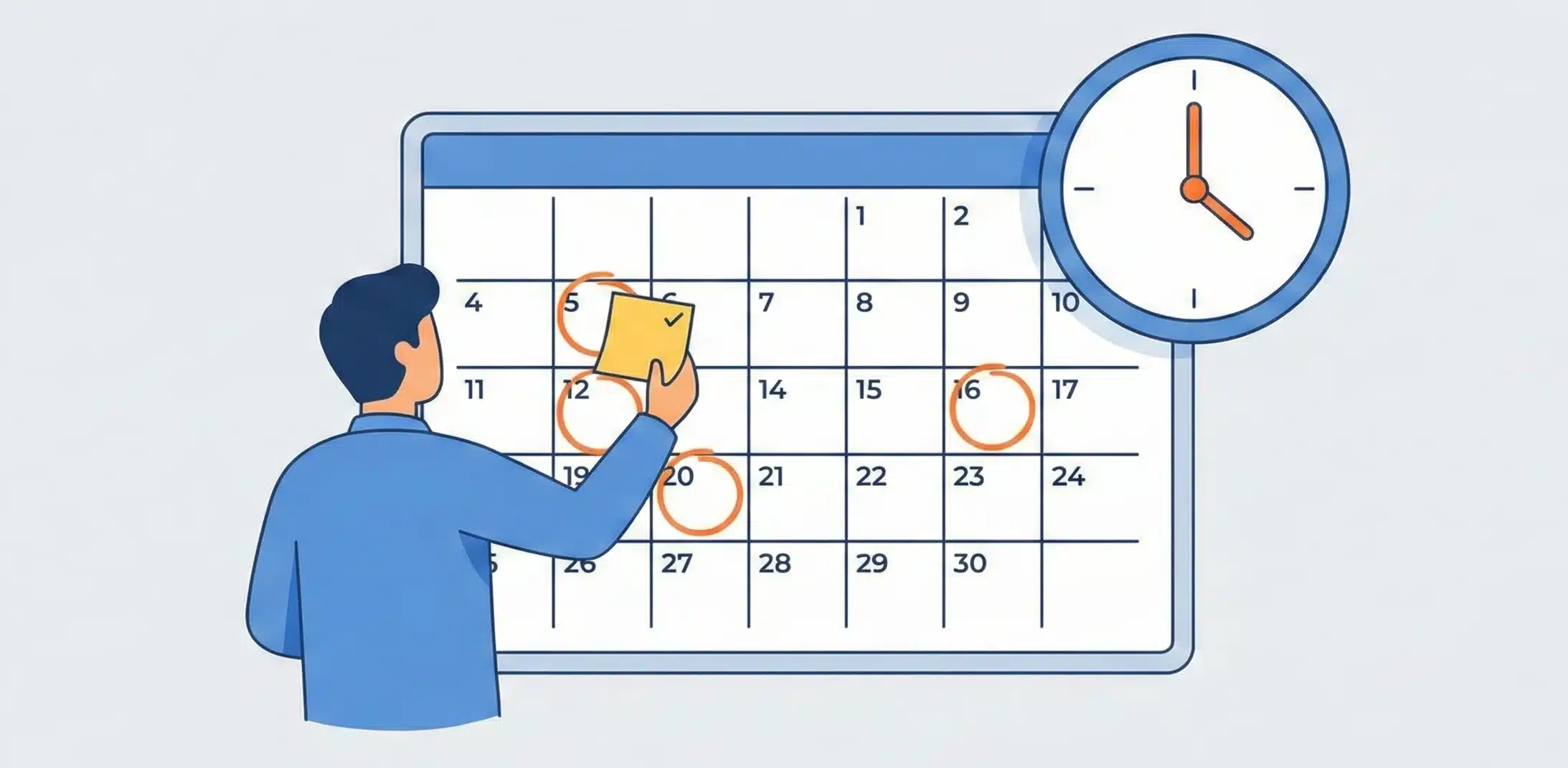
Scheduling answers the “when” part of your plan:
- Campaign start and end dates
- Always-on vs time-bound campaigns
- Seasonal or event-based timing
- Frequency goals (how often a user should ideally see your message)
The goal is to stay visible without overwhelming your audience.
The Media Planning Process: Step by Step
Here’s a simple, beginner-friendly workflow to build your first media plan.
Step 1: Conduct Market and Competitor Research
Start by understanding your landscape:
- Who are your main competitors?
- Where are they active (search, social, display, offline)?
- What messaging and offers are they using?
- Which channels seem to work well in your industry?
This helps you avoid guesswork and identify opportunities or gaps.
Step 2: Define Your Media Objectives
Clarify what success looks like:
- Are you trying to build awareness, drive traffic, capture leads, or generate sales?
- How will you measure that success (e.g., 20% traffic increase, 200 new leads, 50 demo requests)?
- Over what time period?
Objectives should be specific, measurable, achievable, relevant, and time-bound.
Step 3: Analyze and Segment Your Target Audience
Deepen your audience understanding:
- What problems are they trying to solve?
- How do they typically research solutions?
- Which platforms or channels do they use most?
- What content formats do they engage with?
Use this to create 1–3 key audience segments or personas and prioritize them.
Step 4: Evaluate Channels and Build Your Media Mix
Based on goals and audience insights:
- List potential channels, then map them to objectives (e.g., search for high intent, social for awareness and retargeting).
- Consider the strengths and limitations of each channel.
- Start with a focused mix instead of trying everything at once.
A typical beginner mix might include a combination of search ads, social ads, email, and content on owned channels.
Step 5: Build Your Media Plan Document
Put all decisions into a single reference document that includes:
- Objectives and KPIs
- Audience segments
- Chosen channels and placements
- Budget breakdown
- Creative formats and messaging themes
- Schedule and frequency
- Tracking and reporting plans
This document becomes your operating manual during execution.
Step 6: Set Budget and Resource Allocation
Refine your budget:
- Allocate spend per channel and campaign.
- Assign responsibilities (who manages which part).
- Decide what will be handled in-house vs outsourced.
- Set aside a portion (for example 10–20%) for testing new channels or creatives.
Step 7: Execute Your Plan
With the plan in place:
- Set up campaigns in your chosen ad platforms and tools.
- Implement tracking (pixels, UTM parameters, conversions).
- Launch your campaigns according to the schedule.
Execution should follow your plan but stay flexible based on early data.
Step 8: Monitor, Optimize, and Iterate
Media planning is not “set it and forget it”. You should:
- Check performance regularly (daily or weekly, depending on spend).
- Pause underperforming ads or placements.
- Shift budget to better-performing campaigns.
- Test new creatives, audiences, or bidding strategies.
Over time, your plan becomes more efficient as you learn what works.
Step 9: Evaluate Results and Document Learnings
After your campaign period:
- Compare results against objectives and KPIs.
- Calculate key metrics like cost per lead, cost per sale, or ROAS.
- Identify what worked, what didn’t, and why.
- Use these insights to refine your next media plan.
This feedback loop is what turns media planning into a powerful long-term capability.
Media Planning vs Media Buying
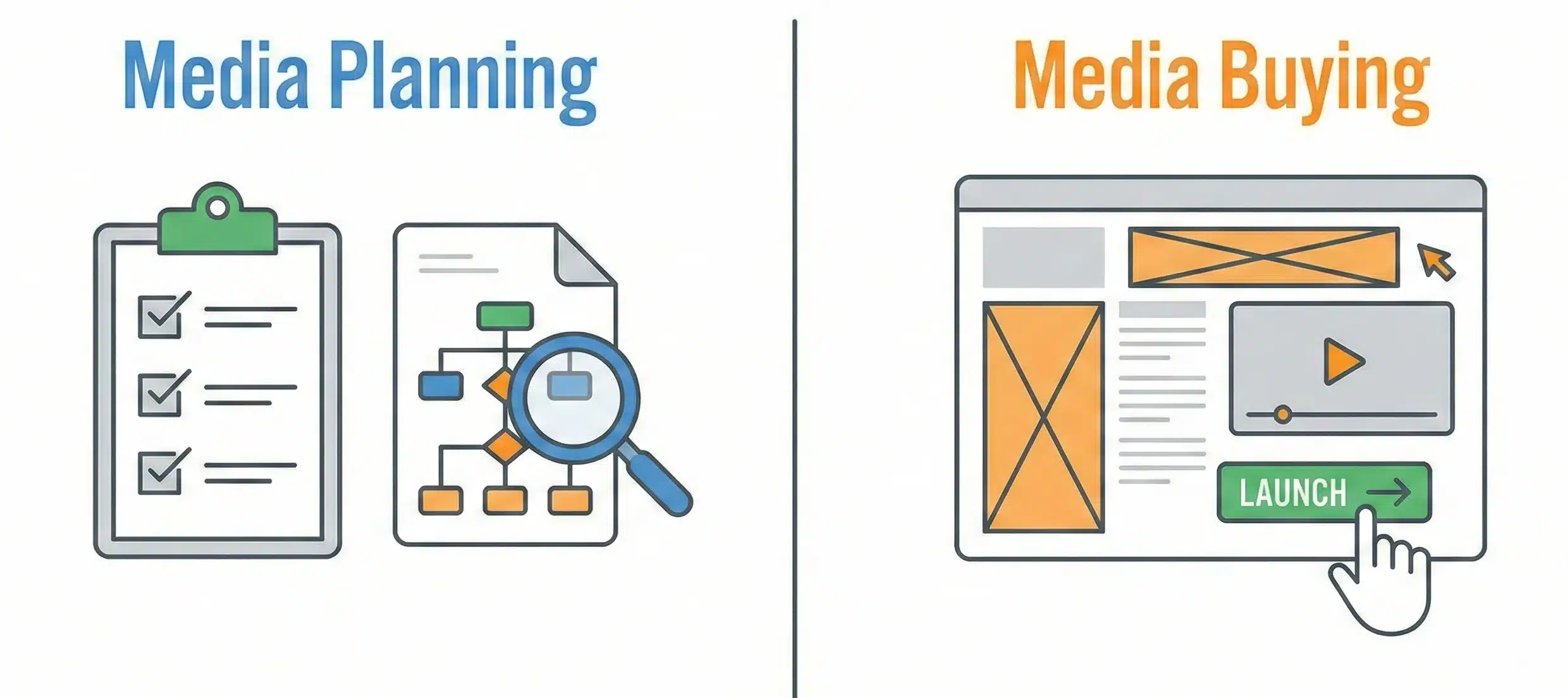
Although closely related, media planning and media buying do different jobs.
Media Planning (Strategy)
Media planning focuses on:
- Research and analysis
- Channel and audience selection
- Budget and schedule planning
- Defining goals, KPIs, and messaging strategy
It answers the “what, where, when, who, and how” questions.
Media Buying (Execution)
Media buying focuses on:
- Negotiating or bidding for ad placements
- Setting up and managing campaigns in ad platforms
- Optimizing bids, targeting, and placements
- Ensuring ads are delivered as planned
In larger teams, media planners and media buyers work closely together. In smaller teams or startups, one person may handle both roles.
Media Planning for Different Types of Businesses
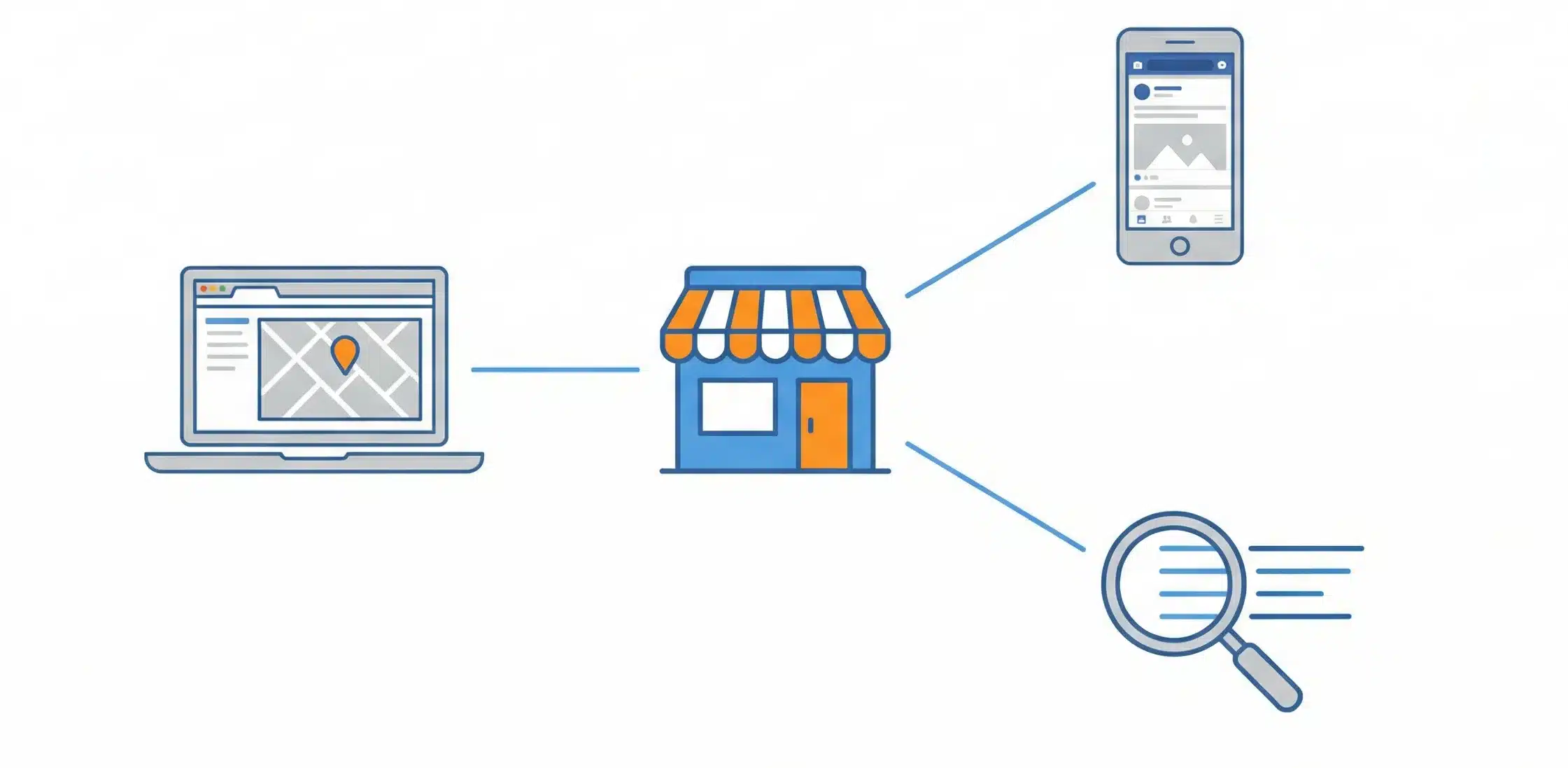
Small Businesses
For small businesses with limited budgets:
- Focus on 1–2 high-impact channels instead of spreading thin.
- Prioritize search and local visibility if customers actively look for your services.
- Use organic content and email to stretch your budget.
- Start with simple campaigns and scale gradually based on results.
E-commerce Brands
For e-commerce:
- Use a mix of search, shopping ads, social ads, and retargeting.
- Plan around seasons, sales, and product launches.
- Integrate your media plan with your product, inventory, and pricing strategies.
- Track metrics like cost per purchase and average order value.
B2B Companies
For B2B:
- Focus on channels where decision-makers spend time, such as LinkedIn, search, and targeted content.
- Plan for longer buying cycles and multiple touchpoints.
- Use content (whitepapers, webinars, case studies) as key assets in your media plan.
- Emphasize lead quality, not just volume.
Content-Driven Brands
If your strategy is content-led:
- Plan for consistent, always-on content across owned channels.
- Use paid media to amplify high-performing content.
- Map content to different stages of the funnel (awareness, consideration, decision).
- Measure engagement and conversions over time, not just immediate clicks.
Essential Tools and Templates for Media Planning
Useful Tools
While you can start with just a spreadsheet, the following types of tools can streamline media planning:
- Spreadsheets (Google Sheets, Excel) for planning and budgets.
- Project management tools (Asana, Trello, ClickUp) for tracking tasks and deadlines.
- Analytics platforms (Google Analytics, platform insights) for performance measurement.
- Ad platforms (Google Ads, Meta Ads Manager, LinkedIn Campaign Manager) for execution and optimization.
Choose tools that match your current scale and complexity.
Creating Your First Media Plan Template
A simple media plan template can include:
- Campaign name and objective
- Audience segment(s)
- Channels and placements
- Creative formats and key messages
- Budget per channel and timeframe
- KPIs and targets
- Start/end dates and frequency notes
- Owner/responsible person
- Status and notes
Once you build this template, you can reuse and refine it for future campaigns.
Common Media Planning Challenges and How to Handle Them
Challenge 1: Limited Budget
- Start with the highest-intent or highest-ROI channels.
- Use precise targeting to avoid waste.
- Combine paid media with strong owned and earned media.
- Test small before scaling.
Challenge 2: Unclear Target Audience
- Talk to existing customers and sales teams.
- Review analytics data and search terms.
- Run small tests across different segments to gather insights.
Challenge 3: Too Many Channel Options
- Narrow your options based on where your audience is most active.
- Start with a small, focused channel mix and expand later.
- Use your goals to decide (e.g., search for intent, social for awareness).
Challenge 4: Measuring ROI
- Set up conversion tracking from day one.
- Use consistent UTM parameters for all campaigns.
- Align your KPIs with business outcomes, not vanity metrics.
Best Practices for Effective Media Planning
To get the most from your media planning efforts:
- Start with clear objectives and KPIs before choosing channels.
- Put the audience first, not the platform.
- Use data and research to inform decisions, not assumptions.
- Keep strategy and execution connected—planning and buying should work together.
- Maintain creative consistency across channels while tailoring formats as needed.
- Treat your media plan as a living document; test, learn, and iterate regularly.
Conclusion
Media planning is the strategic process that decides how your marketing message reaches the right people at the right time, on the right channels, with the right budget. For beginners, it may seem complex, but it becomes manageable when broken into clear steps.
Your next steps:
- Define your goals and success metrics.
- Clarify your target audience and segments.
- Choose a focused set of channels that fit your goals and audience.
- Create a simple media plan document with budgets, timelines, and KPIs.
- Launch, monitor, and optimize based on real data.

Passionate about blogging and focused on elevating brand visibility through strategic SEO and digital marketing. Always tuned in to the latest trends, I’m dedicated to maximizing engagement and delivering measurable ROI in the dynamic world of digital marketing. Let’s connect and unlock new opportunities together!