



The cookieless era has forced marketers to rethink how they reach audiences, shifting from broad, channel-led tactics to strategies that recognize and respect the real people behind every click, visit, and purchase. People-based marketing answers this need by using privacy-conscious, first-party data to deliver personal, relevant experiences that both perform and comply with modern regulations.

People-based marketing is a response to two big realities: users now expect relevant, personalized experiences, and at the same time, browsers and privacy laws are steadily killing off third-party cookies. Instead of renting anonymous audiences from cookie-based data, brands are learning to build their own understanding of customers using data they collect directly through owned touchpoints such as websites, apps, and CRM systems.
This guide explains what people-based marketing is, why it has become essential, how it differs from related approaches like account-based marketing, and how to implement it step by step using first-party data and modern tools.
What is People-Based Marketing?
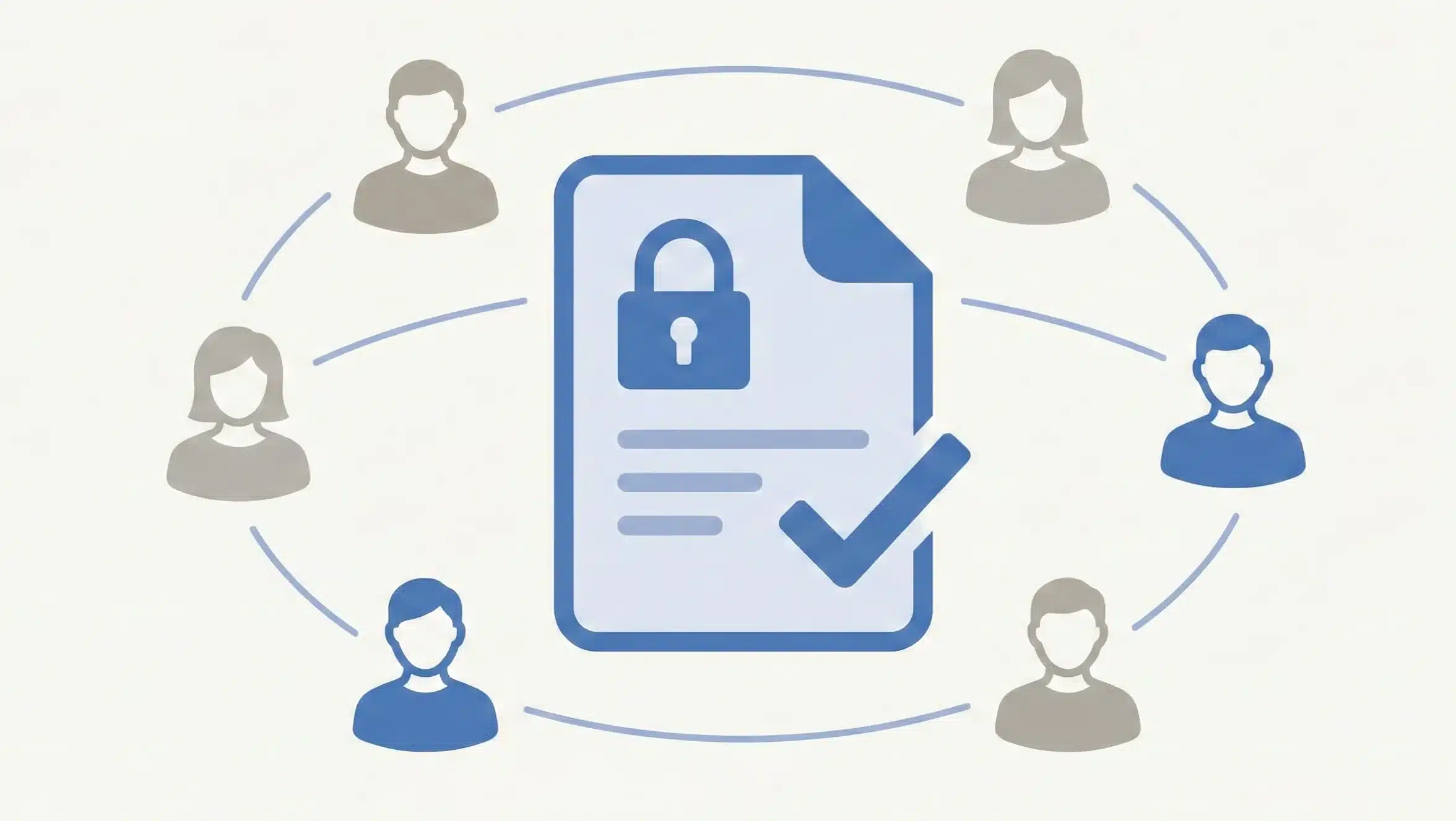
People-based marketing is a strategy that connects marketing activity to identifiable individuals by unifying data from multiple sources—online and offline—into a single profile that can be activated across channels. Instead of targeting a browser or a device, campaigns are designed around the person, so messaging follows them consistently whether they are on mobile, desktop, in-store, or engaging via email.
At the heart of this approach is identity resolution: the process of stitching together behaviors such as site visits, app usage, purchases, and offline interactions into one view of a customer. When that view is based primarily on data the brand collects itself (first-party data), it becomes a durable and compliant foundation for long-term personalization and measurement.
First-Party vs. Third-Party Data: Why the Shift Matters
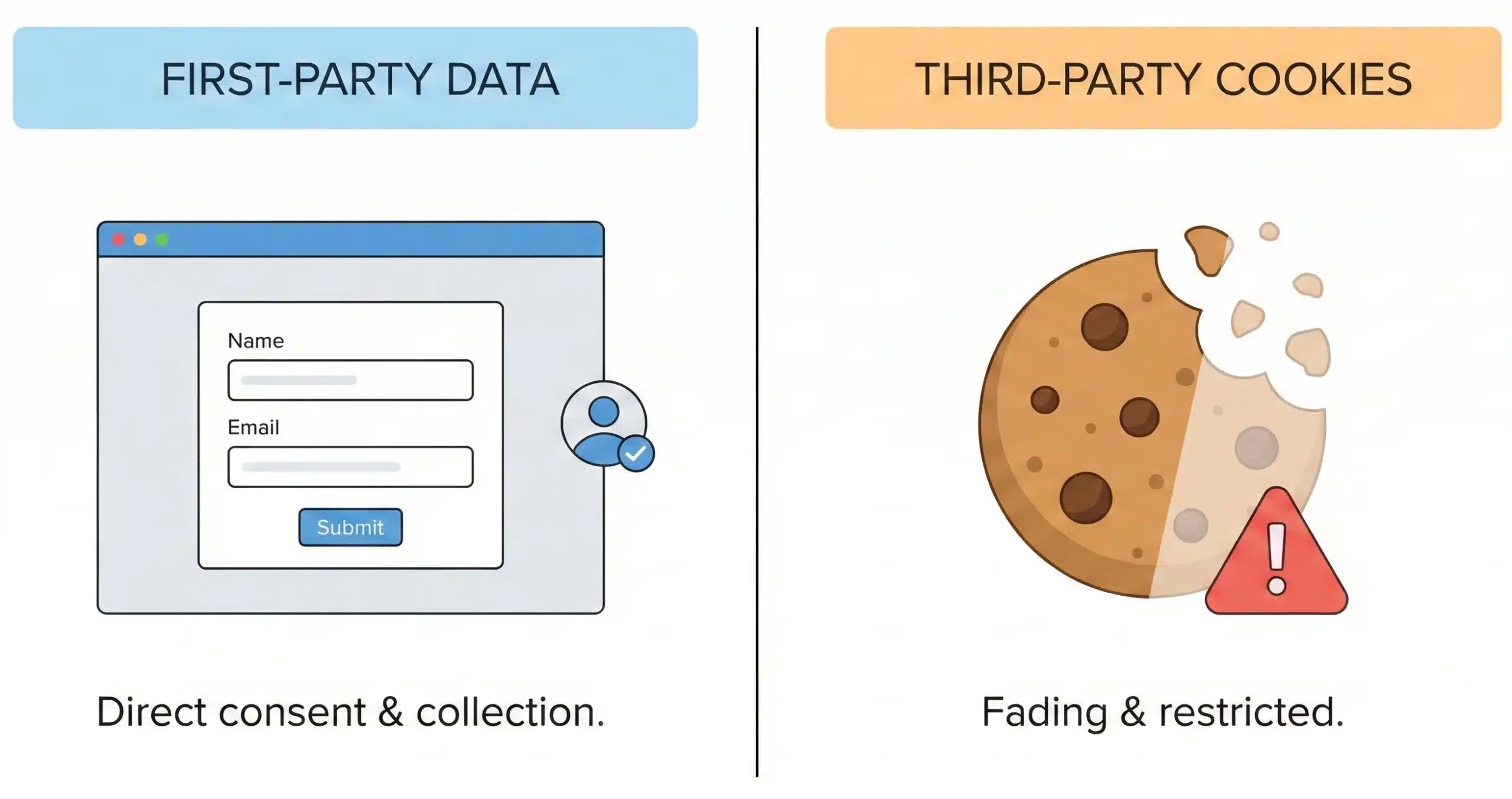
First-party data is information a brand collects directly from its audience through owned properties, such as websites, mobile apps, loyalty programs, email lists, and in-store systems. This data can include behavioral metrics (pages viewed, products browsed), transactional records (purchases, returns), declared preferences (survey responses), and basic demographic details voluntarily provided via forms.
By contrast, third-party data is compiled and sold by external providers that aggregate signals such as browsing history and inferred interests across many sites, traditionally powered by third-party cookies. Browser changes in Chrome, Safari, and Firefox, combined with privacy laws, are steadily eroding the availability and reliability of third-party data, making it less accurate and more risky from a compliance standpoint.
Because first-party data is collected with direct consent and clear value exchange, it is more accurate, more future-proof, and more controllable by the brand. The strategic shift underway is for organizations to invest heavily in systems and experiences that encourage customers to share data willingly, enabling better personalization without relying on opaque third-party trackers.
People-Based vs. Account-Based Marketing: Clear Comparison
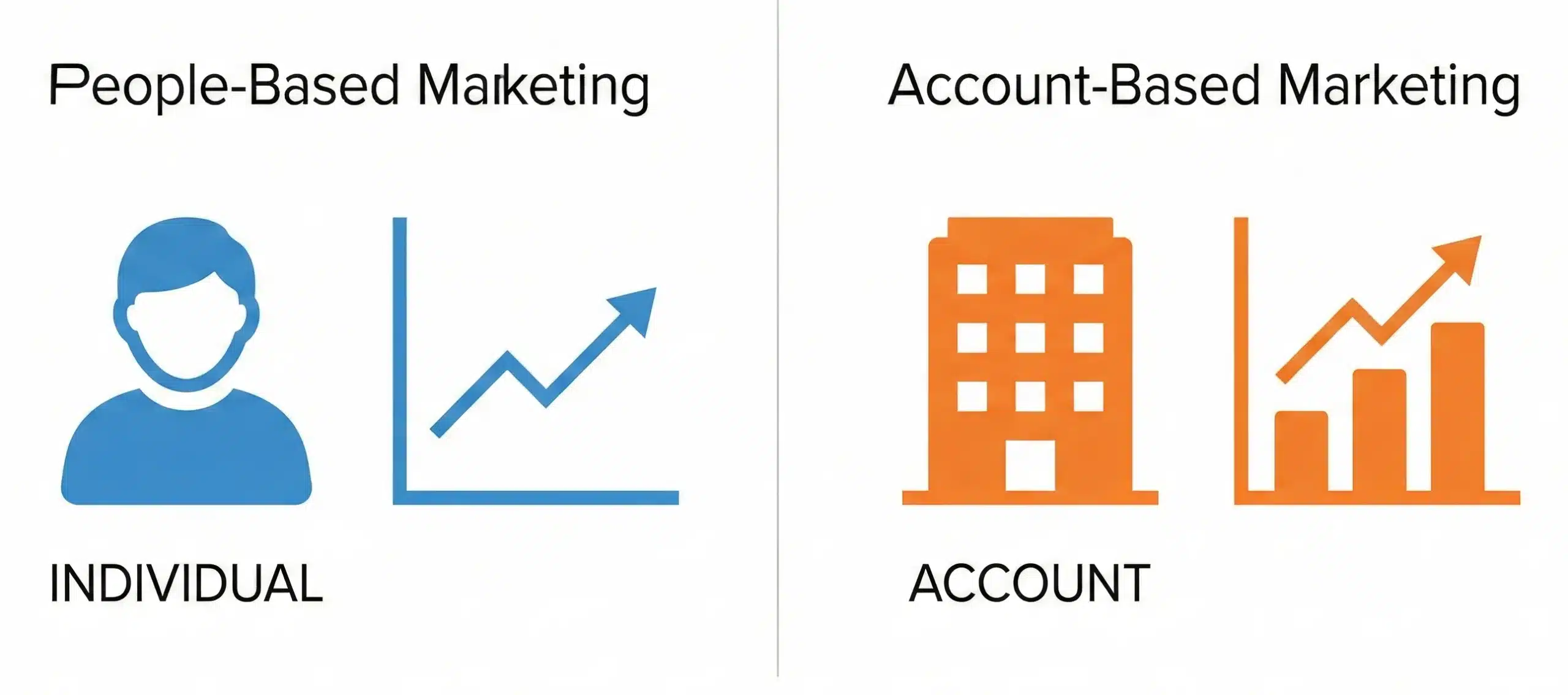
People-based marketing and account-based marketing both aim for relevance and precision, but they are built around different units of focus. People-based marketing centers on the individual customer or prospect, regardless of whether they are a consumer or a professional, and follows that person across devices and channels. Account-based marketing (ABM), by contrast, is primarily a B2B strategy that targets specific high-value companies and then orchestrates campaigns toward multiple stakeholders within those accounts.
Because of this difference, the data foundations and activation patterns of each approach diverge. People-based marketing prioritizes behavioral, transactional, and preference data at the individual level to drive one-to-one messaging, while ABM leans on firmographic data (industry, company size, revenue) and role-based profiles within a target account list.
| Aspect | People-Based Marketing | Account-Based Marketing |
| Focus | Identifiable individuals across devices and channels | High-value companies and key decision-makers |
| Typical Use Case | B2C, subscriptions, B2B with many small buyers | Complex B2B deals with long sales cycles |
| Core Data Inputs | First-party behavioral and transactional data | Firmographic and account-level engagement data |
| Personalization Granularity | One-to-one at person level | One-to-few or one-to-many within an account |
In practice, many organizations blend both: they use account-based marketing to prioritize which companies to pursue and people-based techniques to personalize messaging to individual contacts within those accounts.
Key Benefits of People-Based Marketing
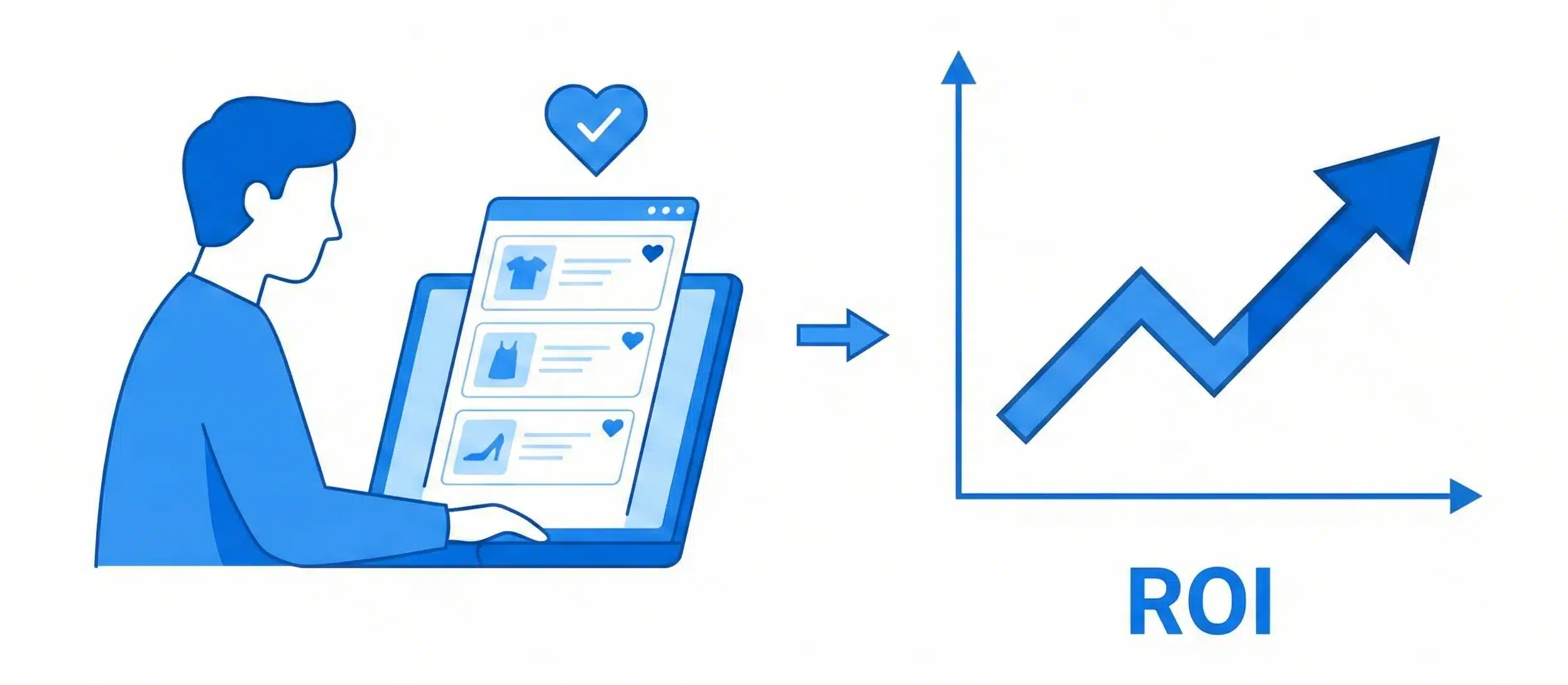
People-based marketing delivers value because it aligns business performance with customer relevance: the more precisely messages match individual needs, the better they tend to perform. Brands see improvements not just in short-term metrics like click-through rates, but also in long-term outcomes such as loyalty, repeat purchases, and customer lifetime value.
- Deep Personalization and Relevance
Using unified profiles, marketers can adjust creative, offers, and timing based on an individual’s browsing history, purchase patterns, and preferences, rather than generic segments. Customers are more likely to buy from brands that recognize them and present relevant offers, and many surveys show that a large share of consumers respond positively when treated as individuals. - Higher ROI and Reduced Wasted Spend
Because campaigns are targeted at people with demonstrated interest or fit, budgets can be concentrated on those with the highest probability of conversion, reducing wasted impressions. Strong personalization practices are often linked to significant uplifts in revenue and return on ad spend, particularly when used to optimize cross-channel media mixes. - Stronger Retargeting and Cross-Device Engagement
People-based systems can recognize the same individual moving from mobile to desktop or from online research to an in-store purchase, letting brands adjust sequencing and stop advertising once a conversion happens. This cross-device continuity improves the experience by avoiding irrelevant or repetitive ads and allows marketers to more accurately attribute which channels contributed to the final sale. - Better Customer Understanding and Loyalty
Organizing data around individuals instead of channels yields richer insights into how customers research, buy, and engage over time. With these insights, brands can refine journeys, anticipate needs, and design retention programs that strengthen satisfaction and increase repeat behavior. - Greater Compliance and Long-Term Resilience
Because people-based marketing emphasizes consented first-party data, it aligns more naturally with privacy expectations and regulatory frameworks. This makes it a more sustainable strategy as third-party signals continue to diminish, reducing the risk of sudden performance drops driven by browser or policy changes.
Privacy Regulations Driving the Change
Modern privacy regulations are a major force behind the rise of people-based marketing, because they restrict how organizations collect and use personal data without transparency or consent. Laws such as the General Data Protection Regulation (GDPR) in the EU and the California Consumer Privacy Act (CCPA) in the U.S. give individuals more control over tracking, data sharing, and profiling, with meaningful penalties for non-compliance.
Under these rules, many of the tactics historically enabled by third-party cookies—such as extensive cross-site tracking without explicit consent—are either tightly regulated or effectively blocked by browser defaults. People-based marketing fits the new environment because it emphasizes data gathered directly from customers with clear permissions and value exchange, often supported by mechanisms like consent banners, preference centers, and robust data governance.
Instead of attempting to circumvent regulations, brands that invest in transparent, first-party data collection and respectful personalization can build greater trust, which itself is closely tied to stronger long-term customer relationships and higher retention.
Also Read: What Is the Product Life Cycle? Stages, Examples, and Strategies
How to Build Your People-Based Marketing Strategy: Step-by-Step
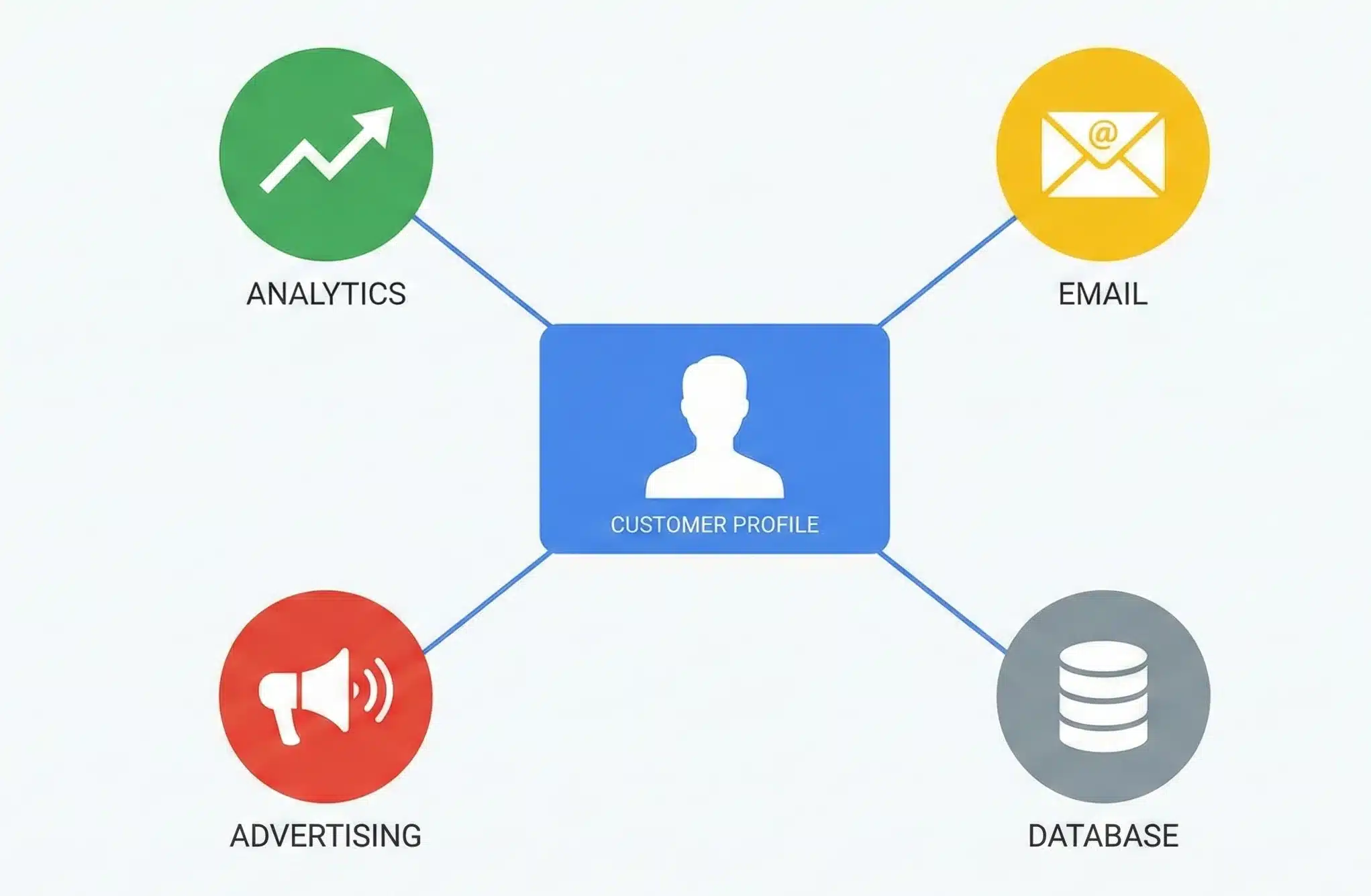
Building a people-based marketing strategy involves both technical and strategic work: collecting high-quality data, unifying it, and then activating it thoughtfully across channels. Many organizations approach this incrementally, starting with a few priority use cases (such as cart abandonment or loyalty campaigns) and expanding as they gain confidence.
- Step 1: Collect First-Party Data Intentionally
The foundation is a deliberate plan to capture data at key touchpoints, such as newsletter sign-ups, account creation, loyalty enrollment, and post-purchase surveys. Effective programs emphasize clear value for the customer—exclusive content, better recommendations, or financial incentives—so that consent and data sharing feel like a fair exchange. - Step 2: Implement and Configure Data-Tracking Tools
Analytics platforms such as Google Analytics 4 (GA4) are widely used to track user behavior across websites and apps, including events, conversions, and device types. In parallel, many brands deploy customer data platforms (CDPs) or CRM systems that ingest data from analytics, e-commerce platforms, and offline sources to build unified profiles. - Step 3: Segment Your Audience Based on Real Behavior
Once first-party data is organized, marketers can define segments by lifecycle stage (new visitors, first-time buyers, loyal customers), product interests, or engagement intensity. These segments then guide creative and offer strategies, allowing campaigns to prioritize high-intent users or at-risk customers with tailored messaging. - Step 4: Create and Maintain Buyer Personas
Many teams translate data into semi-fictional personas that capture common goals, challenges, and behaviors of key customer types, often informed by analytics and qualitative research. Keeping personas grounded in first-party insights rather than assumptions helps ensure campaigns remain aligned with how real customers act, not just how marketers imagine them. - Step 5: Personalize Campaigns Across Channels
With data and segments in place, brands can customize subject lines, product carousels, on-site banners, and ad creatives to reflect what each individual has done and is likely to need next. Channels such as email, paid media, and on-site experiences often yield early wins from relatively simple rules, like recommending related products or adjusting messaging based on past purchases. - Step 6: Measure, Attribute, and Optimize
Measurement platforms that connect person-level data to outcomes allow marketers to see which touchpoints and messages drive awareness, conversion, and retention for different individuals. Over time, these insights support more sophisticated tactics like lookalike modeling, dynamic frequency capping, and multi-touch attribution, further improving efficiency and ROI.
Tools & Platforms for People-Based Marketing
Executing people-based marketing at scale usually requires a stack of interoperable tools that handle data collection, storage, unification, activation, and measurement. While exact combinations differ by organization size and industry, several categories appear consistently across successful implementations.
- Data Collection and Analytics Platforms
Web and app analytics tools such as Google Analytics 4 capture event-level behavior and user properties that feed into broader customer profiles. Tag managers and consent management platforms help ensure data is collected in ways that respect user choices and regulatory obligations. - Customer Data Platforms and CRMs
Customer data platforms (CDPs) aggregate data from web, app, in-store, and back-office systems to create a unified view of each individual, often with identity resolution capabilities. CRM systems then allow sales and service teams to act on that view, orchestrating personalized outreach and support experiences. - Personalization and Marketing Automation Engines
Email service providers, on-site personalization tools, and marketing automation platforms use profile and segment data to adjust content and workflows for each person. Features like dynamic content blocks, journey builders, and triggered campaigns make it possible to tailor experiences without hand-crafting every message. - Advertising and Measurement Platforms
Ad platforms such as Google Ads and Meta Ads support people-based tactics through features like customer match and custom audiences, which allow brands to target known individuals or lookalikes derived from first-party lists. Advanced measurement and attribution tools then tie person-level exposure to sales and other business outcomes, making it possible to calibrate spend and creatives across channels.
Common Mistakes to Avoid
Even though the logic of people-based marketing is straightforward, implementation can go wrong in predictable ways if organizations underestimate the strategic and operational demands. Recognizing these pitfalls early helps teams avoid wasted investment and poor customer experiences.
- Over-Reliance on Legacy Third-Party Data
Some brands delay first-party investments and try to preserve performance using patchwork third-party solutions, only to face abrupt declines when browser or policy changes take effect. - Fragmented Data and Siloed Systems
When data remains locked in separate tools with no identity resolution, attempts at personalization often produce inconsistent or contradictory messages across channels. - Collecting Data Without a Clear Use Case
Gathering extensive information without a plan to use it can increase risk without improving performance; good practice is to collect only what is needed for clearly defined experiences and outcomes. - Ignoring Consent and Transparency
Implementing advanced tracking or personalization features without clear disclosure or opt-in mechanisms can erode trust and invite regulatory scrutiny. - “Set and Forget” Personalization
Journeys and rules that are never revisited can quickly drift out of alignment with evolving customer behavior or product offerings, reducing effectiveness over time.
Getting Started: Quick Action Plan
For teams at the beginning of their people-based marketing journey, it is often helpful to think in phased milestones rather than trying to deploy every capability at once. A structured rollout balances foundational work with early wins that demonstrate value and secure stakeholder support.
- Month 1: Audit and Foundation
During the first month, organizations typically inventory existing data sources, evaluate consent practices, and ensure core analytics tools are properly configured. This is also the time to identify a small set of priority use cases—such as cart abandonment emails or simple on-site recommendations—that can prove the concept. - Months 2–3: Unification and Segmentation
Once visibility into data flows improves, teams can begin connecting systems, defining identity resolution rules, and creating initial segments tied to real business goals like retention or upsell. Early campaigns launched in this phase provide feedback loops that guide subsequent investments. - Month 4 and Beyond: Optimization and Scale
Over time, organizations expand their library of personalized journeys, refine measurement models, and gradually incorporate more channels and touchpoints into their people-based strategy. The most mature programs treat people-based marketing as an ongoing discipline, not a one-time project, continually updating data models and experiences as customer needs and regulations evolve.
Key Metrics to Track
Measuring people-based marketing effectively requires moving beyond surface-level engagement metrics to indicators that capture both efficiency and long-term customer value. Organizations that succeed in this space tend to connect marketing dashboards to finance and retention metrics so that performance is assessed in terms of profitable growth rather than clicks alone.
Important metrics often include conversion rate and return on ad spend to gauge how well targeted campaigns drive immediate outcomes. At the same time, customer acquisition cost, customer lifetime value, retention rates, and frequency of repeat purchase provide insight into whether personalization is building durable relationships rather than just short-lived spikes in activity.
Because people-based marketing is rooted in person-level data, it also enables more granular analysis of how often individuals see messages across channels, which sequences lead to conversion, and when to stop or adjust outreach to avoid fatigue. These insights support continuous optimization of both creative and media investment over time.
Conclusion
As third-party cookies decline and privacy expectations rise, people-based marketing has emerged as a practical path to both better performance and better customer relationships. By building strategies around consented first-party data, unified customer profiles, and respectful personalization, brands can reach individuals with messages that genuinely fit their needs and contexts, rather than relying on broad, impersonal targeting.
Organizations that start now—auditing their data, improving consent and value exchange, and rolling out focused use cases—position themselves to navigate future changes more smoothly and create more durable competitive advantages. In a marketplace where customers reward relevance and trust, the shift from channel-centric to people-centric marketing is less a tactical experiment than a necessary evolution in how brands grow.

Passionate about blogging and focused on elevating brand visibility through strategic SEO and digital marketing. Always tuned in to the latest trends, I’m dedicated to maximizing engagement and delivering measurable ROI in the dynamic world of digital marketing. Let’s connect and unlock new opportunities together!