


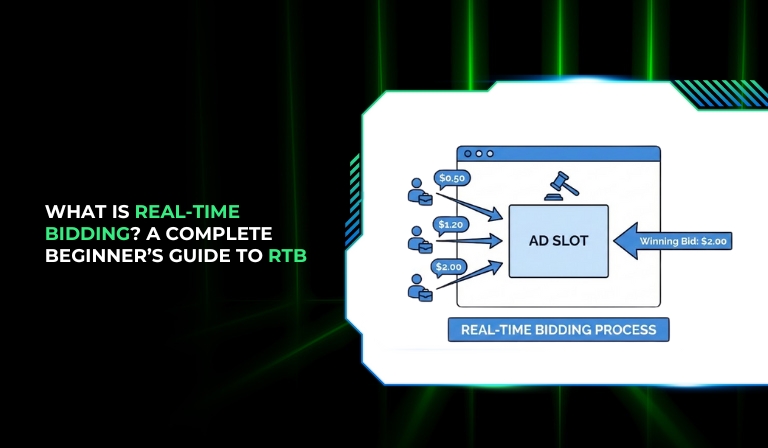
Digital advertising has shifted from manual deals and direct ad buys to automated, data-driven systems that can evaluate and purchase single impressions in milliseconds. RTB sits at the core of this change by running instant auctions for each impression so advertisers can decide what each user is worth, and publishers can maximize revenue from their inventory.

Today, RTB is a major buying method within programmatic advertising, powering a large share of display, mobile, and video inventory across the open web. This guide focuses on giving beginners a practical understanding of RTB: definitions, players, process, pricing, benefits, risks, best practices, and where RTB is heading in the coming years.
What is Real-Time Bidding (RTB)?
RTB is a method of buying and selling ad impressions via real-time auctions where each impression is evaluated and priced individually as it becomes available. Advertisers bid on impressions based on user and context data, and the winning ad is served in the fraction of a second between a user clicking a link and the page or app loading.
Real-Time Bidding Definition
RTB is typically classified as a subset of programmatic advertising because it relies on automated platforms and algorithms to handle bidding, targeting, and delivery. In most implementations, RTB auctions run within about 100–200 milliseconds, which is fast enough that users do not notice the process while a page or app loads.
- RTB is an automated auction for individual ad impressions.
- Bidding and decision-making happen in real time for each impression.
- The pricing model is usually cost per mille (CPM), or cost per thousand impressions.
RTB vs. Programmatic Advertising
Programmatic advertising is a broad term covering all automated methods of buying and selling digital ad inventory, including RTB, private marketplaces, and programmatic guaranteed deals. RTB specifically refers to open or auction-based programmatic buying, whereas programmatic direct or guaranteed deals can use automation without an auction.
- Programmatic is the overall automated buying ecosystem.
- RTB is the auction-based part of programmatic, where impressions are bid on in real time.
- Programmatic direct and private marketplaces use automation but may have fixed or pre-negotiated terms rather than open auctions.
Key Components and Players in RTB
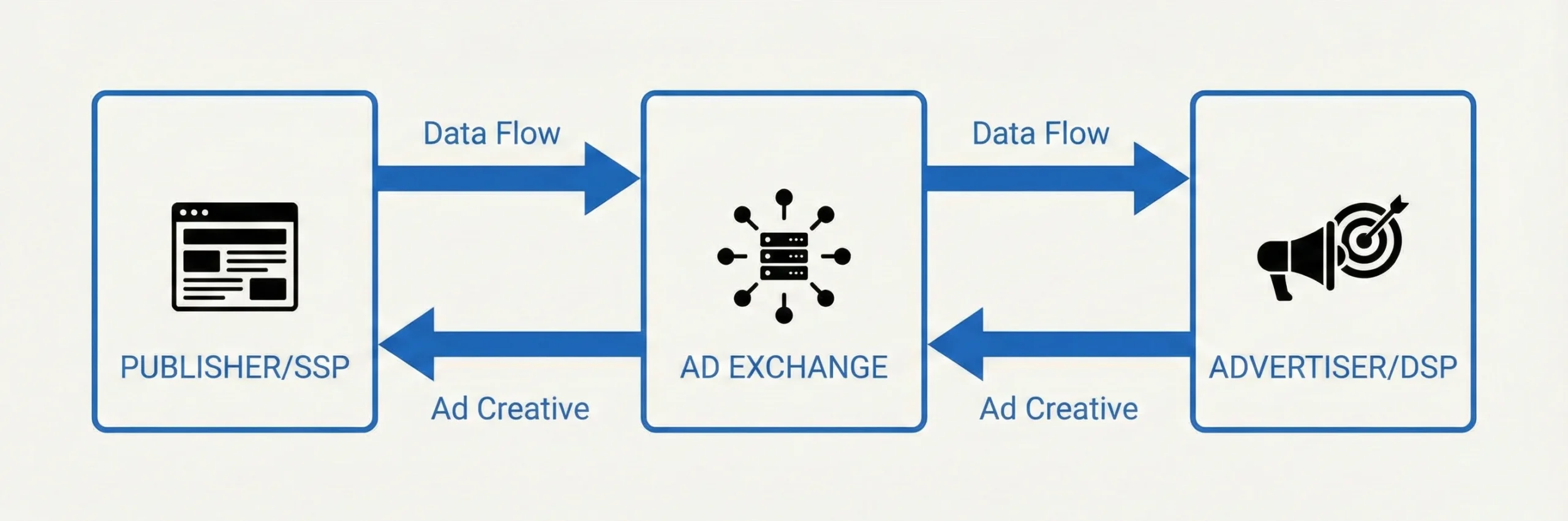
RTB requires several connected platforms and participants to function, each playing a specific role in requesting, valuing, and serving impressions.
1. Demand-Side Platforms (DSPs)
Demand-side platforms are software platforms that advertisers and agencies use to buy impressions across many publishers and exchanges from one interface. DSPs ingest bid requests, apply targeting rules and algorithms, determine a bid price, and submit bids back into the auction, then report on performance.
- Advertisers use DSPs to manage budgets, bids, and targeting at scale.
- DSPs evaluate each impression against campaign goals in real time.
- Well-known examples in the market include large buying platforms provided by major ad tech and cloud vendors.
2. Supply-Side Platforms (SSPs)
Supply-side platforms help publishers manage, price, and sell their ad inventory programmatically to multiple demand sources. SSPs package available ad slots into bid requests, pass them to exchanges and DSPs, and enforce publisher rules such as floor prices and blocklists.
- Publishers use SSPs to connect their inventory to many buyers.
- SSPs help optimize yield by routing impressions to competitive auctions.
- SSPs can integrate with header bidding and multiple ad exchanges.
3. Ad Exchanges
Ad exchanges are marketplaces that route bid requests from SSPs to DSPs, run auctions, and return the winning creative back to the publisher’s ad server. They work as neutral infrastructure connecting many buyers and sellers, standardizing protocols so different platforms can communicate.
- Ad exchanges receive bid requests and run real-time auctions.
- They connect many SSPs and DSPs using standard APIs and protocols.
- Some large platforms combine exchange, SSP, and ad server capabilities.
4. Additional Players
In addition to DSPs, SSPs, and exchanges, RTB relies on supporting services that provide data, verification, and measurement.
- Data management platforms or customer data tools aggregate and segment user data to enhance targeting.
- Verification and fraud detection vendors monitor for invalid traffic, brand safety violations, and viewability issues.
- Analytics and attribution tools help advertisers evaluate performance and optimize campaigns.
How Does Real-Time Bidding Work?
RTB works by turning each ad impression into a micro-auction that occurs when a user loads a page or app. What looks like a single page load to the user actually triggers a chain of technical steps among the publisher, SSP, exchanges, DSPs, and advertiser systems.
The RTB Process Step-by-Step
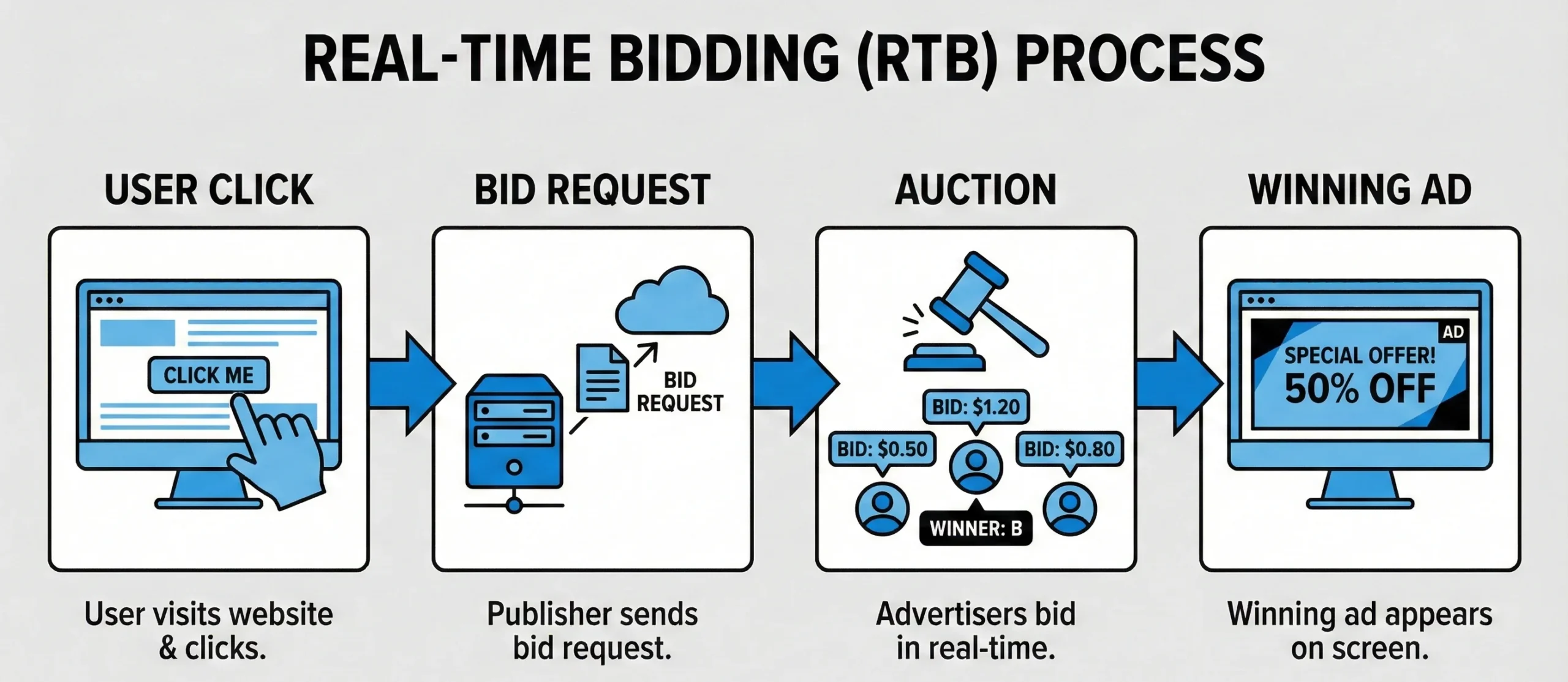
1. User Visits a Website/App
When a user opens a website or app that contains ad placements, the publisher’s ad server identifies available ad slots on that page or screen. For each eligible slot, the publisher’s setup can instruct its SSP or header bidding wrapper to request bids from connected demand sources.
- A page or app view triggers the ad request.
- The publisher determines which slots will be filled via RTB.
- The ad server or header bidding integration initiates the process.
2. Bid Request Generation
The SSP generates a bid request describing the impression opportunity and the user and context signals that are allowed under privacy rules and user consent. Typical bid requests may include information such as ad slot size, page URL or app, device type, approximate location, and anonymized identifiers that hint at user behavior or segments.
- SSPs package ad slot details (size, position, format).
- Context and user-related data are attached where permitted (device, location, segments).
- Privacy regulations and consent frameworks limit what can be shared.
3. Bid Request Distribution
The SSP forwards bid requests to one or more ad exchanges, which then pass them on to connected DSPs representing different advertisers. This fan-out process lets multiple buyers evaluate the same impression, driving competition and potentially higher prices for the publisher.
- SSPs send bid requests to several exchanges or endpoints.
- Exchanges relay them to many DSPs simultaneously.
- All of this must occur within strict latency limits (often under a few hundred milliseconds).
4. Advertiser Evaluation and Bidding
Each DSP receives the bid request and runs it through its decisioning engine, which compares the impression against the advertiser’s targeting, budget, and bidding strategies. The DSP may also use first-party data, third-party segments, and machine learning models to estimate the likelihood of a conversion or other desired outcome.
- DSPs check whether the user and context match campaign targeting.
- Algorithms estimate impression value based on historical performance and predictive models.
- If the impression is valuable, the DSP returns a bid price (usually in CPM) and a creative to serve if it wins.
5. Auction Process
The ad exchange collects all bids for the impression and runs an auction to determine the winner. Historically, many RTB auctions used second-price logic, where the highest bidder wins but pays slightly more than the second-highest bid, though the market has been shifting toward first-price auctions where the winner pays its own bid.
- The exchange compares all valid bids for the impression.
- In a first-price auction, the highest bidder pays its bid; in a second-price auction, the winner pays just above the second-highest bid.
- Publisher rules, such as floor prices and blocked buyers, are applied before confirming the winner.
6. Ad Serving
Once a winner is selected, the exchange or SSP returns the winning ad markup or creative to the publisher’s ad server, which then renders the ad in the appropriate slot. All of this happens in the time between the user requesting the page and the content fully appearing on their screen.
- The winning ad code is returned to the publisher.
- The ad is rendered alongside or within the page or app content.
- To the user, it appears as a normal ad load with no visible delay.
7. Performance Tracking and Payment
After the ad is served, impression and event tracking pixels or tags log views, clicks, and conversions, which feed back into DSP and analytics systems. Financial settlement then occurs among advertisers, DSPs, exchanges, SSPs, and publishers based on auction prices, contracts, and fees.
- Impression, click, and conversion data are recorded for reporting.
- Performance data informs future bidding and optimization.
- Payments flow from advertisers to publishers through the chain of intermediaries.
Types of Real-Time Bidding
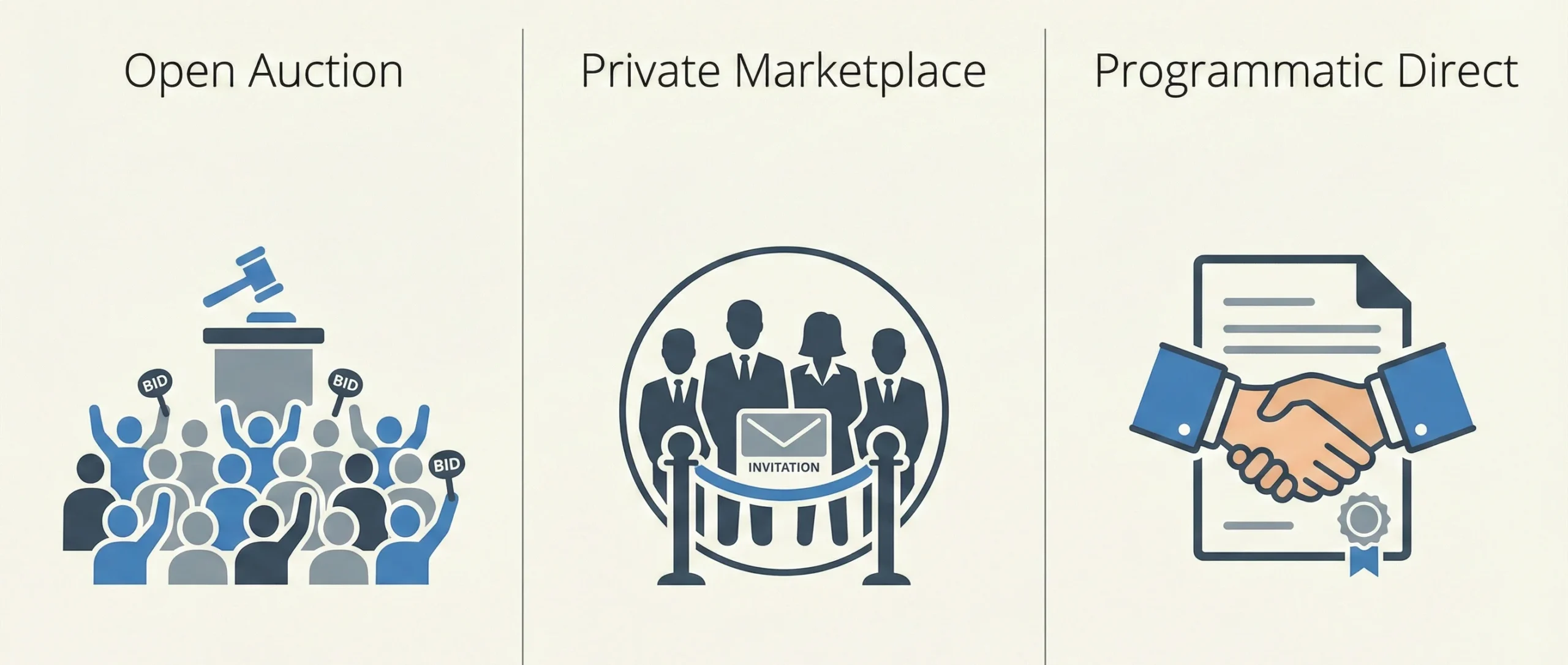
RTB can be implemented through different marketplace structures that balance scale, control, and pricing. The main distinctions are between completely open auctions and more controlled, invitation-based environments that use similar mechanics but tighter rules.
1. Open RTB (Open Auction)
Open RTB refers to auctions where many buyers can compete for impressions across a wide range of publishers. These open marketplaces typically offer broad reach and high impression volume, often at lower CPMs, but with more variability in inventory quality and less publisher-level exclusivity.
- Any eligible advertiser using connected DSPs can bid on impressions.
- Inventory spans many sites and apps, providing scale and diversity.
- Best suited to performance-focused campaigns that need reach and efficient pricing.
2. Private RTB (Private Marketplace – PMP)
Private marketplaces use RTB auction mechanics but restrict participation to a curated list of advertisers or buyers. Publishers often offer premium inventory in PMPs, sometimes with higher floor prices in exchange for better brand safety, transparency, and direct relationships.
- Only invited advertisers or deals can access PMP inventory.
- Publishers typically offer higher-quality or more brand-safe placements.
- PMPs are often used by brands that prioritize environment and control over sheer scale.
3. Programmatic Direct (Programmatic Guaranteed)
Programmatic direct or programmatic guaranteed deals automate trafficking and billing while using fixed pricing and reserved inventory, rather than open auctions. These deals may run through the same pipes as RTB but bypass bidding by using agreed CPMs and impression guarantees.
- Inventory and pricing are negotiated directly but delivered via programmatic pipes.
- Advertisers gain guaranteed placements; publishers secure predictable revenue.
- Helpful for campaigns needing specific placements, volumes, or sponsorship-like presence.
Understanding RTB Auction Models
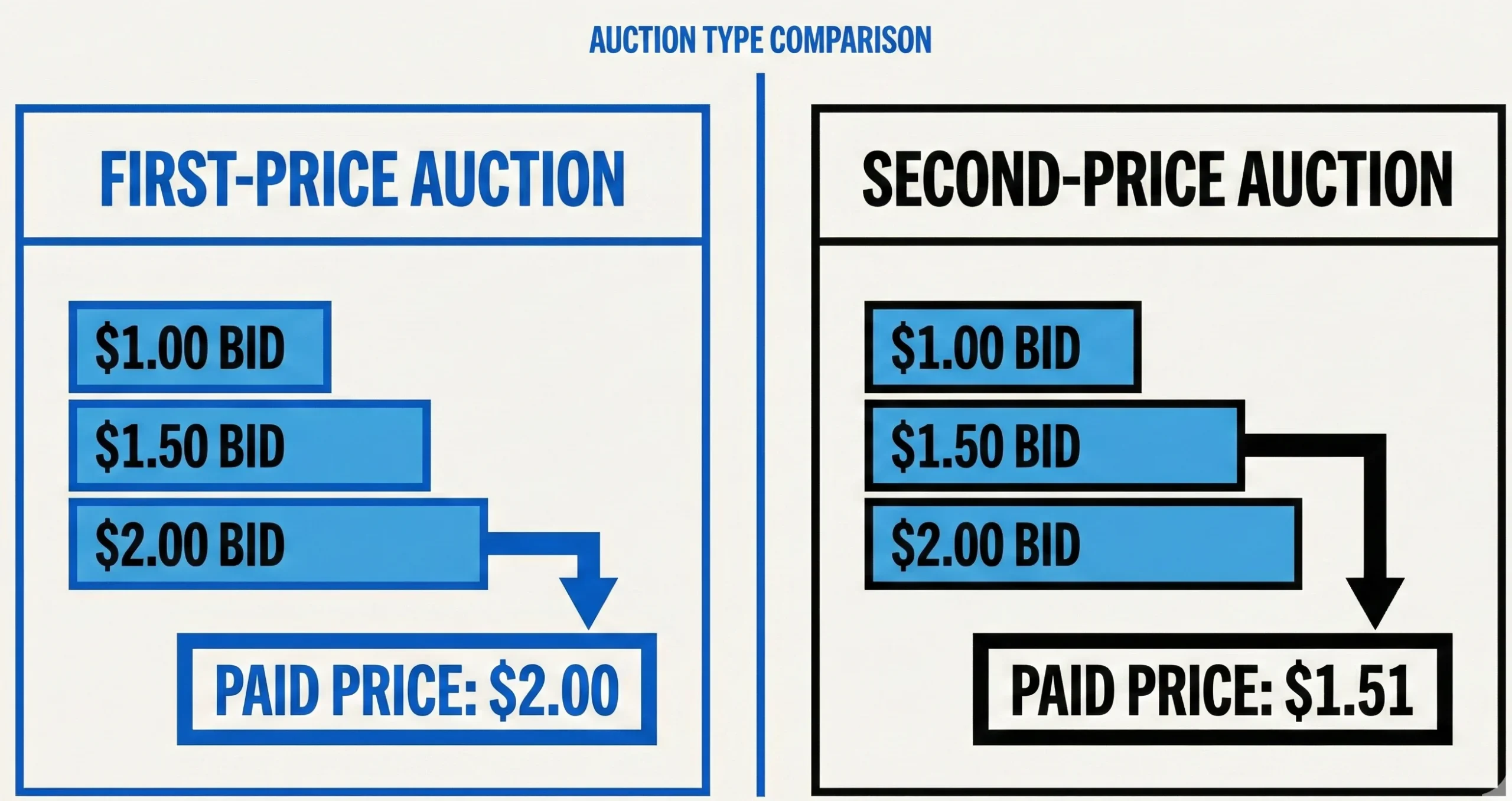
Different auction models affect how much advertisers pay and how they design bidding strategies. As the industry shifts from second-price to first-price auctions, understanding these models is important for cost control and performance.
First-Price Auctions
In a first-price auction, the bidder with the highest bid wins the impression and pays exactly the amount they offered. This model simplifies the auction but forces buyers to think carefully about bid shading and optimization to avoid overpaying.
- Highest bid wins and is paid as-is.
- Buyers often use algorithms or tools to “shade” bids below their maximum willingness to pay.
- First-price auctions have become more common in programmatic environments.
Second-Price Auctions
In a second-price auction, the highest bidder still wins, but the clearing price is just above the second-highest bid instead of the full highest bid. This structure historically encouraged bidders to bid their true value because they paid less than or close to it, but many exchanges have moved away from pure second-price models.
- Highest bidder wins but pays slightly above the second-highest bid.
- Reduces the risk of overbidding for a single impression.
- Now less dominant as exchanges introduce or favor first-price setups.
Header Bidding
Header bidding is a technique where publishers allow multiple demand sources to bid on the same inventory before calling the ad server, often increasing competition and yield. It can run as either client-side or server-side code that collects bids from different SSPs and exchanges simultaneously and then passes results to the ad server for final selection.
- Multiple exchanges or SSPs bid in parallel for the same impressions.
- Header bidding often improves publisher revenue compared with older waterfall setups.
- It interacts with RTB auctions by exposing inventory to more competitive demand sources at once.
Cost Per Thousand Impressions (CPM) in RTB
CPM is the standard pricing metric for RTB, representing the cost to show an ad one thousand times. Advertisers set bids in CPM terms, and platforms convert those bids into per-impression prices inside the auction.
What is CPM?
Cost per mille (CPM) is calculated by dividing the total campaign cost by the number of impressions and multiplying by 1,000. RTB systems operate largely on CPM bids so that different campaigns and formats can be compared on a common pricing unit.
- CPM = (Total cost ÷ Impressions) × 1,000.
- RTB campaigns typically use CPM bidding even if advertisers track downstream metrics like cost per click or cost per acquisition.
- CPM allows the auction to value each impression consistently.
CPM Pricing Factors
CPMs in RTB are influenced by market supply and demand as well as the specifics of each impression. Factors such as audience quality, geo, device, format, and vertical can lead to significant variation in CPM ranges.
- Audience characteristics: highly valuable segments (for example, in-market shoppers or specific B2B roles) often command higher CPMs.
- Context and inventory quality: premium publishers, above-the-fold placements, and certain categories cost more.
- Geography and device: ads in high-income markets or on certain devices may be priced higher.
Typical RTB Costs
RTB campaigns can start with budgets in the low thousands of dollars, with CPMs ranging from low single digits for broad, lower-tier inventory to significantly higher rates for premium or highly targeted impressions. Advertisers retain control over daily and total budgets, and platforms will not exceed the limits set at the campaign or account level.
- Broad or remnant display inventory may be available at low single-digit CPMs.
- More targeted, brand-safe, or premium placements can reach much higher CPMs.
- Total campaign budgets are flexible and can be scaled up or down based on performance.
Also Read: Public Relations vs. Marketing: Understanding the Key Differences
Benefits of Real-Time Bidding
RTB offers advantages to both advertisers and publishers by aligning price with value at the impression level and automating execution. When implemented carefully, it can improve relevance, efficiency, and revenue outcomes compared to older manual or bulk-buying approaches.
For Advertisers
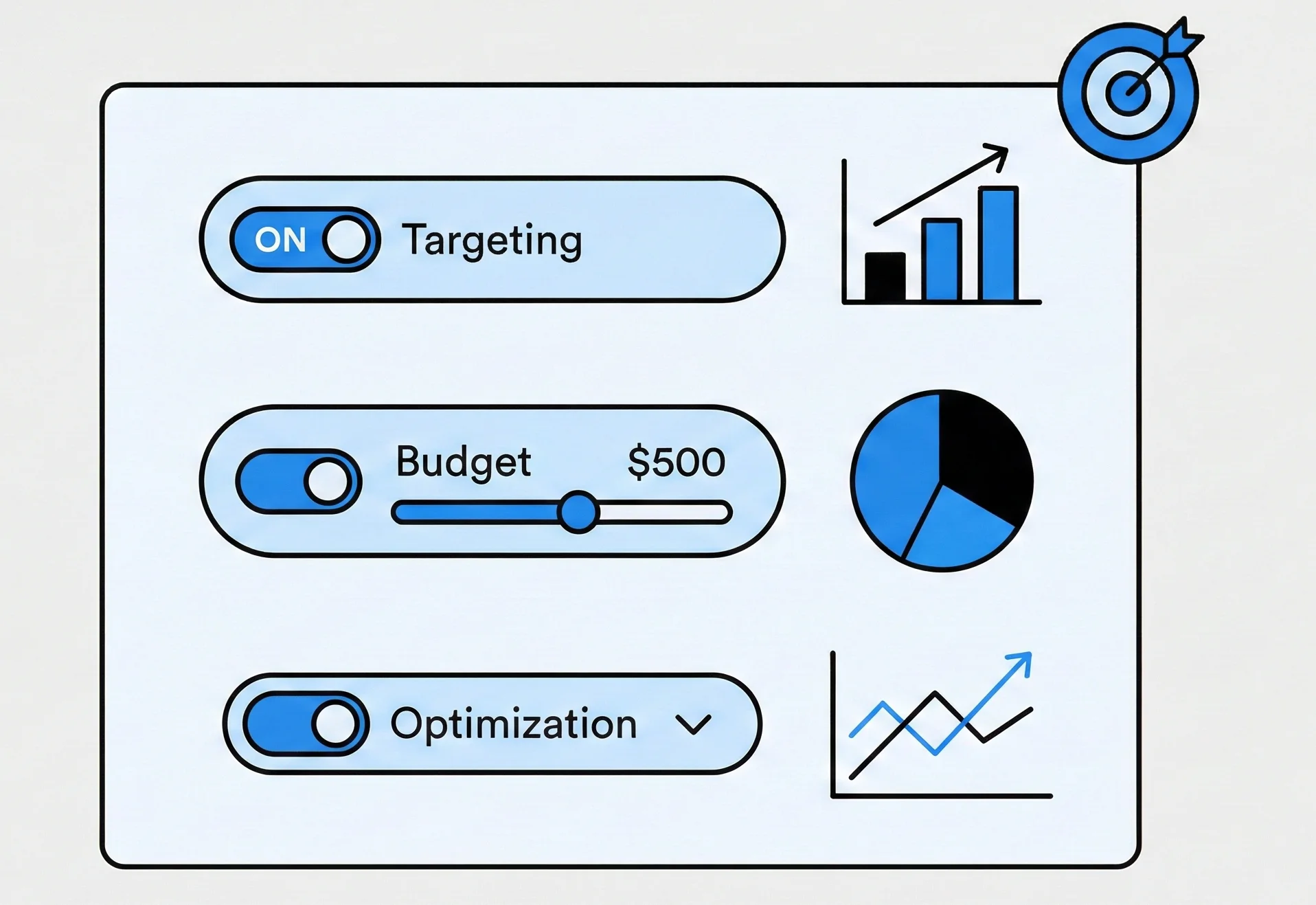
1. Precision Targeting and Personalization
RTB lets advertisers layer many types of targeting to reach specific audiences based on data, not just context. DSPs can segment users by demographics, interests, behaviors, and previous interactions, often using machine learning models to predict which impressions are most likely to lead to desired outcomes.
- Advertisers can target by:
- Demographics such as age, gender, or income where available.
- Behavioral signals like browsing history, purchase intent, or app usage.
- Contextual signals such as page topics or content categories.
- Dynamic creative approaches can adapt messaging to audience segments.
2. Cost Efficiency and ROI Optimization
Because RTB evaluates each impression individually, advertisers can avoid paying for low-value impressions and focus budgets on users most likely to convert. Platforms and algorithms can adjust bids in real time based on performance data, improving cost per acquisition and return on ad spend.
- Budgets are allocated toward higher-value impressions as identified by models.
- Inefficient placements can be quickly reduced or excluded.
- Case studies in the market often show lower acquisition costs when using well-optimized RTB compared with less targeted buying.
3. Scale and Reach
RTB taps into inventory across thousands of websites and apps, as well as formats like display, video, and in some cases connected TV. This allows advertisers to maintain consistent targeting across many environments while still controlling frequency and spend.
- Campaigns can reach large audiences across multiple publishers.
- Cross-device targeting can maintain continuity as users move between devices.
- RTB supports a range of ad formats, depending on the DSP and exchanges used.
4. Real-Time Optimization and Agility
RTB systems provide near real-time reporting, enabling advertisers to react quickly to performance trends. Bids, budgets, creatives, and targeting can be adjusted without renegotiating direct deals, giving campaigns more flexibility to respond to changing conditions.
- Advertisers can pause or adjust underperforming segments promptly.
- A/B tests on creatives and audiences can run continuously.
- Automated bid strategies can incorporate recent performance signals.
5. Transparency and Control
Many modern DSPs and exchanges offer detailed reporting on win rates, placements, and performance metrics. Advertisers can enforce frequency caps, site-level exclusions, and brand safety filters to maintain control over how and where their ads appear.
- Placement and domain reports reveal where impressions were bought.
- Frequency and pacing controls help manage user experience and spend.
- Brand safety features can reduce risk of appearing next to unsuitable content.
6. Automation and Time Savings
RTB reduces the need for manual insertion orders and one-to-one negotiations for each publisher relationship. Once campaigns and rules are configured, the system handles bidding and delivery automatically, freeing teams to focus more on strategy and creative testing.
- Centralized buying across many publishers via one or a few DSPs.
- Less manual trafficking work compared to traditional direct buys.
- Automated optimization can run continuously without constant human intervention.
For Publishers
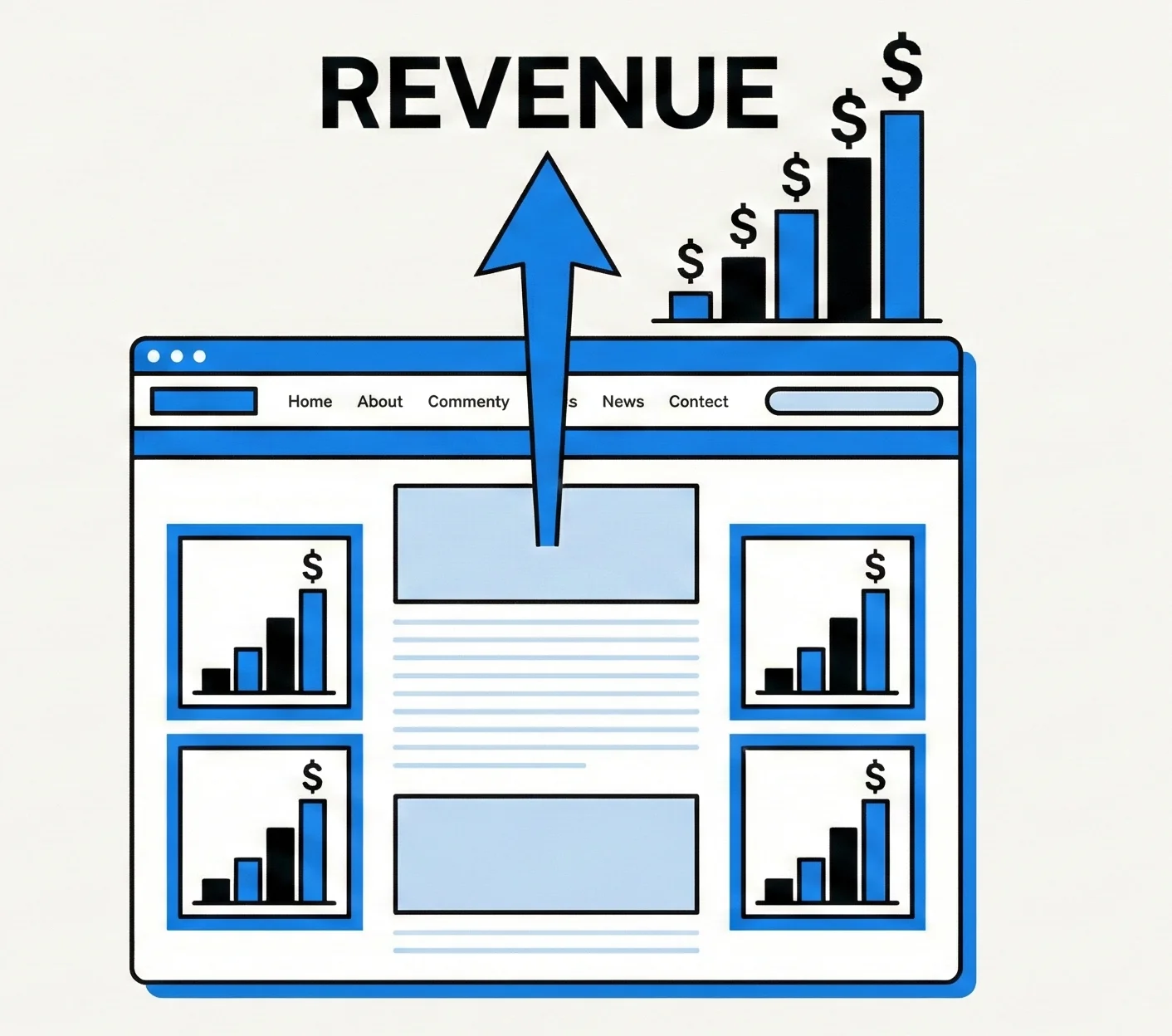
1. Revenue Maximization
By exposing inventory to competitive auctions among many buyers, publishers can often increase effective CPMs compared with selling exclusively through fixed-price networks or waterfalls. Techniques such as header bidding and yield optimization help publishers send impressions to the demand sources likely to pay the most.
- More buyers compete for each impression, often lifting prices.
- RTB can monetize both premium and remnant inventory.
- Publishers can set floor prices to avoid selling inventory below acceptable thresholds.
2. Efficiency and Automation
RTB and programmatic tools automate a large portion of the ad sales process, reducing reliance on manual operations and direct sales deals for every placement. This can be especially valuable for publishers with large volumes of inventory and diverse audiences.
- Automated auctions replace many manual negotiations.
- Inventory management becomes more data-driven.
- Smaller teams can manage complex yield strategies with the help of SSPs and analytics.
3. Demand Access and Fill Rates
RTB connects publishers to a global pool of advertisers and agencies, often improving fill rates and reducing unsold impressions. Publishers may work with multiple SSPs and exchanges, widening the funnel of potential bids for each impression.
- Access to many buyers increases the likelihood of finding demand for niche inventory.
- Multiple SSP and exchange connections can diversify revenue sources.
- Better fill rates can improve overall monetization.
4. Control and Transparency
SSPs and publisher tools offer controls over which buyers and creatives are allowed, as well as analytics on who is buying inventory and at what prices. Publishers can apply category blocks, advertiser restrictions, and quality filters to protect user experience and brand reputation.
- Publishers can block certain advertiser categories or domains.
- Reporting dashboards show top buyers and pricing trends.
- Brand safety and fraud solutions can be integrated into the supply stack.
Targeting Options in Real-Time Bidding
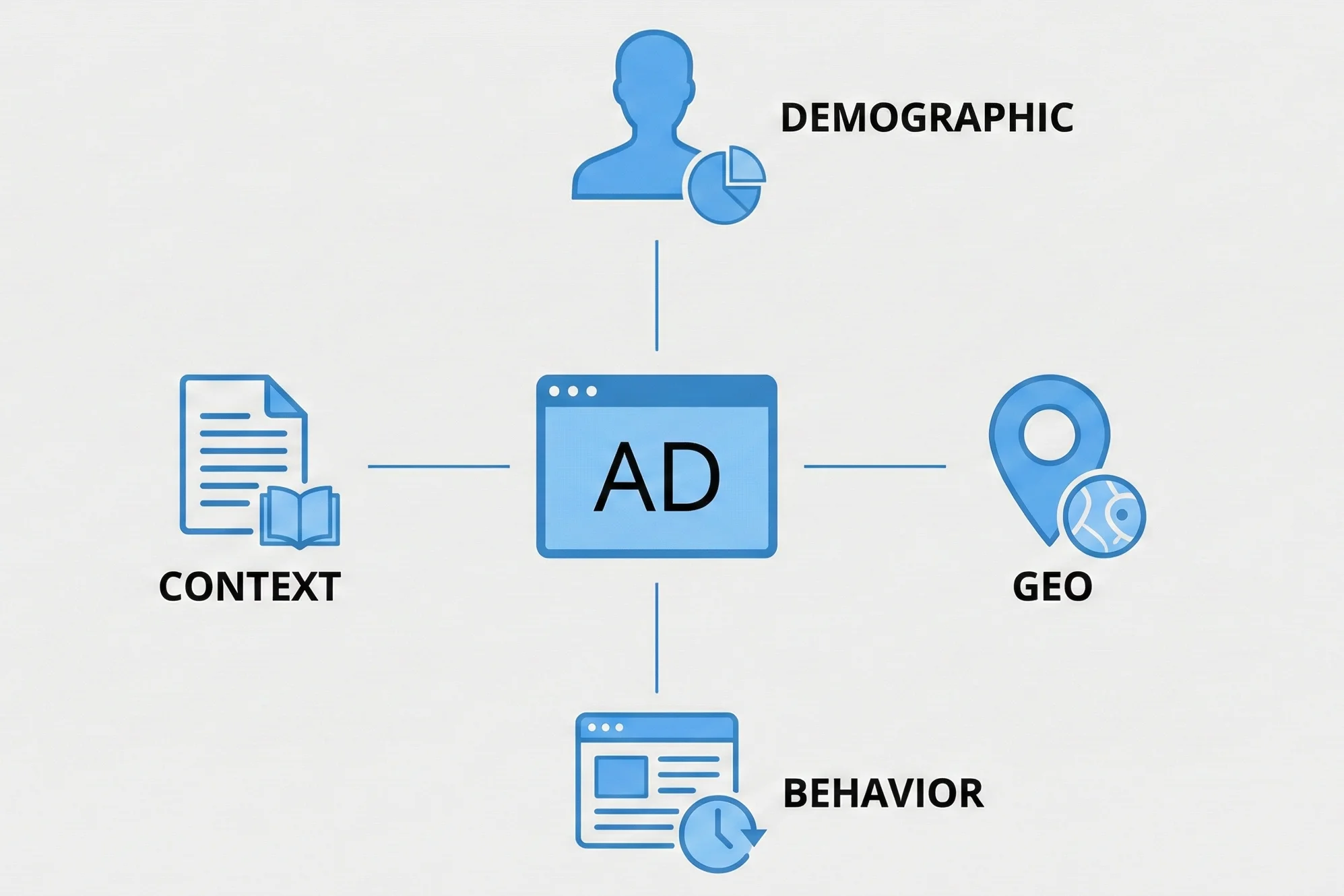
RTB is powerful largely because of the variety of targeting options available, which can be combined to create detailed audience strategies. The availability and granularity of these options depend on data sources, privacy constraints, and platform capabilities.
Demographic Targeting
Demographic targeting focuses on characteristics such as age ranges, gender, income brackets, and sometimes household composition, where such data is inferred or provided and permitted. This type of targeting helps align messaging with broad audience segments that share similar life stages or needs.
- Age and gender segments can be used for products with clear demographic skew.
- Income or inferred purchasing power segments may be used for luxury or high-ticket items.
- Accuracy depends on data quality and privacy-compliant data collection.
Behavioral Targeting
Behavioral targeting analyzes users’ online activities—such as browsing histories, past purchases, and app usage—to infer interests and intent. RTB systems can use behavioral segments to bid more for users who show signals of being in-market for certain products or categories.
- Past site visits, search patterns, and content engagement help infer interests.
- In-market segments identify users likely to be considering a purchase in a category.
- Behavioral data typically comes from first-party sources and privacy-compliant partners.
Contextual Targeting
Contextual targeting focuses on the content and context of the page or app where the ad is shown rather than on user history. This approach has gained renewed importance as privacy regulations and browser changes limit some forms of individual-level tracking.
- Ads are matched to topics, keywords, or categories of the page content.
- Contextual targeting can be combined with brand safety filters.
- It can perform well even without detailed user-level data.
Geographic Targeting
Geographic targeting uses location data derived from IP addresses, GPS (where allowed), or other signals to restrict or weight bids toward specific regions. This is critical for businesses that serve specific markets or have location-based offers.
- Targeting ranges from countries down to regions, cities, or postal codes.
- Radius-based targeting is often used for local businesses and stores.
- Advertisers can tailor creatives and offers to local conditions.
Device and Technical Targeting
Device and technical targeting focuses on factors such as device type, operating system, browser, and connection type. This is important both for creative compatibility and for performance optimization, especially in mobile-heavy or app-based campaigns.
- Ads can be targeted to desktop, mobile web, in-app, or connected TV environments.
- OS and browser targeting help ensure correct rendering and user experience.
- Connection speed can inform whether heavier formats like rich media or video are appropriate.
Retargeting and Remarketing
Retargeting uses first-party data about users who have previously interacted with a brand—such as site visitors or cart abandoners—and reaches them again through RTB impressions. These audiences often convert at higher rates because they are already familiar with the brand.
- Site retargeting reaches people who visited but did not convert.
- Cart abandonment campaigns focus on users who left items in a cart.
- Sequential messaging strategies can show different creatives over time.
Lookalike and Similar Audiences
Lookalike or similar audiences are generated by models that identify users whose behaviors and attributes resemble those of an advertiser’s best customers. RTB campaigns can use these audiences to scale acquisition beyond existing first-party lists while preserving similar characteristics.
- Seed audiences often come from converters or high-value customers.
- Algorithms find other users with similar patterns across broader datasets.
- Lookalike expansion can balance scale and relevance.
Challenges and Considerations in RTB
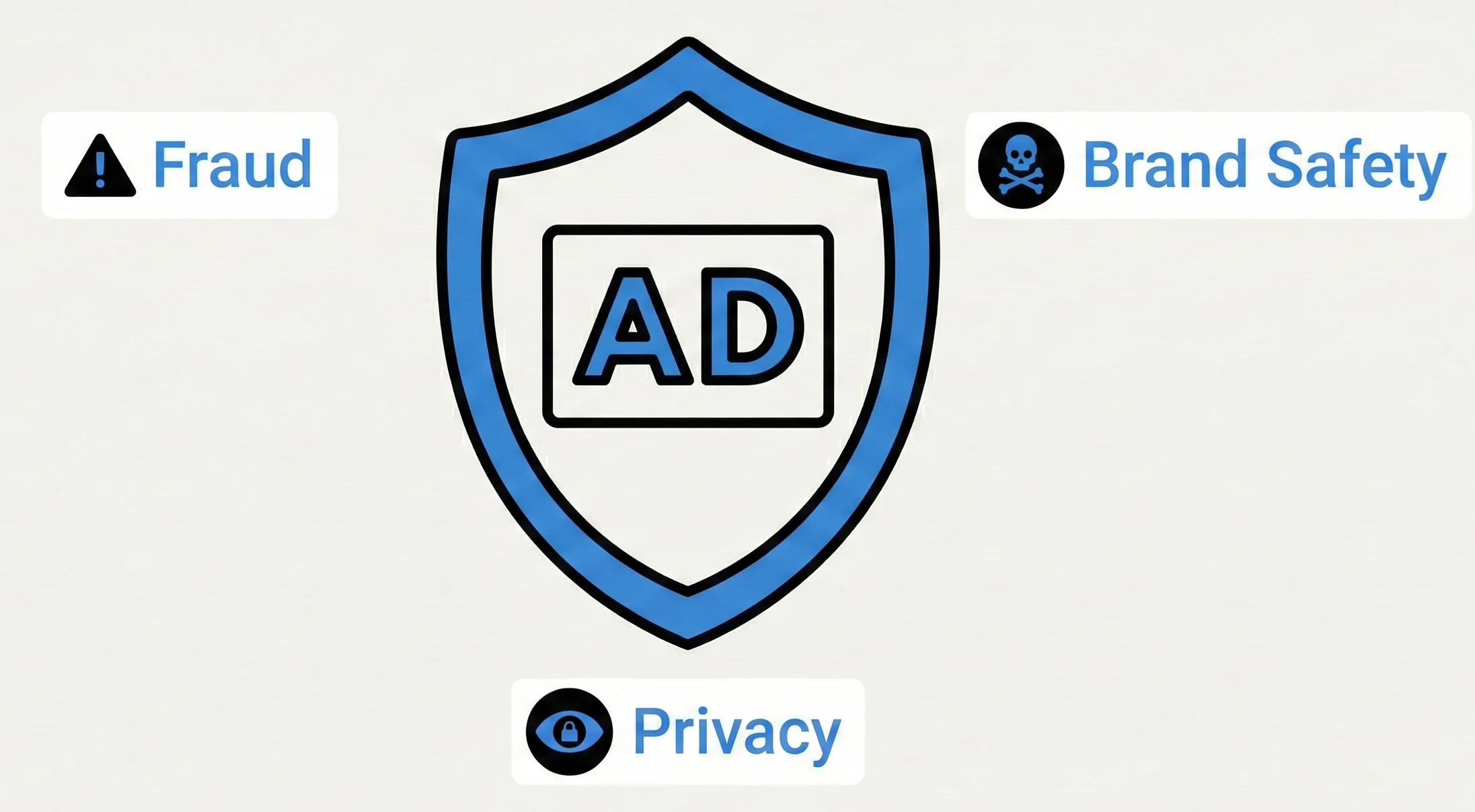
While RTB offers many benefits, it also introduces challenges around fraud, brand safety, privacy, and complexity that advertisers and publishers must address proactively.
Ad Fraud and Invalid Traffic
Ad fraud includes activities like bot traffic, fake sites, and falsified impressions that generate spend without real user engagement. Industry analyses commonly estimate global ad fraud losses in the tens of billions of dollars annually, highlighting the need for strong defenses.
- Forms of fraud include bots, domain spoofing, and manipulated metrics.
- Fraud can waste budgets and distort performance data.
- Mitigation tactics involve:
- Using verification and fraud detection vendors.
- Applying strict inventory and traffic source controls.
- Monitoring anomalies in performance metrics.
Brand Safety Concerns
Brand safety risks arise when ads appear next to content that is offensive, inappropriate, or misaligned with a brand’s values. Negative associations can harm brand perception, so many advertisers deploy robust brand safety controls in RTB environments.
- Concerns include hate speech, misinformation, explicit content, or violent material.
- Strategies to reduce risk include:
- Category and keyword exclusions.
- Domain and app blacklists.
- Working with verification vendors and using PMPs.
Data Privacy and Compliance
Laws such as the GDPR and CCPA define strict rules for collecting, sharing, and using personal data, affecting how RTB systems can operate. Browsers and platforms are also phasing out or limiting certain tracking technologies like third-party cookies, which changes how audience targeting is implemented.
- RTB participants must respect consent signals and data minimization principles.
- Privacy changes encourage more reliance on first-party data and contextual targeting.
- Compliance requires updates to data flows, contracts, and technology integrations.
Ad Viewability
Viewability measures whether an ad actually had the opportunity to be seen—for example, whether it appeared in the visible part of the screen for a minimum duration. Low viewability means advertisers may pay for impressions that users never realistically see.
- Industry bodies define minimum thresholds for viewable impressions.
- Advertisers and publishers use measurement tags to track viewability rates.
- Optimization involves prioritizing placements and formats with higher viewability.
Latency and Page Load Times
RTB adds extra network calls and decision steps during page loading, which can affect latency if not configured carefully. Poorly tuned setups, especially with many header bidding partners, can hurt user experience through slower load times.
- Timeouts are used to prevent slow bidders from delaying page rendering.
- Server-side header bidding can reduce client-side overhead.
- Publishers must balance revenue optimization with site performance.
Inventory Quality Variability
Open RTB marketplaces include inventory of varying quality, and not all impressions are equally valuable or safe. Buyers need robust filtering and whitelisting strategies to avoid low-quality or irrelevant placements.
- Some inventory may have low engagement or be associated with poor user experience.
- Buyers can use curated marketplaces, PMPs, and quality filters to manage this.
- Continuous monitoring of placement performance is necessary.
Complexity and Learning Curve
RTB involves technical concepts, multiple platforms, and continuous optimization, which can be challenging for teams new to programmatic buying. It demands skills in data analysis, measurement, and platform management in addition to creative strategy.
- Teams must learn DSP interfaces, reporting, and troubleshooting.
- Continuous changes in privacy, auction mechanics, and platform features require ongoing education.
- Many advertisers start with managed service or agency support to accelerate learning.
Best Practices for Real-Time Bidding Success
To get strong results from RTB, advertisers need clear goals, smart targeting, thoughtful creative, and disciplined optimization and controls. The following best practices help structure an effective approach.
1. Setting Up for Success
A solid RTB strategy starts with clearly defined objectives and metrics so that platforms and optimization logic can align with the right outcomes.
- Define primary goals, such as awareness (impressions, reach), engagement (clicks, viewable impressions), or conversions (leads, sales).
- Set measurable KPIs like CPM, CPC, CPA, or ROAS and align bid strategies accordingly.
- Choose DSPs that support needed inventory types, geographies, and integrations.
2. Targeting Strategy
Effective targeting balances precision with reach and avoids over-constraining campaigns to tiny, expensive audience segments.
- Start with a few core audience definitions rather than many small segments.
- Combine contextual, demographic, and behavioral targeting where appropriate.
- Expand into lookalike audiences and new segments after establishing performance baselines.
3. Creative Optimization
Ad creatives must align with audience intent and format constraints to perform well in RTB environments.
- Develop multiple variations per audience or product line to enable testing.
- Ensure that creatives are optimized for the devices and placements they will run on, especially mobile.
- Refresh creatives regularly to prevent fatigue and maintain engagement rates.
4. Bidding Strategy
Bidding strategies should reflect auction types, campaign goals, and tolerance for volatility.
- In first-price environments, use bid shading tools or algorithms to avoid overpaying.
- Start with conservative bids and adjust upward in segments that show strong performance.
- Use automated bidding strategies when available and validated, especially for conversion-focused campaigns.
5. Campaign Management
RTB campaigns benefit from consistent monitoring and incremental optimization rather than set-and-forget approaches.
- Track key metrics at the segment level (by placement, audience, device, and creative).
- Pause or adjust segments that underperform on cost or quality thresholds.
- Use frequency caps and dayparting to manage user experience and budget pacing.
6. Brand Safety and Quality Control
Maintaining brand safety and inventory quality is essential in open RTB environments.
- Apply domain and app blocklists and, where feasible, whitelists of trusted partners.
- Use third-party verification tools for brand safety, fraud detection, and viewability measurement.
- Consider PMPs and curated marketplaces for sensitive campaigns and high-profile brands.
7. Measurement and Attribution
Accurate measurement and thoughtful attribution help determine the true value of RTB channels in the broader marketing mix.
- Implement tracking for conversions and post-view events where supported and compliant.
- Use multi-touch attribution models or data-driven approaches instead of relying solely on last-click metrics.
- Compare performance across channels and formats to guide budget shifts.
8. Continuous Learning and Optimization
RTB is a dynamic space, and long-term success depends on continuous learning and adaptation.
- Regularly review campaign reports for insights about audiences, creatives, and placements.
- Test new formats, targeting approaches, and bid strategies in controlled experiments.
- Stay informed on industry updates regarding privacy, identity, and auction changes through trusted sources and standards bodies.
Getting Started with Real-Time Bidding
For organizations new to RTB, the most effective path often involves starting small, choosing the right partners, and building processes for measurement and optimization.
Choosing a DSP Platform
Selecting a DSP is a foundational decision because it dictates inventory access, targeting options, and workflow.
- Evaluate DSPs based on:
- Inventory coverage (web, in-app, CTV, geographic reach).
- Targeting and data integrations.
- Reporting depth and usability.
- Support options (self-serve vs. managed service).
- Consider minimum spend requirements and platform fees that may affect smaller budgets.
Setting Your First Campaign
A first RTB campaign should be structured to learn while managing risk.
- Start with a clearly defined goal and a modest but meaningful test budget.
- Use a limited number of audience segments and creatives to keep analysis manageable.
- Ensure tracking for key conversions is set up correctly before launch.
Monitoring and Optimization
Once live, RTB campaigns should be monitored closely, especially in the early stages.
- Review placement, audience, and creative performance regularly.
- Adjust bids, budgets, and exclusions to move spend toward strong performers.
- Watch for anomalies that may indicate fraud, misconfigured targeting, or tracking issues.
Working with Experts
Many advertisers choose to work with agencies, consultancies, or managed-service offerings when first implementing RTB.
- Specialists can help navigate platform complexity, integrate data sources, and design tests.
- Over time, some organizations move more programmatic operations in-house as capabilities grow.
- Training and certification programs from platforms and industry bodies support skill-building.
Frequently Asked Questions (FAQs)
This section addresses common questions that often arise when organizations consider or begin using RTB.
1. How much does RTB advertising cost?
RTB costs vary widely depending on targeting, inventory quality, and competition, with CPMs ranging from low single digits for broad, lower-tier inventory to higher levels for premium placements and narrow segments. Advertisers can control total spend by setting daily and campaign-level budgets in their DSP.
2. Is RTB suitable for small businesses?
RTB can be used by small businesses, especially through platforms that offer low minimum spends or managed options, but the learning curve and setup effort may be more significant than simpler self-serve ad channels. Small advertisers often focus on tightly targeted local or remarketing campaigns to make budgets work efficiently.
3. How is RTB different from Google Ads?
Google’s advertising tools provide several buying options, including search ads and display placements, some of which use programmatic and RTB mechanisms behind the scenes. RTB as a general concept refers to the auction model used across many exchanges and DSPs, whereas a specific platform like Google Ads is just one environment and includes inventory and formats beyond RTB display.
4. What types of ads can be run through RTB?
RTB can support standard display banners, rich media, native formats, and video ads, depending on the DSP and exchanges used. Connected TV and audio inventory are also increasingly accessible through RTB-based programmatic channels.
5. How do I prevent ad fraud in RTB campaigns?
Mitigating fraud requires combining verification tools, supply controls, and monitoring.
- Work with DSPs and verification vendors that provide fraud detection and filtering.
- Use curated marketplaces, PMPs, and whitelists when appropriate.
- Monitor metrics for unusual patterns such as abnormal click-through rates or conversion anomalies.
6. Can I control where my ads appear?
Advertisers can influence placements through domain and app blocklists, contextual filters, and whitelists of preferred publishers. Brand safety settings and PMPs further increase control, though open auctions inherently involve some variability.
7. What is the difference between RTB and header bidding?
RTB describes the auction-based method of buying impressions, whereas header bidding is a publisher-side technique to solicit bids from multiple demand sources before calling the ad server. Header bidding often uses RTB auctions inside each participating SSP or exchange but focuses on improving competition and yield for the publisher.
8. How quickly can I launch an RTB campaign?
Once a DSP account is set up and tracking is implemented, campaigns can often be launched in days rather than weeks. However, time is still needed for creative approvals, data integrations, and initial optimization before performance stabilizes.
Conclusion
RTB enables advertisers and publishers to transact on individual impressions in real time, using data to determine value and automate buying and selling at scale. By understanding the ecosystem players, auction mechanics, targeting options, and associated challenges, organizations can use RTB to reach more relevant audiences, improve efficiency, and support sustainable revenue and growth.

Passionate about blogging and focused on elevating brand visibility through strategic SEO and digital marketing. Always tuned in to the latest trends, I’m dedicated to maximizing engagement and delivering measurable ROI in the dynamic world of digital marketing. Let’s connect and unlock new opportunities together!