


Choosing between Facebook Ads and LinkedIn Ads comes down to goals, audience, and budget—Facebook excels in cost-efficient reach, while LinkedIn shines for high-intent B2B leads and decision-maker access. Both can work together: use Facebook for scale and retargeting, and LinkedIn for qualified lead capture and sales activation.
Marketers often face a tough decision: invest in Meta’s massive reach or pay a premium to reach professionals on LinkedIn. The smartest choice depends on who needs to be reached, what the sales cycle looks like, and how much can be spent to acquire a customer. This guide breaks down targeting, costs, formats, performance, and practical decision rules so campaigns get set up on the right platform with a strategy that actually converts.
Platform overview
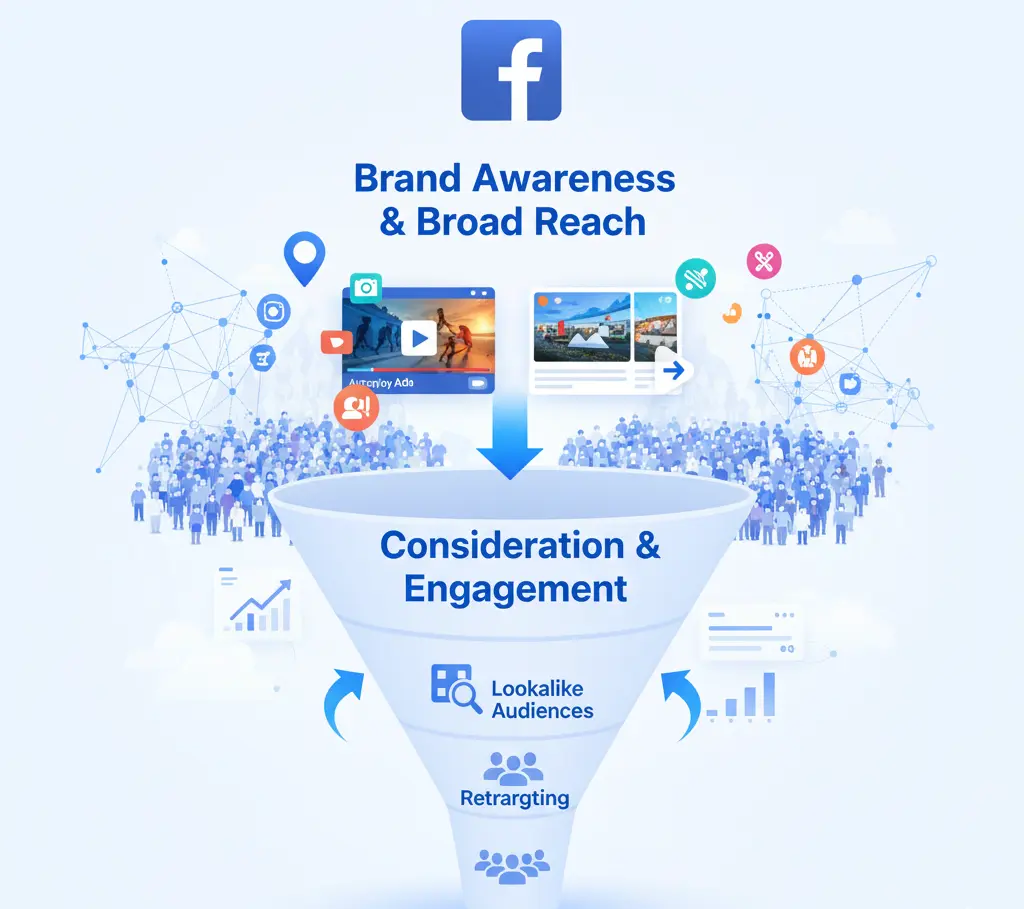
- Facebook Ads: Built for consumer attention at scale with deep reach across demographics, rich creative formats, and advanced automation. Ideal for awareness, e‑commerce, and full-funnel prospecting and retargeting.
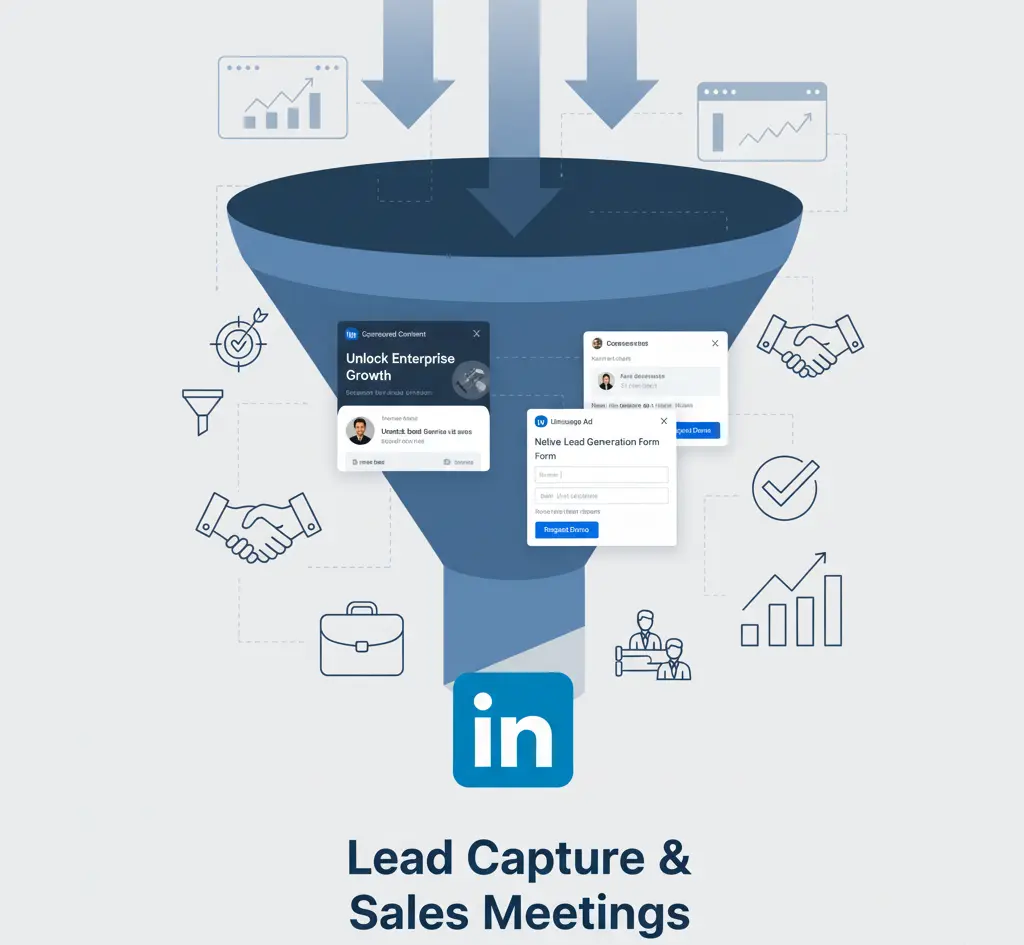
- LinkedIn Ads: Purpose-built for professional audiences with unmatched job, company, and industry targeting. Ideal for B2B, high-ticket services, recruiting, and ABM-style programs.
Audience targeting capabilities
Facebook targeting (2025)
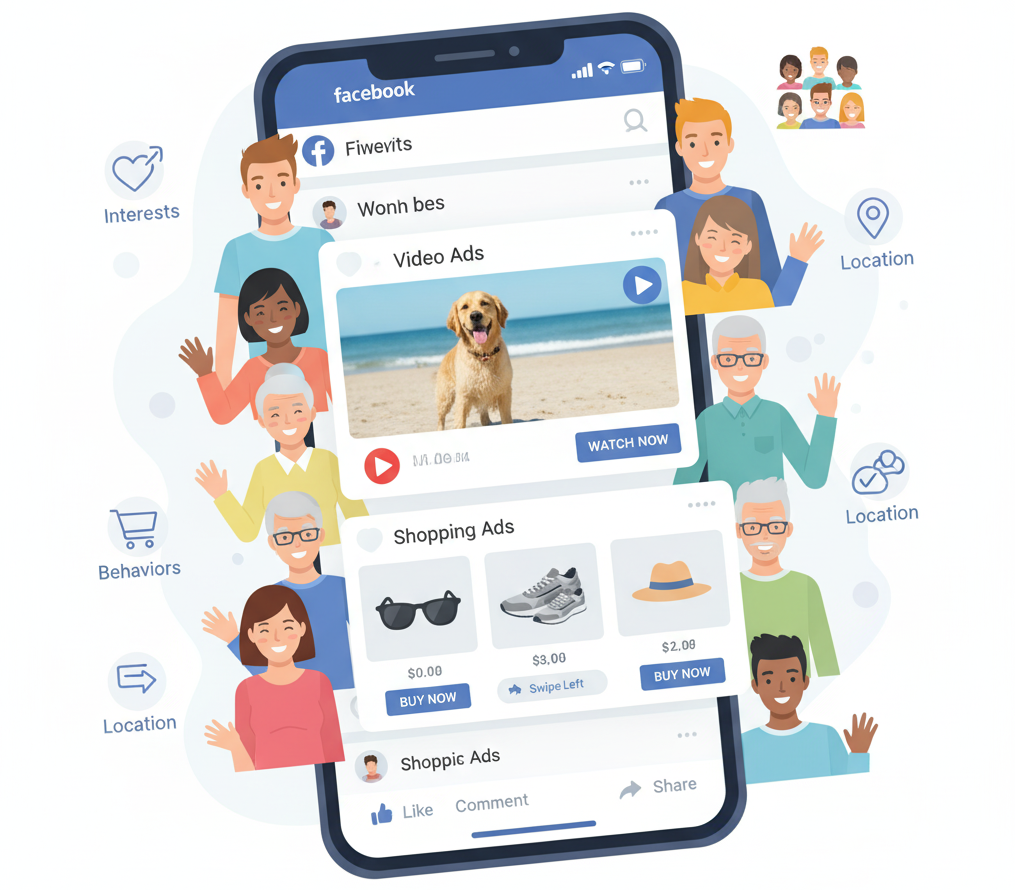
- Demographics: age, gender, location, language, relationship, education.
- Interests and behaviors: content engagement, shopping behavior, device use, life events.
- Custom and lookalike audiences: CRM lists, website/app users, high-signal similarity expansion.
- Automation: Advantage+ audiences, campaign budget optimization, and broad targeting for scale.
What it’s best for:
- Broad-market prospecting.
- Lower CPA at volume with creative-led differentiation.
- Fast learning cycles and iterative testing.
LinkedIn targeting (2025)
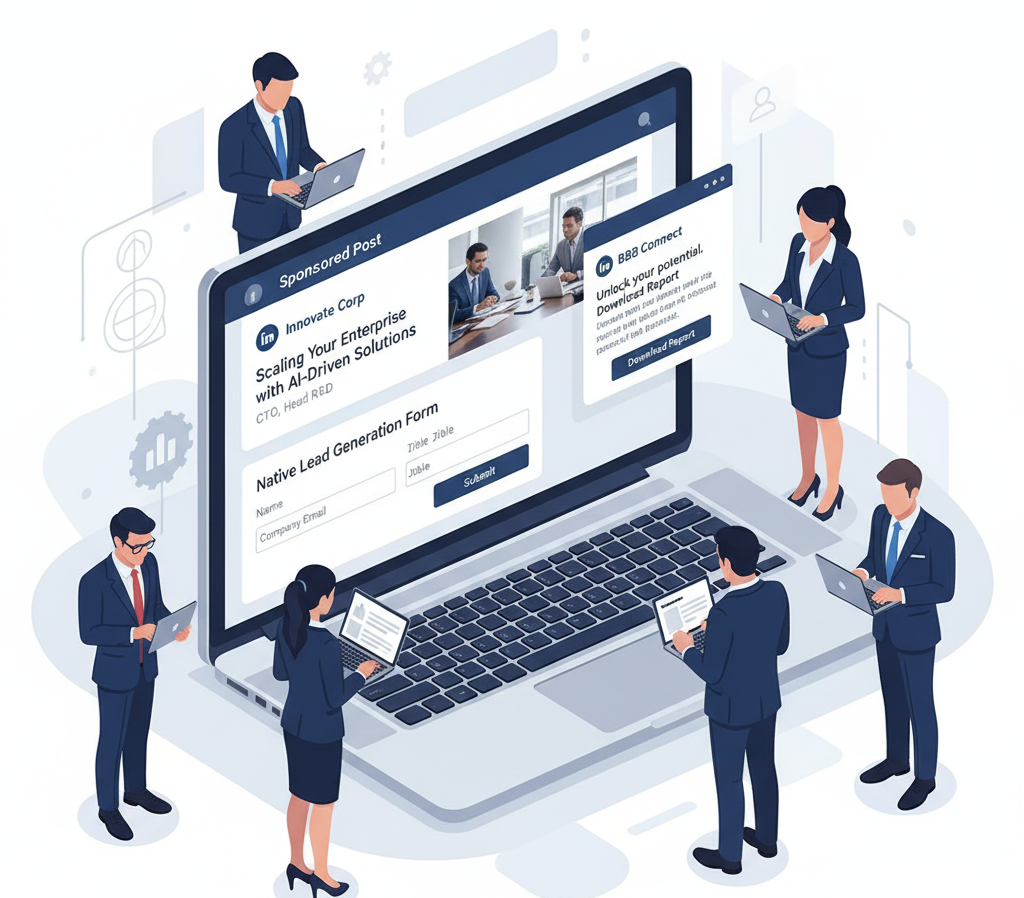
- Professional attributes: job title, seniority, function, skills, industry.
- Company data: company name, employee count, growth, and sector.
- Education and groups: schools, fields of study, member groups, interests.
- Geographic targeting aligned to commercial hubs and territories.
What it’s best for:
- Decision-maker access in specific industries and account lists.
- Complex B2B motions and recruiting.
- ABM and pipeline acceleration.
Cost analysis and budget considerations
Facebook Ads pricing (typical ranges)
- CPC: often under $1–$2 with optimized campaigns in many verticals.
- CPM: generally lower than LinkedIn, enabling efficient awareness and retargeting.
- Budget flexibility: low daily minimums and easy scaling for tests.
Cost drivers:
- Audience competition, ad relevance/quality, industry CPM norms, creative strength, and placement mix.
LinkedIn Ads pricing (typical ranges)
- CPC: commonly $4–$10+ depending on seniority and niche targeting.
- CPM: higher than Facebook given professional context and intent.
- Budget requirements: higher effective spend needed to exit learning and reach statistical significance.
Cost drivers:
- Seniority and company size filters, narrow ICP definitions, message format bids, and relevance diagnostics.
ROI reality:
- Facebook tends to deliver lower CPL/CPA at scale; LinkedIn often delivers fewer but more qualified leads that convert to higher LTV. For B2B, total acquisition cost can be lower on LinkedIn when deal sizes are large and pipeline quality matters more than raw lead volume.
Ad formats and creative options
Facebook formats
- Core: image, video, carousel.
- Commerce: collection, catalog/dynamic product ads.
- Engagement: stories, reels, polls, lead ads, Messenger/Click-to-Message.
- Experiences: Instant Experience (immersive) and Advantage+ catalog.
Strengths:
- Rich creative canvas, short-form video, and algorithmic delivery tuned for engagement and lower-funnel actions.
LinkedIn formats
- Sponsored Content: single image, video, carousel, document.
- Lead Gen Forms: native forms with profile prefill for high-intent capture.
- Sponsored Messaging: Message Ads and Conversation Ads for targeted outreach.
- Text and Dynamic Ads: right-rail text, follower, and spotlight ads.
- Thought Leader Ads: promote posts from executives/SMEs to build authority.
Strengths:
- Native lead capture, professional context, and content formats aligned to B2B education and trust-building.
Pros and cons
Facebook Ads pros
- Cost-efficient reach and rapid testing.
- Powerful retargeting and lookalikes.
- Extensive creative formats, especially short-form video.
- Strong for e‑commerce, apps, local, and B2C services.
Facebook Ads cons
- Lower average lead quality for B2B vs LinkedIn.
- Professional attribute targeting is indirect versus LinkedIn’s.
- Creative fatigue and auction volatility in competitive niches.
LinkedIn Ads pros
- Direct reach to decision-makers and ICPs.
- Native Lead Gen Forms reduce friction and improve lead quality.
- Supports ABM, recruiting, and complex-sales content journeys.
- Higher trust and context for professional content.
LinkedIn Ads cons
- Higher CPC/CPM and generally higher CPL.
- Fewer immersive creative options than Meta.
- Requires careful audience design to avoid overspend.
Performance metrics and success rates
Track platform-specific metrics and optimize by funnel stage:
- Facebook: CPM, CTR, CPC, view-through rate, add-to-cart, initiate checkout, purchase, ROAS, MER.
- LinkedIn: CTR, CPC, form fill rate, MQL/SQL rate, meeting booked, pipeline created, win rate, CAC:LTV.
Benchmarks to watch:
- Facebook CTRs can vary widely by creative; strong hooks and vertical video outperform.
- LinkedIn CTRs are often lower but yield higher meeting rates and pipeline per lead in B2B.
- Expect higher CPL on LinkedIn but better MQL→SQL conversion when targeting senior roles.
Also Check: 7 Reasons Your Facebook Ads Don’t Convert
Decision framework: when to choose each
Choose Facebook Ads when:
- Selling to consumers or prosumers with visual demand capture.
- Budgets are limited and learning needs to be fast and affordable.
- Goals include top-of-funnel awareness, e‑commerce sales, app installs, or broad lead gen.
- A creative-led testing culture is in place to iterate quickly.
Choose LinkedIn Ads when:
- Selling to defined B2B ICPs with seniority requirements.
- Deal sizes are high and pipeline quality is crucial.
- Goals include lead generation for sales, event/ webinar promotion, or recruiting.
- ABM motions involve specific account lists and buying committees.
Hybrid strategy:
- Use Facebook for broad reach, education, and retargeting based on content engagement.
- Use LinkedIn for bottom-funnel offers, native lead forms, and account targeting.
- Sync creative narratives so LinkedIn references proof points earned through Facebook engagement, and vice versa. To execute this effectively, many companies collaborate with a B2B Meta Ads agency, ensuring that audience data, retargeting logic, and messaging consistency are aligned across both platforms. This helps bridge performance gaps between awareness and conversion stages.
Best practices and optimization tips
Facebook best practices
- Creative: Mobile-first, 1:1 and 9:16 video variants, strong hooks in first 2–3 seconds, captions-on.
- Targeting: Start broad with Advantage+ and constrain via creative relevance and exclusions; layer retargeting from site and engagement.
- Testing: Rotate new creatives weekly in competitive niches; test messaging angles, offers, and CTAs systematically.
- Measurement: Tie pixel events to revenue; use blended metrics (MER) and incrementality tests where possible.
LinkedIn best practices
- Targeting: Start with job functions/titles + company size + industry; avoid over-narrowing early.
- Offers: Use high-intent assets—case studies, ROI calculators, comparison guides, and event registrations.
- Lead Gen Forms: Keep fields minimal; sync to CRM; implement fast speed-to-lead SLAs and lead scoring.
- Sequencing: Warm audiences with Sponsored Content, then deploy Message/Conversation Ads to prompt meetings or demos.
Future trends and evolution
- Facebook/Meta: More automation (Advantage+), creative diversification (short-form video, templates), and first-party signal emphasis. Expect continued improvements in targeting efficacy with broader inputs and better creative matching.
- LinkedIn: Deeper AI enhancements to matching and optimization, more video and thought leadership surfaces, and stronger ABM integrations. Expect continued premium pricing tied to decision-maker access and professional data.
Conclusion
If the goal is efficient scale and fast iteration, Facebook Ads typically deliver the best cost-performance and learning velocity. If the goal is B2B pipeline quality and decision-maker penetration, LinkedIn Ads usually produce higher-value outcomes, even at a higher CPL. The most resilient strategy combines both: build and educate large audiences on Facebook, then convert qualified segments on LinkedIn with precise offers and native lead capture.
FAQs
1) Which platform is better for B2B lead generation?
LinkedIn is generally better for B2B lead generation because it offers precise professional targeting by job title, seniority, industry, and company size, reaching decision-makers directly. Facebook can still drive B2B results at lower cost when paired with strong retargeting and content funnels.
2) Which platform offers lower cost-per-click (CPC)?
Facebook typically delivers a lower CPC than LinkedIn, making it more budget-friendly for awareness, traffic, and high-volume testing. LinkedIn’s CPC is higher but often offsets with higher lead quality for enterprise and high-ACV products.
3) Is LinkedIn worth the premium pricing?
Yes—when the goal is quality over quantity, such as reaching executives in a defined ICP for complex B2B sales. If average deal size and LTV are high, LinkedIn’s higher CPL can still produce lower CAC.
4) Can Facebook Ads work for B2B?
Absolutely. Use Facebook to build audiences cost-effectively with content (videos, case studies), then retarget engaged users with lead magnets or demo offers. Results improve by syncing CRM audiences and using exclusion logic.
5) Which platform has better targeting options?
“Better” depends on the goal. Facebook excels in scale with demographic, interest, behavior, and pixel-based audiences. LinkedIn excels in precision with job title, function, seniority, skills, company size, and industry.
6) What ad formats perform best on each platform?
- Facebook: Short-form video, reels, carousel, and lead ads often perform well for TOFU/MOFU.
- LinkedIn: Sponsored Content with native Lead Gen Forms, document ads (e.g., case studies), and Conversation Ads work well for BOFU in B2B.
7) How should budgets be split between Facebook and LinkedIn?
A common starting point: 60% to Facebook (awareness + retargeting) and 40% to LinkedIn (lead capture + meetings). Adjust split based on CAC, pipeline created, MQL→SQL rates, and win rates.
8) What common mistakes should be avoided?
- Judging channels by CPC alone.
- Over-narrowing LinkedIn audiences too early.
- Under-investing in creative iteration on Facebook.
- Ignoring post-click experience: slow follow-ups, weak landing pages, and unclear offers.
9) What offers convert best on each platform?
- Facebook: Educational videos, product demos, limited-time promos, and value-focused lead magnets work well, especially with retargeting.
- LinkedIn: Case studies, whitepapers, comparison guides, event/webinar registrations, and demo/consultation offers tailored to ICP pain points.

Passionate about blogging and focused on elevating brand visibility through strategic SEO and digital marketing. Always tuned in to the latest trends, I’m dedicated to maximizing engagement and delivering measurable ROI in the dynamic world of digital marketing. Let’s connect and unlock new opportunities together!