


In digital marketing, attracting visitors to your website is only the first step. The real challenge is turning those visitors into customers. Studies across the marketing industry consistently show that most users do not convert during their first visit to a website. People often browse, compare options, or leave before making a decision. This behavior makes it difficult for businesses to achieve consistent conversions using only first-time traffic.

Remarketing helps solve this problem. It allows businesses to reconnect with users who have already interacted with their website, app, or brand. Instead of losing potential customers after their first visit, remarketing gives marketers another chance to engage them with relevant advertisements or messages.
In today’s digital environment, where competition is high and attention spans are short, remarketing has become a core strategy for many online businesses. It helps brands stay visible, guide users through the buying process, and increase the chances of conversions. This guide explains what remarketing is, how it works, why it is important, and how businesses can use it effectively in 2026.
What Is Remarketing?
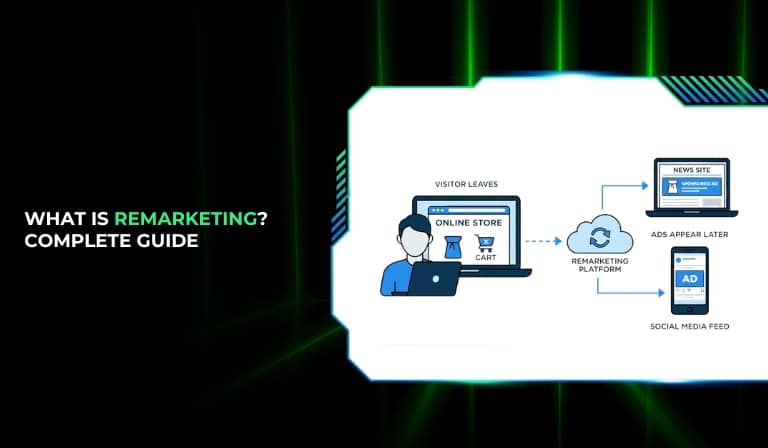
Remarketing is a digital advertising strategy that targets users who have previously interacted with a website, mobile app, or online content. Instead of reaching completely new audiences, remarketing focuses on people who already know about the brand. These users may have visited a product page, explored a service, watched a video, or added items to a shopping cart but did not complete a purchase.
By using tracking technologies such as cookies or pixels, marketers can identify these users and show them relevant advertisements across different platforms. These ads remind users about the brand and encourage them to return to the website.
Remarketing is important because users who have already shown interest in a product or service are more likely to convert compared to completely new visitors. Businesses use remarketing to increase conversions, improve return on advertising spend, and strengthen brand recall.
A simple example of remarketing is when a user visits an online store to look at shoes but leaves without buying. Later, while browsing other websites or social media platforms, the user sees ads showing the same shoes they previously viewed. This reminder may encourage them to return and complete the purchase.
Is Remarketing Used for Potential or Existing Customers?
Remarketing can be used for both potential customers and existing customers. The messaging and strategy may differ depending on the audience.
For potential customers, remarketing focuses on encouraging users to complete an action they previously started. This may include reminding users about products they viewed, offering discounts for abandoned carts, or highlighting key benefits of a service.
For existing customers, remarketing can promote repeat purchases, upgrades, or additional services. Businesses often use remarketing to inform customers about new product releases, special offers, or related products that match their previous purchases.
Because these audiences have different needs, marketers often create separate campaigns with customized messages for each group.
Remarketing vs Retargeting: What’s the Difference?
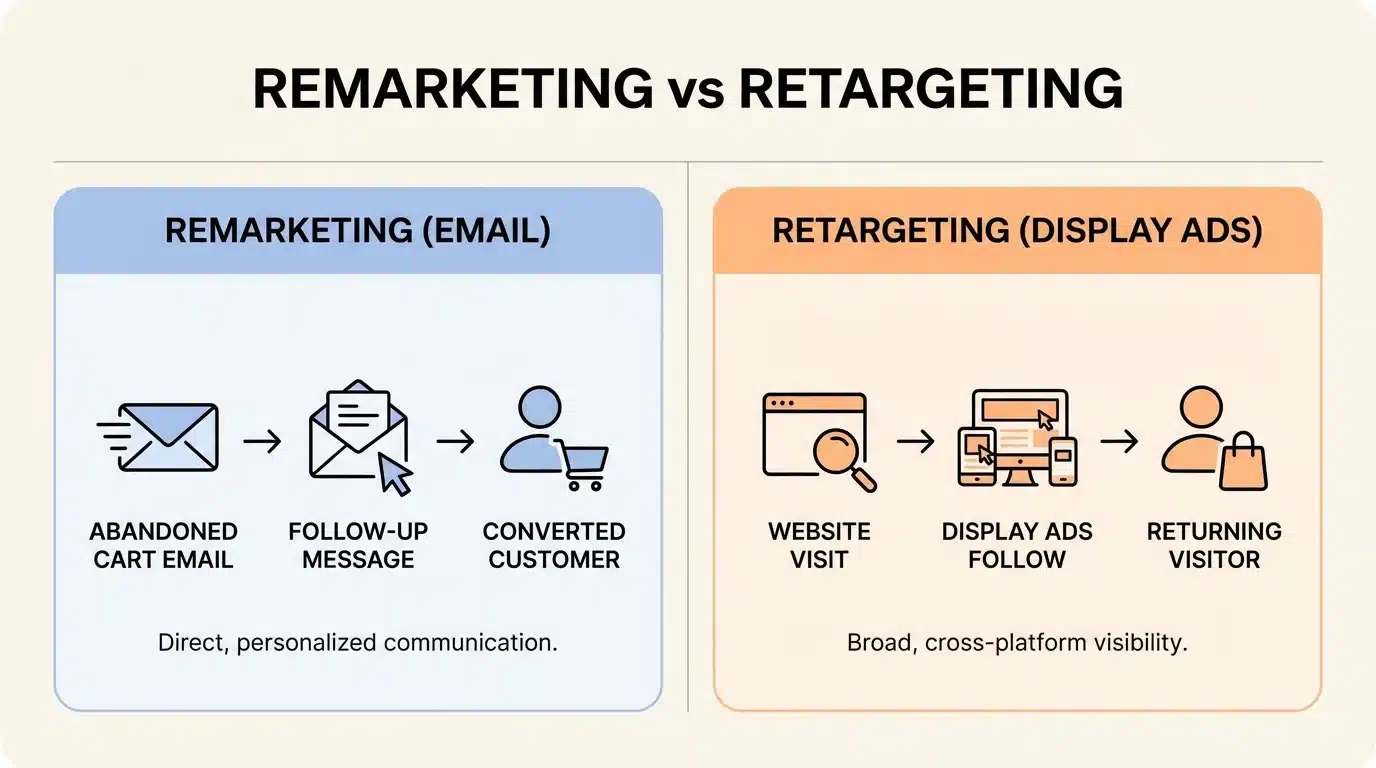
Remarketing and retargeting are often used interchangeably in digital marketing conversations, but they originally referred to slightly different concepts.
Retargeting traditionally referred to advertising campaigns that target users based on their previous online behavior. These campaigns typically rely on cookies or tracking pixels to show ads to users who visited a website but did not complete a specific action.
Remarketing originally referred to re-engaging customers through email marketing or other direct communication methods. For example, a business might send reminder emails to users who abandoned their shopping carts.
Today, most marketing platforms and professionals use the terms remarketing and retargeting to describe the same general strategy of reconnecting with previous visitors. The goal of both approaches is to bring interested users back and encourage them to take the next step in the customer journey.
How Remarketing Works

Tracking User Behavior
Remarketing begins with tracking user behavior on a website or application. This is usually done by placing a small piece of code called a tracking pixel or tag on web pages. When a user visits the site, the tag records information about the visit, such as the pages viewed or actions taken.
This data helps identify users who have interacted with specific content, allowing marketers to build remarketing audiences.
Collecting First-Party Data
First-party data refers to information that businesses collect directly from their own users. This data is becoming increasingly important as privacy regulations and browser changes limit third-party tracking.
Types of first-party data used in remarketing include:
- Website browsing behavior
- Email subscription lists
- Customer relationship management (CRM) data
- Mobile app interactions
Using first-party data allows businesses to create more accurate and relevant audience segments.
Creating Remarketing Lists
After collecting data, marketers create remarketing lists. These lists group users based on specific actions or behaviors. For example, a business may create lists for users who visited a product page, users who abandoned a cart, or users who completed a purchase.
Audience segmentation helps marketers deliver more relevant advertisements to different groups of users.
Showing Targeted Ads
Once remarketing lists are created, advertising platforms display targeted ads to those audiences. These ads can appear on websites, search engines, social media platforms, or mobile applications.
The messaging and creative elements are usually tailored to match the user’s previous interaction with the brand.
Driving Users Back to Your Website
The final goal of remarketing is to bring users back to the website and encourage them to complete a desired action. This may include making a purchase, filling out a form, signing up for a service, or downloading an application.
Because remarketing targets users who already know the brand, these campaigns often produce higher engagement and conversion rates compared to campaigns targeting new audiences.
The Impact of Privacy Changes on Remarketing
Digital privacy regulations and browser changes have significantly influenced how remarketing works. Many browsers now limit or block third-party cookies, which were traditionally used for tracking user behavior across websites.
Regulations such as data protection laws require businesses to obtain user consent before collecting or using personal data. These rules aim to protect user privacy and give individuals more control over how their data is used.
As a result, many marketers are shifting their focus toward first-party data. Instead of relying on external tracking, businesses collect information directly from users through website interactions, email subscriptions, and customer accounts.
In addition, new advertising technologies are being developed to support privacy-friendly targeting methods. These solutions aim to deliver relevant advertising while respecting user privacy preferences.
Types of Remarketing Campaigns
Standard Display Remarketing
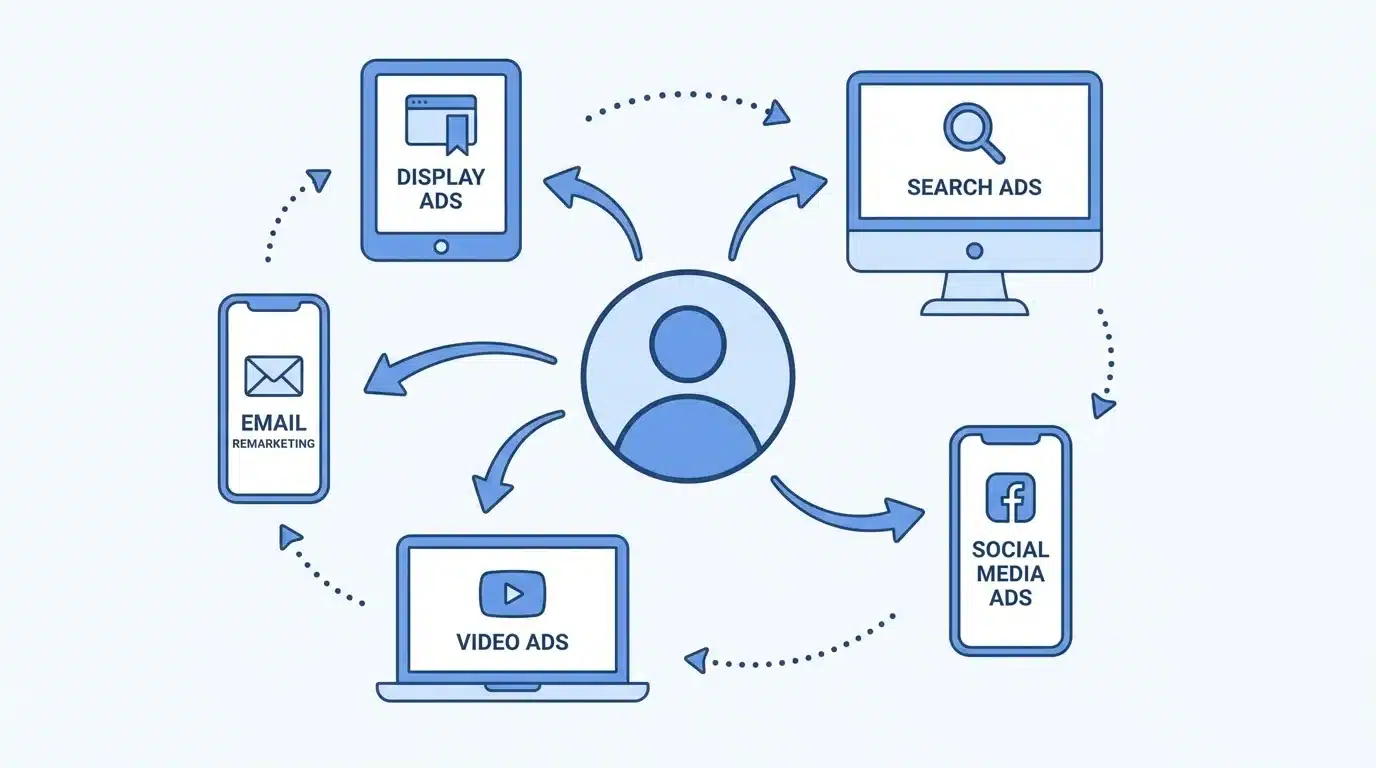
Standard display remarketing shows advertisements to users who previously visited a website while they browse other sites in an advertising network. These ads usually remind users about the brand or product they previously explored.
Dynamic Remarketing
Dynamic remarketing shows personalized ads that display specific products or services that a user viewed on a website. For example, if a user looked at a particular product in an online store, the ad may show the same product with updated pricing or offers.
Search Remarketing (RLSA)
Remarketing Lists for Search Ads allow businesses to target previous website visitors when they perform searches on search engines. This strategy helps marketers adjust bids, show customized ads, or target specific keywords for returning users.
Social Media Remarketing
Social media remarketing targets users who interacted with a brand’s website or content and shows them ads on social media platforms. These ads can appear in feeds, stories, or other placements within social networks.
Video Remarketing
Video remarketing focuses on users who watched or interacted with video content. Businesses can show ads to people who watched specific videos or engaged with video campaigns.
Email Remarketing
Email remarketing involves sending targeted messages to users who previously interacted with a brand. These emails may remind users about abandoned carts, promote special offers, or suggest related products.
Remarketing Audience Segments

Website Visitors Who Didn’t Convert
These users visited the website but left without completing any meaningful action. Remarketing campaigns for this audience often focus on reminding them about the brand or highlighting benefits.
Product Viewers
Product viewers are users who visited specific product pages. Ads shown to this group often highlight the same product or similar items.
Cart Abandoners
Cart abandoners added products to their shopping cart but did not complete the purchase. Remarketing campaigns for this audience often include reminders or limited-time offers.
Returning Visitors
Returning visitors have visited the website multiple times. These users may be closer to making a decision, making them valuable targets for remarketing campaigns.
Existing Customers
Existing customers have already purchased from the business. Remarketing can encourage repeat purchases or introduce related products.
Social Media Engagers
These users interacted with a brand’s social media content, such as liking posts or watching videos.
Video Viewers
Video viewers watched or engaged with marketing videos. Remarketing campaigns can show them additional content or offers related to what they previously watched.
Audience segmentation improves campaign performance because ads become more relevant to each group.
Why Remarketing Is Important in Digital Marketing
Re-engage Lost Visitors
Remarketing allows businesses to reconnect with visitors who left without converting.
Increase Conversion Rates
Users who already know a brand are more likely to take action compared to new visitors.
Improve Brand Recall
Repeated exposure to brand messages helps users remember the brand when making purchasing decisions.
Lower Cost Per Acquisition (CPA)
Remarketing campaigns often achieve conversions at a lower cost because they target users who already showed interest.
Improve Customer Lifetime Value
Remarketing helps maintain long-term relationships with customers by encouraging repeat purchases.
Stay Ahead of Competitors
By maintaining visibility across multiple platforms, businesses can keep potential customers from choosing competing brands.
Where You Can Run Remarketing Campaigns
Google Ads
Google Ads supports remarketing through multiple networks.
- Display Network campaigns targeting website visitors
- Search remarketing lists that adjust bids for returning users
- YouTube remarketing targeting video viewers
Meta Ads (Facebook and Instagram)
Meta advertising platforms allow businesses to create custom audiences based on website visits, app activity, or engagement.
- Custom audiences based on user behavior
- Dynamic ads showing products previously viewed
LinkedIn Ads
LinkedIn remarketing is often used for B2B marketing.
- Targeting website visitors
- Re-engaging professional audiences
Other Platforms
Many other advertising platforms offer remarketing features.
- TikTok advertising campaigns
- Amazon advertising for eCommerce products
- Snapchat advertising campaigns
- Programmatic advertising networks
Using multiple platforms allows businesses to reach users across different digital environments.
How Much Does Remarketing Cost?
Cost-Per-Click (CPC)
CPC refers to the amount advertisers pay each time someone clicks on their ad. Remarketing campaigns often have competitive CPC rates because the audience is already familiar with the brand.
Cost-Per-Thousand Impressions (CPM)
CPM measures the cost of displaying ads one thousand times. This pricing model is commonly used for display remarketing campaigns focused on visibility and brand awareness.
Cost-Per-Acquisition (CPA)
CPA represents the cost required to generate a specific action, such as a purchase or lead submission. Many businesses use CPA to measure the efficiency of remarketing campaigns.
Budget Tips for Remarketing Campaigns
- Start with smaller audience segments
- Adjust bids based on performance data
- Allocate budget across multiple platforms to reach users in different environments
How to Set Up a Remarketing Campaign
Step 1: Install Tracking Pixels
Tracking pixels or tags must be added to the website to collect visitor data.
Step 2: Build Audience Lists
Audience lists are created based on user behavior and interactions.
Step 3: Segment Users Based on Behavior
Users are grouped into categories such as product viewers, cart abandoners, or returning visitors.
Step 4: Create Personalized Ads
Advertisements are designed to match the interests and behavior of each audience segment.
Step 5: Set Budget and Bidding Strategy
Advertisers decide how much they want to spend and choose a bidding strategy aligned with their campaign goals.
Step 6: Launch and Monitor Campaign
Once campaigns are launched, marketers monitor performance metrics and make adjustments to improve results.
Key Metrics to Track in Remarketing Campaigns
Click-Through Rate (CTR)
CTR measures how often users click on ads after seeing them.
Conversion Rate
Conversion rate measures the percentage of users who complete a desired action after clicking the ad.
Cost Per Acquisition (CPA)
CPA measures the cost required to generate each conversion.
Return on Ad Spend (ROAS)
ROAS calculates how much revenue is generated for every unit of advertising spend.
Frequency and Reach
Frequency measures how often a user sees an ad, while reach represents the number of unique users exposed to the campaign.
Customer Lifetime Value (CLV)
CLV estimates the total value a customer brings to a business over the entire relationship.
Best Remarketing Strategies for 2026
AI-Powered Audience Segmentation
Artificial intelligence helps analyze user behavior and predict which audiences are most likely to convert.
Sequential Remarketing Campaigns
Sequential campaigns show different messages based on the stage of the customer journey.
Cross-Platform Remarketing
Targeting users across search engines, websites, and social platforms increases brand visibility.
Omnichannel Marketing Integration
Remarketing campaigns can be combined with email marketing, CRM systems, and content marketing strategies.
Personalized Dynamic Ads
Dynamic ads automatically display products or services relevant to the user’s previous behavior.
Advanced Remarketing Tips
Scale Remarketing Without Increasing CPA
Expanding remarketing campaigns should be done gradually while monitoring performance metrics.
Use AI-Based Predictive Audiences
Predictive models help identify users with a higher probability of conversion.
Leverage First-Party Data
First-party data provides accurate audience insights while supporting privacy-friendly marketing practices.
Use Consent-Based Advertising
Businesses should ensure users understand how their data is used and provide consent where required.
Integrate Remarketing with Customer Retention Strategies
Remarketing can support loyalty programs, customer engagement campaigns, and long-term retention strategies.
Who Should Use Remarketing?
- eCommerce businesses can remind users about products they viewed or abandoned in their carts
- Software companies can re-engage visitors who explored product features but did not sign up
- Local businesses can encourage users who searched for nearby services to return
- Service-based companies can nurture leads who visited service pages
- B2B companies can maintain engagement with decision-makers who previously researched their solutions
Remarketing helps each of these businesses stay connected with potential customers during the decision-making process.
Conclusion
Remarketing has become one of the most effective strategies in digital marketing for reconnecting with potential customers and increasing conversions. By targeting users who already showed interest in a product or service, businesses can guide them back to their website and encourage them to complete the desired action.
Successful remarketing campaigns rely on accurate data collection, proper audience segmentation, and personalized advertising. Businesses that use remarketing strategically can improve brand visibility, reduce acquisition costs, and strengthen long-term customer relationships.
As digital marketing continues to evolve, remarketing will remain an essential tool for businesses that want to maximize the value of their website traffic and build stronger connections with their audiences.
Frequently Asked Questions (FAQs)
What is remarketing in digital marketing?
Remarketing is a digital advertising strategy that targets users who have previously interacted with a website, mobile app, or online content. It allows businesses to show ads to these users as they browse other websites, search engines, or social media platforms. The main goal of remarketing is to bring users back to the website and encourage them to complete actions such as making a purchase, signing up, or filling out a form.
How does remarketing work?
Remarketing works by tracking user behavior on a website through technologies such as tracking pixels or cookies. When a user visits the website, this tracking code records their actions and adds them to a remarketing audience list. Advertising platforms then use these lists to show targeted ads to those users across different digital channels, reminding them about the brand or product they previously viewed.
What is the difference between remarketing and retargeting?
Remarketing and retargeting are often used interchangeably. Traditionally, retargeting referred to showing ads to users based on their online behavior, while remarketing focused on reconnecting with customers through channels like email. Today, both terms generally refer to strategies that target users who have previously interacted with a brand.
Why is remarketing important for businesses?
Remarketing is important because it allows businesses to reconnect with users who already showed interest in their products or services. Since these users are familiar with the brand, they are more likely to convert compared to new visitors. Remarketing helps increase conversions, improve brand recall, and reduce the cost of acquiring customers.
What types of remarketing campaigns are commonly used?
Businesses use several types of remarketing campaigns depending on their marketing goals. Common types include display remarketing, dynamic remarketing that shows specific products users viewed, search remarketing that targets previous visitors on search engines, social media remarketing, video remarketing, and email remarketing campaigns.
Which platforms support remarketing campaigns?
Many advertising platforms support remarketing campaigns. These include advertising networks that allow businesses to show ads across websites, search engines, social media platforms, and video platforms. Companies often run remarketing campaigns across multiple platforms to reach users wherever they spend time online.
How much does remarketing cost?
The cost of remarketing depends on several factors such as the advertising platform, audience size, bidding strategy, and competition. Advertisers may pay based on cost-per-click (CPC), cost-per-thousand impressions (CPM), or cost-per-acquisition (CPA). Businesses usually start with smaller budgets and adjust their spending based on campaign performance.
What audiences can be targeted with remarketing?
Remarketing audiences can be created based on different user behaviors. Examples include users who visited the website but did not convert, people who viewed specific product pages, users who abandoned their shopping carts, returning visitors, existing customers, and individuals who engaged with social media posts or videos.
How can businesses measure the success of remarketing campaigns?
The success of remarketing campaigns can be measured using several performance metrics. These include click-through rate (CTR), conversion rate, cost per acquisition (CPA), return on ad spend (ROAS), reach, frequency, and customer lifetime value. Tracking these metrics helps marketers understand how effective their campaigns are and where improvements can be made.
Is remarketing affected by privacy and cookie changes?
Yes, remarketing strategies are affected by changes in privacy regulations and browser restrictions on third-party cookies. These changes limit some tracking methods used in traditional advertising. As a result, businesses are increasingly relying on first-party data collected directly from their users and using privacy-friendly targeting methods to continue running effective remarketing campaigns.