


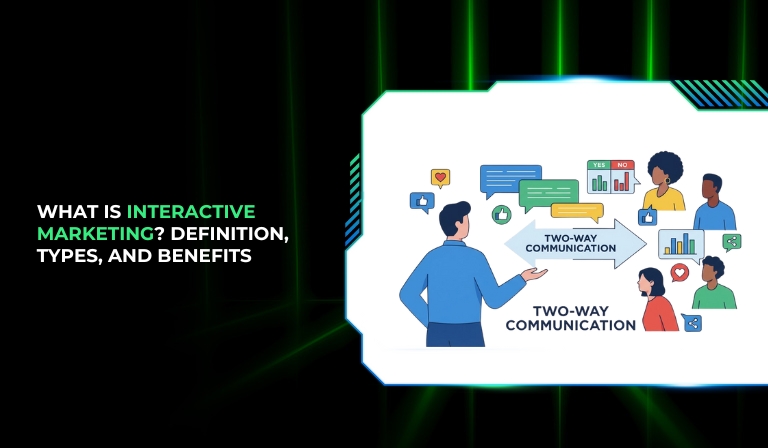
Traditional marketing mainly talks at customers. Ads, banners, emails, and TV commercials deliver messages, but they rarely invite people to respond. Today, customers expect more. They want to interact, explore, and feel involved before they trust a brand.
This is where interactive marketing comes in.
Interactive marketing focuses on two-way communication between brands and customers. Instead of passive content, it encourages users to click, answer, explore, and engage. In this blog, you will learn what interactive marketing is, how it works, its types, real-world examples, benefits, and how to build a simple interactive marketing strategy.
The key takeaway is simple: interactive marketing turns marketing into a conversation, not a broadcast.
What Is Interactive Marketing?
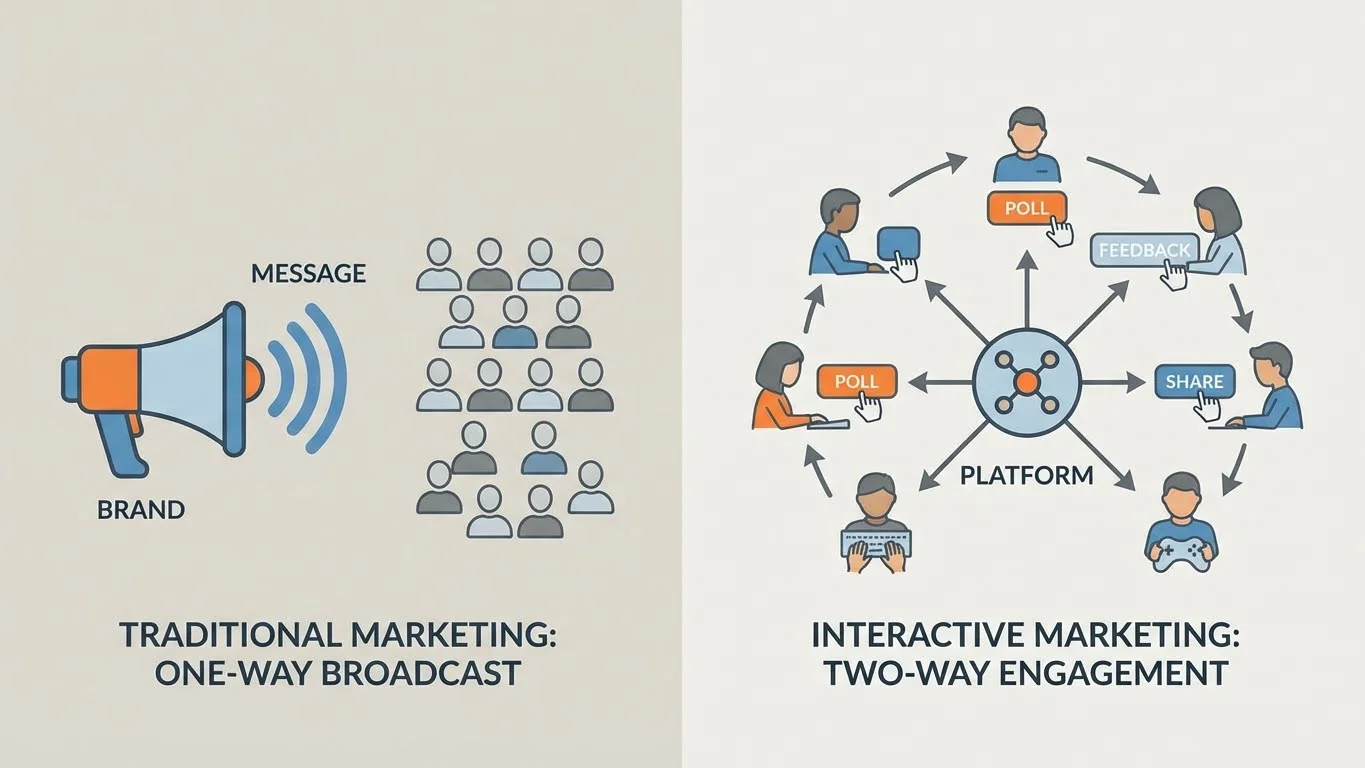
Interactive marketing is a marketing approach that encourages active participation from users. Instead of just showing information, it invites customers to engage, respond, and interact with the content.
It is different from traditional marketing because:
- Traditional marketing is one-way communication
- Interactive marketing is two-way communication
The core principle of interactive marketing is engagement through interaction, where users influence their own experience.
How Interactive Marketing Works
Interactive marketing works by placing the customer at the center of the experience. The brand provides a framework, and the user actively participates in it.
- Users interact with content such as quizzes, tools, videos, or chats
- The system responds in real time based on user actions
- Personalization improves with every interaction
- Brands receive feedback and data instantly
This process helps brands understand customer needs while giving users relevant and engaging experiences.
Interactive vs. Direct Marketing
| Aspect | Interactive Marketing | Direct Marketing |
| Communication | Two-way | One-way |
| User Role | Active participant | Passive receiver |
| Personalization | High and dynamic | Limited |
| Feedback | Immediate | Delayed or none |
| Engagement Level | High | Low to moderate |
Interactive marketing is ideal when engagement and personalization are important, while direct marketing works better for quick announcements or promotions.
Types of Interactive Marketing
1. Quizzes & Polls
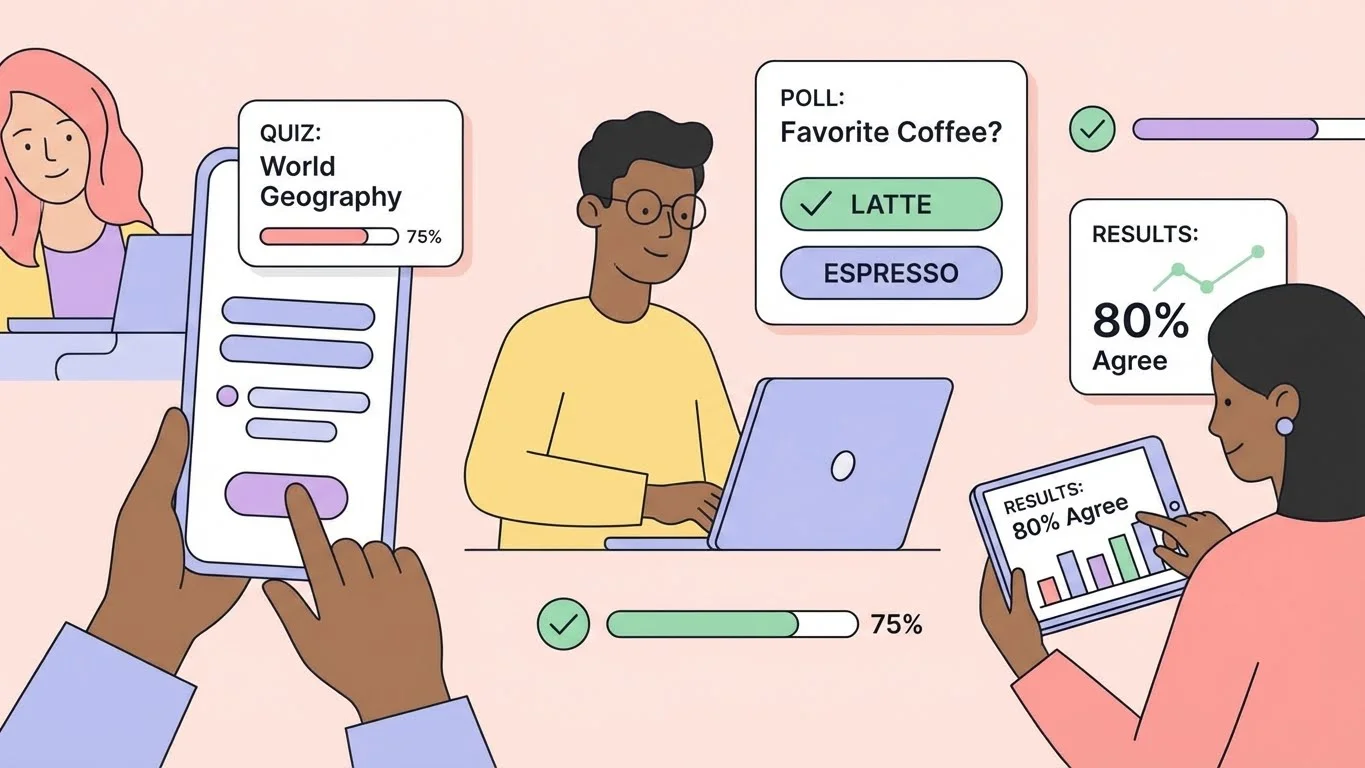
Quizzes and polls are simple but powerful interactive tools. They encourage users to participate by answering questions.
- Easy to consume and fun to complete
- Provide instant results, which users enjoy
- Collect valuable user preferences
2. Interactive Videos
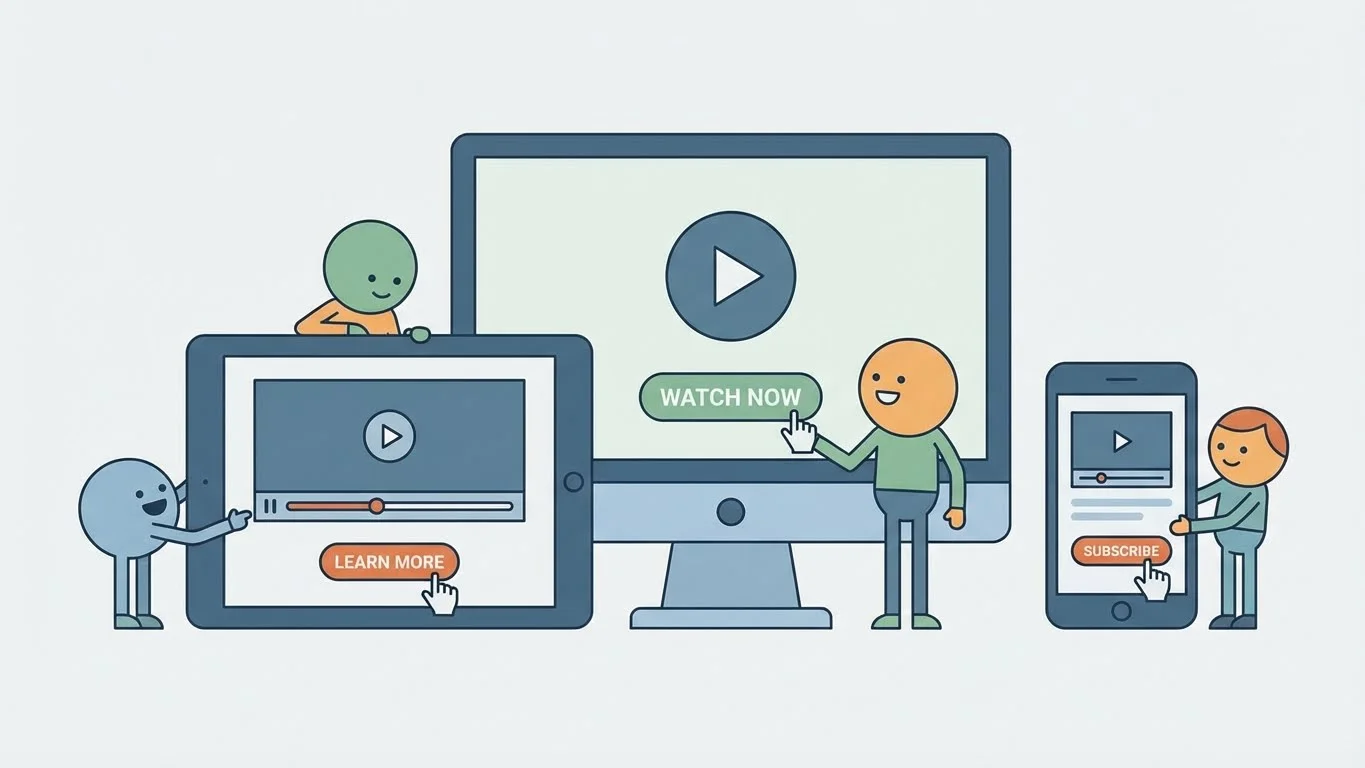
Interactive videos allow users to take action while watching content.
- Clickable calls-to-action inside videos
- 360-degree video experiences
- Live streaming with audience interaction
3. Calculators & Tools
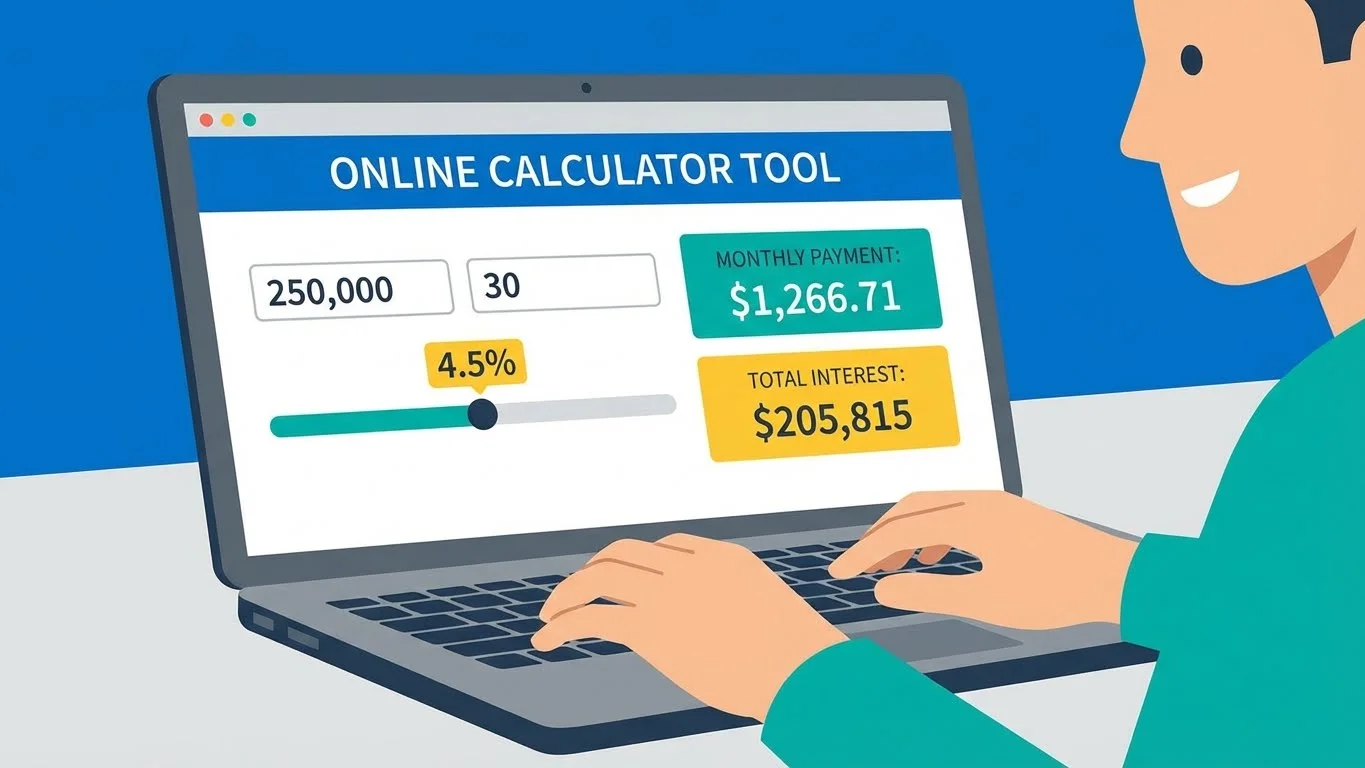
Calculators provide practical value and help users make decisions.
- ROI calculators for marketing or finance
- Mortgage and loan calculators
- Cost estimators and savings tools
4. Solution Finders
Solution finders guide users to the best product or service based on their inputs.
- Ask questions to understand needs
- Recommend tailored solutions
- Reduce decision fatigue
They are commonly used in real estate, healthcare, and retail to improve customer experience and conversions.
5. Interactive Content (Ebooks, Infographics, Reports)
Interactive content makes traditional formats more engaging.
- Animated and clickable infographics
- Interactive PDFs with embedded links
- Maps, charts, and hover-based information
This format helps users explore information at their own pace and improves content retention.
6. Augmented Reality (AR) & Virtual Reality (VR)
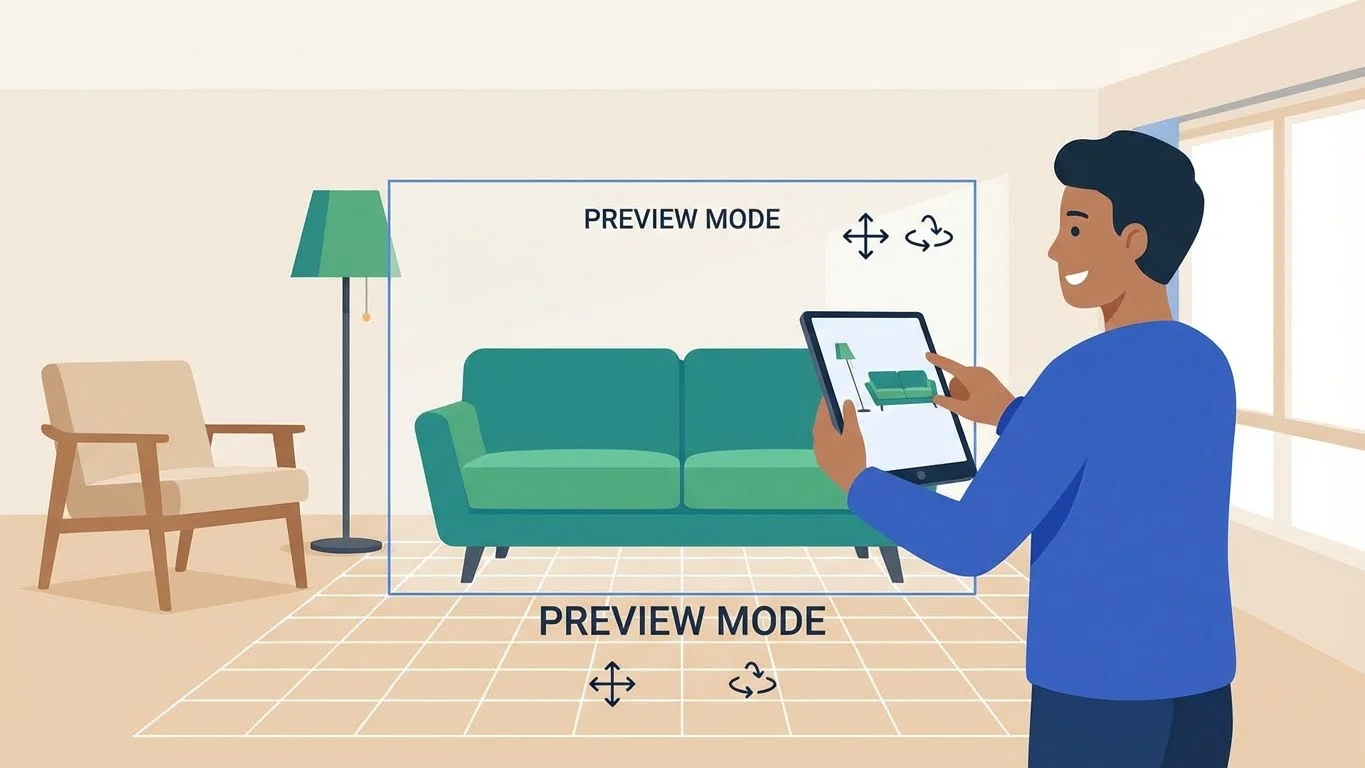
AR and VR bring immersive brand experiences to users.
- AR try-on for products
- Virtual showrooms and demos
- Real-world environment overlays
7. Personalized Content & Conversational Marketing
Personalization adapts content based on user behavior and preferences.
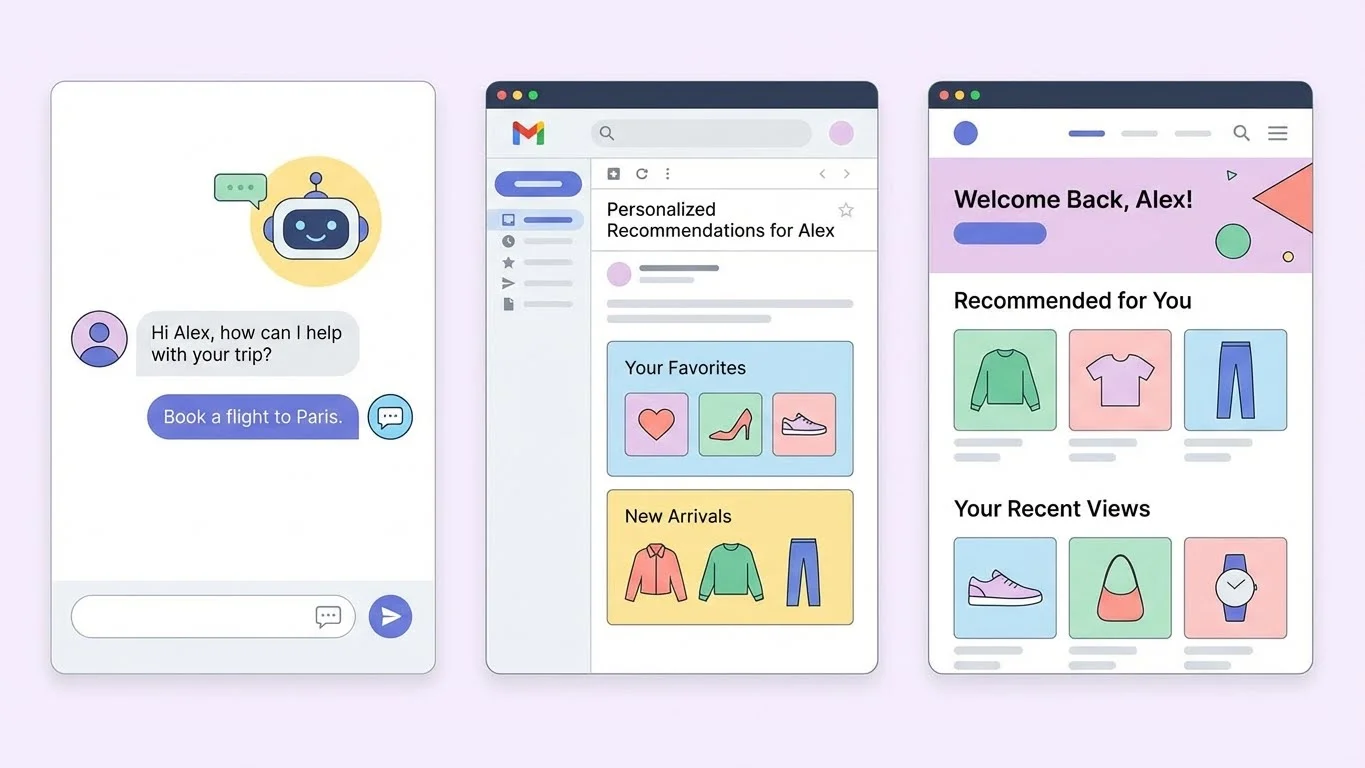
- Personalized emails and recommendations
- Live chat support and chatbots
- Dynamic website content
This approach improves relevance and customer satisfaction while supporting real-time conversations.
8. Gamification & Interactive Games
Gamification uses game elements to engage users.
- Branded games and challenges
- Reward points and badges
- Community-based competitions
It increases participation, motivation, and long-term engagement.
Key Benefits of Interactive Marketing
1. Increased Engagement & Time on Site
Interactive content encourages users to spend more time engaging with brands.
- Higher interaction compared to static content
- Reduced bounce rates
- Visual and interactive content generally attracts more attention
2. Improved Conversion Rates
Interactive marketing reduces friction in the buyer journey.
- Clear and clickable CTAs
- Guided decision-making
- Immediate action opportunities
3. Instant Feedback & Data Collection
Every interaction provides insights.
- User preferences and behavior
- Product and service feedback
- Better campaign optimization
4. Enhanced Brand Differentiation
Interactive experiences help brands stand out.
- Memorable customer journeys
- Strong emotional connection
- Higher brand recall
5. Better Audience Segmentation
Interactive data improves targeting.
- Segment users by behavior
- Build accurate buyer personas
- Deliver personalized messages
6. Increased Social Sharing & Reach
Interactive content is more shareable.
- Encourages organic sharing
- Increases word-of-mouth marketing
- Extends brand reach naturally
How to Create an Interactive Marketing Strategy
Step 1 – Define Your Goals
Clear goals guide the strategy.
- Lead generation
- Brand awareness
- Customer engagement
Using SMART goals helps keep efforts measurable and realistic.
Step 2 – Know Your Audience
Understanding your audience is essential.
- Buyer persona research
- Platform preferences
- Content consumption habits
Step 3 – Choose the Right Interactive Format
Different goals need different formats.
- Quizzes for engagement
- Calculators for lead generation
- Videos for awareness
Step 4 – Develop a Content Plan
Planning ensures smooth execution.
- Content flow and wireframes
- User experience design
- Asset creation timeline
Step 5 – Test & Optimize
Optimization improves results over time.
- A/B testing
- User feedback
- Performance analysis
Step 6 – Distribute & Promote
Distribution drives visibility.
- Social media promotion
- Email marketing
- Multi-channel campaigns
Measurable Metrics & KPIs for Interactive Marketing
- Engagement rate
- Click-through rate (CTR)
- Time spent on content
- Conversion rate
- Lead quality score
- Social shares and mentions
- Return on investment (ROI)
Common Challenges & Solutions
Challenge 1: High Development Costs
- Solution: Start small and use no-code tools
Challenge 2: Technical Complexity
- Solution: Use platforms or agencies
Challenge 3: User Experience Design
- Solution: Continuous user testing
Challenge 4: Measuring ROI
- Solution: Define KPIs early
Conclusion
Interactive marketing is no longer optional. It helps brands build meaningful relationships through two-way communication. By encouraging participation, collecting insights, and delivering personalized experiences, interactive marketing improves engagement, conversions, and loyalty.
The key takeaway is clear: when customers interact, they connect more deeply with your brand. Start small, test often, and build experiences that invite users to be part of the conversation.

Passionate about blogging and focused on elevating brand visibility through strategic SEO and digital marketing. Always tuned in to the latest trends, I’m dedicated to maximizing engagement and delivering measurable ROI in the dynamic world of digital marketing. Let’s connect and unlock new opportunities together!