


Domain Authority (DA) is a third‑party metric that predicts how likely a domain or subdomain is to rank on search engine results pages on a scale of 1–100, where higher scores indicate a greater likelihood to rank relative to other sites. DA is not used by Google directly; instead, it serves as a comparative benchmark to understand a site’s competitive strength and the effectiveness of its SEO over time.

Who created Domain Authority and why
DA was introduced by Moz to give marketers a single, comparable indicator of a domain’s ranking potential based on link data and other signals, making competitive analysis and progress tracking simpler across niches and timeframes. Because DA aggregates multiple inputs into one score, it helps translate complex link graph dynamics into an actionable KPI for planning and reporting.
The 1–100 scale and interpreting scores
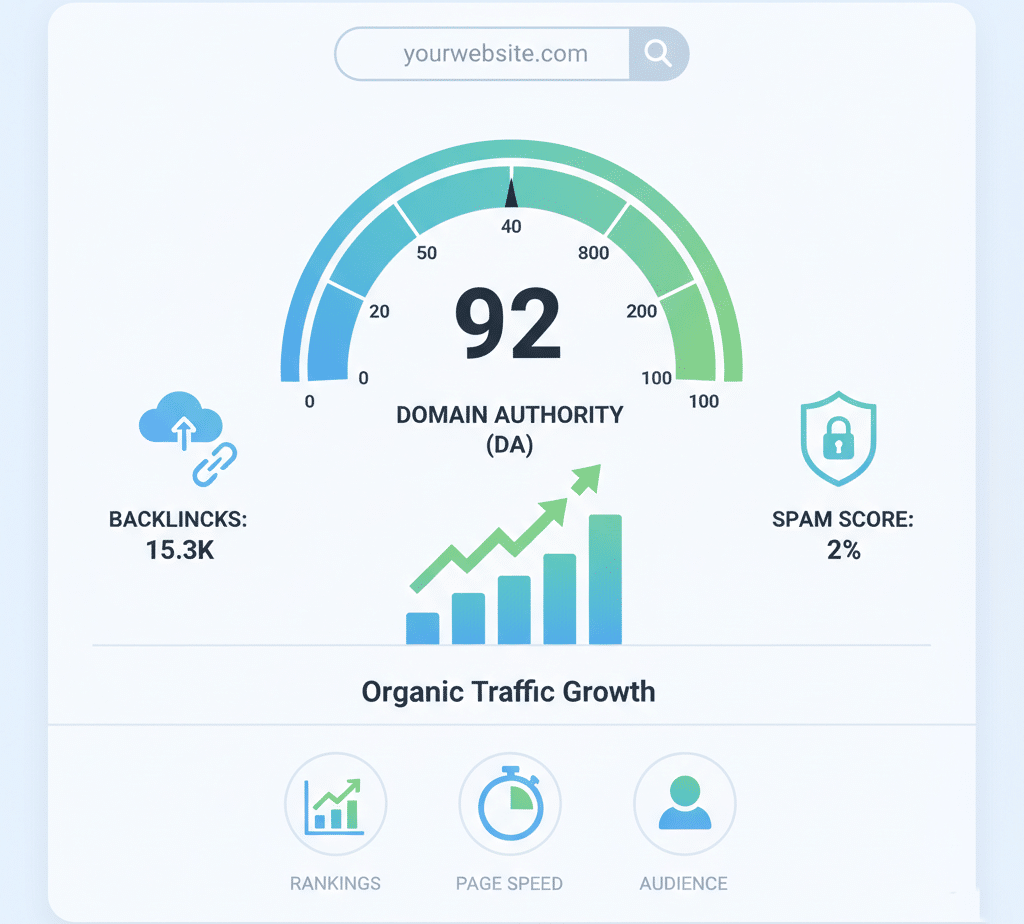
DA follows a logarithmic scale, so it’s easier to move from 10 to 20 than from 70 to 80, and scores should be interpreted relative to competitors rather than as absolute “good” or “bad” values. A site in a competitive industry may need a higher DA to compete on head terms, while a niche site with lower DA can still win by aligning to intent and topical depth.
Why Domain Authority matters in 2026
In 2026, DA remains useful as a directional KPI that correlates with organic visibility because it reflects link quality, diversity, and authority—factors that continue to align with strong SEO outcomes even though DA itself isn’t a ranking factor. Teams use DA to prioritize link acquisition, content investments, and to set realistic expectations when entering or expanding in competitive SERP landscapes.
How Domain Authority Works and Is Calculated
Moz’s algorithm (what’s known)
DA is computed via a machine‑learning model that estimates how often a domain appears across Google SERPs relative to others, drawing heavily from link graph signals and related quality assessments. The underlying model ingests numerous indicators and recalibrates periodically, so scores can shift when data sets update, indexes refresh, or training inputs change.
Key factors that influence DA
- Linking root domains and backlink profile: The breadth and quality of unique domains linking to you is a primary driver of DA improvements. Links from authoritative, relevant sites carry more weight than raw volume.
- Content quality and relevance: Comprehensive, useful content earns natural links and citations over time, improving both link velocity and link diversity.
- Technical SEO and site structure: Crawlable architecture, clean internal linking, and performance best practices support discovery and distribution of authority across the site.
- Other signals: Models can incorporate spam indicators, link freshness, and patterns that correlate with trustworthy domains versus manipulative behavior.
Why DA fluctuates
DA changes with new links gained or lost, competitors’ link growth, index and algorithm updates, and major site changes like migrations, consolidations, or disavows that alter the link graph footprint.
Domain Authority vs. Other Authority Metrics in 2026
DA vs. Domain Rating (Ahrefs)
Both aim to quantify domain‑level link authority, but each uses its own crawler and formulas, so absolute numbers differ even if directional trends are similar. Using both in parallel can surface blind spots from index coverage differences and provide a more resilient read on link growth momentum.
DA vs. Page Authority (Moz)
DA estimates a domain’s overall ranking potential, whereas Page Authority (PA) estimates the ranking potential of a specific URL, making PA useful for prioritizing page‑level optimization and link building. Combining DA for domain health with PA for target pages produces a clearer blueprint for on‑page and off‑page investments.
DA vs. Authority Score (Semrush)
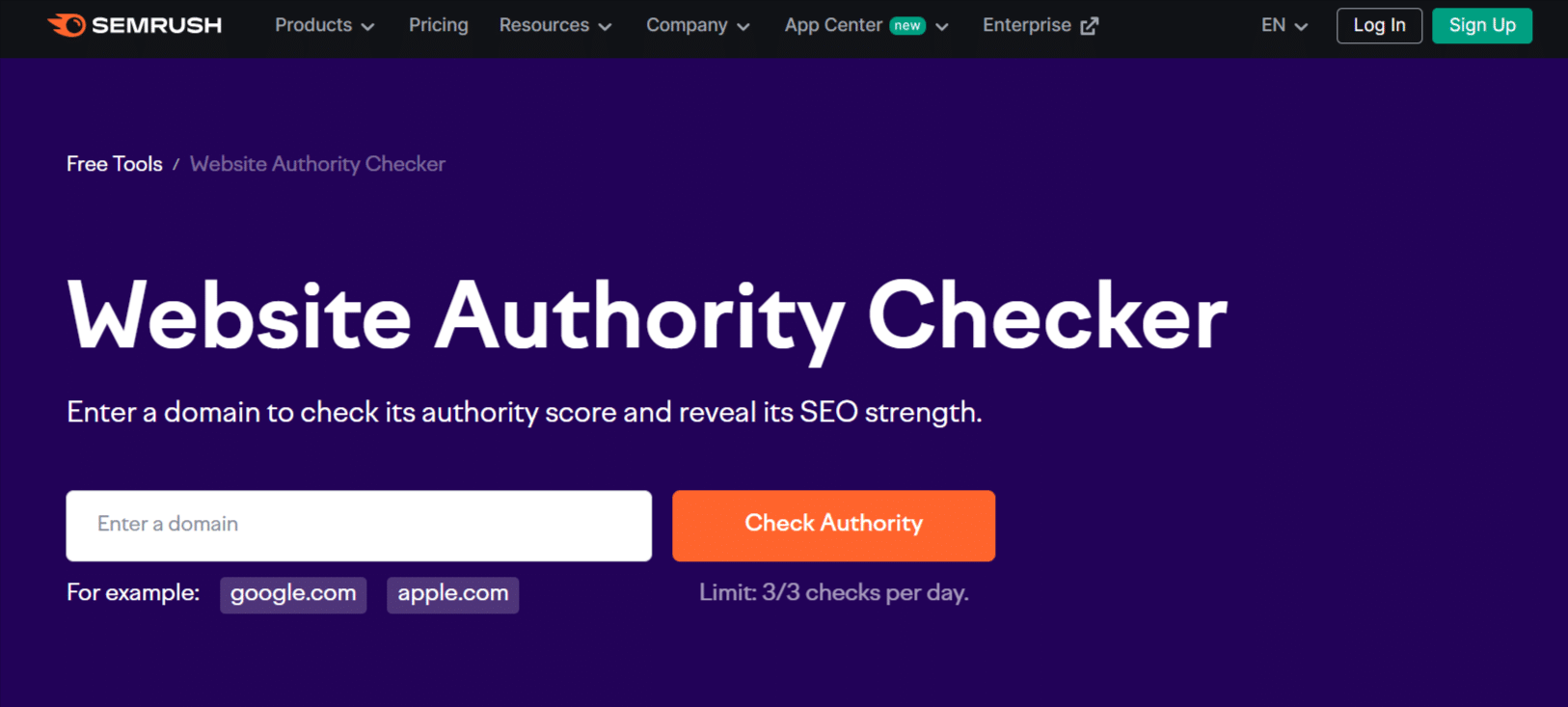
Some platforms blend link data with other signals like traffic estimates to broaden competitiveness assessment beyond backlinks, which can complement DA when evaluating markets with varying link dynamics. Cross‑referencing multiple authority indicators tends to yield better strategic decisions than relying on a single metric.
What Is a Good Domain Authority Score?
Benchmarks and competitive context
“Good” is relative: benchmark your DA against direct SERP competitors targeting the same queries and audiences rather than industry giants outside your niche. Aim to outpace the average DA of the sites ranking for your core keywords by a reasonable margin while maintaining focus on content relevance and intent match.
Setting realistic goals
Expect diminishing returns at higher ranges due to the logarithmic scale, and set quarterly targets tied to link acquisition, content publishing cadence, and technical improvements rather than chasing a single number. Use DA movements as directional validation alongside traffic, rankings, and conversions to ensure efforts meet business outcomes.
How to Check Your Domain Authority
Where to check and how to track
You can check DA with popular SEO tools that surface DA alongside backlink data, and you should track DA at regular intervals with annotations for campaigns, migrations, and major releases. Pair DA trendlines with backlink velocity, referring domain counts, and anchor text profiles to catch issues early and validate growth strategies.
Related Read: How to Boost Domain Authority
10 Proven Ways to Increase Domain Authority in 2026
1) Earn high‑quality, relevant backlinks
Prioritize editorial links from topical, authoritative sites through digital PR, partnerships, and content assets designed to attract citations, avoiding paid or manipulative schemes.
2) Create link‑worthy content
Publish original research, deep guides, actionable frameworks, and useful tools that solve problems and naturally earn links over time, refreshing content to maintain relevance and linkability.
3) Strengthen on‑page SEO
Optimize titles, meta descriptions, headings, and semantic structure to align with search intent and improve discoverability and snippet performance for link‑earning pages.
4) Improve internal linking
Use descriptive anchors and hub‑and‑spoke architectures to surface priority pages, distribute link equity, and help crawlers understand topical relationships across the site.
5) Remove toxic and low‑quality links
Audit regularly to identify spammy or irrelevant backlinks and pursue removal or disavowal when necessary to protect trust and sustain DA growth trajectories.
6) Enhance technical performance
Invest in Core Web Vitals, clean sitemaps, structured data, and crawl budget optimization to ensure fast, stable, and indexable experiences across devices.
7) Build brand signals and social presence
Consistent brand mentions and content amplification can indirectly support link acquisition and awareness, which often precedes natural backlink growth.
8) Strategic guest publishing
Contribute high‑value articles to reputable, relevant publications with strict editorial standards to earn authoritative links and referral audiences.
9) Digital PR campaigns
Launch data‑driven studies, expert commentary, and newsworthy assets to secure coverage from journalists and industry outlets that confer strong authority.
10) Focus on UX and content satisfaction
Design for task completion, clarity, and trust, reducing pogo‑sticking and improving engagement signals that correlate with link attraction and rankings over time.
Common Mistakes to Avoid
Avoid buying backlinks, private blog networks, or doorway tactics that risk penalties and long‑term trust erosion, even if they produce short‑lived DA bumps. Don’t fixate on DA at the expense of topical depth, search intent alignment, and conversion outcomes that ultimately sustain organic growth.
Domain Authority Myths and Misconceptions
DA is not a Google ranking factor, and a higher DA doesn’t guarantee rankings without relevant, high‑quality pages mapped to intent and supported by robust internal linking and technical health. DA cannot be “hacked” sustainably; durable improvements reflect genuine authority earned through real value and trustworthy link profiles over time.
Conclusion
Domain Authority remains a practical comparative KPI in 2026: use it to benchmark against real competitors, validate link‑earning strategies, and guide incremental improvements—not as an end in itself. Focus on earning reputable backlinks through remarkable content, strengthening technical foundations, and aligning pages to intent, and DA will rise as a byproduct of building genuine, defensible authority in your niche.

Passionate about blogging and focused on elevating brand visibility through strategic SEO and digital marketing. Always tuned in to the latest trends, I’m dedicated to maximizing engagement and delivering measurable ROI in the dynamic world of digital marketing. Let’s connect and unlock new opportunities together!