


When you think of soft drinks, what’s the first brand that comes to mind? For many, it’s Coca-Cola. This instant recall is not by accident—it’s the result of strategic brand salience. In today’s highly competitive market, being top-of-mind when consumers are ready to buy is essential to business success.

Brand salience refers to the ease with which buyers identify and recall a brand when considering a purchase. This blog will explore what brand salience is, why it matters for marketing, and effective strategies to improve it. By the end, you will understand how to make your brand the go-to choice in your category.
What Is Brand Salience? (Definition & Core Concepts)
Brand Salience
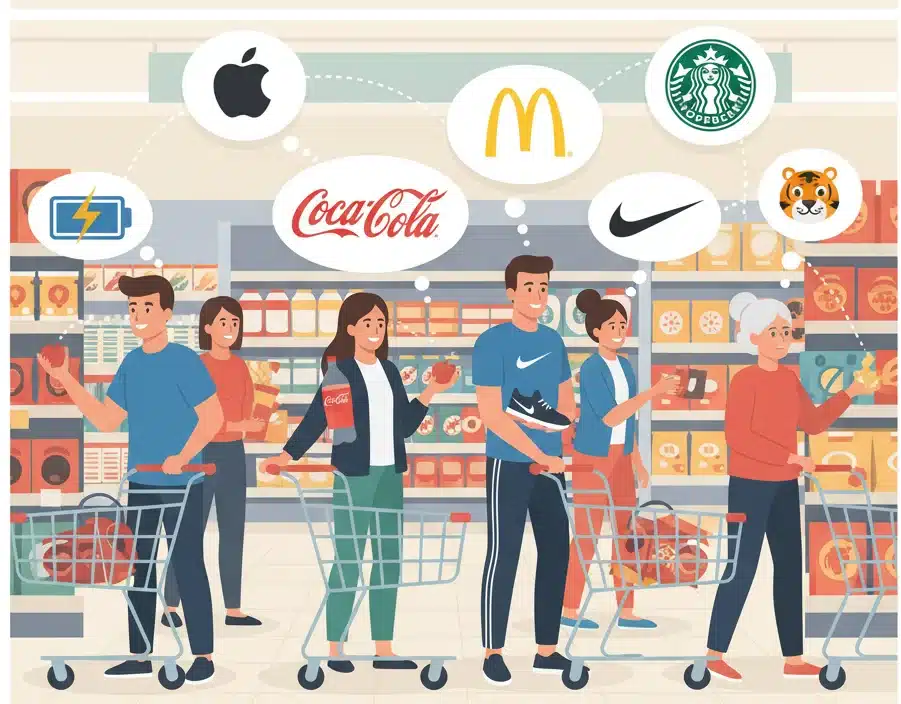
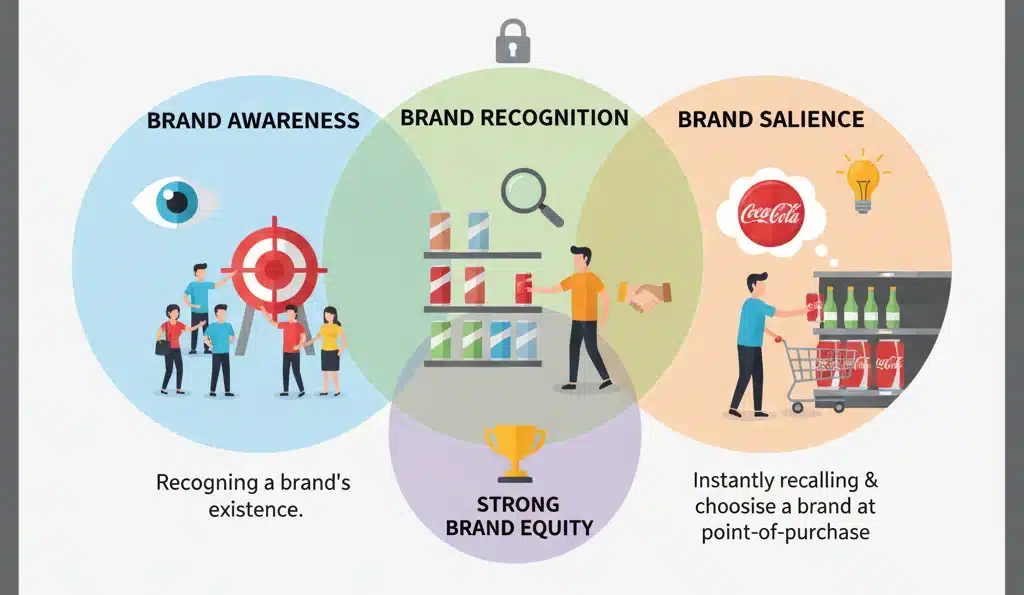
Brand salience is the measure of how easily a brand is noticed or thought of in buying situations. It reflects the extent to which a brand is “top-of-mind” within a product category. Unlike general brand awareness, which is the recognition of a brand, salience focuses on the immediacy and frequency of recall in purchase contexts, impacting decision-making heavily.
Key points:
- Brand salience affects consumer purchase decisions by being the brand that first comes to mind.
- It is distinct from brand awareness, which might only indicate recognition but not preferential recall.
- Example: When people think of tissues, “Kleenex” often springs to mind immediately—showing high brand salience.
How Brand Salience Works
Brand salience functions by tapping into two core mental components:
- Memory salience: How easily a brand is retrieved from a consumer’s memory.
- Attention salience: How much a brand captures consumer attention in the buying moment.
A brand with strong salience occupies a prominent place in consumers’ mental networks, meaning its presence is activated quickly upon category need recognition.
Brand Salience vs. Related Concepts
| Concept | Definition | Distinction |
| Brand Salience | Ease of brand recall in buying situations | Focuses on top-of-mind recall at purchase decision time |
| Brand Awareness | Knowledge that a brand exists | Broader recognition, not necessarily linked to purchase |
| Brand Recognition | Ability to identify brand from visual or verbal cues | Recognition doesn’t always equal recall or preference |
| Brand Loyalty | Consumers’ repeated purchase behavior and preference | Emotional and behavioral commitment beyond recall |
Understanding these distinctions helps marketers focus efforts precisely where they influence buying behavior the most.
Why Brand Salience Matters (Business Benefits)
1. Impact on Purchasing Decisions
Consumers tend to buy brands that come to mind quickly during shopping because doing so reduces effort and cognitive load. A salient brand thus enjoys the “path of least resistance” advantage, making it more likely to be chosen over other options even if the consumer’s knowledge is limited.
2. Competitive Advantage
In crowded marketplaces, standing out can be difficult. High brand salience grants a competitive edge by ensuring consumers remember your brand first, directly linking to increased market share and sales growth. This salience can differentiate brands and drive customer acquisition more effectively.
3. Customer Loyalty & Advocacy
Salience is often the first step towards building brand loyalty. When customers recall a brand positively and frequently, they are more likely to identify with it and recommend it to others, boosting word-of-mouth marketing and increasing customer lifetime value.
Key Elements of Brand Salience (Components)
1. Mental Availability
Mental availability is the likelihood that a brand is thought of in a buying situation, governed by brand memory structures called “category entry points” (CEPs). These are cues like “refreshing drinks” or “family snacks” that trigger brand recall.
How to build mental availability:
- Strengthen associations with common purchase triggers.
- Repeated brand exposure in relevant contexts.
2. Distinctive Brand Assets
Distinctive brand assets (DBAs) include visual elements (logos, colors), sounds (jingles), and verbal cues (taglines) that make a brand instantly recognizable.
Examples:
- McDonald’s golden arches (visual)
- Intel’s five-tone jingle (auditory)
- Nike’s “Just Do It” slogan (verbal)
Consistent use of these assets across all touchpoints reinforces brand salience.
3. Brand Positioning & Message Clarity
Clear and focused brand positioning means owning a specific place in the consumer’s mind related to a need or moment.
Examples:
- Volvo = Safety
- Red Bull = Energy
Owning one strong position helps prevent dilution and strengthens salience.
4. Emotional Connection & Storytelling
Emotional resonance through storytelling makes brands memorable. Stories related to brand values or customer experiences create deeper associative links than mere facts.
Research shows people are up to 22 times more likely to remember and share stories than dry data, highlighting the power of narrative in building brand salience.
Strategies to Improve Brand Salience (6 Action Steps)
Step 1: Define Your Brand’s Unique Attributes
Identify what makes your brand distinct in the market by analyzing competitors and customer preferences. These unique selling points create the foundation for all brand messaging.
Step 2: Create Consistent Brand Identity Across Channels
Consistency in visual style, tone, and messaging builds trust and easy recognition. Tailoring the approach for different platforms while preserving core identity ensures broad but coherent exposure.
Step 3: Provide Exceptional Customer Experiences
Every interaction should embody your brand’s values, from customer service to packaging. Positive, memorable experiences encourage repeat purchases and referrals.
Step 4: Leverage Storytelling to Connect with Audiences
Craft authentic stories that reflect your brand’s mission and values. Share these narratives through blogs, videos, social media, and live events to deepen emotional bonds.
Step 5: Utilize Targeted Advertising & Promotions
Segment your audience and tailor ads to their interests and behaviors. Use promotions strategically to boost interest and loyalty.
Step 6: Monitor Brand Perception Through Feedback & Analytics
Regularly collect and analyze customer feedback, social media sentiment, and brand tracking data to adapt and improve branding efforts in real time.
📌 Coca-Cola and Brand Salience: Key Campaigns
Coca-Cola exemplifies brand salience with its consistent branding and emotionally engaging campaigns. Below are major campaigns that highlight its strategy across the years:

- Share a Coke (2011 – Ongoing)
Launched originally in Australia in 2011, this campaign featured bottles with popular local names, encouraging personalization and social sharing. It quickly expanded to over 80 countries, including the United States, United Kingdom, China, and South Africa, each adapting the campaign with local names and cultural nuances.
- Open Happiness (2009-2015)
Focused on spreading joy and positive moments, this campaign used feel-good messaging to associate Coca-Cola with happiness and social connection.
- Taste the Feeling (2016)
Rolled out globally, this campaign unified Coca-Cola’s variants with a focus on everyday enjoyable moments, reinforcing the brand’s place in daily life.
- One Coke Away from Each Other (2021)
Launched in fall 2021 as the kickoff campaign for the Real Magic global brand platform, this campaign emphasized that real magic happens when people connect. It focused heavily on the gaming community and included collaborations with popular gamers like DJ Alan Walker, Aerial Powers, and Average Jonas. The campaign featured interactive elements such as a Twitch partnership and a code hunt with prizes, symbolizing how a Coca-Cola can bridge separation and bring people together despite physical distance. It also introduced a refreshed Coca-Cola logo redesigned to resemble a hug, reinforcing inclusivity and human connection worldwide.
- Real Magic (2021)
A worldwide campaign emphasizing unity, inclusivity, and human connection, reflecting post-pandemic hopes across diverse markets including North America, Europe, and Asia.
- Open to Better (2021-2022)
Primarily in North America and Europe, this campaign promoted optimism and personal growth with unique packaging replacing the logo with inspirational messages, supported by influencer collaborations.
- Holidays Are Coming (Annual, adapted in 2020)
Iconic in North America and Europe, this Christmas campaign adapted in 2020 to include pandemic themes but retained its nostalgic emotional appeal.
How to Measure Brand Salience (Metrics & Methods)
Brand Recall Measurement
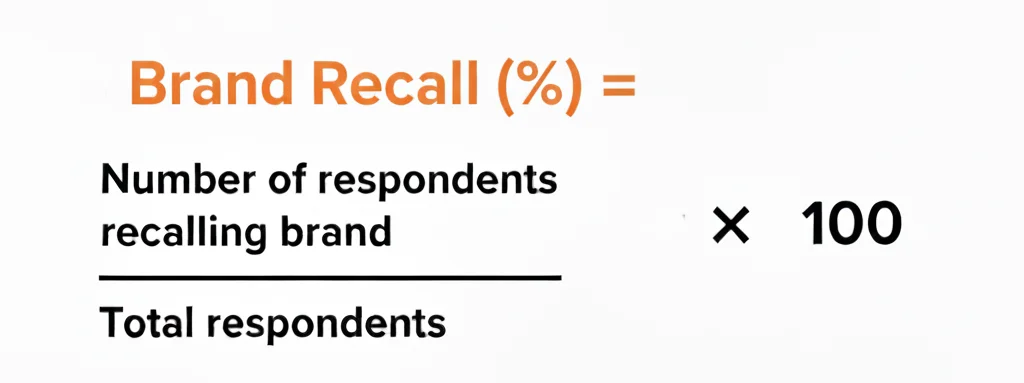
Use unaided brand recall tests to measure how many consumers can name your brand spontaneously in a product category.
Calculation formula:
Brand Recall (%) = (Number of respondents recalling brand / Total respondents) × 100
Google Analytics can help track brand-related search volumes as an indirect measure.
Brand Recognition Testing
Conduct surveys or experiments showing logos or brand elements to assess how well consumers visually recognize your brand.
Additional Metrics
- Strength of category entry points
- Share of mind metrics
- Propensity to purchase indicators
Tools & Methods for Measurement
- Online and offline surveys
- Focus groups
- Social media listening platforms
- Brand tracking software
Real-World Examples of Strong Brand Salience
Global Brands with High Salience
- Google: Immediately associated with online search
- Kleenex: Synonymous with tissues
- Coca-Cola: Instantly linked to soft drinks
- Band-Aid: Generic term for adhesive bandages
- McDonald’s: Iconic fast-food brand worldwide
What These Brands Do Right
- Consistent branding over decades
- Strong distinctive assets (logos, sounds)
- Emotional connections through storytelling and campaigns
- Presence across all consumer touchpoints
Emerging Brands Building Salience
Example: Fishwife, a sustainable tinned fish brand, leverages community-driven storytelling and ethical values to build mental availability and category entry points with a niche audience.
Common Mistakes to Avoid
1. Inconsistent Brand Messaging
- Confusing messages dilute recall and trust.
2. Neglecting Emotional Connection
- Brands that focus only on transactions miss loyalty opportunities.
3. Ignoring Customer Feedback
- Without monitoring perception, brands may miss damaging issues.
4. Trying to Be Everything to Everyone
- Broad positioning weakens category focus and salience.
Building Brand Salience: A Long-Term Strategy
1. Timeline Expectations
Building strong brand salience is a multi-year effort. Iconic salience like Coca-Cola or Levi’s took decades of consistent investment.
2. The Incremental Process
Start by raising awareness, then build mental availability through repeated positive interactions and messaging.
3. Sustained Effort Across Channels
An omnichannel approach with frequent brand presence in relevant moments reinforces salience.
Conclusion
Brand salience is crucial for winning consumer choice by being the first brand that comes to mind in purchase situations. Defining your unique attributes, maintaining consistent identity, providing excellent experiences, and using storytelling combined with targeted advertising can improve your brand’s salience. Measuring and monitoring these efforts ensures ongoing success.
FAQs
1. What is brand salience?
Brand salience is the degree to which a brand is thought about or noticed by consumers when they are making a purchasing decision. It measures how easily your brand comes to mind compared to competitors at the moment it matters most.
2. How is brand salience different from brand awareness?
While brand awareness is about recognizing a brand exists, brand salience is specifically about recalling and considering that brand in buying situations. Salience means the brand is top-of-mind in purchase contexts, not just generally known.
3. Why is brand salience important for businesses?
Brand salience influences customer purchase decisions by making a brand the easiest and most familiar choice. High salience drives sales, improves market share, fosters customer loyalty, and differentiates a brand in competitive markets.
4. What factors influence brand salience?
Key factors include:
- Mental availability (being linked to relevant category entry points)
- Distinctive brand assets (logos, jingles, taglines)
- Clear brand positioning
- Emotional connection and storytelling
- Consistent marketing and customer experience
5. How can a brand improve its salience?
Brands can improve salience by:
- Defining unique brand attributes
- Ensuring consistent messaging and visual identity
- Delivering exceptional customer experiences
- Using authentic storytelling
- Targeting advertising effectively
- Monitoring feedback and adjusting strategies
6. How is brand salience measured?
Common methods include:
- Unaided brand recall tests (asking consumers to name brands spontaneously)
- Brand recognition surveys (logo or name identification)
- Analyzing category entry point activation
- Using analytics tools to track search and engagement data
7. Can small or new brands achieve high brand salience?
Yes, but it requires focused efforts on building mental availability among target audiences, crafting clear messaging, and consistent multi-channel presence. Incremental growth and community building are critical for smaller brands.
8. What role does storytelling play in brand salience?
Storytelling creates emotional connections, making a brand more memorable and shareable. Stories tied to brand values resonate more deeply than facts, increasing recall and preference during purchase decisions.
9. What are some examples of brands with strong salience?
Global brands like Coca-Cola, Google, Kleenex, Band-Aid, and McDonald’s show high brand salience because they are instantly recalled in their product categories by consumers worldwide.
10. Can brand salience change over time?
Yes, brand salience is dynamic and can fluctuate with changes in marketing efforts, consumer preferences, competition, and market conditions. Continuous monitoring and adaptation are essential to maintain or increase salience.

Passionate about blogging and focused on elevating brand visibility through strategic SEO and digital marketing. Always tuned in to the latest trends, I’m dedicated to maximizing engagement and delivering measurable ROI in the dynamic world of digital marketing. Let’s connect and unlock new opportunities together!