TNEB Offices in India: Locations, Key Functions, and Corporate Overview
The Tamil Nadu Electricity Board (TNEB), now restructured into TANGEDCO (Generation & Distribution) and TANTRANSCO (Transmission), manages Tamil Nadu’s electricity system through a structured statewide office network. The TNEB head office in Chennai serves as the central administrative and strategic hub, handling policy, financial oversight, regulatory coordination, and major power purchase agreements.
The operational structure includes:
Head Office (Chennai) – Strategy, governance, regulatory liaison, and crisis coordination
Generation Plant Offices (North Chennai, Tuticorin, Mettur, etc.) – Power production and plant operations
Distribution Circles & Divisional Offices (across districts) – New connections, billing, maintenance, and consumer services
Customer Service Centres & Call Centres – Complaints, payments, outage reporting, and net-metering applications
Project & Material Depots – Infrastructure expansion and equipment logistics
The key takeaway: Tamil Nadu’s electricity ecosystem operates through a multi-layered office network where the head office sets strategy, and regional/divisional offices handle daily power delivery, billing, maintenance, and customer support. For most services, consumers should contact their local distribution office, while major policy or high-value matters are managed at the state head office level.
Before you start
The Tamil Nadu Electricity Board (commonly known as TNEB) has been the principal electricity utility in the state of Tamil Nadu for decades. After organisational restructuring, its primary functions today are carried out by TANGEDCO (Tamil Nadu Generation and Distribution Corporation Limited) for generation and distribution, and TANTRANSCO (Tamil Nadu Transmission Corporation Limited) for transmission. Collectively people still use the shorthand “TNEB” when referring to the state electricity ecosystem. This blog explains the corporate structure, the role of the tneb head office, the major regional and divisional offices across the state, the key functions performed at each location, and practical information about how these offices serve citizens, industrial customers and other stakeholders. The aim is to give a single, comprehensive reference for anyone seeking to understand how TNEB/TANGEDCO/TANTRANSCO operate on the ground.
01
Stop 01 of 14
1 min
Company overview
TNEB historically handled generation, transmission and distribution of electricity in Tamil Nadu. To improve corporate governance and to comply with reforms, the power sector in the state was restructured: generation and distribution responsibilities were vested with TANGEDCO, while transmission functions were assigned to TANTRANSCO. Both are state-owned companies under the Government of Tamil Nadu and together manage electricity supply for one of India’s largest power systems.
TANGEDCO and TANTRANSCO are responsible for planning, execution, operations and maintenance of generation plants, high-voltage transmission networks, distribution networks, billing, customer service, and regulatory compliance within Tamil Nadu. They interact closely with the Central Electricity Authority, the state government, independent generators, and large industrial consumers. Even after institutional change, the colloquial term “TNEB” continues to appear in day-to-day usage, forms, and customer conversations.
02
Stop 02 of 14
1 min
The TNEB head office: strategic role and what it does
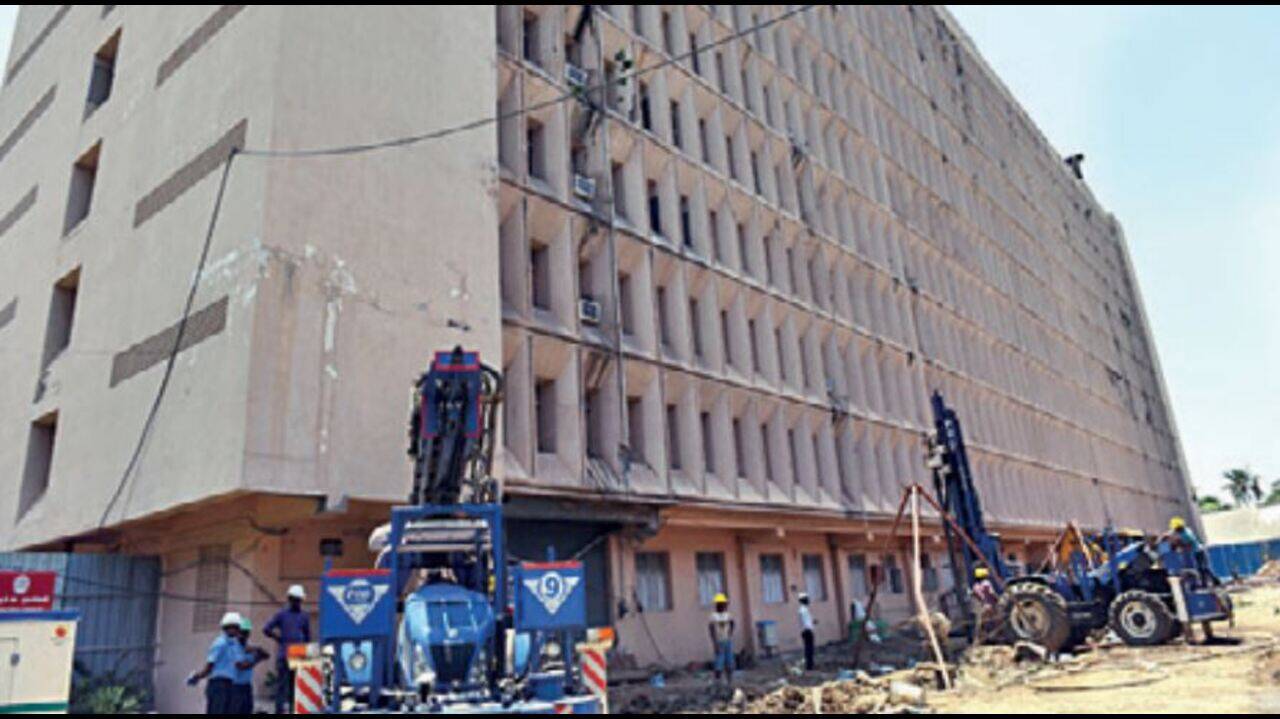
The tneb head office (the state-level administrative headquarters) remains the nerve centre for policy, coordination and high-level decision-making. This office typically houses senior leadership including the Chairman, Managing Director of TANGEDCO, the Director of TANTRANSCO, and key departments such as corporate affairs, finance, legal, human resources, planning and system operations.
Core responsibilities of the head office include:
Corporate governance, board coordination and strategic planning for the state power apparatus Budgeting, financial oversight and tariff policy inputs for submission to regulators Coordination with the state government for policy directives, emergency responses and investment approvals High-level contracts and power purchase agreements with independent generators and central sector projects Regulatory filing and liaison with the State Electricity Regulatory Commission and Central Electricity Authority Oversight of major capital projects, modernization programs and large procurement Crisis and disaster response coordination during storms, grid events or fuel shortages
Citizens and businesses often contact regional or local offices for routine service needs, but the head office is where long-term strategy, inter-agency coordination and large contracts are decided.
03
Stop 03 of 14
1 min
Major categories of operational offices
To serve a state with multiple cities, industrial corridors and rural areas, the TNEB ecosystem operates multiple office types, each with distinct functions:
State/corporate headquarters (the tneb head office) – strategic planning and corporate control Generation stations and plant offices – power station operations, plant maintenance and local technical teams Transmission regional divisional offices – high-voltage network control, line construction and maintenance Distribution circles and divisional offices – feeder management, consumer servicing, theft prevention and restoration Regional customer service centres and commercial offices – meter readings, bill issue, payment acceptance and grievance redressal Call centres and online support hubs – outage reporting, online application handling and digital services Material and stores depots – spares and procurement logistics for network upkeep Project management and capital works units – implementation of new substations, feeders and upgradation programs
Below we will describe principal office locations, their expected addresses by city (where relevant and typical), and their key functions.
04
Stop 04 of 14
1 min
Head office (State headquarters) — strategic centre
Location: Chennai (state capital)
Role and functions
The tneb head office in Chennai is the strategic coordinating centre for generation, transmission and distribution. Besides the administrative leadership, the head office contains departments for planning and projects, commercial affairs, human resources, legal and compliance, finance, and public relations. The office issues statewide directives during system emergencies (for example load management when supply is constrained), coordinates large power purchase agreements, and drives modernization initiatives such as smart metering rollouts and distribution automation.
Typical interactions for citizens and large customers
Although routine consumer requests (new connections, billing issues, outage reports) are handled by regional/distribution offices, the head office is the contact for major stakeholders, mass media, policy makers and electricity market participants. Petitions or litigation matters that require state-level involvement are routed through this office.
05
Stop 05 of 14
1 min
Generation plant offices — plant-level control and safety
TANGEDCO operates multiple generation facilities across Tamil Nadu including thermal power stations, hydroelectric stations, gas-based peaking units and renewable energy plants (solar and wind). Each plant has an on-site office and control room responsible for:
Day-to-day plant operations and generation scheduling Maintenance planning and shutdown coordination Environmental and safety compliance Plant staff administration and contractor coordination Local procurement and logistics for spares
Major generation locations include (by city/area): North Chennai Thermal Power Station area, Tuticorin/Thoothukudi thermal complex, Ennore/Arignar Anna, Mettur Dam hydro region, and several gas and renewable sites. These plant offices are crucial for ensuring reliable power injection to the state grid.
Transmission divisional offices and regional control centres — grid reliability
TANTRANSCO operates the high-voltage backbone across Tamil Nadu. Transmission offices are organised into zones and divisions that manage substations, 400/220/110 kV lines, and grid stability functions.
Key functions
Monitoring and maintaining substations and cross-state interconnects Construction and commissioning of new transmission lines and substations Coordination with regional load dispatch centres for scheduling and contingency management Fault detection, rapid restoration and corridor management during outages Technical studies for system strengthening and reactive power support
Transmission regional offices are often located near major grid substations or in regional cities like Chennai, Trichy, Coimbatore, Salem and Madurai, providing quick mobilisation during grid contingencies.
07
Stop 07 of 14
1 min
Distribution circles and divisional offices — the citizen-facing network
Distribution is where customers interact with the utility. TANGEDCO’s distribution architecture is organised into zones/circles and further into divisions and sections to manage feeders, transformers and consumer connections.
Core responsibilities
Issuing and managing new service connections for domestic, commercial and industrial consumers Meter reading, billing, and collection processes Feeder-level load flow management and rural electrification programs Consumer grievance redressal, service restoration and outage communications Inspection and anti-theft measures, including legal actions where needed Implementation of schemes: agricultural pump-set supply, street-lighting, suburban electrification, and rural feeder segregation
Major distribution circles typically cover large urban areas such as Chennai, Coimbatore, Madurai, Trichy, Salem, Tirunelveli and Vellore, alongside many district offices that serve towns and rural blocks.
Example of consumer touchpoints
Regional commercial offices issue bills, accept payments, process “change of name” or “meter replacement” requests and handle disputes. Local divisional offices dispatch field technicians for meter faults, transformer issues and power restorations.
08
Stop 08 of 14
1 min
Regional Customer Service Centres and call centres — the public interface
To provide timely resolution and convenience, TANGEDCO operates customer service centres where consumers can pay bills, apply for new services and lodge complaints. There are also toll-free helplines and online portals for digital submissions. These centres handle:
Customer onboarding and KYC verification for new connections Processing of net-metering applications for rooftop solar Connection upgrades and feeder change requests Registration and tracking of complaints, with on-field work coordination Education and outreach about energy conservation, subsidy schemes and safety
Increasingly, these centres are connected to central CRM systems enabling faster turnaround and transparency on complaint status.
09
Stop 09 of 14
1 min
Project offices and capital works units — expanding and modernising the network
Large capital projects (substations, feeder upgradation, rural electrification, SCADA installation, smart meters) are managed by project offices with engineers, procurement staff and project managers. These teams coordinate land acquisition, contractor management, quality assurance and commissioning.
Typical projects include:
New 110/220/400 kV substations to relieve overloaded corridors Feeder separation for agricultural and domestic supplies in rural zones Distribution transformer upgrades to reduce technical losses Installation of SCADA and distribution automation for faster fault detection Smart meter pilot programs and meter data analytics rollout
Such projects often have temporary offices at site or in district urban centres.
10
Stop 10 of 14
1 min
Material stores and logistics depots — spares and supply chain hubs
Effective network maintenance requires reliable spare parts and transformers. Material stores are located regionally to keep stocks of meters, fuses, conductors, transformers and switchgear, ensuring rapid deployment during faults.
Key functions
Inventory management and procurement scheduling Quality inspection of supplies received from vendors Coordination with divisions to dispatch parts for emergency restoration
These depots are vital during storms and high-failure events permitting quicker restoration.
11
Stop 11 of 14
1 min
Typical addresses and where to find the exact contact details
Tangedco/Tantransco administrative offices and major regional/divisional offices are headquartered in major Tamil Nadu cities such as Chennai (state headquarters), Coimbatore, Trichy, Madurai, Salem, Vellore, Tirunelveli and Thanjavur. Generation plant offices will be located at the plant site (for example power stations near thermal complexes and hydro dams).
For exact postal addresses, phone numbers, email IDs and office hours please consult the official TANGEDCO/TANTRANSCO website or the customer service helpline, because local office addresses and contact numbers may change after reorganisations or office relocations. If you need, I can list the main office phone and web contacts used for consumer services and grievance escalation, but those details should be verified on the official portal before use.
12
Stop 12 of 14
1 min
How to engage with the right office for your need
New domestic or commercial connection: approach the local distribution divisional office or the customer service centre in your taluk/district.
Billing disputes or meter issues: contact the commercial office or the customer service division responsible for your billing circle.
Urgent faults and outages: phone the outage reporting number for your locality; if not resolved, escalate to the divisional engineer.
Agricultural services and pump-set connections: contact the designated agricultural engineer at the district distribution office.
Large industrial consumers and EHT (Extra High Tension) services: approach the regional commercial office or the head office for contract negotiation and high-powered supply agreements.
Power project developers and interconnection: coordinate with TANTRANSCO’s transmission planning office.
13
Stop 13 of 14
1 min
FAQs
What does the “tneb head office” actually do? The head office performs strategic planning, policy coordination, regulatory filings and manages high-value contracts, capital approvals and statewide emergency responses. It is the top-tier administrative hub for Tamil Nadu’s electricity system.
Who should I contact for a new residential electricity connection? Visit the local distribution division or the customer service centre in your city or taluk. They handle application intake, site verification and meter installation scheduling.
Where can I report a power outage? Most towns and municipalities have a local helpline and a fault reporting number. The customer service centre logs the complaint and escalates to field staff for restoration.
How are generation, transmission and distribution organised now? Generation and distribution activities are mainly handled by TANGEDCO; transmission is managed by TANTRANSCO. Together they form the operational continuum previously known simply as TNEB.
How can I escalate unresolved complaints? f local divisional offices do not resolve an issue, escalate to the regional/zonal office, and finally to the head office. Many utilities publish an escalation matrix with contact numbers for each level.
Do these offices also handle renewable energy net-metering? Yes. Net-metering and rooftop-solar applications are handled by regional commercial or customer service offices, with technical checks done by distribution engineers.
Are office addresses stable? Major headquarters and plant offices are stable, but regional and divisional office addresses or contact points can change. Always confirm via the official TANGEDCO/TANTRANSCO portal or toll-free number.
14
Stop 14 of 14
1 min
Conclusion
Understanding the network of TNEB/TANGEDCO/TANTRANSCO offices helps citizens, businesses and project developers navigate the electricity ecosystem in Tamil Nadu. The tneb head office provides strategic oversight, while an extensive network of generation plants, transmission divisions, distribution circles and customer service centres ensures day-to-day power delivery and support. Whether one needs a new connection, a commercial power contract, to report an outage, or to engage on projects, the appropriate office exists at local, regional and state levels to provide the necessary service. For the most reliable contact information and exact postal addresses, consult the utility’s official website or customer care helpline before visiting an office.
If you’d like, I can now produce a city-wise table of probable regional offices and their typical functions (city, office type, what they handle) which you could use as a checklist when contacting the utility — noting that exact addresses and phone numbers should be confirmed on the official site. Would you like that table?
From insight to action
Want results like these for your brand?
Talk to a consultant about your position, your message and your next step.