


The B2B landscape has fundamentally shifted. In 2024, 93% of B2B buyers began their purchasing journey on LinkedIn, not Google. For marketing agencies competing for high-value clients, this shift isn’t just significant—it’s transformative. Yet most agencies still treat LinkedIn as a passive networking platform rather than a powerhouse lead generation engine.
The question isn’t whether your agency should be on LinkedIn. It’s whether your LinkedIn strategy is actually driving qualified leads and revenue. This comprehensive guide walks you through eight battle-tested approaches that marketing agencies are using right now to fill their pipelines, build authority, and attract ideal clients without relying solely on expensive ad spend.
Why LinkedIn Has Become Essential for Marketing Agency Growth
Before diving into tactics, let’s establish why LinkedIn matters so much for your business. LinkedIn isn’t just a job board anymore—it’s evolved into the primary professional network where decision-makers spend their time, research vendors, and evaluate solutions.
The numbers tell a compelling story:
- Over 1 billion professionals actively use LinkedIn
- More than 70% of LinkedIn users are decision-makers with hiring or purchasing power
- B2B companies that engage on LinkedIn are 67% more likely to exceed revenue goals
- 45% of LinkedIn users research companies before engaging with their sales team
What makes this especially relevant for marketing agencies is the nature of the audience. Your ideal prospects—marketing directors, CMOs, entrepreneurs, and business leaders—spend considerable time on LinkedIn. They’re actively looking for solutions to their marketing challenges, and they’re evaluating agencies they discover on the platform.
The agencies winning right now aren’t the ones with the biggest ad budgets. They’re the ones with the most strategic, consistent, and authentic LinkedIn presence. They’ve built credibility, established thought leadership, and created meaningful conversations with prospects before ever asking for a sale.
Strategy 1: Optimize Your Agency Profile for Maximum Discoverability
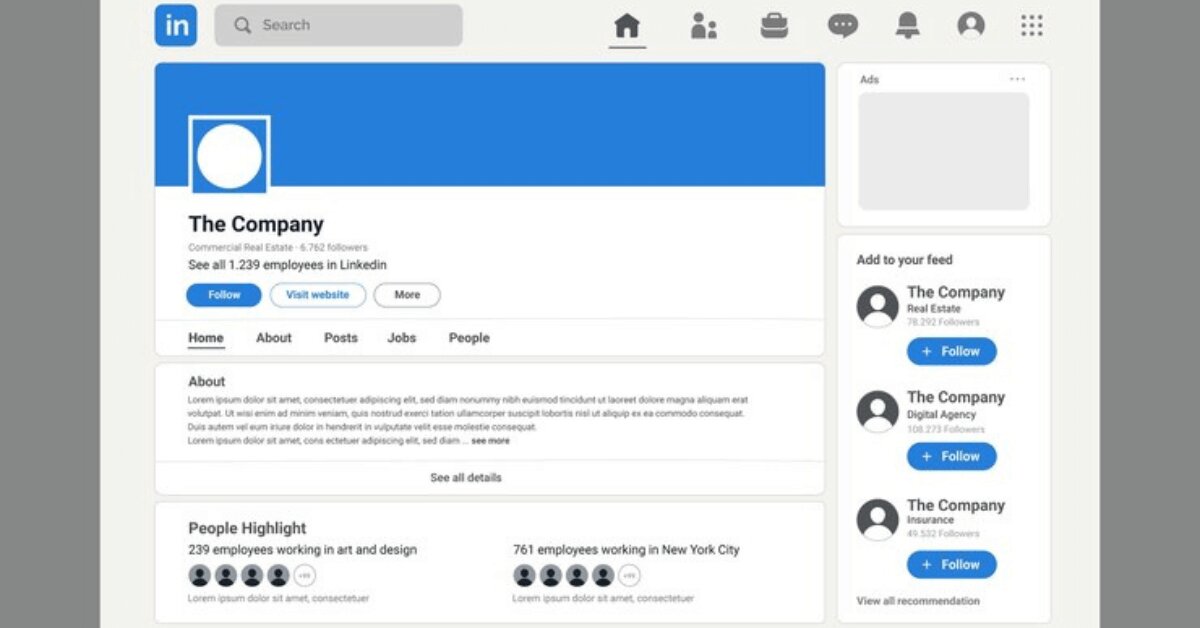
Your LinkedIn profile is your digital storefront. It’s the first impression you make on potential clients, and it dramatically influences whether they’ll reach out or scroll past. Yet most agency profiles are incomplete, confusing, or fail to communicate clear value.
A complete, optimized profile increases visibility in LinkedIn searches and sends a powerful signal that your agency is professional and credible. Here’s what works:
Profile Completeness Matters More Than You Think
LinkedIn’s algorithm rewards complete profiles with better visibility in search results and suggested connections. When prospects search for “marketing agency” or “digital marketing services,” a 100% complete profile has significantly better chances of appearing in their results.
What makes a profile complete:
- Professional profile photo
- Compelling headline
- Detailed about section
- Complete work history
- Skills endorsements
- Recommendations from clients
- Featured content (case studies, articles, videos)
- Rich media in your experience sections
Headline Optimization: Stop Saying “Marketing Agency”
Your headline is the first thing people see. Most agencies use something generic like “Marketing Agency | Digital Marketing Services.” This wastes prime real estate.
Instead, optimize your headline for both human readers and LinkedIn’s search algorithm. Include keywords your ideal clients are searching for, but keep it compelling and human-readable.
Examples of optimized headlines:
- “Helping B2B SaaS Companies Scale Revenue Through Data-Driven Digital Marketing | LinkedIn Lead Generation Specialist”
- “Marketing Agency Focused on Healthcare Tech | Organic Growth | Lead Generation Experts”
- “B2B Marketing Services | Converting Prospects into Customers | Fractional CMO for Startups”
Notice how these headlines include the type of client served, the core result delivered, and specific services—all while naturally incorporating relevant keywords that prospects search for.
The About Section: Tell Your Agency Story
Your about section should answer three critical questions a prospect unconsciously asks:
- Who is this agency and what do they do?
- Who do they serve and what problems do they solve?
- Why should I trust them?
Write in first person, even though you’re representing an agency. People connect with people, not corporate entities. Share your story, your mission, and why you’re passionate about helping clients succeed.
Include a clear call to action. Don’t be shy about what you want people to do next: “Schedule a free 30-minute strategy call,” “Download our B2B marketing playbook,” or “Message me to discuss your marketing challenges.”
Featured Section Strategy: Showcase Your Best Work
Your featured section is prime real estate where you can display:
- Case studies with specific results (e.g., “Increased qualified leads by 340%”)
- Thought leadership articles you’ve written
- Videos of client testimonials
- Infographics about industry trends
- Guides and templates that demonstrate expertise
- Webinar recordings
Update this section monthly with your most recent, impressive work. When prospects visit your profile, these featured items create immediate social proof and demonstrate that you deliver results.
Keywords: The Bridge Between Search and Discovery
Strategically place keywords throughout your profile where they fit naturally. Don’t keyword-stuff—that looks spammy and damages credibility. Instead, weave relevant terms into your headline, about section, and experience descriptions.
Keywords to consider for marketing agencies:
- LinkedIn lead generation
- B2B lead generation
- Lead generation strategy
- Digital marketing services
- Content marketing
- Social media marketing
- Marketing automation
- SEO services
- PPC management
Pro tip: Check what keywords your ideal clients are searching for on LinkedIn by using LinkedIn Sales Navigator. This data-driven approach ensures you’re optimizing for actual search terms, not guessed keywords.
Strategy 2: Create and Share High-Value ContentThat Attracts Leads
Content is the foundation of LinkedIn lead generation. In a platform where your prospects spend 30+ minutes daily, strategic content puts you directly in front of them, positions you as knowledgeable, and creates opportunities for meaningful engagement.
The key isn’t just posting frequently—it’s posting the right content that resonates with your target audience and drives action.
Content Types That Actually Generate Leads
Different content formats perform differently on LinkedIn. Here’s what works best for marketing agencies:
Case Studies and Results-Driven Posts Share specific client wins with numbers. Instead of vague statements like “We helped clients grow,” say “Increased qualified leads by 127% in 6 months through targeted content strategy.” Include the challenge, your approach, and the results. Prospects see themselves in these stories.
Industry Insights and Trend Analysis Share what you’re observing in the marketing landscape. What’s working in 2026? What’s changing? What are your clients asking about? These posts position you as someone who understands the market, not just someone trying to sell.
How-To Posts and Actionable Frameworks People love practical advice. Share frameworks, templates, and tactics they can implement immediately. “5 Questions to Ask Before Hiring a Marketing Agency” or “The LinkedIn Lead Generation Strategy That Generated $2M in Pipeline” create value upfront.
Behind-the-Scenes Content Humanize your agency. Show your team in action, your office culture, your process. People buy from people, and behind-the-scenes content builds connection and relatability.
Controversial or Thought-Provoking Takes Sometimes the most engaging content challenges conventional wisdom. “Why Most Agencies Fail at Lead Generation” or “The Marketing Metric Everyone’s Wrong About” spark conversations and get people thinking.
Employee Wins and Company News Promotions, new clients, team announcements, and company milestones humanize your agency and keep followers updated on your growth.
The LinkedIn Content Calendar: Creating a System
Consistency matters more than perfection. A strategic content calendar ensures you’re posting regularly and covering topics that resonate.
Content Pillars for Marketing Agencies:
- Results & Case Studies (30%) – Proof of what you deliver
- Industry Trends & Insights (25%) – Thought leadership
- Actionable Tips & Frameworks (25%) – Value-first content
- Agency & Team Updates (20%) – Behind-the-scenes and culture
Posting 3-4 times per week strikes the right balance between maintaining visibility and not overwhelming your network. The best posting times are typically Tuesday-Thursday, 8-10 AM in your prospect’s timezone.
LinkedIn-Native Content Formats That Drive Engagement
Carousel Posts (Images with text overlay) These consistently outperform single-image posts. Use them to share step-by-step processes, before/after comparisons, or numbered lists. Each slide should be able to stand alone while contributing to the overall narrative.
Document Posts (PDF-style posts) Ideal for in-depth guides, frameworks, or research. These perform exceptionally well because they keep people on the LinkedIn platform longer, and LinkedIn’s algorithm rewards that.
Video Content Short-form videos (30 seconds to 2 minutes) showing client results, quick tips, or team culture get 5x more engagement than static posts. You don’t need professional production—authentic, mobile-captured video often performs better than polished content.
Text-Based Posts with Storytelling A compelling story beats a tactic every time. Share a client’s challenge, the aha moment, and the transformation. These longer-form posts often generate the deepest engagement and warmest leads.
The LinkedIn Hook Formula Stop scrollers in the first 2-3 lines. Examples:
- “We fired our biggest client yesterday…”
- “Most agencies are doing this wrong…”
- “Nobody talks about this, but…”
- “We just realized something about lead generation…”
Content Repurposing: One Piece, Multiple Formats
Create content once, distribute it widely:
- Long-form blog post → LinkedIn carousel (5-7 slides) → LinkedIn article → Email to subscribers
- Webinar recording → 30-second video clip → 90-second highlight reel → Full webinar post
- Client case study → Written post → Infographic → Video testimonial
This approach multiplies your content’s reach without multiplying your workload.
Engagement Strategy: Why Responding Matters
Posting is only half the battle. Engagement is where relationships form. When someone comments on your post, they’re signaling interest. Respond within the first hour if possible—LinkedIn’s algorithm prioritizes posts with early engagement.
Ask questions in your posts to encourage comments. “What’s been your biggest challenge with lead generation?” sparks conversation and helps prospects feel heard.
Equally important: Comment strategically on other people’s content, especially from your ideal prospects and industry influencers. Thoughtful comments increase your visibility and can lead to direct messages and deeper relationships.
Strategy 3: Master Personalized LinkedIn Outreach That Converts
While content builds your authority, direct outreach creates immediate opportunities to engage specific prospects. The difference between successful outreach and ignored messages comes down to personalization and genuine value.
The Problem with Generic Outreach
Most LinkedIn messages look like this:
“Hi [First Name], I noticed we’re connected on LinkedIn. My agency helps B2B companies generate more leads. Would you be interested in a quick call?”
This message fails because it’s obviously templated. It provides no proof that you’ve learned anything about the person. It’s about what you want to sell, not what they need.
High-converting messages are different. They demonstrate that you’ve done research, understand the prospect’s specific situation, and have a legitimate reason for connecting.
Building Your Prospect List: Strategic Targeting
Before sending a single message, identify who you want to reach. This sounds obvious, but most agencies are too broad in their targeting.
Create a clear ideal customer profile (ICP):
- Company size (SMB, mid-market, enterprise)
- Industry vertical (SaaS, healthcare, finance, e-commerce, etc.)
- Decision-maker role (CMO, VP Marketing, Growth Manager, Owner)
- Company stage (early-stage, scaling, mature)
- Revenue/growth trajectory
Use LinkedIn’s search filters to find prospects matching your ICP:
- Job title filters
- Company industry and size
- Location
- Company growth signals (recently funded, expanding headcount)
- Engagement signals (active on LinkedIn, posting content)
LinkedIn Sales Navigator (LinkedIn’s premium tool) makes this significantly easier, providing better filtering options and tracking capabilities.
The Anatomy of a High-Converting Outreach Message
Element 1: Specific Recognition Show you’ve actually looked at their profile or recent activity.
“I noticed you just published a post about the challenges of B2B lead generation—you highlighted a point that most agencies miss…”
Element 2: Genuine Value or Insight Offer something valuable before asking for anything.
“I’ve been working with similar companies in your space, and I noticed that [specific insight about their situation]. Here’s what’s working: [specific tactic or framework].”
Element 3: Credibility Through Proof Mention results or relevant experience, but keep it brief.
“We recently helped [similar company] increase qualified leads by 180% in 6 months through [brief description of approach].”
Element 4: A Specific, Low-Friction Next Step Don’t ask for a 30-minute call immediately. Ask for something smaller first.
“I’d love to share one specific tactic that’s working right now. Are you open to a 5-minute conversation, or would you prefer I send over a short guide first?”
Element 5: Social Proof (If Applicable) Reference a mutual connection or mention where you heard about them.
“[Mutual connection] mentioned you’re focused on scaling your marketing team, which aligned with something we’re working on…”
Message Sequence Strategy: Timing and Follow-Up
Effective outreach often requires multiple touches:
| Touch | Timing | Content |
|---|---|---|
| Initial Connection | Day 1 | Personalized request with reason for connecting |
| Follow-Up Message #1 | 5-7 days later | If no response, add additional value or insight |
| Follow-Up Message #2 | 14 days later | Final attempt with different angle or exclusive resource |
| Transition to Email/Phone | 3+ weeks | Move to email or phone if warm signals exist |
| Archive for Later | 4+ weeks | Remove from active outreach, reconnect in 2-3 months |
The key is persistence without being pushy. If someone isn’t engaging after three thoughtful messages over 3+ weeks, they’re likely not ready or not a good fit.
Building Social Proof in Your Messages
References to existing relationships dramatically improve response rates:
- “I see we’re connected with [mutual contact]”
- “I’ve been following your content on [specific topic] for a while”
- “Several of your clients have mentioned that [specific challenge]”
- “Your company’s recent expansion into [market] made me think of something…”
These references create instant credibility and show genuine research.
CRM Integration: Tracking Everything
Without a system, outreach becomes chaotic. Use your CRM (HubSpot, Pipedrive, Salesforce, etc.) to track:
- Every prospect you reach out to
- Message content and dates
- Response rates
- Whether they became a lead or client
- What messaging worked best
This data reveals patterns and helps you continuously improve your approach.
Strategy 4: Build Authority Through Strategic Community Engagement
While direct outreach generates immediate conversations, community participation builds long-term relationships and positions you as a trusted authority.
Leveraging LinkedIn Groups Strategically
LinkedIn Groups have declined in relevance for some industries but remain powerful in others. The key is finding high-value groups where your ideal prospects actively participate.
Types of Groups to Join:
- Industry-Specific Groups (e.g., “B2B SaaS Marketing Leaders,” “Healthcare Marketing Professionals”)
- Company Alumni Groups (large company alumni groups often include decision-makers who may need marketing support)
- Functional Role Groups (e.g., “CMOs at Series B+ Companies,” “Founders in Tech”)
- Location-Based Groups (especially valuable for agencies with geographic focus)
- Challenge-Specific Groups (e.g., “Companies Looking to Scale Revenue,” “Scaling Lead Generation”)
Rather than joining dozens of groups, focus deeply on 3-5 high-quality groups where your ideal clients congregate.
Becoming a Recognized Authority in Communities
In each group, adopt a consistent strategy:
- Answer Questions with Genuine Expertise Resist the urge to immediately mention your agency. Instead, provide the most helpful, detailed answer possible. Share frameworks, examples, and insights freely.
- Start Thoughtful Conversations Post questions and observations about challenges your ideal clients face. Don’t ask “Anyone need marketing help?” Instead, ask “What’s your biggest challenge in generating qualified leads with your current team size?”
- Provide Contrarian Insights Share opinions that run counter to conventional wisdom, backed by data or real experience. These generate discussion and position you as a thought leader.
- Help Others Without Expecting Return Refer people to other resources, introduce group members to each other, and support others’ content. This builds social capital and reputation.
LinkedIn Events and Webinars: Establish Thought Leadership
Hosting LinkedIn Live events or participating in webinars elevates your visibility and credibility. Options include:
- Hosting Your Own LinkedIn Live (15-30 minute format covering a specific topic)
- Co-Hosting Webinars (with another agency or industry expert)
- Participating in Panel Discussions (on platforms like Lunchclub, Blab, or industry virtual events)
- Hosting Workshops (deeper dive, interactive formats)
Webinars work as lead magnets when you gate them behind email registration. Post-event, attendees represent warm leads already interested in your expertise.
Strategic Commenting: Visibility Without Posting
You don’t need to post original content constantly. Strategic commenting on influential posts increases your visibility and keeps you top-of-mind.
Comment on posts from:
- Industry influencers and thought leaders
- Accounts with large followings (even tangentially related)
- Posts from your ideal prospects
- Content related to your core services
Make comments substantive—add new insights, ask follow-up questions, or share relevant experience. One-word comments (“Great post!”) add no value and look like spam.
Strategy 5: Accelerate Growth with Strategic LinkedIn Advertising
While organic strategies build long-term authority, paid LinkedIn campaigns can accelerate lead generation when executed strategically.
When to Invest in LinkedIn Ads
LinkedIn ads should complement, not replace, your organic strategy. Consider paid investment when:
- Your organic content is consistently getting engagement
- You have a compelling offer or lead magnet
- You’ve identified a high-value target audience on LinkedIn
- Your customer lifetime value justifies the cost
- You have tracking in place to measure ROI
Budget recommendations:
- Starting budget: $500-1,000/month to test and learn
- Growth stage: $2,000-5,000/month with proven results
- Scaling: $5,000-20,000+/month with optimized campaigns
Ad Formats That Actually Convert
| Format | Best For | Performance | Notes |
|---|---|---|---|
| Sponsored Content | Boosting top posts | Medium | 60-80% lower CPM than other formats |
| Lead Generation Ads | Direct lead capture | High | Built-in forms, no click-through needed |
| InMail | High-value targets | High | Direct inbox, premium pricing |
| Video Ads | Engagement & awareness | High | Best for brand building + conversions |
| Dynamic Ads | Personalization | Medium | Uses profile data for relevance |
| Conversation Ads | Lead qualification | High | Interactive, conversational format |
Lead generation ads deserve special attention. These ads include a form pre-filled with the prospect’s LinkedIn profile data (name, email, company). They have no click-through—prospects submit directly without leaving LinkedIn. This friction-free experience typically converts 3-5x better than sending traffic to a landing page.
Targeting Strategy: Precision Over Reach
LinkedIn’s targeting options are exceptionally granular. Resist the urge to target broadly; instead, segment by:
Decision-Maker Profile:
- Job titles (VP Marketing, CMO, Growth Manager, CEO)
- Seniority level (executive, director, manager)
- Function (marketing, sales, operations)
Company Characteristics:
- Industry (SaaS, healthcare, finance, manufacturing)
- Company size (1-50 employees, 51-200, etc.)
- Revenue range or employee count
- Recent growth (hiring increases, funding)
Behavioral Signals:
- Engagement with specific LinkedIn pages or accounts
- Behaviors (job changers, planners, decision-makers)
- Skills and interests
- Profile keywords containing relevant terms
Account-Based Marketing (ABM): For high-value accounts, create targeted campaigns with custom lists of companies or individual prospects. This hyper-personalized approach generates fewer impressions but much higher quality leads.
Lead Magnet Campaigns: Proven Offers
Effective lead magnets for marketing agencies:
- Free Marketing Audits (“We’ll analyze your current marketing and provide specific recommendations”)
- Strategy Templates (“B2B Marketing Plan Template,” “Content Strategy Framework”)
- Research Reports (Original data on trends in your industry)
- Assessment Tools (“Marketing Maturity Assessment,” “Lead Generation Readiness Scorecard”)
- Webinar Access (Educational webinars gated behind email capture)
- Competitive Analysis (“Complete analysis of how your top 3 competitors market themselves”)
- ROI Calculators (“Calculate the revenue impact of improving your marketing”)
The best lead magnets solve a specific problem or provide immediately actionable insights.
Landing Page Essentials
Whether using LinkedIn’s built-in forms or directing to a landing page, follow these principles:
- Clear headline that restates the value proposition
- Concise description of what they’ll receive and why
- Social proof (testimonials, results, logo walls)
- Specific form fields (only ask what you need; long forms reduce conversions significantly)
- Clear CTA button with action language (“Get Free Audit,” not “Submit”)
- Fast loading on mobile devices
- Mobile optimization (70%+ of LinkedIn users access via mobile)
Tracking and Attribution
Poor tracking makes it impossible to know if ads are working:
- Install the LinkedIn Insight Tag on your website
- Set up conversion tracking for leads, meetings scheduled, or sales
- Connect to your CRM to track leads through the entire funnel
- Measure cost per lead and cost per acquisition
- Monitor lead quality, not just quantity (a cheap lead that never converts is expensive)
Strategy 6: Amplify Your Reach Through Team Thought Leadership
Your agency’s reach is limited to your network. Your team’s combined reach is exponentially larger. Strategic team participation multiplies your LinkedIn impact.
Why Employee Advocacy Outperforms Brand Pages
Content shared by individual employees gets 8x more engagement than the same content shared by company pages. People connect with people, not brands. When your team members share content, it lands in their networks with more credibility and engagement.
Setting Up Your Team for Success
Create clear, simple guidelines for team participation:
What to Share:
- Company wins and client results
- Industry insights and observations
- Personal learnings and professional development
- Behind-the-scenes team content
- Articles and resources the team finds valuable
What NOT to Share:
- Confidential client information
- Internal politics or disagreements
- Personal rants or controversial non-business topics
- Spam or excessive self-promotion
Provide your team with:
- Pre-written posts they can personalize
- Carousel templates (easy to customize)
- Key talking points on main company topics
- Graphics and assets ready to share
- A monthly content calendar
Building Individual Authority
Rather than all team members sharing the same content, specialize:
- Your CEO becomes the face of the company—thought leadership on strategy and vision
- Your Head of Strategy focuses on industry trends and tactical frameworks
- Your Sales Lead shares conversations and common objections
- Your Creative Director showcases design thinking and creative strategy
- Your Account Managers share client success stories and implementations
This creates multiple entry points for prospects and makes your team the faces of your agency’s expertise.
Measuring Impact
Track:
- Combined reach and engagement across team posts
- New connections from team member posts
- Whether leads mention specific team members
- Correlation between team activity and inbound lead generation
This data justifies the time investment and identifies which team members drive the most impact.
Strategy 7: Convert Warm Leads With Strategic Retargeting
Prospects rarely convert after a single touchpoint. Retargeting campaigns keep your agency top-of-mind as prospects move through their buying journey.
What is LinkedIn Retargeting Options
Audience Pixel Retargeting Install a pixel on your website to retarget site visitors on LinkedIn. Anyone who visits your website can be retargeted with specific messaging.
Matched Audience Retargeting Upload your CRM list (emails, phone numbers) to create a custom audience on LinkedIn. Target people from your database directly.
Video Viewer Retargeting Retarget people who watched your LinkedIn video content. These users showed active interest in your content.
Lookalike Audiences Create audiences similar to your best customers, prospects, or video viewers.
Retargeting Campaigns by Funnel Stage
| Stage | Audience | Message | Goal |
|---|---|---|---|
| Awareness | Website visitors, video viewers | Educational content, industry insights | Build familiarity |
| Consideration | Case study viewers, webinar attendees | Social proof, specific results, comparison content | Establish credibility |
| Decision | Sales page visitors, demo attendees | Testimonials, ROI, limited-time offers | Trigger commitment |
| Post-Contact | Leads that haven’t responded | Value-adds, social proof, alternative CTAs | Re-engage interest |
Building Multi-Touch Attribution
Map out your customer journey:
- Prospect discovers your agency (content, referral, or cold outreach)
- Visits your website and explores services
- Watches a case study video
- Downloads a resource
- Subscribes to your email list
- Receives retargeting ads
- Clicks through to a specific service page
- Fills out a contact form
- Schedules a call
- Becomes a customer
Retargeting campaigns can appear at any touchpoint, gently reminding prospects of your value.
Frequency Capping: Avoiding Ad Fatigue
Show your ads enough to stay top-of-mind, but not so often that you annoy people:
- Awareness stage: 1-3 impressions per week
- Consideration stage: 2-4 impressions per week
- Decision stage: 3-5 impressions per week
After conversion (either positive or negative), pause ads to the user.
Strategy 8: Optimize Continuously Using Data and Analytics
The most successful LinkedIn strategies aren’t set-and-forget. They’re continuously refined based on performance data.
Key Metrics That Matter
Profile Metrics:
- Profile views (trending up indicates growing visibility)
- Search appearances
- Engagement rate on posts
- Click-through rate on CTAs
Content Metrics:
- Impressions (how many people saw your content)
- Engagement rate (comments, likes, shares as % of impressions)
- Click-through rate (link clicks)
- Post type performance (which formats engage best)
Outreach Metrics:
- Connection acceptance rate
- Message response rate
- Conversation to meeting rate
- Time to response
Campaign Metrics:
- Cost per lead
- Cost per acquisition
- Lead quality score
- Conversion rate from lead to customer
- Return on ad spend (ROAS)
Creating Your Analytics Dashboard
Don’t track everything. Focus on 10-12 metrics that directly impact your business:
- Profile views (monthly trend)
- Post engagement rate (average across all posts)
- Top-performing content type
- Connection acceptance rate
- Outreach response rate
- Cost per lead (paid)
- Lead to customer conversion rate
- Customer acquisition cost
- Cost per assisted conversion
- Return on ad spend (if running ads)
Review these metrics monthly and adjust your strategy accordingly.
Monthly Optimization Process
Week 1: Analyze Review the past month’s performance. Which content performed best? What outreach messaging worked? Which ads generated the highest-quality leads?
Week 2: Identify Patterns Look for trends. Are certain content topics consistently outperforming? Do specific targeting parameters generate cheaper leads? Are certain team members more effective at engagement?
Week 3: Adjust Strategy Double down on winners. Cut underperformers. Test new approaches. Refine messaging based on what’s working.
Week 4: Implement and Document Make changes to your content calendar, outreach templates, ad targeting, and team guidelines. Document what worked and why.
This iterative approach compounds over time, turning good strategies into great ones.
Competitive Intelligence
Monitor what your competitors are doing on LinkedIn:
- What content are they sharing?
- How frequently are they posting?
- What engagement do their posts get?
- Who’s engaging with their content (are they reaching your ideal prospects)?
- What ads are they running?
Tools like LinkedIn’s “See all similar pages” and third-party tools like Sprout Social or Mention help track competitor activity.
Bringing It All Together: Your Implementation Roadmap
These eight strategies work best as an integrated system. Here’s how to implement them without overwhelming your team:
Month 1: Foundation
- Optimize your agency profile (Strategy 1)
- Set up analytics and tracking (Strategy 8)
- Install LinkedIn Insight Tag and CRM integration
- Document your ideal customer profile
Month 2-3: Content Engine
- Develop your content strategy (Strategy 2)
- Create a 30-day content calendar
- Build your first three cornerstone content pieces
- Start posting 3x per week
Month 4: Community and Engagement
- Join high-value LinkedIn groups (Strategy 4)
- Begin strategic commenting and community participation
- Start building your outreach list (Strategy 3)
- Enable team members to start sharing content (Strategy 6)
Month 5-6: Outreach and Paid
- Launch personalized outreach campaigns (Strategy 3)
- Set up LinkedIn Sales Navigator
- Launch initial ads with lead magnet (Strategy 5)
- Implement basic retargeting (Strategy 7)
Month 7+: Optimization
- Analyze everything with your dashboard (Strategy 8)
- Double down on winners
- Optimize underperformers
- Scale working campaigns
- Refine messaging and targeting based on data
Realistic Expectations and Timeline
Months 1-3: Groundwork You’re building momentum but may not see dramatic results yet. Focus on consistency and learning. You should see modest improvements in profile visibility and initial engagement.
Months 3-6: Compound Growth Your content is reaching more people. Outreach is generating conversations. You’re likely seeing first inbound leads and initial meetings booked.
Months 6-12: Acceleration Your agency is recognized as knowledgeable. Inbound inquiries increase. Outreach converts at higher rates. You have data showing what works and scale accordingly.
Month 12+: Strategic Advantage LinkedIn is a consistent, predictable source of qualified leads. Your agency has established authority in your niche. Clients come to you because they’ve seen your expertise and thought leadership.
The agencies winning right now didn’t build their LinkedIn presence overnight. They committed to consistent, strategic execution over months.
Conclusion
LinkedIn has evolved into one of the most powerful platforms for B2B lead generation, making it an essential channel for marketing agencies that want to grow consistently. With millions of professionals actively using the platform every day, agencies have a unique opportunity to connect directly with decision-makers, build credibility, and position themselves as trusted experts.
However, success on LinkedIn does not come from simply having a profile or posting occasionally. Agencies that generate consistent leads are the ones that combine multiple strategies—optimizing their profiles, publishing valuable content, engaging in meaningful conversations, and using targeted outreach to connect with the right prospects.
By implementing the eight strategies outlined in this guide, marketing agencies can transform LinkedIn from a passive networking platform into a powerful lead generation engine. Over time, consistent effort and strategic execution will help build authority, expand professional networks, and create a steady pipeline of high-quality clients.
In a competitive B2B landscape, agencies that leverage LinkedIn effectively will not only generate more leads but also build stronger relationships and long-term business growth.
Frequently Asked Questions
1. Why is LinkedIn important for B2B marketing agencies?
LinkedIn has become the most powerful platform for B2B networking and lead generation because it is filled with professionals, decision-makers, and business leaders. Marketing agencies can connect directly with CMOs, founders, and marketing managers who are actively looking for solutions to grow their businesses. With the right strategy, LinkedIn allows agencies to build authority, nurture relationships, and generate high-quality leads consistently.
2. How often should marketing agencies post on LinkedIn?
Marketing agencies should aim to post three to four times per week to stay visible and maintain engagement. Consistent posting helps build authority and keeps the agency top-of-mind among potential clients. However, quality matters more than quantity, so every post should provide value, insights, or practical advice to the target audience.
3. What type of content works best for LinkedIn lead generation?
The most effective LinkedIn content for lead generation includes case studies, actionable tips, industry insights, and thought leadership posts. Content that demonstrates real results, such as client success stories or frameworks for solving common marketing problems, tends to attract more engagement and inquiries from potential clients.
4. Is LinkedIn outreach tool still effective for agencies?
Yes, a LinkedIn Outreach Platform remains highly effective when used strategically. Personalized messages that reference a prospect’s work, industry, or specific challenges tend to perform far better than generic sales pitches. Agencies that use a LinkedIn Outreach Platform to build genuine relationships and provide value before promoting their services usually achieve higher response rates and better engagement.
5. Should marketing agencies use LinkedIn ads?
LinkedIn ads can be extremely effective for agencies targeting specific industries or decision-makers. Sponsored content, lead generation ads, and InMail campaigns allow agencies to reach a highly targeted audience. When combined with organic strategies like content marketing and outreach, LinkedIn advertising can accelerate lead generation.
6. How long does it take to generate leads from LinkedIn?
Most agencies begin seeing meaningful engagement and early leads within three to six months of consistent activity. Building authority and trust takes time, but once an agency establishes a strong presence, LinkedIn can become a reliable and scalable lead generation channel.
7. Can small marketing agencies compete with larger agencies on LinkedIn?
Absolutely. LinkedIn rewards expertise, consistency, and authentic engagement, not just brand size. Smaller agencies can compete effectively by focusing on niche industries, sharing valuable insights, and building genuine relationships with prospects.

An avid blogger, dedicated to boosting brand presence, optimizing SEO, and delivering results in digital marketing. With a keen eye for trends, he’s committed to driving engagement and ROI in the ever-evolving digital landscape. Let’s connect and explore digital possibilities together.