


The world of digital marketing is growing every day, and SEO (Search Engine Optimization) is still at the center of it. Businesses want to rank higher on Google, reach more customers, and stay ahead of competitors. That’s why the demand for SEO professionals in 2026 is higher than ever.
If you are preparing for an SEO job interview, you must be ready with the most commonly asked questions and their answers. In this guide, you’ll find 50+ SEO interview questions and answers that cover everything from basics to advanced strategies.
Basic SEO Interview Questions
Q1. What is SEO and why is it important?
SEO (Search Engine Optimization) improves a website so it ranks higher for relevant searches. It increases qualified organic traffic, builds brand trust, and lowers long-term acquisition costs.
Why it matters: Most buyers start with search. High rankings → more clicks → more leads/sales without paying per click.
How to do it (pillars):
- Technical: Ensure crawlability, indexation, speed, mobile.
- Content: Satisfy search intent with comprehensive, helpful pages.
- Authority: Earn trustworthy links/mentions.
- UX: Fast, easy, and credible experience.
Interview tip: Tie SEO to business outcomes (revenue, leads), not just rankings.
Q2. What’s the difference between On-page and Off-page SEO?
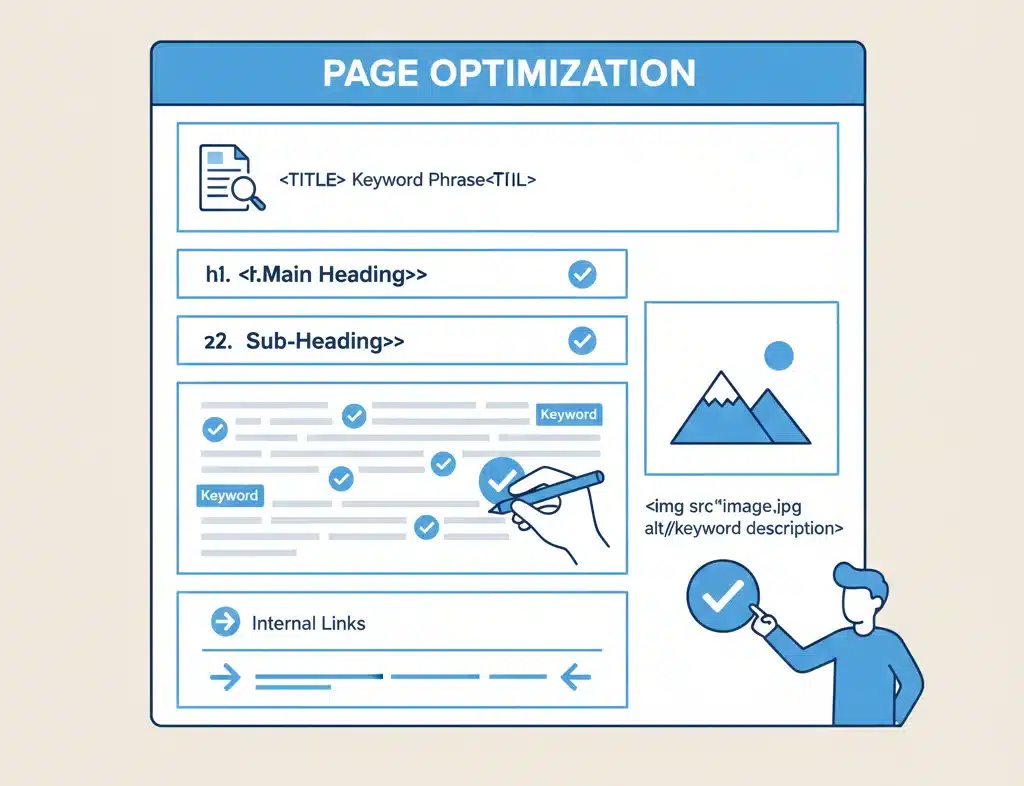
- On-page: Things you control on your site—content quality, titles, headers, internal links, schema, UX.
- Off-page: Signals away from your site—backlinks, digital PR, brand mentions, reviews.
Why it matters: You need both: on-page to deserve rankings; off-page to win against competitors.
How to do it:
- On-page: Intent-matched content, optimized HTML elements, meaningful internal linking.
- Off-page: Earn links via content that’s worth citing, partnerships, and PR.
Interview tip: Say “Strong on-page is the foundation; off-page accelerates.”
Q3. How do search engines work?
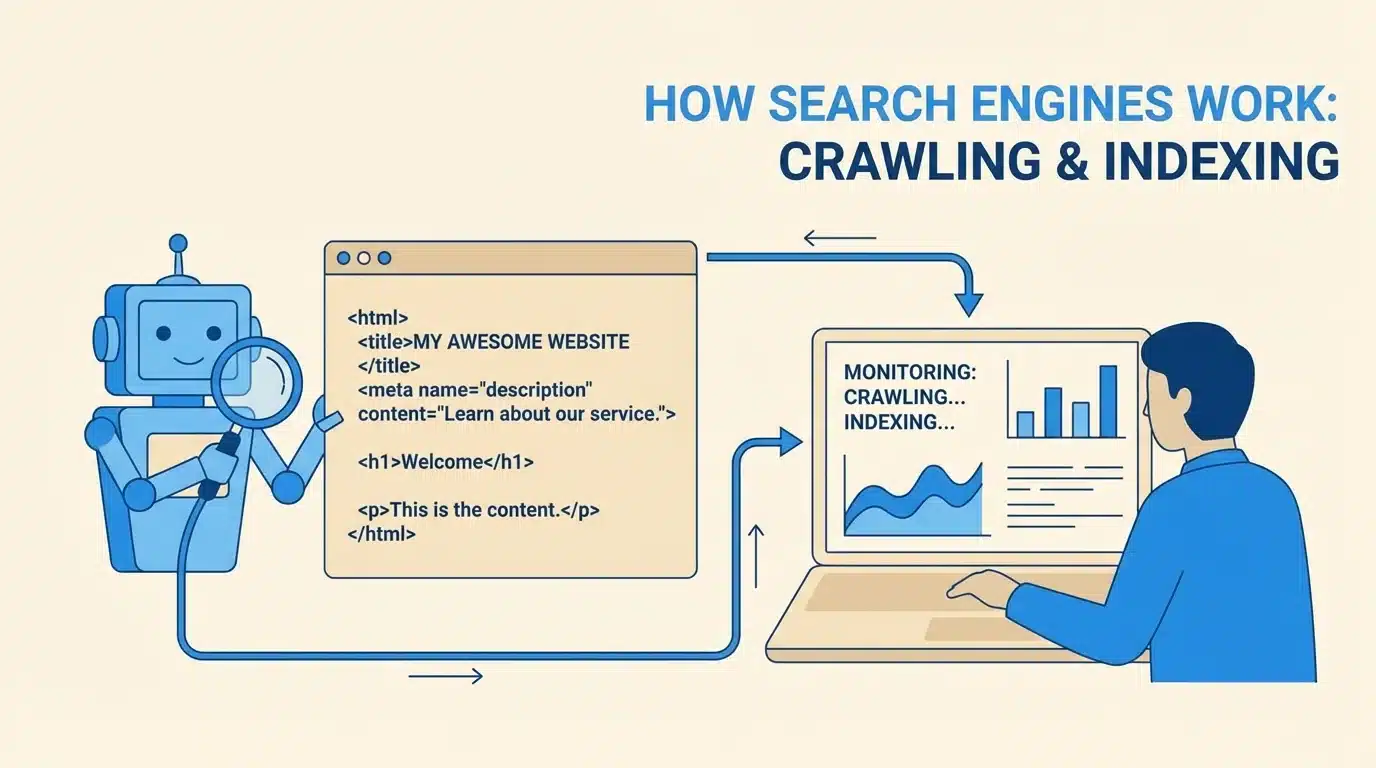
They crawl pages via links/sitemaps, render to see content (incl. JS), index what they can understand, then rank results using hundreds of signals (relevance, quality, UX, freshness).
Why it matters: If bots can’t crawl or render critical content, it can’t rank.
How to do it:
- Provide XML sitemaps; fix broken links.
- Avoid heavy JS without SSR/CSR best practices.
- Use internal links and avoid deep, orphaned pages.
Q4. Organic vs Paid results?
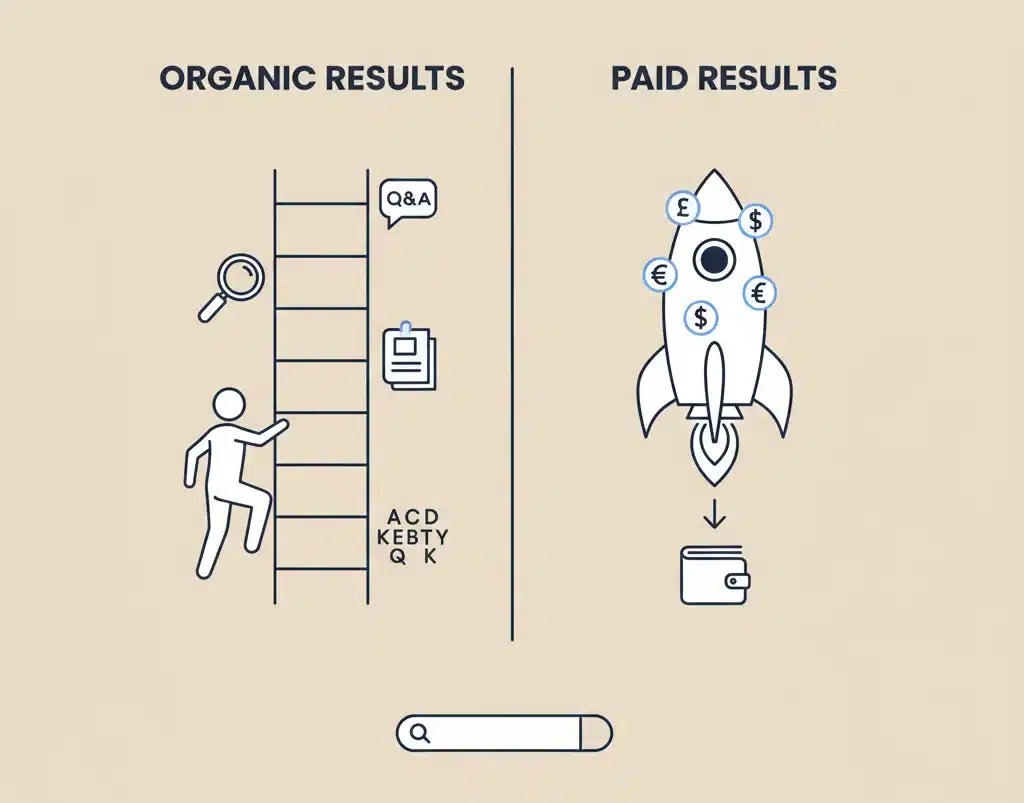
- Organic: Earned via SEO; free clicks; compounding value.
- Paid: Ads via auctions; instant but stops when spend stops.
Why it matters: Smart teams run both: paid for speed/testing; SEO for durable growth.
Q5. What are SERPs?
Search Engine Results Pages: blue links, featured snippets, People Also Ask (PAA), images, videos, news, local packs, product listings, etc.
Why it matters: Understanding SERP layouts helps you choose content format (FAQ, how-to, video) to capture more real estate.
How to do it: Analyze SERP features before writing; add suitable schema; target snippet-friendly structures.
On-Page SEO Interview Questions
Q6. What is keyword research and why does it matter?
It’s finding exactly how your audience searches and mapping those terms to content that matches their intent (informational, commercial, transactional, navigational).
Why it matters: Prevents content guesswork; improves ROI.
How to do it:
- Gather terms (GSC, Ahrefs/Semrush, autocomplete, PAA).
- Identify intent + difficulty.
- Cluster related terms (topic clusters).
- Map clusters to pages.
- Prioritize by business value.
Example:
- Cluster: “best running shoes for flat feet”, “supportive running shoes women”, “arch support running shoes”.
- Pillar page + subpages/FAQs.
Interview tip: Mention topic clustering and intent alignment.
Q7. What is keyword cannibalization?
Multiple pages target the same keyword/intent → they compete, dilute equity, and cause volatility.
Fix:
- Merge overlapping pages; 301 to the best URL.
- Adjust internal anchors to the primary page.
- Differentiate intents with content and titles.
Q8. Best practices for title tags & meta descriptions
- Title: ~50–60 chars, primary keyword first, unique, matches intent; add brand if room.
- Description: ~150–160 chars, benefits + CTA, unique, natural keywords.
Why it matters: Titles influence ranking and CTR; descriptions primarily CTR.
Example
Title: Women’s Running Shoes for Flat Feet | BrandName Example
Description: Find stable, comfortable shoes designed for arch support. Compare top models and pick your perfect fit today.
Q9. Why do heading tags (H1–H3…) matter?
They structure content for users and bots. Use one H1, clear H2/H3 sections, natural terms, and avoid stuffing.
Why it matters: Better readability → more engagement → stronger ranking signals.
Q10. How does internal linking help SEO?
It distributes authority, improves discovery, and clarifies page relationships.
How to do it:
- Use descriptive, natural anchors.
- Link from high-authority pages to priority pages.
- Build hub & spoke structures.
- Fix orphan pages; keep click depth low (≤3).
Quick win: Add links from top traffic posts to new landing pages.
Q11. What are canonical tags and when to use them?
<link rel=”canonical” href=”https://example.com/preferred-url/” /> tells search engines the preferred version when duplicates/variants exist (sorts, filters, UTM).
Do: Self-reference on unique pages; keep canonicals consistent with internal links & sitemaps. Don’t: Canonicalize to non-equivalent content.
Q12. Dofollow vs Nofollow/UGC/Sponsored
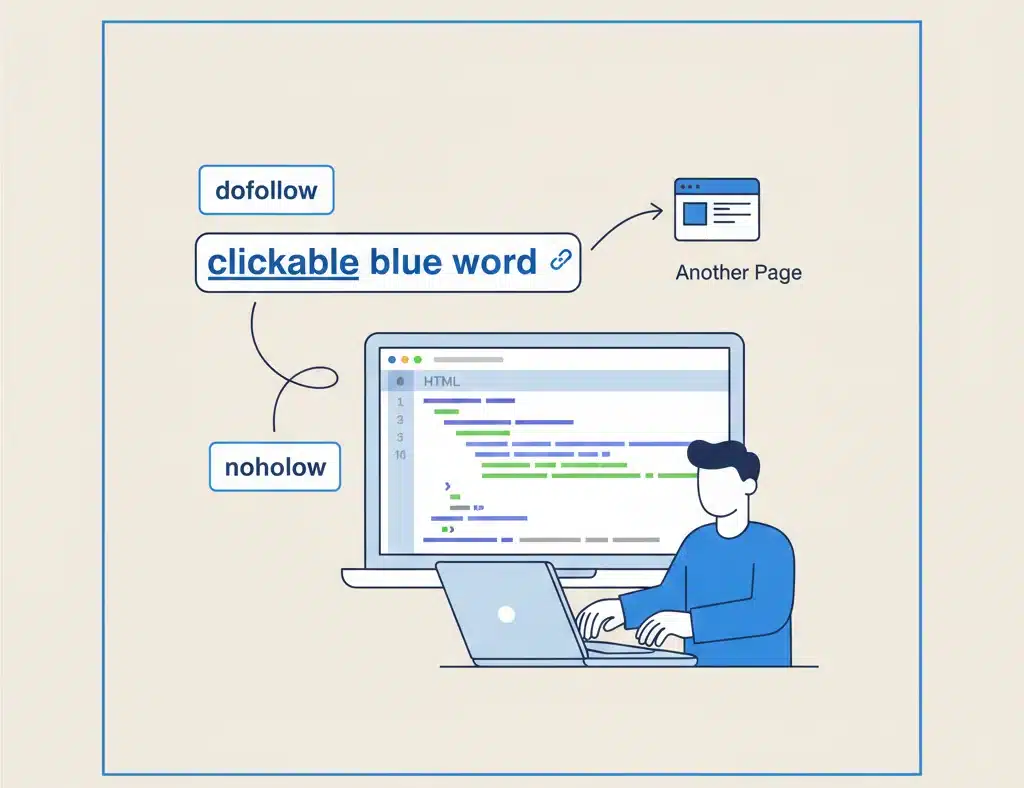
- Default links pass equity (“dofollow”).
- rel=”nofollow”/ugc/sponsored” signal link type to reduce passing equity or to declare sponsorship/UGC.
- Use sponsored for paid partnerships; ugc for forum/comments.
Interview tip: Emphasize policy compliance and sensible use.
Off-Page SEO Interview Questions
Q13. What are backlinks and why are they important?
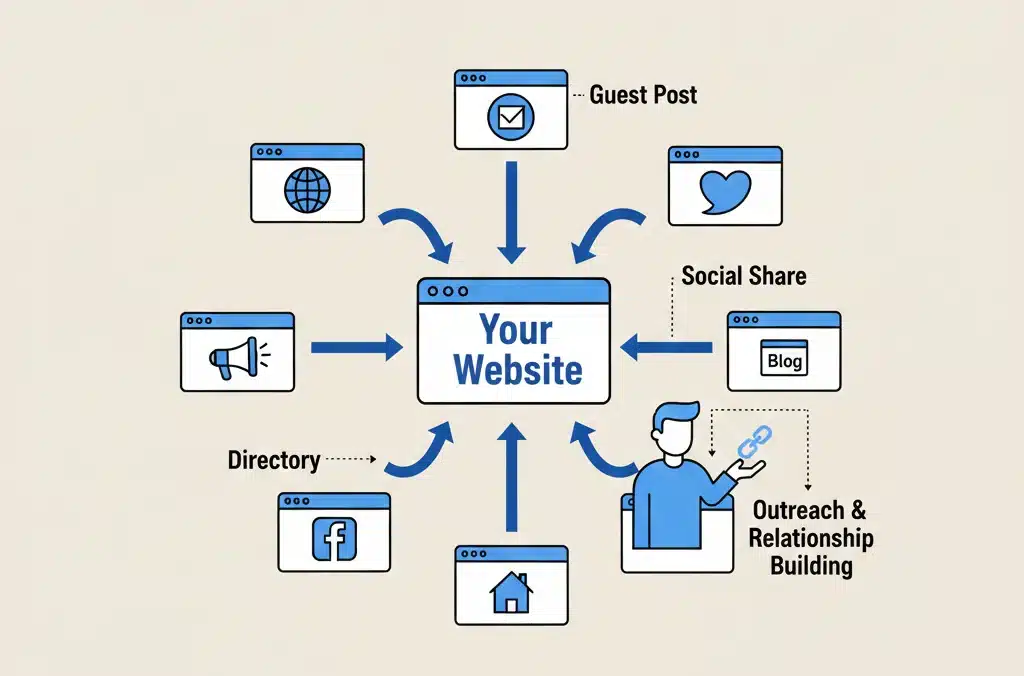
Links from other sites to yours. Quality (relevance, authority, placement, anchor, uniqueness) beats quantity.
How to earn: Linkable assets (data studies, tools), digital PR, expert contributions, resource pages, broken-link outreach.
Q14. White-hat vs Black-hat vs Grey-hat
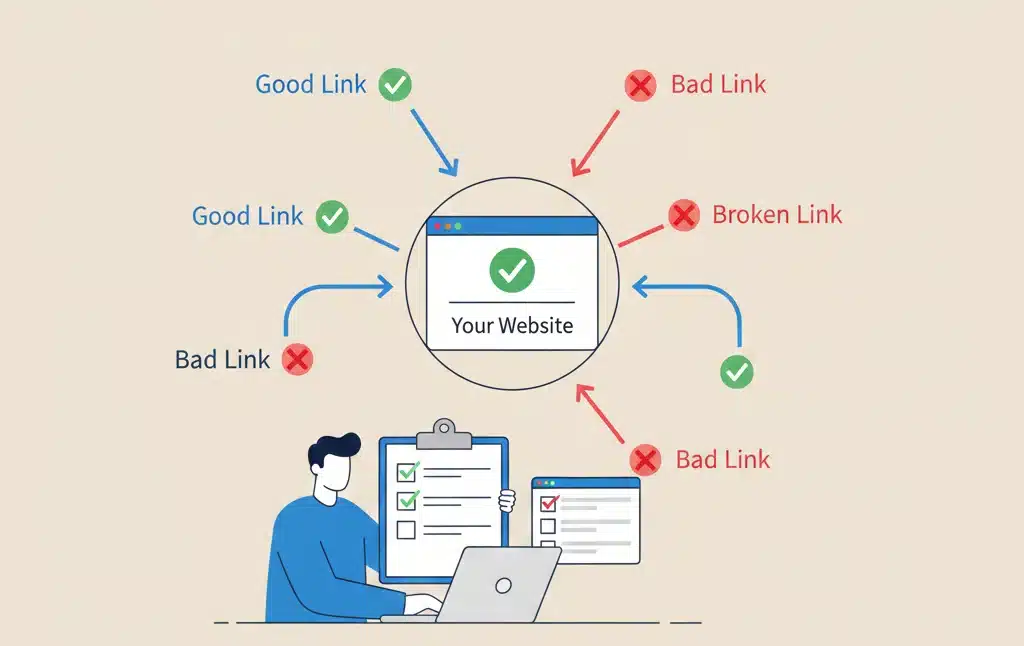
- White-hat: User-first, guideline-compliant (PR, editorial links).
- Black-hat: Manipulative (link schemes, cloaking, doorway pages). Risky.
- Grey-hat: In-between (PBNs, aggressive guest posting). Risk varies.
Interview tip: “I run risk-aware, sustainable strategies.”
Q15. Effective link-building in 2026
Digital PR (data-driven stories), unlinked brand mentions → outreach, tools/templates, partnerships/sponsorships, authoritative guest features, niche communities.
Priorities: Relevance, editorial context, audience fit.
Q16. What are DA/PA (Moz) and should we rely on them?
Third-party estimates of authority at domain/page level. Useful for prospecting/benchmarking—but not Google signals. Consider traffic relevance too.
Q17. Do social signals impact SEO?
Not directly as a ranking factor, but they boost discovery and can lead to links and branded search—indirect SEO gains.
Technical SEO Interview Questions
Q18. What is robots.txt?
A file at /robots.txt guiding bots what to crawl. It doesn’t prevent indexing if other signals link to a URL.
User-agent: *
Disallow: /cart/
Allow: /blog/
Sitemap: https://example.com/sitemap.xml
Best use: Control crawl budget; don’t hide sensitive pages—use auth or noindex.
Q19. What is an XML sitemap?
Machine-readable list of important, canonical URLs with optional lastmod.
Best practices:
- Only indexable URLs.
- Update when adding/removing pages.
- Submit in Search Console.
Q20. WWW vs non-WWW
They’re separate hosts. Pick one, 301 redirect to it, and keep canonicals/internal links/sitemaps consistent.
Q21. 301 vs 302 redirects
301 (permanent): Passes most equity; use for migrations, URL changes.
- 302 (temporary): Short-term; test or seasonal routes.
Note: Long-lived 302s may be treated as 301—but set intent correctly.
Q22. What is canonicalization?
The process of consolidating duplicate/near-duplicate URLs to a single preferred one using canonicals, redirects, and parameter rules.
Watch: Search Console’s “Duplicate, Google chose different canonical”/“Duplicate without user-selected canonical”.
Q23. How to handle duplicate content?
- Identify sources (parameters, print pages, pagination, localized variants, tag archives).
- Fix with canonicals, 301s, noindex, improved IA, unique content.
- Ensure one indexable URL per intent.
Q24. What is page speed and how to optimize it?
Speed impacts UX, conversion, and rankings. Focus on Core Web Vitals:
- LCP (load speed): Optimize hero images/video, server TTFB, use CDN.
- INP (interactivity): Reduce JS, defer non-critical scripts, optimize hydration.
- CLS (stability): Reserve space for images/ads, avoid layout shifts.
Tools: PageSpeed Insights, Lighthouse, CrUX, RUM.
Q25. Mobile-first indexing

Google primarily uses the mobile version for indexing/ranking. Ensure parity (same content/schema/meta), accessible navigation, and unblocked resources. Test with a mobile crawler.
Q26. What is schema markup and why use it?
Structured data (JSON-LD) that clarifies meaning (Article, FAQ, Product, Breadcrumb…). It can unlock rich results and improve understanding/CTR.
Example (FAQ):
<script type=”application/ld+json”>
{
“@context”:”https://schema.org”,
“@type”:”FAQPage”,
“mainEntity”:[
{“@type”:”Question”,”name”:”How long is shipping?”,”acceptedAnswer”:{“@type”:”Answer”,”text”:”3–5 business days.”}}
]
}
</script>
Q27. What is hreflang and when to use it?
Tells search engines the language/region of pages (e.g., en-US, en-GB) to serve the right locale and avoid duplication.
Rules: Mutually reference variants, point to canonical URLs, apply per equivalent pages (tags, headers, or sitemaps).
Advanced SEO Interview Questions
Q28. How does RankBrain work (practically speaking)?
It helps interpret ambiguous/novel queries and adjusts results based on user satisfaction over time.
What to do: Write for intent clarity, cover sub-topics, ensure fast answers and good UX.
Q29. What is E-E-A-T and how to show it?
Experience, Expertise, Authoritativeness, Trustworthiness. Show author bios/credentials, cite reputable sources, keep content accurate and updated, display policies (About, Contact, Returns), and use HTTPS.
Extra: Add expert review for YMYL topics (health, finance, legal).
Q30. Core Web Vitals (LCP, INP, CLS)
Field-measured UX metrics.
- Optimize hosting, caching, image compression, critical CSS, and reduce third-party bloat.
- Track by template and device; fix regressions via CI checks.
Q31. Semantic search & topical authority
Search engines understand entities and relationships. Build topic clusters: a comprehensive pillar page + interlinked sub-topics, FAQs, tools, and media.
Outcome: Better coverage → stronger authority → improved rankings across the cluster.
Q32. Long-tail keywords
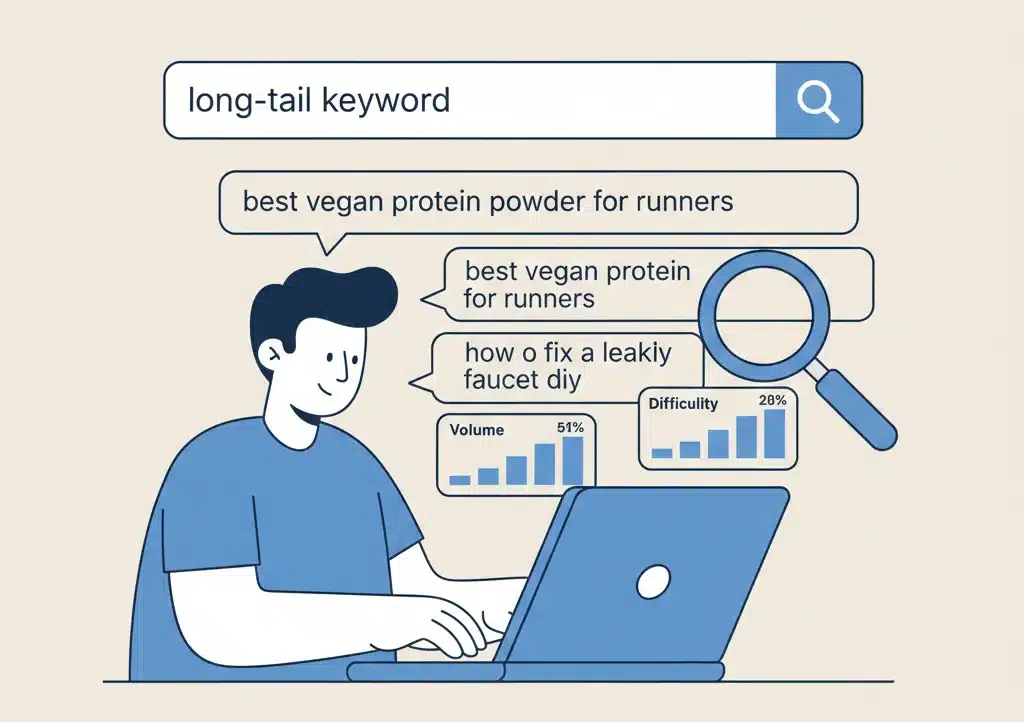
Specific, longer queries with clearer intent and lower competition (e.g., “best vegan protein powder for baking”). Great for new sites and conversion-ready visitors.
Tactic: Group long-tails under broader pillars; answer precisely.
Q33. Crawling vs Indexing vs Rendering
- Crawling: Discovery of URLs (links/sitemaps).
- Rendering: Executing JS/CSS to “see” content.
- Indexing: Storing content in Google’s index to be eligible to rank.
Tip: If JS loads critical content, ensure it’s renderable (SSR/Hybrid).
Q34. How does AI (like ChatGPT) impact SEO in 2026?
Users make more conversational, multi-step queries; SERPs show more AI-generated summaries. Commodity content loses value.
Win with: Original insights, experience-led content, data, tools, calculators, community, and media formats (video, interactive) that AI cites or can’t replicate.
Q35. Voice search optimization
Target natural questions, concise answers (40–60 words), FAQ sections + schema, strong local SEO (for “near me”), fast mobile pages, and snippet-ready formatting.
Q36. “Latest” Google updates—how do you respond?
Rather than memorize names, explain process:
- Confirm drop in GSC/GA4 (scope, pages, countries).
- Check Search Status Dashboard & industry chatter.
- Identify intent/quality gaps; update content; improve EEAT and UX.
- Document fixes; annotate dashboards; monitor recovery.
Local SEO Interview Questions
Optimizing to appear in location-based searches and Google Maps.
Levers: Google Business Profile (GBP), NAP consistency, local citations, reviews, localized content, local links, proximity/relevance/prominence.
Q38. What is Google Business Profile (GBP) and why is it critical?
Your business’s panel in Search/Maps: categories, hours, photos, services, posts, reviews, Q&A.
Optimize:
- Accurate categories (primary + secondary).
- Complete services/menu/product lists.
- Fresh photos and weekly posts.
- Rapid review responses + Q&A management.
Q39. How to optimize for “near me” searches?
Strong GBP + localized landing pages, embed map, local keywords, local backlinks (sponsorships, chambers), and consistent reviews with natural keywords.
Q40. What are citations?
NAP mentions on directories and relevant niche sites.
Why it matters: Confirms business data; helps local trust. Keep data consistent; fix duplicates.
Q41. How do reviews affect local SEO?
Influence local pack visibility and conversions. Encourage genuine reviews, reply professionally, address issues offline, and showcase reviews on-site (with compliant schema; no gating/faking).
Analytics and Tools Related Interview Questions
Q42. What is Google Search Console (GSC)?
Google’s view of your site: indexing, coverage, enhancements, queries, CTR, positions, manual actions, sitemaps, CWV.
Use cases: Diagnose drops, find winning queries, fix indexing, measure impact.
Q43. What is GA4 and how is it different?
Event-based analytics focused on user journeys, privacy, cross-device. Configure key events (e.g., generate_lead, purchase), mark conversions, build Explorations, and connect to BigQuery.
Q44. Popular SEO tools in 2026
Ahrefs, Semrush, Screaming Frog / Sitebulb, GSC, GA4, log analyzers, Lighthouse/PageSpeed, Surfer/ClearScope, Looker Studio.
Tip: Choose tools by job-to-be-done (research, audit, monitoring, reporting).
Q45. How do you measure SEO success?
- Primary: Organic revenue/leads/pipeline.
- Leading: Visibility (Top 3/10), CTR, qualified sessions.
- Health: Index coverage, CWV pass rate, crawl errors, link growth.
Present: Annotated dashboards to separate SEO impact from seasonality/campaigns.
Q46. How do you track keyword rankings?
Rank trackers (daily/weekly) + GSC queries. Track by topic and intent, not just single keywords; split by device/location; combine with CTR & conversion data.
Practical/Scenario-Based SEO Interview Questions
Q47. Sudden drop in organic traffic—what’s your process?
- Scope it: Pages, devices, countries (GSC/GA4).
- Tech check: robots.txt, noindex, 404/500, redirects, DNS/SSL.
- Google side: Manual actions, algorithm volatility.
- SERP diffs: New competitors/features.
- Content: Intent mismatch, thinness, outdated info, weak EEAT.
- Links: Sudden loss/toxic patterns.
- Plan: Prioritized fixes + monitoring with annotations.
Q48. Site has “good content” but no rankings—what now?
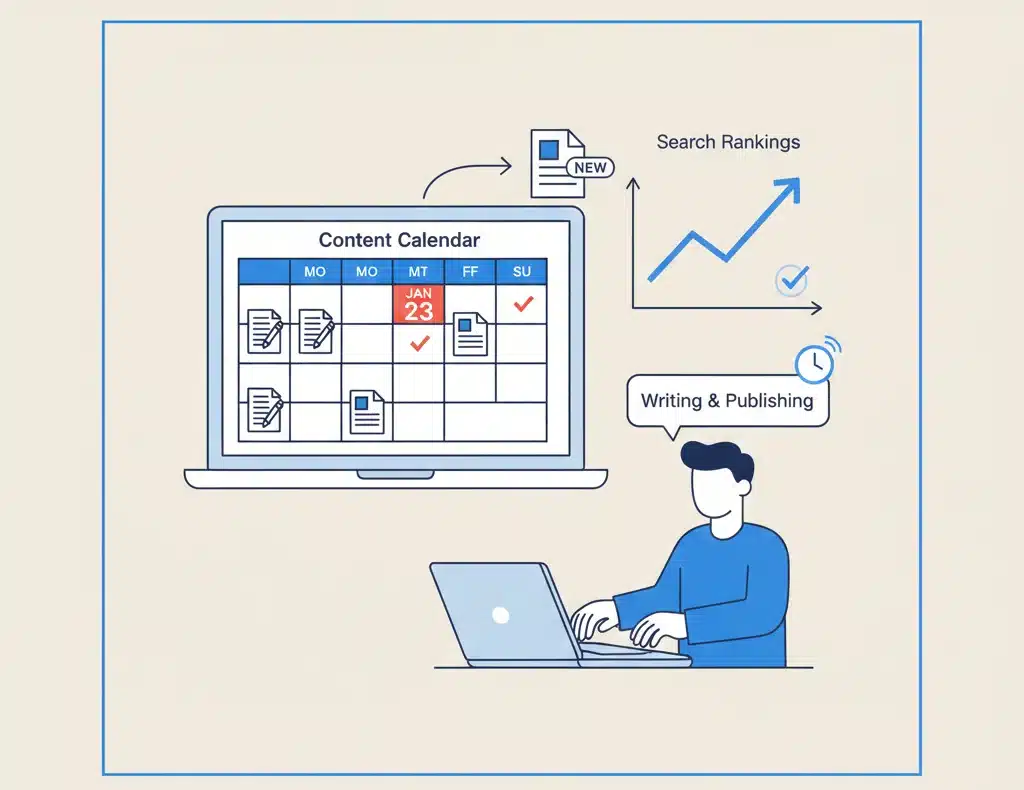
Validate intent vs format (listicles vs how-tos vs comparisons), add topical depth, improve internal links, secure relevant links, fix speed/rendering, strengthen EEAT (author bios, sources, fresh edits), and improve page experience.
Q49. How do you perform an SEO audit?
- Technical: Crawlability, indexability, CWV, canonicals, hreflang, structured data, sitemaps/robots, logs.
- On-page: Content quality, headings, duplication, internal links.
- Off-page: Link quality, anchors, growth patterns.
- Analytics: Correct tracking, goals, baselines. Deliver a prioritized roadmap (impact × effort) with owners and timelines.
Q50. Client wants quick results—how do you respond?
Set expectations: SEO is compounding. Offer a dual track—quick wins (tech fixes, internal links, CTR improvements) + paid campaigns for immediate traffic. Share a 30-60-90 plan with milestones.
Q51. How to optimize a site for a new product launch?
- Research demand & SERP features.
- Publish landing page early (pre-launch), gather emails.
- Create support content (FAQ, comparisons, how-to).
- Add Product/FAQ schema.
- Run PR/partner outreach; align with paid ads.
- Ensure fast media, reviews/testimonials at launch.
HR/General SEO Interview Questions
Q52. Why choose SEO as a career?
It combines analytics, creativity, and business impact; it’s measurable, evolving, and directly tied to growth.
Interview tip: Share a short story of a project where your SEO work moved a KPI.
Q53. Where do you see SEO in 5 years?
More AI-assisted creation/search, higher bar for UX and trust, greater emphasis on experience-rich, original content and brand authority.
Q54. How do you stay updated?
Official Google channels, credible SEO publications, peer communities, webinars, and running experiments on test sites. Set alerts for site changes and performance anomalies.
Q55. Ever handled a penalty? How did you recover?
- Manual: Identify cause (link/content spam), remove/fix, document, submit reconsideration.
- Algorithmic: Improve content quality/intent coverage/EEAT; clean link profile; monitor recovery over weeks/months with annotations.
Q56. How do you prioritize SEO tasks?
Impact × Effort matrix. Fix blockers first (indexing, wrong redirects), then CWV/speed and intent-mapped content, then authority and enhancements. Tie each item to a KPI and an expected uplift.
Quick SEO Tips for Interview Preparation
- Bring three examples of measurable wins (traffic, CVR, CWV).
- Prepare a 10-minute mini audit of the employer’s site (3 wins, 3 risks).
- Know your prioritization framework and 30-60-90 plan.
- Practice concise explanations of technical topics (canonicals, rendering, hreflang).
- Be transparent about trade-offs and risk management.
Conclusion
SEO interviews in 2026 are not just about memorizing terms – they are about showing practical skills, problem-solving, and real strategies. If you prepare with these 50+ SEO interview questions and answers, you’ll walk into your interview more confident and job-ready.
Passionate about blogging and focused on elevating brand visibility through strategic SEO and digital marketing. Always tuned in to the latest trends, I’m dedicated to maximizing engagement and delivering measurable ROI in the dynamic world of digital marketing. Let’s connect and unlock new opportunities together!