


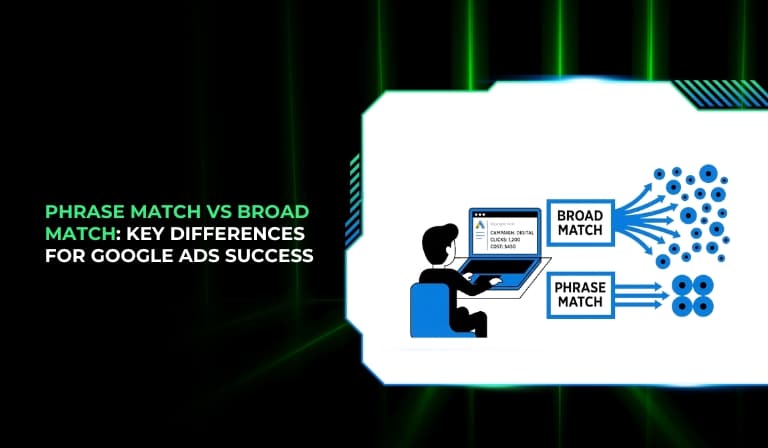
Choosing between phrase match and broad match is no longer a minor settings choice in Google Ads; it is a strategic decision that shapes your traffic quality and budget efficiency. As Google’s automation and machine learning have advanced, each match type behaves differently than it did a few years ago, making it essential to understand how they now work in practice.

What is Broad Match?
Broad match is the default keyword match type in Google Ads and is designed to give your ads the widest possible reach. When you add a keyword in broad match (without any symbols), your ads can show for searches that are related to your keyword, even if they do not include the exact words you entered.
With broad match, Google may show your ad for:
- Misspellings, singular/plural forms, and related variations of your keyword.
- Synonyms and searches with the same or similar meaning or intent, not just exact wording.
- More general or specific queries that Google’s systems infer as relevant to your keyword and landing page.
Because broad match relies heavily on Google’s understanding of user intent, landing page content, and other signals, it can uncover new, high-intent queries you might not have thought to target directly. However, the same flexibility can also introduce irrelevant searches if not monitored and refined regularly.
What is Phrase Match?
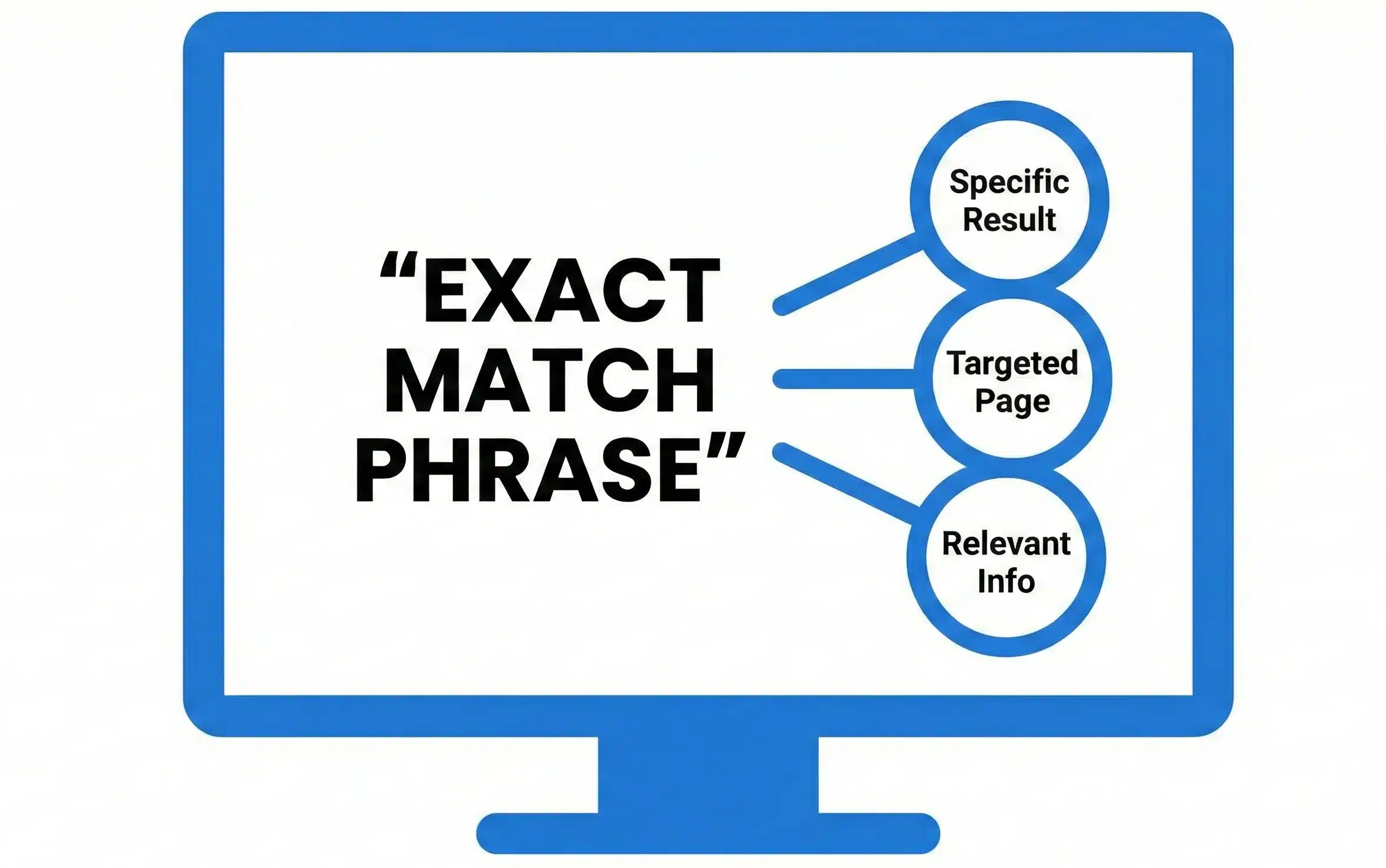
Phrase match is a more focused match type that shows your ad on searches that include the meaning of your keyword phrase, usually with the words appearing in a similar order or with close variants. To use phrase match, you put your keyword in quotation marks, such as “running shoes” or “at-home workout plan”.
With phrase match, your ads can show when:
- The search query contains your phrase or a close variation that keeps the same meaning, potentially with extra words before or after.
- The query uses plural/singular, misspellings, or near-synonyms that still express the same intent as your phrase.
However, phrase match generally will not show when the query inserts unrelated words that change the meaning in the middle of your phrase. This makes phrase match more restrictive than broad match but more flexible than exact match, giving you a middle ground between volume and relevance.
Key Differences: Broad vs Phrase Match
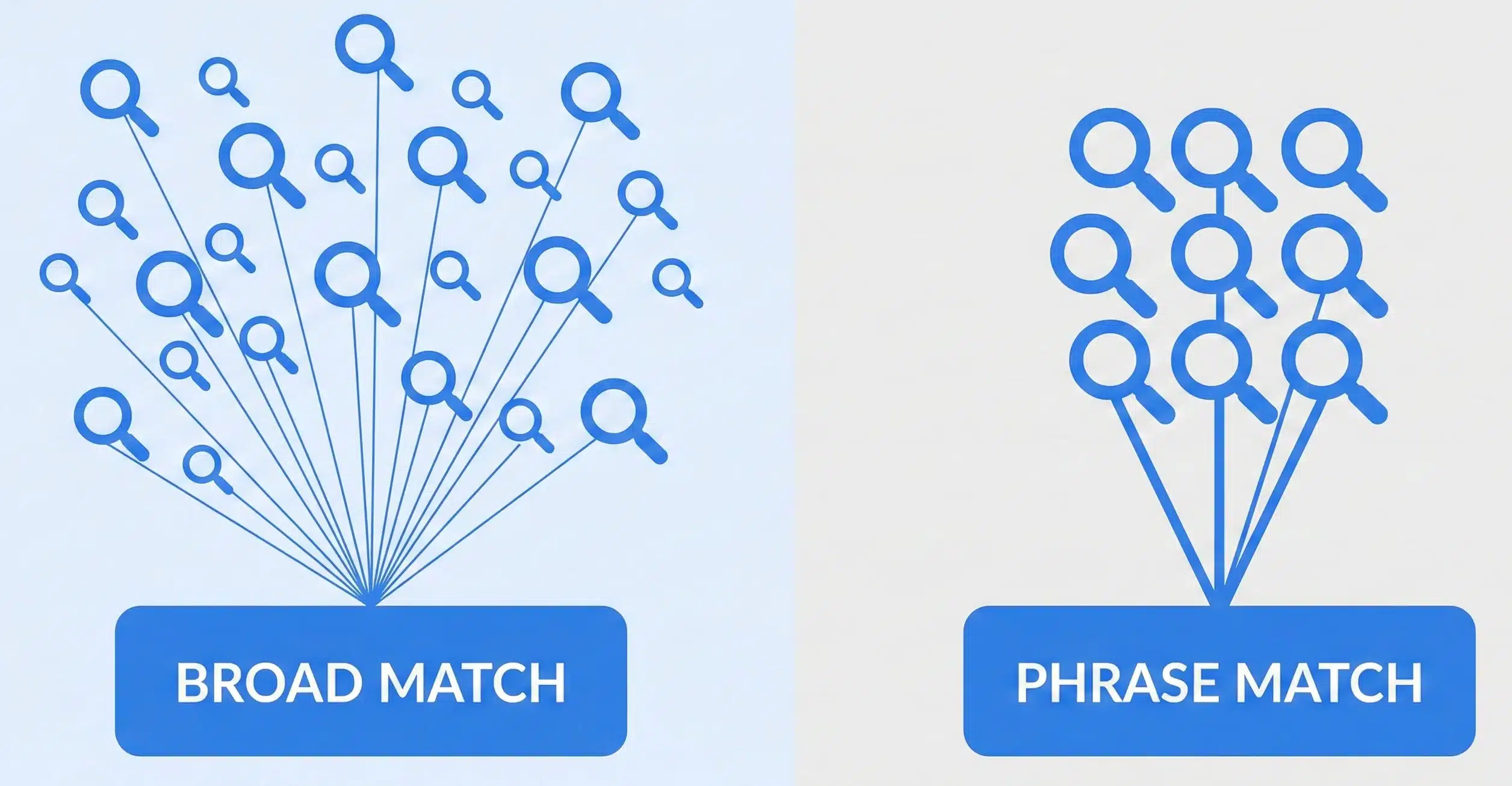
The core differences between broad match and phrase match can be grouped into reach, control, relevance, and performance impact.
Reach and Specificity
Broad match delivers the highest reach among the main match types because it can match to a wide set of related and contextual queries, even when the user’s search does not contain your exact keyword terms. Phrase match has a narrower reach because it focuses on searches that include the meaning of your specific phrase, limiting impressions to queries that closely align with your wording and intent.
In practice, this means broad match is better at discovering new search terms, while phrase match is better at concentrating traffic around a more defined set of intents.
Control and Relevance
Because broad match is less restrictive, your control over exactly which queries trigger your ads is lower, and your exposure to loosely related or low-relevance searches is higher. On the other hand, phrase match offers more control by requiring the phrase meaning to be present, which generally improves query alignment and relevance.
Advertisers often use phrase match when they want to avoid Google interpreting their keywords too broadly, especially in niches where small wording differences significantly change user intent.
Performance Metrics
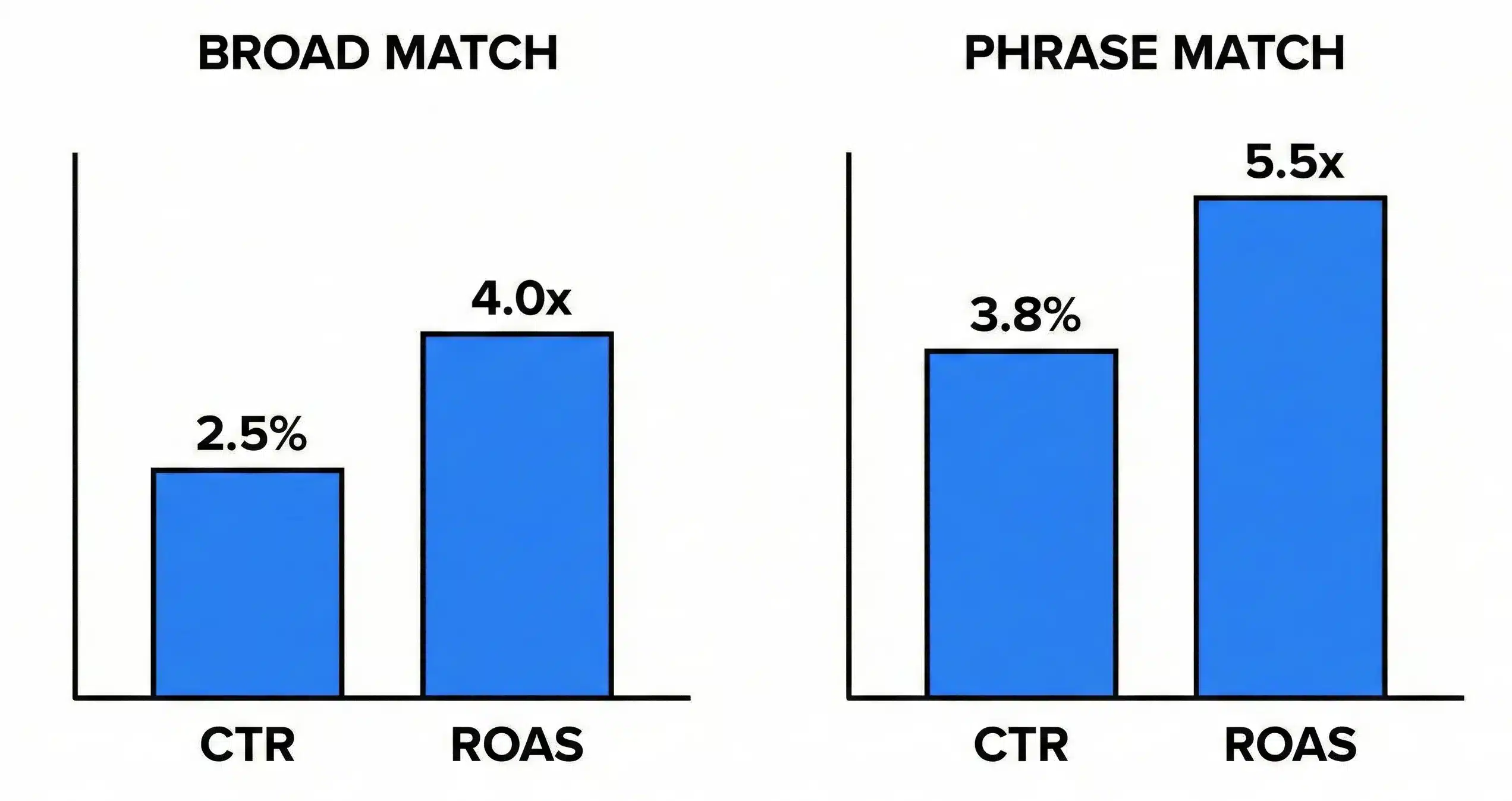
Broad match can generate higher impression and click volume, which is useful for testing new ideas, collecting search term data, and feeding automated bidding systems with more signals. Phrase match, due to tighter relevance, commonly supports higher click-through rates (CTR) and more stable return on ad spend (ROAS) when targeting well-defined intents.
Recent analyses indicate that cost per click (CPC) trends and AI-driven bidding can influence whether broad or phrase match is more cost-effective in a given account, with some data showing phrase match CPCs rising faster in certain periods. This makes ongoing performance monitoring and testing between match types essential.
Broad vs Phrase Match Table
| Aspect | Broad Match | Phrase Match |
| Syntax | Keyword with no symbols (e.g., running shoes) | Keyword in quotes (e.g., “running shoes”) |
| Reach | Widest; includes related and inferred-intent queries | Moderate; queries closely tied to phrase meaning |
| Control over queries | Lowest; high dependence on Google’s interpretation | Medium; maintains phrase meaning and structure |
| Typical relevance | Mixed; can be high or low depending on setup | Generally higher due to phrase-based filtering |
| Best role in strategy | Discovery, scaling, and feeding Smart Bidding | Targeting defined intents at controlled scale |
When to Use Each Match Type
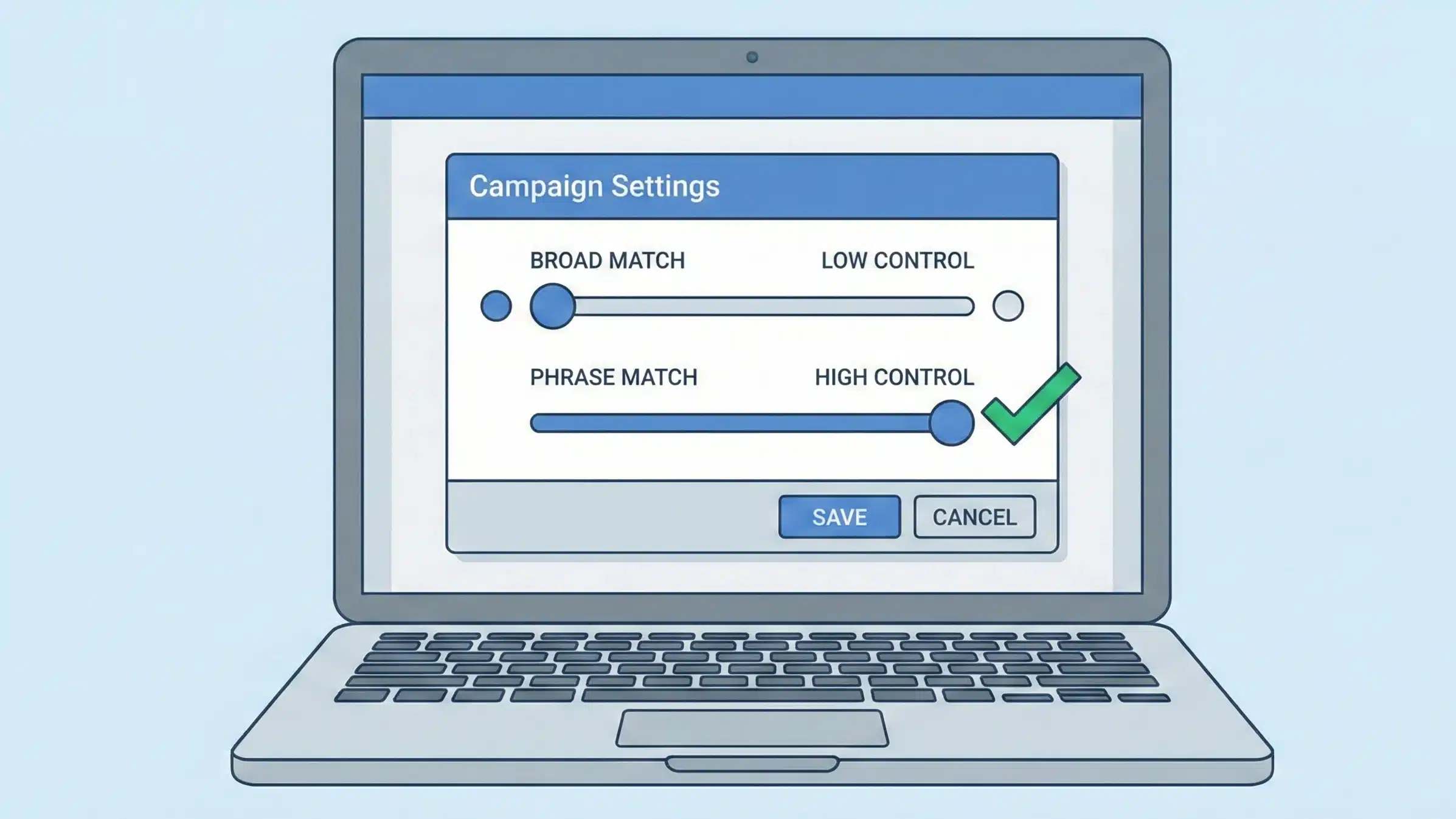
Choosing between broad and phrase match depends on your campaign goals, budget flexibility, and how mature your account and data are.
Broad Match Scenarios
Broad match tends to perform best in situations where volume and discovery are valuable and you are comfortable leaning on automation and strong negative keyword management.
You may prefer broad match when:
- You are launching new campaigns or entering a new market and need to quickly collect search term and intent data.
- Your primary goal is brand awareness or upper-funnel traffic, especially when you want to appear for a wide range of related searches.
- You have a diverse product/service catalog where many related queries can legitimately convert on some part of your offering.
- You are using automated bidding strategies (such as Target CPA or Target ROAS) and want to give the system more signals to optimize against.
In these situations, it is important to review the search terms report regularly and apply negative keywords to cut out unprofitable queries. Without that ongoing optimization, broad match can lead to wasted spend on irrelevant clicks.
Also Read: Optimization Score: What It Is And How To Improve It
Phrase Match Scenarios
Phrase match is often better suited for advertisers who already understand their profitable queries and want more precise traffic without going all the way to strict exact match.
You may prefer phrase match when:
- You are targeting mid- to lower-funnel users searching for specific offerings where wording and intent need to stay tight.
- You have already run broader match campaigns and now want to narrow down to the highest-performing phrases from your search term data.
- You want to keep control over query themes while still allowing some variation and additional qualifiers around your phrase.
- Your budget is more constrained and you need to prioritize relevance and efficiency over experimentation.
Phrase match can help improve CTR and ROAS by focusing impressions on highly relevant searches, especially when paired with strong ad copy that mirrors those phrases.
Other Match Types and Strategies
Broad and phrase match sit alongside other important keyword tools in Google Ads, and they are usually most effective when combined thoughtfully rather than used in isolation.
- Exact match: Uses square brackets (e.g., [running shoes]) and focuses on searches that have the same or very similar meaning as your keyword, giving maximum control but the smallest reach.
- Negative keywords: Block your ads from showing for specific terms and can be set as negative broad, phrase, or exact, helping refine traffic and reduce wasted spend regardless of your positive match types.
Many successful accounts blend broad, phrase, and exact match with layered negatives, allowing broad match to explore, phrase match to scale profitable themes, and exact match to protect top-performing queries.
Best Practices for Google Ads Success
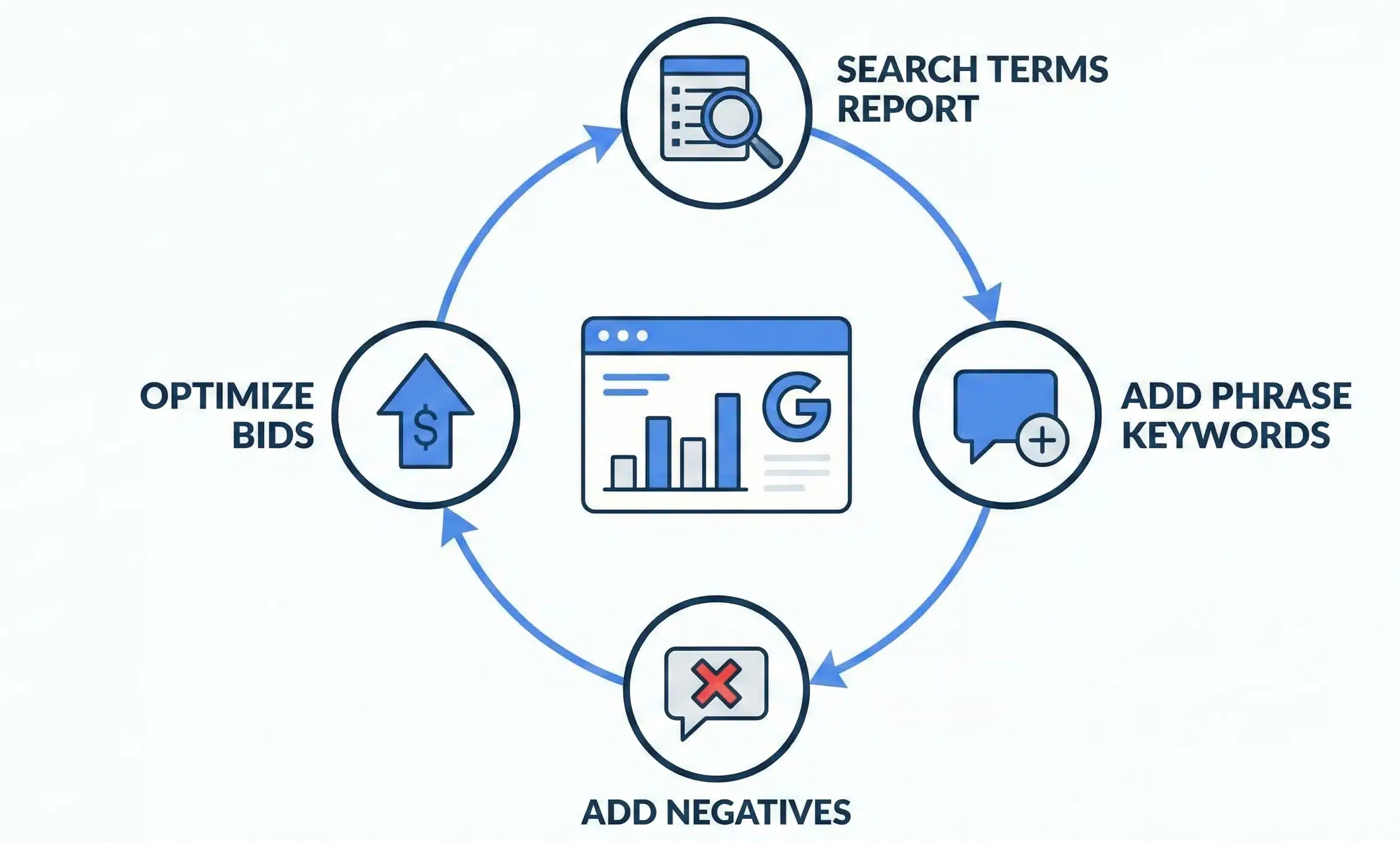
Using phrase match and broad match effectively requires ongoing optimization and alignment with your goals, not a one-time choice.
Key practical best practices include:
- Start with clear goals: Decide whether you prioritize discovery, scale, or maximum efficiency, then map match types accordingly.
- Use broad match with automation and negatives: Pair broad match with smart bidding strategies and regularly prune irrelevant search terms using negatives.
- Promote high-value queries to phrase or exact: From your search term data, identify the phrases that consistently drive quality leads or sales and add them as phrase or exact match keywords.
- Monitor CPCs, CTR, and ROAS by match type: Evaluate performance at the match-type level, as cost and efficiency can shift over time with platform changes and competition.
Aligning these practices with your account structure and creative strategy gives both phrase match and broad match a clear, complementary role in your Google Ads approach.
Conclusion
Phrase match and broad match each play a distinct but interconnected role in Google Ads success, balancing reach, control, and efficiency in different ways. By understanding how they now behave, where each excels, and how to combine them with exact match and negative keywords, you can design campaigns that discover new opportunities while protecting your budget and maximizing ROI.
FAQs
1. What is the main difference between phrase match and broad match?
The main difference is how tightly each match type controls which searches can trigger your ads.
Broad match shows ads for a wide range of related queries, including synonyms and variations, while phrase match focuses on queries that include the meaning of your specific keyword phrase, usually in a similar order.
2. Which is better for beginners: broad match or phrase match?
For beginners, phrase match is usually safer because it gives more control and tends to keep traffic more relevant.
Broad match can work well for discovery, but it requires careful monitoring, negative keywords, and often automated bidding to avoid wasting budget on irrelevant searches.
3. When should I use broad match in my Google Ads campaigns?
Broad match works best when you want to:
- Discover new search terms and user intents
- Maximize reach and impressions
- Feed more data into automated bidding strategies like Target CPA or Target ROAS
If your goal is testing and learning, broad match is typically a strong starting point.
4. When is phrase match the better choice?
Phrase match is ideal when you:
- Already know your high-performing keyword themes
- Want to keep tighter control over which queries trigger your ads
- Have a more limited budget and need to prioritize relevance and efficiency
It strikes a balance between the strictness of exact match and the flexibility of broad match.
5. Can I use both broad match and phrase match in the same campaign?
Yes, and many advertisers do.
A common approach is to use broad match for exploration and volume, while phrase (and sometimes exact) match is used to protect and scale the best-performing queries identified from search term reports.
6. Does phrase match always require the exact phrase to appear in the search?
Not always as literal text, but the query must closely reflect the meaning of your phrase.
Google can match close variants and re-ordered words, as long as the intent stays the same and the phrase’s meaning is preserved.

Passionate about blogging and focused on elevating brand visibility through strategic SEO and digital marketing. Always tuned in to the latest trends, I’m dedicated to maximizing engagement and delivering measurable ROI in the dynamic world of digital marketing. Let’s connect and unlock new opportunities together!