



Many businesses invest in marketing but still fail to see real results. Why? Because they often rely on vanity metrics, ignore attribution, or use outdated KPIs that don’t reflect how modern customer journeys work. These mistakes lead to confusion, wasted budget, and unclear decision-making.

In 2026, measuring marketing performance means understanding how your audience behaves across multiple touchpoints, tracking their journey in real time, and using accurate data to guide your strategy. Customer behavior is evolving, marketing channels are expanding, and real-time insights are now essential—not optional.
KPIs (Key Performance Indicators) play a crucial role in all of this. They help businesses:
- Make smarter, data-driven decisions
- Spend marketing budgets efficiently
- Identify the channels that truly drive results
In this blog, we will explore the 10 essential KPIs you must track in 2026 to measure performance effectively.
Let’s dive into the metrics that matter most.
Why Measuring Marketing Performance Matters More Than Ever
Marketing is becoming more expensive every year. Without proper measurement, businesses end up wasting money on campaigns that don’t convert.
Ignoring KPIs also leads to:
- Missed revenue opportunities
- Weak campaign decisions
- Inefficient strategy adjustments
Industry studies show that companies with strong attribution and ROI tracking outperform competitors by a wide margin. Data-driven marketing helps you understand what works, what doesn’t, and how to allocate your budget wisely.
In 2026, accurate measurement is no longer just helpful—it is a major competitive advantage.
The 10 Essential KPIs for Measuring Marketing Performance
KPI #1 – Conversion Rate
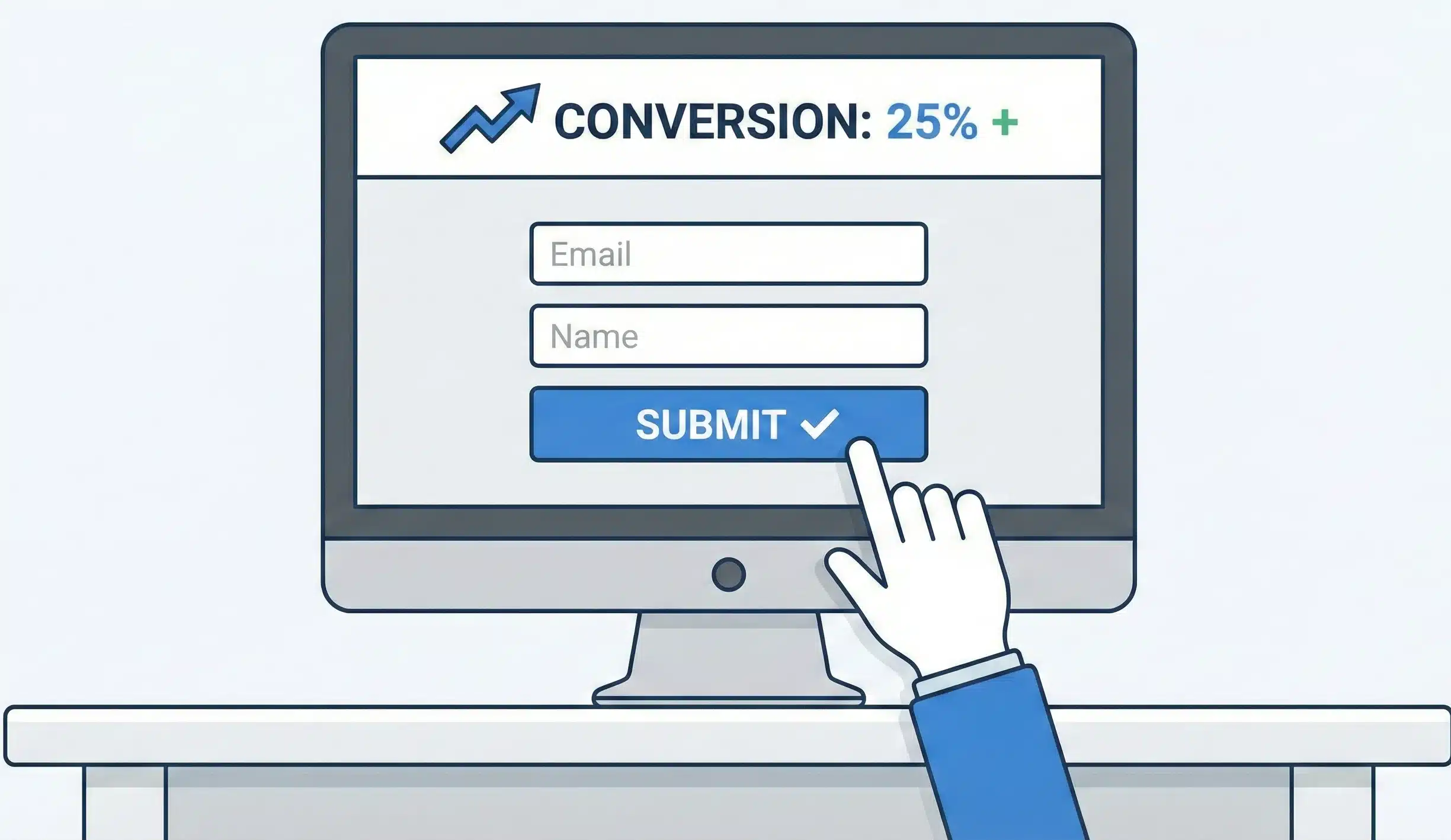
Definition: The percentage of users who complete a desired action—purchase, signup, download, etc.
Why it matters in 2026: Conversion Rate shows how effectively your marketing turns visitors into customers.
Formula: (Conversions ÷ Total Visitors) × 100
Channel Benchmarks:
- SEO: 2%–4%
- PPC: 3%–8%
- Social Media: 1%–3%
- Landing Pages: 5%–15%
Tools: GA4, Hotjar, HubSpot, Unbounce
Optimization Tips: Improve UX, simplify forms, use A/B testing, and enhance CTAs.
KPI #2 – Cost Per Acquisition (CPA)
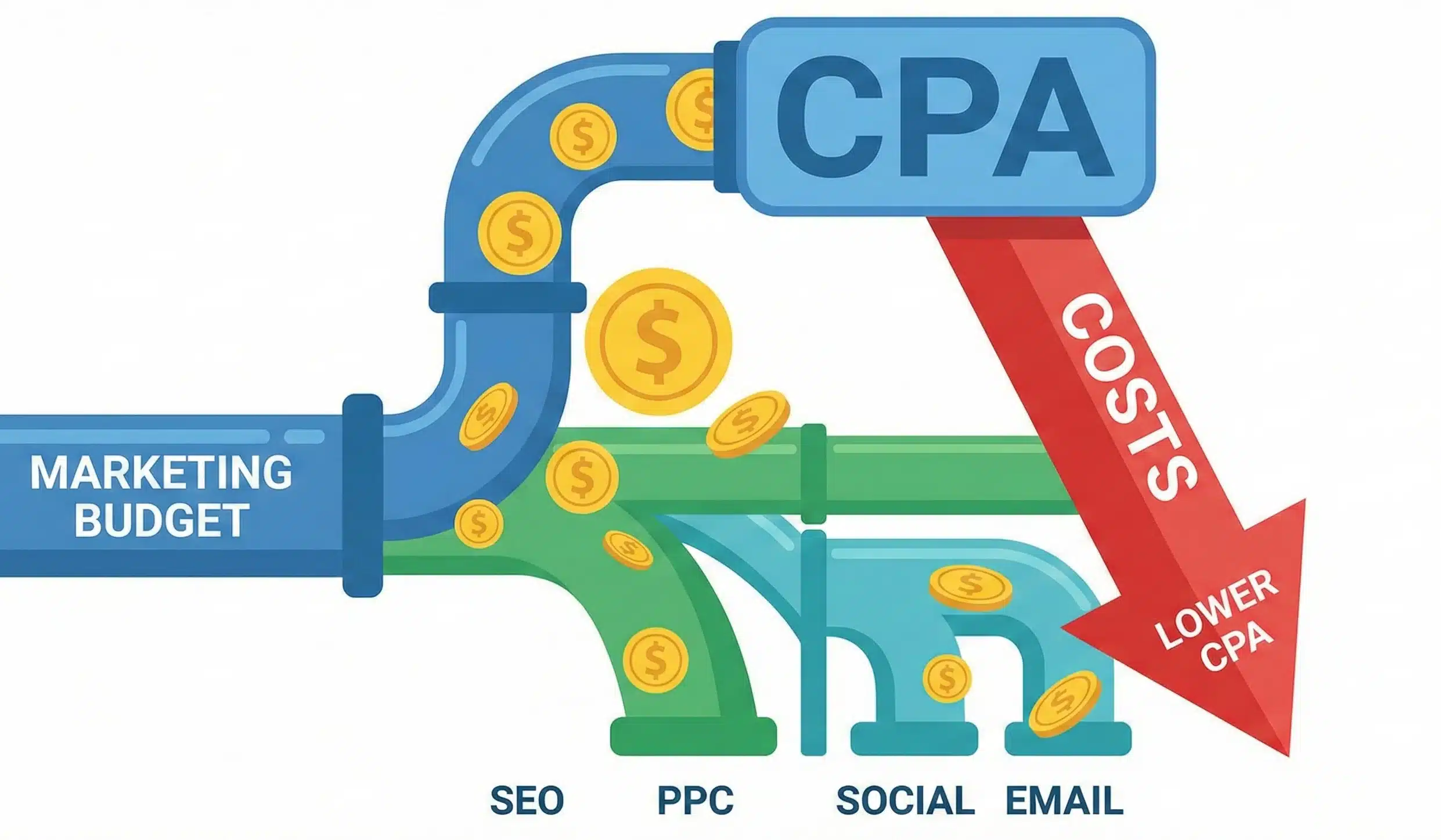
Definition: The cost of converting one customer.
Formula: Total Spend ÷ Total Conversions
Why it matters: It directly shows how efficiently you’re spending your budget.
Ways to Reduce CPA:
- Improve targeting
- Optimize landing pages
- Test new creatives
- Use retargeting
Channel Strategies:
- Search ads: Optimize keywords and bidding
- Social ads: Improve audience segmentation
- Email: Strengthen automation workflows
- Display: Test placements and exclusions
KPI #3 – Return on Ad Spend (ROAS)
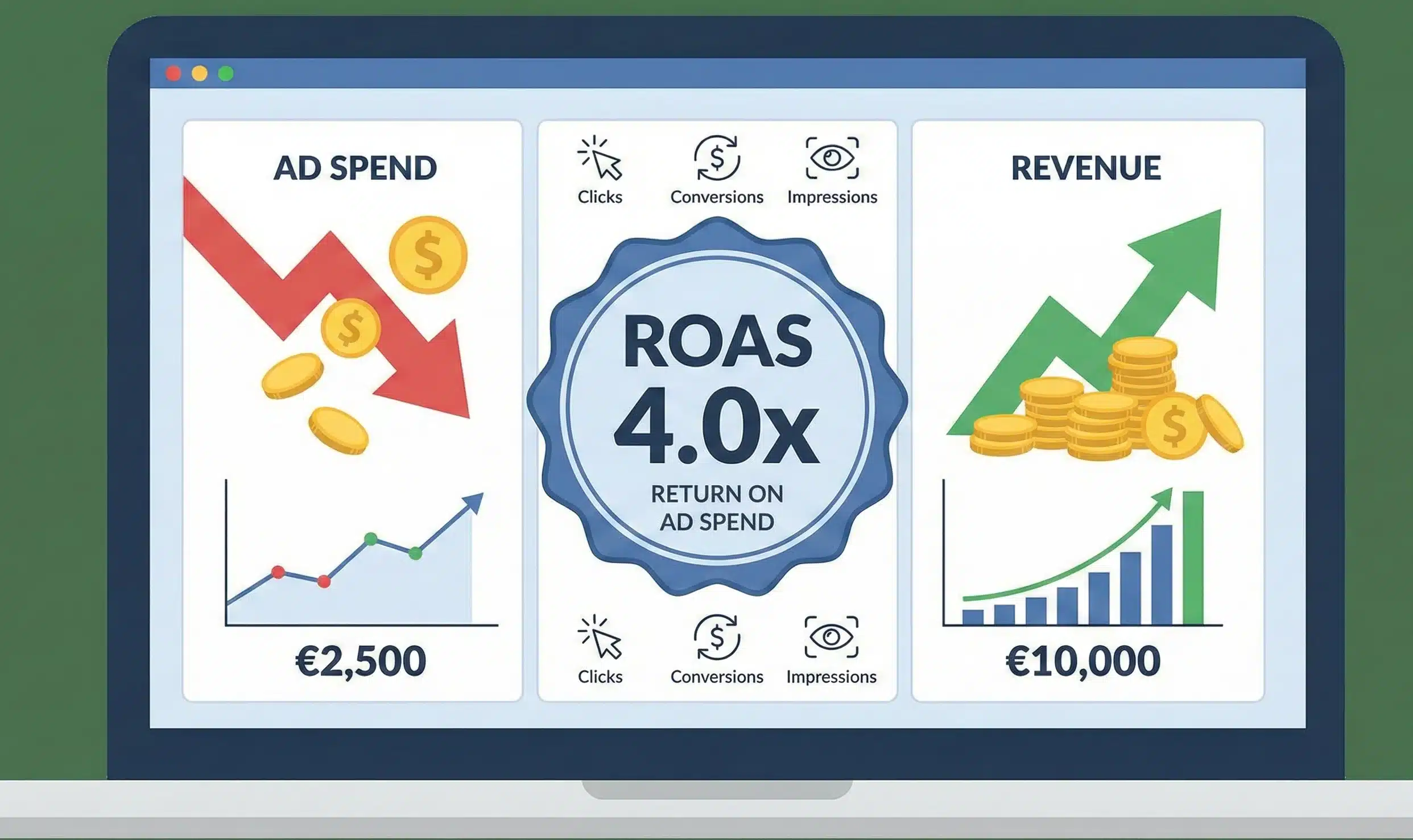
Definition: Measures how much revenue you earn for every dollar spent on ads.
Formula: Revenue from Ads ÷ Total Ad Spend
Interpretation:
- 4:1 = Strong ROAS
- 2:1 = Average
- Below 1:1 = Loss-making campaign
2026 Standards: Most industries aim for 3x to 5x ROAS.
How to Improve:
- Use better creatives
- Improve product pages
- Optimize targeting and bidding strategies
- Focus on high-intent audiences
KPI #4 – Customer Lifetime Value (CLV)
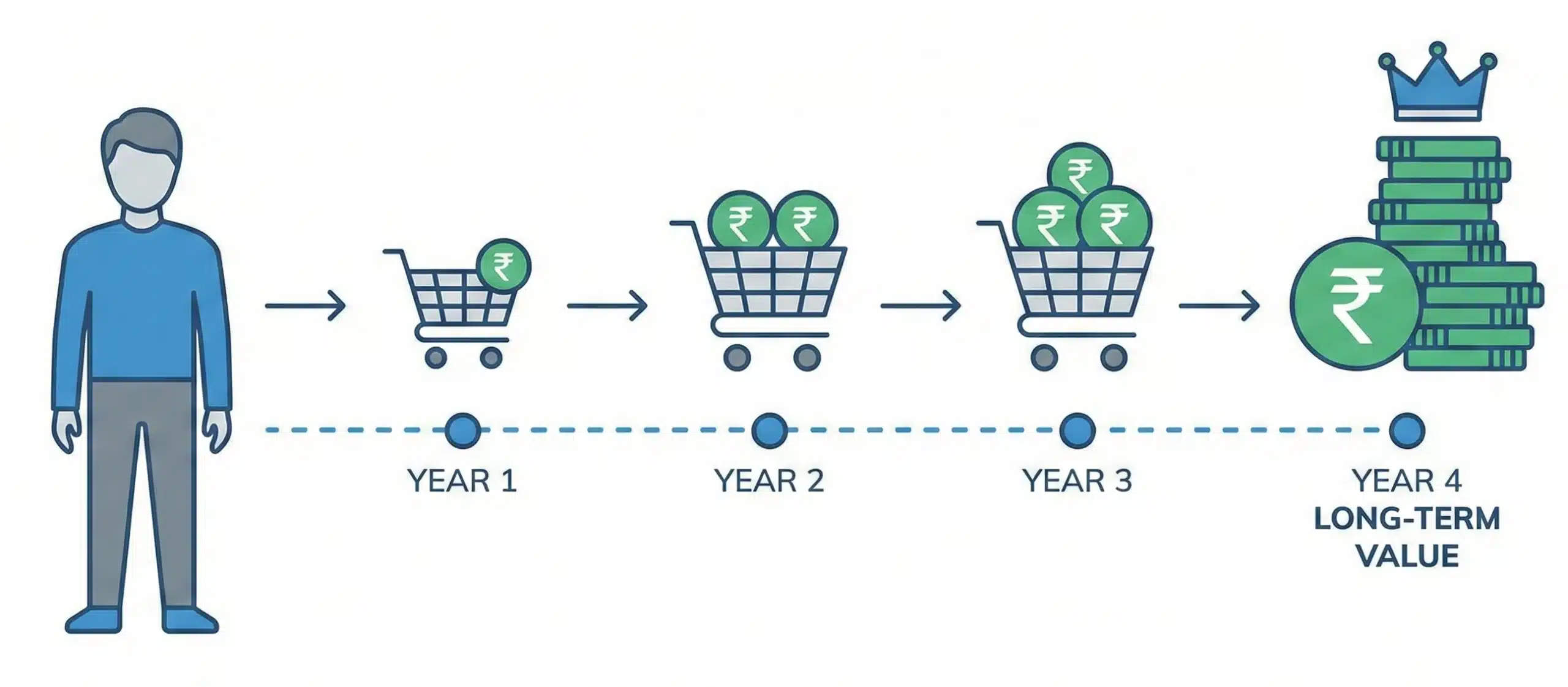
Definition: How much revenue a customer brings over their entire relationship with your business.
Simple Formula: Average Purchase Value × Purchase Frequency × Customer Lifespan
Why it matters:
- Helps you understand long-term revenue
- Determines how much you should spend on acquisition
Insights: If CLV > CAC, your marketing is profitable.
KPI #5 – Marketing Qualified Leads (MQLs)
Definition: Leads that show strong interest and are more likely to become customers.
Differences:
- MQL ≠ SQL
- MQLs need nurturing before becoming sales-ready
How to Measure Quality:
- Engagement with content
- Website behavior
- Email interactions
Sales Alignment: Define MQL criteria together to avoid lead-quality issues.
Impact: MQLs help predict pipeline growth and conversion success.
KPI #6 – Click-Through Rate (CTR)
Why CTR Matters: Shows how effective your ads, emails, or posts are at capturing attention.
Benchmarks:
- PPC ads: 2%–6%
- Social ads: 1%–3%
- Email: 2%–5%
How to Improve:
- Use attractive headlines
- Keep copy simple
- Test different creatives
- Match search intent
CTR + Conversion Rate: A strong CTR + strong conversion rate shows both interest and intent.
KPI #7 – Customer Acquisition Cost (CAC)
Definition: Total cost of acquiring a new customer.
Formula: (Sales + Marketing Costs) ÷ Total Customers Acquired
Industry Averages: Varies widely by industry, but CAC should always be compared with CLV.
Comparisons: Evalute CAC across channels—PPC, social, email, affiliates—to understand what’s most efficient.
Strategies to Lower CAC:
- Improve customer retention
- Use automation
- Build stronger organic channels
- Optimize ads based on performance data
KPI #8 – Attribution and Multi-Touch Attribution
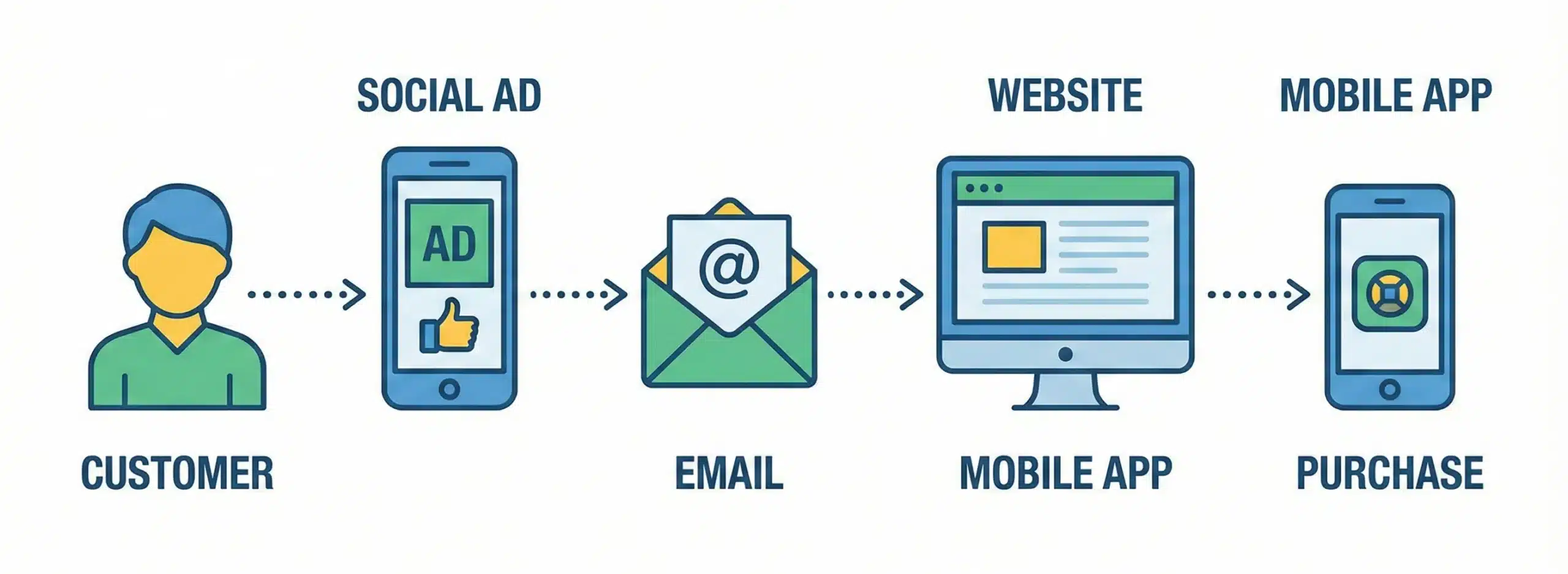
Why it matters in 2026: Customer journeys are longer and involve more touchpoints than ever.
Models to Know:
- First-click: Gives credit to the first interaction
- Last-click: Gives credit to the final touchpoint
- Multi-touch: Credits multiple touchpoints across the journey
How to Implement: Use tools that support event-based tracking and combined data streams.
Recommended Tools: GA4, HubSpot, Adobe Analytics, Ruler Analytics
KPI #9 – Brand Awareness Metrics
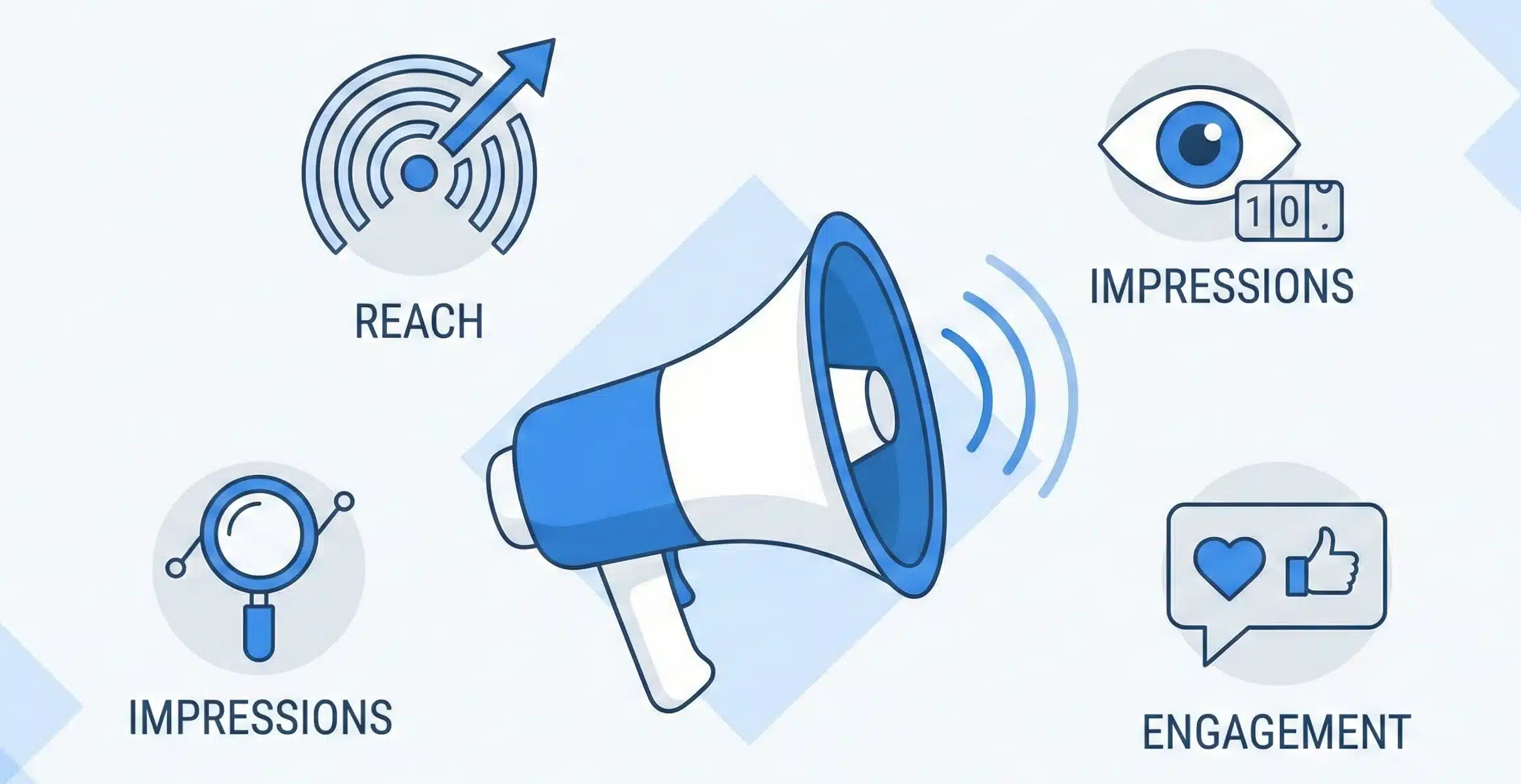
These KPIs help you understand how well your brand is being recognized.
Key Metrics:
- Reach and impressions
- Brand recall and recognition
- Sentiment analysis
- Share of voice
Social Listening Tools: Brand24, Mention, Sprout Social
Top-of-Funnel Measurement: Track landing page views, video views, and engagement activities.
KPI #10 – Marketing ROI and Revenue Impact
Definition: Measures how marketing directly contributes to revenue.
ROI Formula: (Revenue – Marketing Cost) ÷ Marketing Cost × 100
Contribution Analysis: Identifies which channels and campaigns drive real revenue.
Why it matters: It helps prove marketing’s value to leadership and secure larger budgets.
How to Set Up Measurement Systems (Tools & Technology)
To track KPIs effectively, you need the right tools and setup.
Essential Tools:
- Google Analytics 4
- HubSpot
- SEMrush
- CRM platforms
- Tableau / Looker Studio
Key Setup Steps:
- Build dashboards for real-time tracking
- Use automated reports
- Integrate all platforms
- Ensure data accuracy and consistent naming conventions
Common Mistakes When Measuring Marketing Performance
Avoid these common errors:
- Tracking vanity metrics instead of real performance indicators
- Keeping data siloed across channels
- Relying only on last-click attribution
- Setting unrealistic benchmarks
- Not updating KPIs as business goals change
Benchmarking Your Performance: What “Good” Looks Like
Every industry has different benchmarks. Compare your metrics with:
- Industry standards
- Competitor averages
- Historical performance
- Seasonal patterns
Use frameworks like SWOT, competitor gap analysis, and funnel audits to understand your position.
Creating an Action Plan from Your KPI Data
Once KPIs are measured, turn insights into action:
- Identify underperforming areas
- Make improvements based on patterns
- Use A/B testing to validate ideas
- Share clear reports with stakeholders
Action-based decisions can significantly improve results over time.
Measuring Marketing Performance Across Different Channels
Every channel has unique KPIs:
SEO
- Organic traffic
- Keyword rankings
- Organic conversions
PPC
- CPC
- Quality score
- ROAS
Social Media
- Engagement rate
- Reach
- Social conversions
Email Marketing
- Open rate
- CTR
- Revenue per campaign
Content Marketing
- Time on page
- Conversion assists
- Lead generation
Conclusion
Measuring marketing performance is essential for business growth in 2026. By tracking the right KPIs, you gain clarity, eliminate guesswork, and make smarter decisions.
Recap of the 10 essential KPIs: Conversion Rate, CPA, ROAS, CLV, MQLs, CTR, CAC, Attribution, Brand Awareness, Marketing ROI.
Now is the time to audit your current measurement system and build a stronger, data-driven marketing strategy.
Next Steps:
- Review your existing KPIs
- Set up tracking tools
- Optimize underperforming areas

Passionate about blogging and focused on elevating brand visibility through strategic SEO and digital marketing. Always tuned in to the latest trends, I’m dedicated to maximizing engagement and delivering measurable ROI in the dynamic world of digital marketing. Let’s connect and unlock new opportunities together!