



Marketing buzzwords are shorthand for complex ideas, but they often get used loosely and create confusion across teams and clients. The goal of this guide is to explain 25 marketing buzzwords likely to matter in 2026, focusing on what each term typically means in practice and how to use it without sounding vague or misleading. Several of these terms are closely tied to real shifts in marketing operations—especially AI-driven discovery (GEO), privacy-first data strategy, and automation—so treating them as definitions plus “how to apply” is more useful than treating them as hype.

AI & Automation Buzzwords
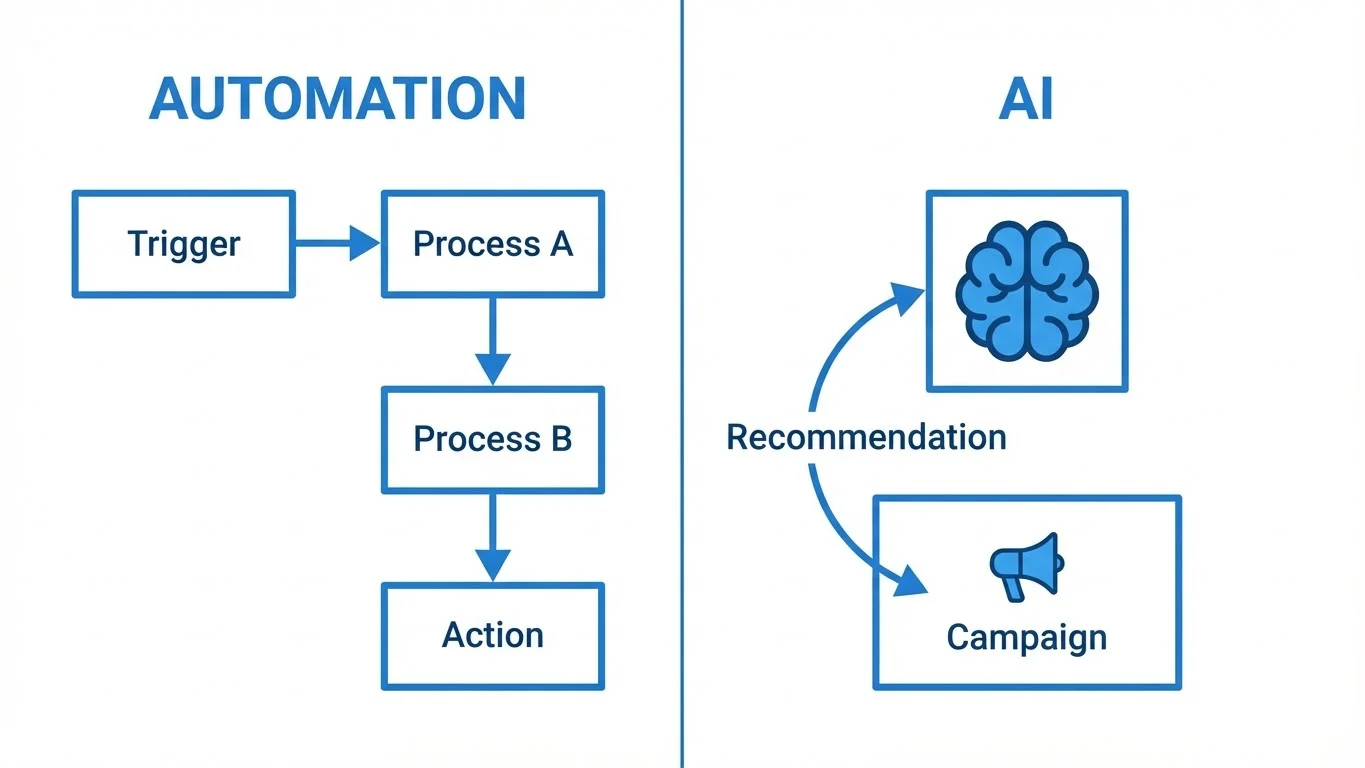
AI-Powered / AI Optimization (AIO)
This phrase is commonly used to signal that a product or workflow uses AI, but it can mean anything from simple rule-based automation to advanced machine-learning systems. Because “AI-powered” is not a standardized label, credibility comes from specifying what the AI does (e.g., prediction, classification, generation) and how humans review outputs.
- Use it when the AI function is clear: what input data it uses, what output it produces, and what decision it influences.
- Avoid using it as a blanket claim; instead, describe the capability (e.g., “AI agent that executes tasks with limited supervision” rather than “AI-powered marketing”).
- Add proof points that can be measured (accuracy, time saved, conversion lift), not just adjectives.
Generative AI / Generative Engine Optimization (GEO)
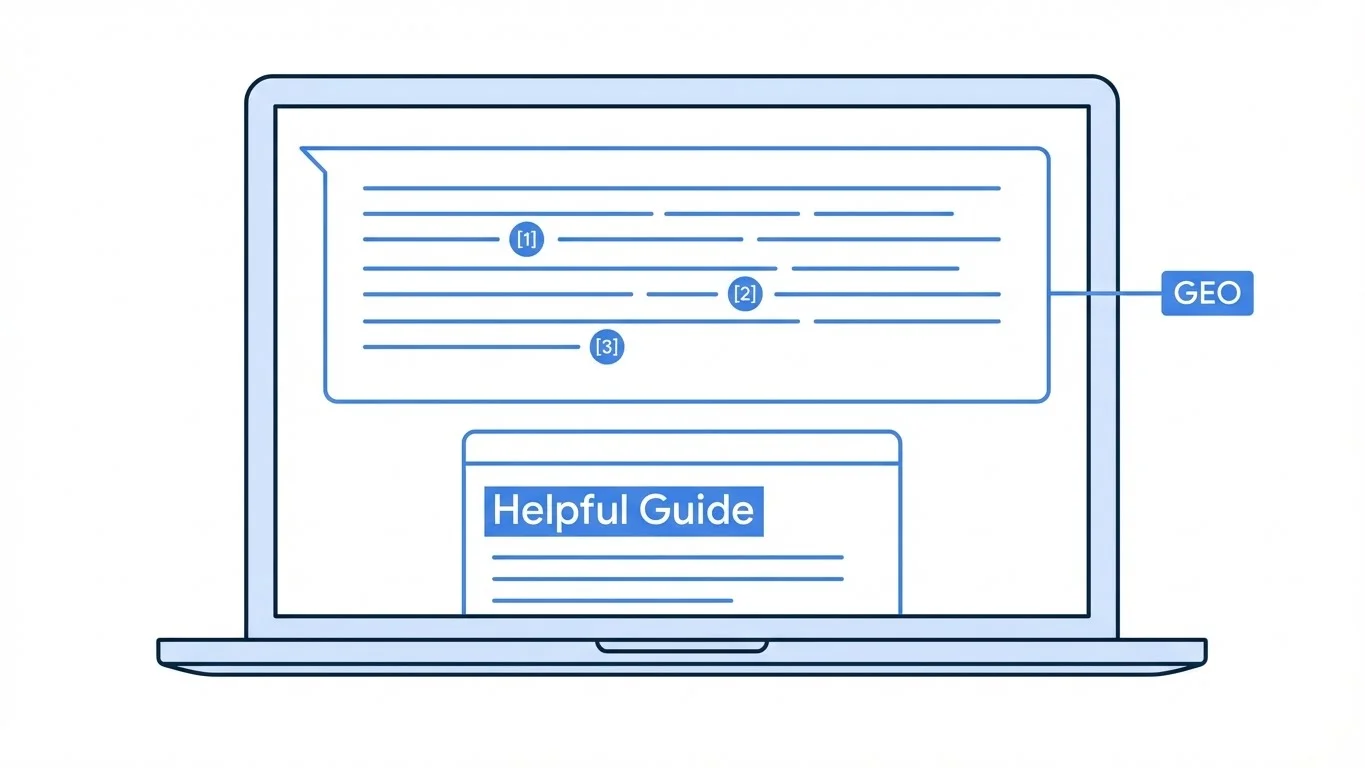
Generative AI refers to models that can create new content (text, images, audio) based on patterns learned from data, which is why it has changed content production and ideation across marketing teams. GEO (Generative Engine Optimization) is the practice of adapting content and online presence to increase visibility in responses produced by generative AI systems, and it has been described as an emerging counterpart to SEO in the AI era.
- Treat GEO as “optimize to be used/cited in AI answers,” not only “rank in blue links.”
- Focus on clear, structured, verifiable information because GEO discussions emphasize how AI systems select and present sources and how marketers can track citations/referrals.
- Track performance differently: GEO write-ups commonly highlight monitoring cited sources and AI-engine referrals rather than only keyword rankings.
Predictive Analytics

Predictive analytics is typically used to describe statistical or machine-learning methods that forecast likely outcomes (e.g., churn risk, conversion probability) using historical data. In marketing, its practical value is in prioritization—deciding who to target, what message to use, or when to engage—based on probability rather than guesswork.
- Common uses: propensity scoring, churn prediction, lead scoring, demand forecasting.
- Requirements: clean historical data, a feedback loop (outcomes captured), and a governance plan for bias and drift.
- Best practice: pair predictions with playbooks (what action to take when a score changes).
Marketing Automation
Marketing automation generally means using software to run repeatable marketing processes (e.g., email sequences, lead routing, segmentation) at scale. Many 2025 trend discussions frame automation’s evolution as increasingly AI-enabled and closely connected to omnichannel execution and personalization, which is why the term continues to show up in strategy decks.
- Automate workflows that are consistent and measurable (nurture sequences, onboarding, reactivation).
- Integrate with CRM so that sales and marketing share lifecycle stage, activity history, and outcomes.
- Use guardrails: frequency caps, human review for sensitive segments, and clear “exit conditions” in journeys.
Chatbots & Conversational AI
Conversational AI refers to systems designed to interact with users in natural language, which in marketing typically supports lead capture, qualification, and customer support triage. The most credible positioning is to define what the bot can do autonomously vs. when it hands off to a human, aligning with the broader definition of agentic/goal-driven AI systems that operate with limited supervision.
- Best use cases: FAQs, booking, lead qualification, routing to the right team.
- Key metrics: resolution rate, handoff rate, CSAT, lead-to-meeting rate.
- Risk control: disclose bot usage, log conversations, and establish escalation rules.
Customer Experience & Personalization Buzzwords
Omnichannel Marketing
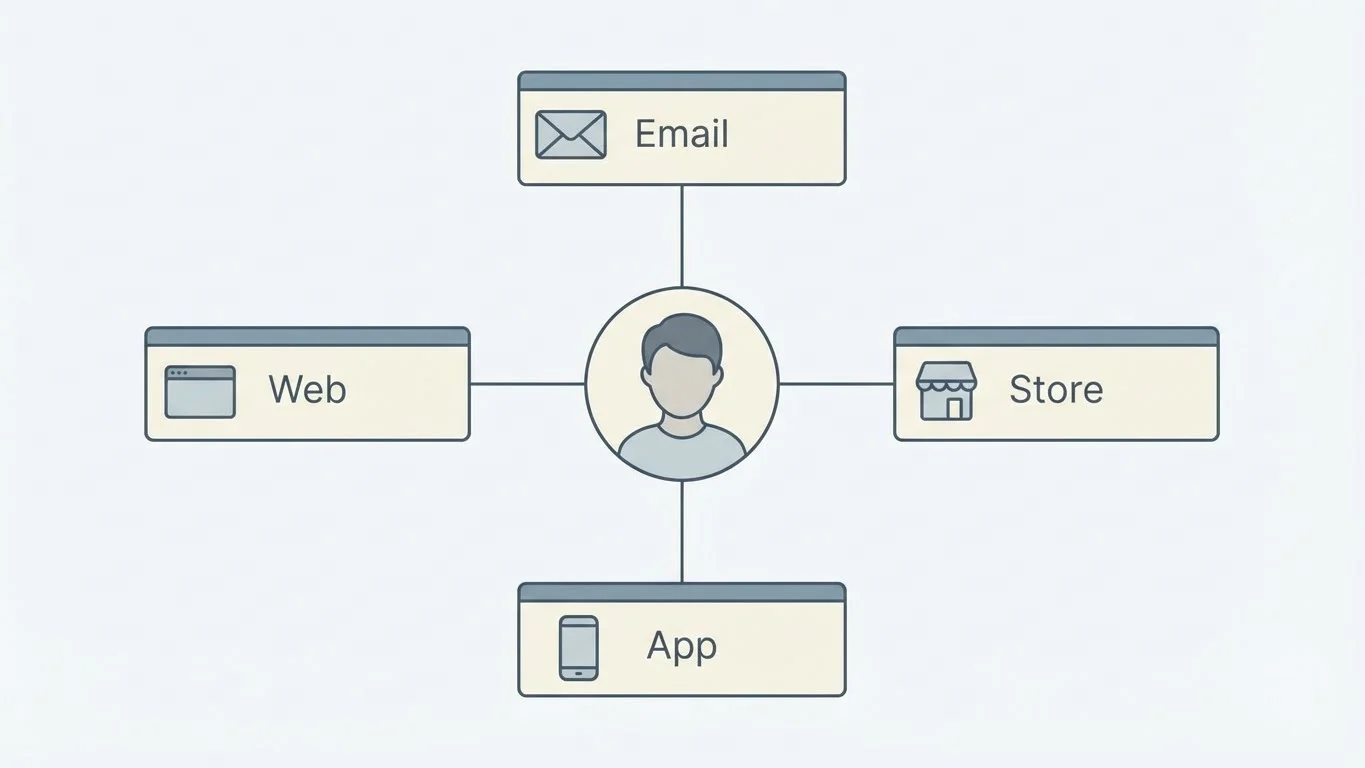
Omnichannel marketing aims to deliver a consistent customer experience across channels (web, email, app, social, offline) rather than running disconnected campaigns per channel. Many 2025 omnichannel discussions connect omnichannel success to better use of customer data and real-time coordination across touchpoints.
- Build a shared customer profile (identity resolution, consent, preferences).
- Coordinate messaging across channels (timing, offers, suppression logic).
- Measure cross-channel impact with attribution approaches that reflect multi-touch journeys.
Hyper-Personalization
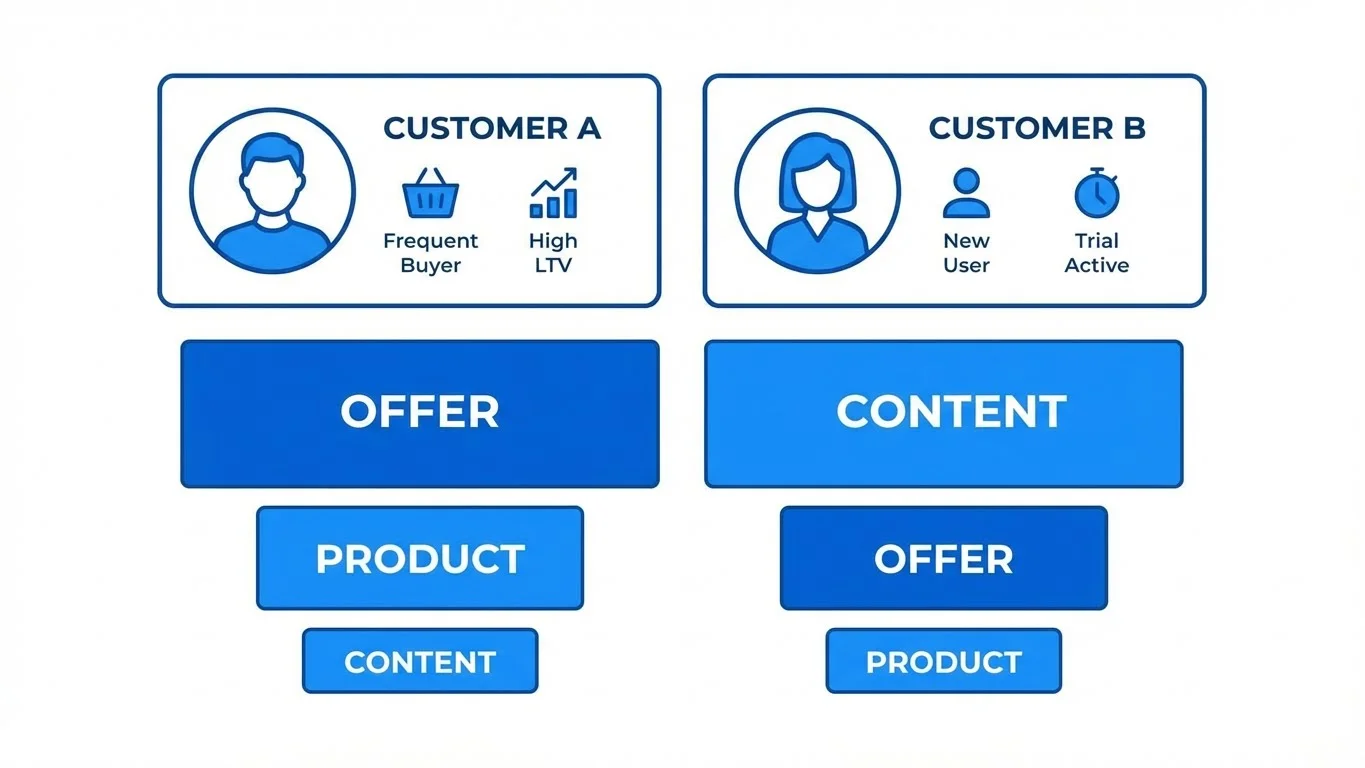
Hyper-personalization typically means using richer customer data and real-time signals to tailor experiences more precisely than basic segmentation. Definitions commonly emphasize predicting intent and dynamically adjusting content, messaging, or offers using data and automation.
- Inputs: behavioral data, purchase history, context (device, location), and preferences.
- Outputs: dynamic recommendations, personalized content modules, individualized messaging cadence.
- Keep it privacy-first: tie hyper-personalization to consent and transparent data practices.
Customer Journey Mapping
Customer journey mapping is the process of visualizing customer touchpoints and experiences across stages (awareness to retention) so teams can identify friction and opportunities. In practice, it becomes more valuable when it is data-informed—linking the map to metrics, drop-offs, and conversion pathways instead of staying as a workshop artifact.
- Map stages and touchpoints (ads, landing pages, sales calls, onboarding, support).
- Identify “moments that matter” where customers decide to continue or churn.
- Pair each stage with measurable signals (time-to-first-value, repeat purchase rate, support tickets).
First-Party Data Strategy
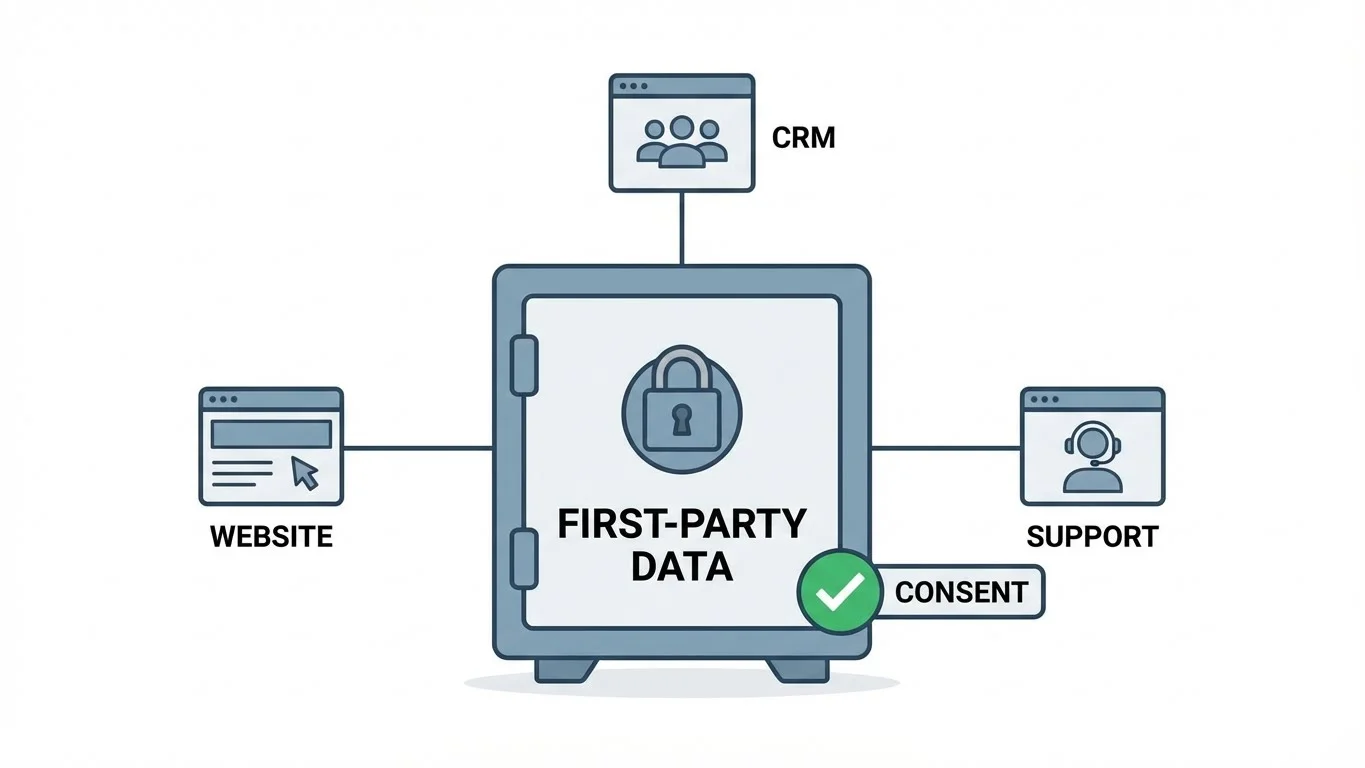
First-party data is data collected directly from your customers and audiences through your own channels and interactions, and many marketing trend sources position it as increasingly important as privacy expectations and regulations rise. Practical descriptions often list examples like website behavior, purchase history, CRM records, and support interactions.
- What it includes: website/app behavior, purchases, CRM details, support history, feedback.
- Why it matters: it’s directly sourced and commonly described as more privacy-aligned than third-party approaches.
- What to build: consent management, clear value exchange (why users share data), and governance for storage/access.
Customer-Centric Marketing
Customer-centric marketing is an approach that prioritizes customer needs, outcomes, and experience over internal preferences or product-first messaging. It becomes real when teams operationalize it through research, segmentation, journey design, and feedback loops that change what gets shipped and how it’s marketed.
- Use voice-of-customer inputs: surveys, interviews, reviews, support transcripts.
- Tie messaging to customer jobs-to-be-done (problems solved, risks reduced, time saved).
- Measure retention and satisfaction alongside acquisition.
Content & Creator Buzzwords
User-Generated Content (UGC)
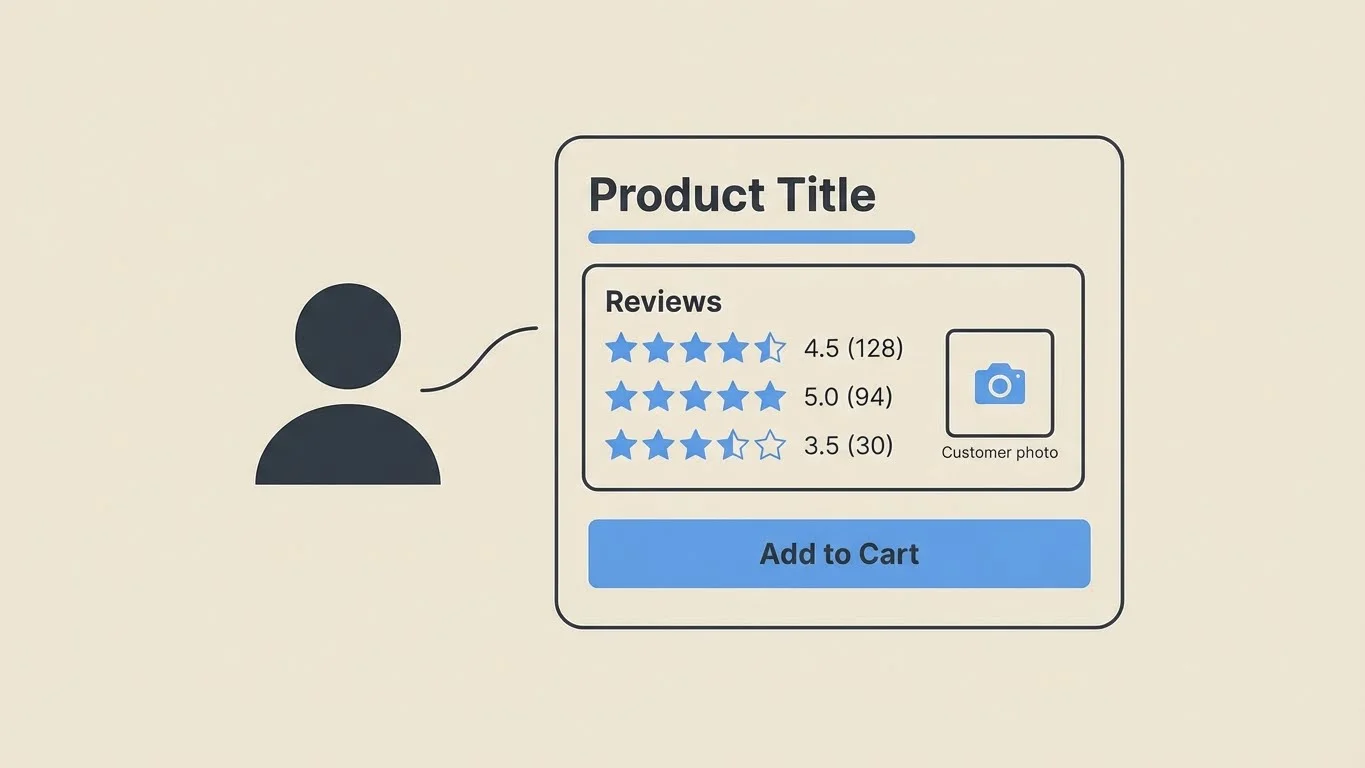
UGC is content created by customers or community members (reviews, testimonials, social posts, unboxings) rather than by the brand. Its marketing value is usually linked to authenticity and social proof, but it still needs permissions, moderation, and brand safety controls.
- Types: reviews, ratings, community posts, case snippets, video testimonials.
- How to use: repurpose on product pages, ads (with permission), and email.
- Governance: rights management, disclosure, moderation, and usage guidelines.
Interactive Content
Interactive content is designed for user participation (quizzes, calculators, assessments) rather than passive reading. Its practical benefit is engagement and data capture (with consent), especially when the interactivity gives the user a personalized output they value.
- Formats: ROI calculators, audits, quizzes, product finders.
- Use cases: lead qualification, segmentation, sales enablement.
- Measurement: completion rate, lead quality, assisted conversions.
Content Marketing vs. Native Advertising
Content marketing focuses on building long-term trust and demand via valuable content, while native advertising is a paid format designed to match the look/feel of the platform where it appears. The key operational difference is intent and disclosure: native is paid distribution and typically requires clear labeling, while content marketing can be distributed via owned/earned channels as well.
- Content marketing: education, comparison, problem-solving; success measured by engagement and pipeline influence.
- Native advertising: paid placements; success measured by CTR, cost per outcome, and downstream conversions.
- Best practice: keep disclosure clear and align the creative with the audience’s expectations on that platform.
Influencer Marketing Evolution
Influencer marketing increasingly spans a spectrum from nano/micro creators to large influencers and media-like creators. The most dependable way to discuss “evolution” without hype is to focus on operational shifts: performance measurement, creator-brand fit, and content repurposing across ads and owned channels.
- Choose creators by audience fit and content quality, not only follower count.
- Use measurable outcomes: attributed sales, assisted conversions, cost per acquisition, incrementality tests where possible.
- Repurpose creator assets into paid social (with rights) for better creative variety.
Thought Leadership
Thought leadership is content that establishes authority by offering original insight, strong points of view, or novel frameworks—not just summarizing existing ideas. In practice, the most defensible thought leadership is built from proprietary data, unique experience, experiments, or deep synthesis that is transparently sourced.
- Build with: original research, benchmarks, case studies, and expert interviews.
- Maintain trust: cite sources, show methodology at a high level, and avoid inflated claims.
- Distribute consistently (newsletter, LinkedIn, webinars) and measure by pipeline influence and speaking/press opportunities.
Social Commerce & Platform-Specific Buzzwords
Social Commerce
Social commerce refers to shopping experiences that happen directly within social platforms or social-first flows, reducing friction between discovery and purchase. The term is used widely, so clarity comes from specifying the mechanism: shoppable posts, in-app checkout, live shopping, or DMs as a sales channel.
- Use cases: impulse buys, creator-led product discovery, limited drops.
- Requirements: product catalog integration, fast fulfillment, customer support readiness.
- Measurement: view-to-cart rate, in-app conversion, and repeat purchase.
New Media & Convergence Media
“New media” often refers to digital-first channels and formats, while “convergence media” typically points to how paid, owned, and earned media blend together (e.g., a creator post becomes an ad, then becomes a landing page module). The practical takeaway is to plan assets so they can travel across channels without losing context or disclosure.
- Design content to be repurposed (short clips, quotes, carousels, landing-page blocks).
- Keep consistent messaging while adapting format to platform norms.
- Track with unified naming conventions and UTMs to reduce measurement gaps.
Community Building
Community building focuses on creating ongoing engagement and belonging around a brand rather than one-off campaigns. It becomes strategic when it has a defined member promise (what members get), rules, and a plan for turning community insight into product and content decisions.
- Define purpose: support, learning, networking, access, or co-creation.
- Choose the venue: owned community (forum/Discord/Slack) vs. social groups.
- Metrics: active members, retention, contribution rate, and community-sourced revenue.
SoLoMo (Social, Local, Mobile)
SoLoMo is shorthand for campaigns that combine social engagement, location relevance, and mobile-first experiences. This is most applicable to local businesses and multi-location brands that benefit from proximity targeting and mobile journeys (maps, calls, store visits).
- Tactics: geo-targeted ads, local landing pages, store locator optimization.
- Content: local offers, local proof (reviews), and local inventory where relevant.
- Measurement: calls, direction requests, store visits (where available), and local conversion rates.
User Experience (UX) in Marketing
UX in marketing refers to how usability, speed, clarity, and accessibility affect conversion and brand perception. In practice, UX connects directly to marketing outcomes when landing pages, checkout, and onboarding reduce friction and make value obvious.
- Priorities: page speed, message-match, clarity of CTA, accessibility basics.
- Audit areas: mobile navigation, forms, pricing pages, and trial/signup flows.
- Measurement: bounce rate, form completion, time-to-first-value, and funnel drop-offs.
Growth & Measurement Buzzwords
Growth Marketing / Growth Hacking
Growth marketing is usually used to describe iterative, experiment-driven marketing across the funnel (acquisition to retention), while “growth hacking” is a more informal label that often implies speed and unconventional tactics. The non-hype way to use these terms is to describe the system: rapid testing, measurement discipline, and cross-functional execution.
- Build an experiment backlog (hypothesis, metric, expected impact, effort).
- Run tests with rigor (sample size thinking, holdouts where possible).
- Expand beyond acquisition: onboarding, activation, retention, referrals.
ROAS (Return on Ad Spend)
ROAS measures revenue generated per unit of ad spend, making it a common headline metric for paid media. The term is useful only when the revenue definition is clear (gross vs. net, attributed vs. incremental) and the time window is specified (same-day vs. 30/90 days).
- Define revenue source: e-commerce purchase, pipeline value, or closed-won.
- Include attribution method and lookback window in reporting.
- Use alongside CAC and contribution margin for a fuller picture.
CAC (Customer Acquisition Cost) & LTV (Lifetime Value)
CAC is the cost to acquire a customer, while LTV estimates how much value a customer generates over time. These terms matter because they connect marketing to unit economics, but they are easy to misuse unless assumptions (gross margin, churn, timeframe) are explicit.
- CAC: include paid media + sales/marketing overhead where appropriate.
- LTV: define timeframe and whether it’s revenue or gross profit.
- Use ratio/targets carefully (industry varies; avoid universal benchmarks without context).
Conversion Rate Optimization (CRO)
CRO is the practice of improving the percentage of users who complete desired actions (purchase, signup, demo request). It is best framed as a research + testing discipline: qualitative insight identifies friction, and controlled experiments validate improvements.
- Research inputs: heatmaps, session recordings, surveys, usability tests.
- Test types: A/B tests, multivariate tests (when traffic supports it).
- Common focus pages: landing pages, pricing pages, checkout, signup forms.
Attribution Modeling
Attribution modeling is how teams assign credit for conversions across touchpoints (first click, last click, multi-touch). It matters because modern journeys are multi-channel, and simplistic models can misallocate budget and undervalue upper-funnel work.
- Common models: first-click, last-click, linear, time decay, position-based, data-driven (where supported).
- Operational tip: keep one “decision model” for budgeting and one “diagnostic model” for learning.
- Validate with experiments (geo tests, holdouts) when feasible.
Emerging & Niche Buzzwords
Synthetic Media
Synthetic media refers to media generated or altered using AI (images, audio, video), which can speed up production but introduces authenticity and misuse risks. Because synthetic media includes deepfake-like capabilities, responsible use requires disclosure policies and brand-safety review.
- Use cases: creative variations for ads, localized assets, concepting.
- Controls: watermarking/disclosure where appropriate, approvals, and restricted use for sensitive contexts.
- Risk areas: impersonation, misinformation, and IP concerns.
Account-Based Marketing (ABM)
ABM is a B2B strategy that focuses marketing and sales efforts on a defined set of high-value accounts with tailored messaging and experiences. It requires alignment on account selection, shared metrics, and coordinated outreach across channels.
- Core steps: define ICP, select accounts, map buying committee, tailor messaging.
- Channels: LinkedIn ads, email, events, direct mail, sales sequences.
- Metrics: account engagement, meetings, pipeline velocity, win rate.
Agentive AI
Agentic AI (often spelled “agentic AI”) refers to AI systems that can pursue goals with limited supervision and take actions, not just generate outputs. IBM describes agentic AI as systems that can accomplish a specific goal with limited supervision and consist of AI agents that mimic decision-making to solve problems in real time.
- Marketing applications: autonomous campaign tasks, journey optimization, adaptive messaging (with human oversight).
- Requirements: clearly defined boundaries (tools it can use, budgets, approvals) and audit logs.
- Governance: human-in-the-loop review for brand, compliance, and risk.
Augmented Reality (AR) Marketing
AR marketing uses augmented reality experiences (e.g., filters, virtual try-ons) to increase engagement and reduce purchase uncertainty. The strongest justification is experiential: AR helps people preview products in context, which can improve confidence even when conversion impact varies by category.
- Best fits: cosmetics, eyewear, furniture, fashion accessories, experiential brand campaigns.
- Distribution: social AR filters, web-based AR, app-based AR.
- Measurement: engagement time, share rate, assisted conversions.
Voice Search Optimization
Voice search optimization focuses on improving visibility for conversational queries, which tend to be longer and more question-based than typed searches. Practically, it overlaps with SEO best practices like clear answers, FAQ-style content, and structured information that can be surfaced in assistant-like experiences.
- Target question formats: “how,” “what,” “best,” “near me,” and task-driven queries.
- Optimize for clarity: concise answers, strong headings, and consistent entity naming.
- Track: search queries, featured-result visibility (where measurable), and local intent outcomes.
What NOT to Say in 2026: Buzzwords to Avoid
Overused & Meaningless Terms
Some terms become filler because they sound advanced but communicate little without specifics, which can reduce trust in presentations and proposals. The practical fix is to replace vague words with testable statements about outcomes, scope, and method.
- “Synergy”: Replace with the exact collaboration and what it changes (handoffs, SLAs, shared metrics).
- “Cutting-edge / next-gen”: Replace with what capability is new and why it matters (speed, accuracy, cost).
- “Viral marketing”: Replace with distribution plan and success thresholds (share rate, seeding, creators, budget).
Buzzwords that Lost Credibility
Some words become risky because they were heavily overused or attached to hype cycles, so audiences may ask for proof immediately. It’s safer to use the underlying concept with concrete framing instead of leaning on the label.
- “Growth hacking”: Replace with “experiment-driven growth program” and show cadence, owners, and KPIs.
- “Blockchain” (in marketing contexts): Replace with the specific benefit and why blockchain is required (often it isn’t).
- “Native advertising”: Replace with “sponsored content” and clarify disclosure, placement, and measurement.
Red Flags When Competitors Use These Words
Buzzword-heavy competitor messaging can be useful intel, but it can also mask vague offerings. The safest approach is to translate their claims into verification questions that uncover scope and proof.
- Ask for definitions: “What do you mean by ‘AI-powered’ in this feature?”
- Ask for evidence: “What benchmarks, experiments, or customer outcomes support this claim?”
- Ask for constraints: “Where does the system fail, and what requires human review?”
How to Use Buzzwords Authentically
Balance Precision with Accessibility
Buzzwords can be efficient among specialists, but marketing often requires alignment with non-specialists (sales, product, leadership, clients). The practical standard is: use the term, then add a plain-language translation and a concrete example in the same breath.
- Define once, then use consistently across teams.
- Add a one-line “translation” for stakeholders outside marketing.
- Maintain a shared internal glossary for recurring terms.
Backing Up Claims with Data
The difference between jargon and credibility is evidence, measurement, and specificity. GEO discussions, for example, commonly emphasize tracking visibility through citations and AI-engine referrals, which is a model for how to keep claims grounded.
- Replace labels with metrics: “reduced time-to-launch by X%,” “improved ROAS by Y,” “increased demo-to-SQL rate by Z.”
- Show measurement method: attribution approach, time window, and dataset scope.
- Prefer controlled tests or clear before/after comparisons with context.
Aligning Words with Actions
Words that suggest capability (AI-powered, omnichannel, hyper-personalization) should map to real processes, tools, and ownership. If an AI system is agentic (goal-driven with limited supervision), it should also have clearly defined boundaries and oversight.
- Document who owns the system and how approvals work.
- Ensure the operational stack supports the claim (identity resolution for omnichannel, consent for personalization).
- Build QA and governance steps into the workflow, not as afterthoughts.
Future-Proofing Your Vocabulary
Marketing language will keep evolving as platforms and AI-driven discovery change how people find and evaluate brands. GEO’s emergence is one example of vocabulary adapting to new discovery systems, which suggests teams should continuously audit how terms are used and measured.
- Review your website and sales decks quarterly for vague terms.
- Track emerging terms, but don’t adopt them until you can define and measure them.
- Keep a “retired terms” list to prevent drift back into empty language.
Conclusion
Buzzwords aren’t automatically bad—they’re a compression tool—but they become harmful when they hide weak thinking or undefined work. Using these 25 terms well in 2026 means translating jargon into operations: clear definitions, measurable outcomes, and honest constraints. When in doubt, swap trendy language for specifics about what is being done, how it works, and what changed as a result.

Passionate about blogging and focused on elevating brand visibility through strategic SEO and digital marketing. Always tuned in to the latest trends, I’m dedicated to maximizing engagement and delivering measurable ROI in the dynamic world of digital marketing. Let’s connect and unlock new opportunities together!