



Planning a marketing budget in 2026 is no longer about simply increasing last year’s spend or dividing money evenly across channels. Rising advertising costs, increasing competition, AI-driven platforms, and complex attribution models have made budget planning more challenging than ever. Businesses today must stretch every marketing dollar while still driving measurable growth.

A marketing budget is a structured financial plan that outlines how much a business will invest in marketing activities over a defined period and how that money will be distributed across strategies, channels, tools, and resources. It connects business goals with marketing execution and ensures that spending decisions are intentional rather than reactive.
Planning a marketing budget matters because it directly affects revenue growth, customer acquisition efficiency, brand visibility, and long-term sustainability. Without a clear budget, marketing teams risk overspending on low-impact channels, underinvesting in high-performing strategies, or failing to demonstrate return on investment to leadership.
This guide breaks down a practical six-step framework for planning a marketing budget in 2026. It removes guesswork, aligns marketing with business objectives, and accounts for modern challenges such as AI adoption, rising ad costs, and increasingly complex customer journeys.
6 Steps To Plan A Marketing Budget In 2026
Step 1: Determine Your Business’s Goals
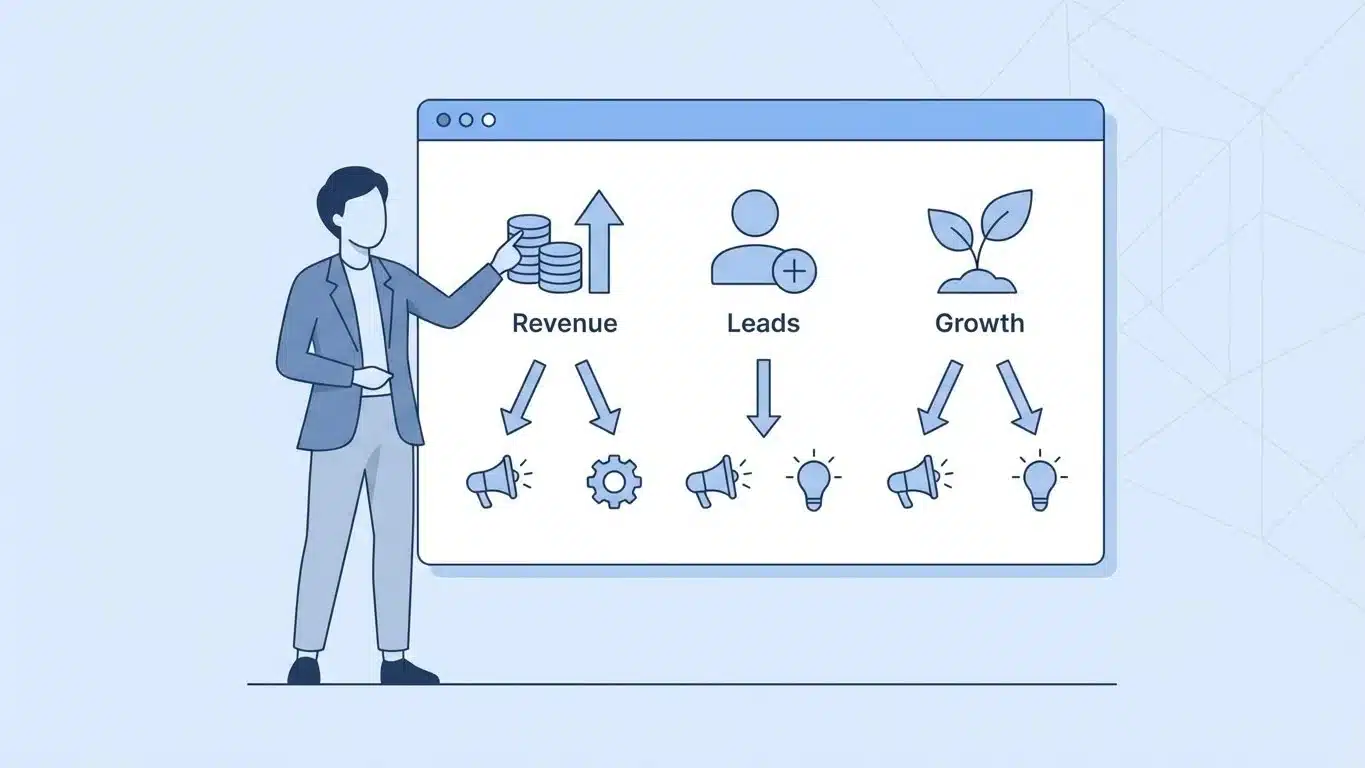
Before allocating a single rupee or dollar, it is essential to clearly define what your business is trying to achieve. Marketing budgets exist to support business outcomes, not the other way around. Every spending decision should tie back to a measurable goal.
Business goals provide direction for marketing activities and help prioritize channels, campaigns, and investments. Without defined goals, budgets become fragmented and difficult to justify.
Common types of business goals that influence marketing budgets include:
- Revenue growth targets
- Lead generation volume
- Market share expansion
- Brand awareness and reach metrics
- Customer retention and lifetime value improvement
To make goals actionable, they should follow the SMART framework:
- Specific: Clearly define what you want to achieve
- Measurable: Attach metrics that can be tracked
- Achievable: Ensure goals are realistic given resources
- Relevant: Align goals with broader business priorities
- Time-bound: Set a deadline for achievement
For example, “Increase sales by 20% by Q4 2026” provides clarity and direction, while a vague goal like “grow the business” does not guide budgeting decisions.
Marketing goals must also align with overall business objectives. If leadership is focused on profitability, the marketing budget should prioritize efficiency and retention rather than aggressive acquisition alone.
A common pitfall at this stage is setting goals that cannot be measured or tracked. Unclear goals make it impossible to evaluate performance or justify future budget increases.
Finally, businesses should define realistic ROI expectations based on their industry and growth stage. A startup may accept lower short-term ROI for growth, while an established company may require predictable returns.
Step 2: Establish Your Sales Cycle & Understand Your Market
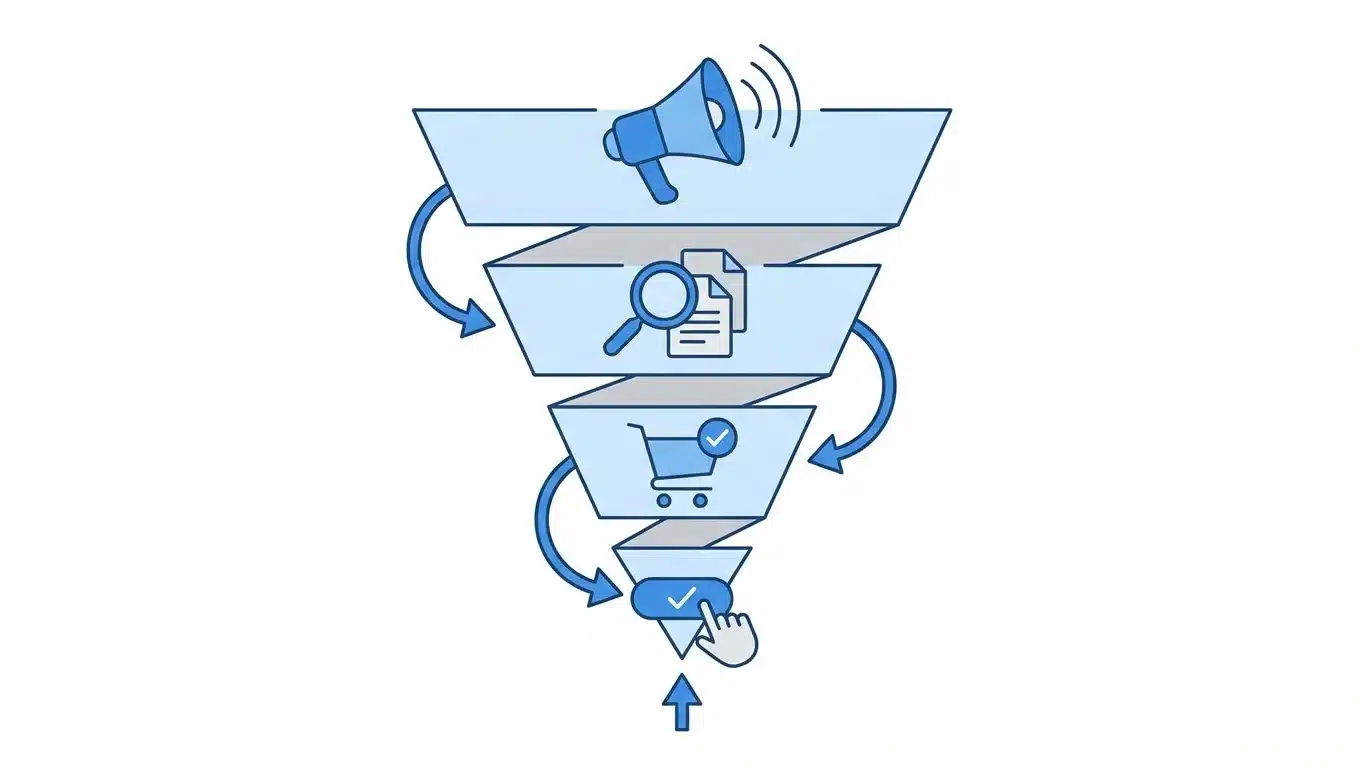
A marketing budget must reflect how customers actually move from awareness to purchase. Understanding your sales cycle and market dynamics ensures that budget allocation supports each stage of the customer journey.
The sales funnel typically consists of four stages:
- Awareness stage: Potential customers discover your brand or problem
- Consideration stage: Prospects research solutions and compare options
- Decision stage: Buyers evaluate alternatives and narrow choices
- Action stage: Customers convert and make a purchase
The length and complexity of your sales cycle directly affect budget allocation. Short sales cycles may require heavier investment in conversion-focused channels, while longer cycles demand sustained spending on education and nurturing.
Competitive analysis plays a critical role in understanding market dynamics. It helps identify where competitors invest their budgets and where opportunities exist.
Key areas to analyze include:
- Competitor marketing spend patterns
- Channels where competitors perform strongly
- Messaging and positioning gaps in the market
Understanding your target audience in 2026 is equally important. Customer behavior continues to evolve due to platform changes, privacy regulations, and AI-driven discovery.
Key factors to assess include:
- Shifts in digital behavior and content consumption
- Where your ideal customers research before buying
- Preferred platforms, formats, and devices
By mapping the funnel and audience behavior, businesses can identify budget gaps—such as stages where prospects drop off due to underinvestment.
Step 3: Know Your Outside Costs & Calculate Required Marketing Budget

Marketing budgets do not exist in isolation. They must be planned in the context of overall business expenses and financial capacity.
External costs that impact marketing budget availability include:
- Product development and operational expenses
- Staff salaries and payroll obligations
- Facility, technology, and overhead costs
- Capital investments and long-term commitments
Once fixed costs are understood, businesses can calculate a realistic marketing budget using a baseline calculation method.
The core components include:
- Cost per acquisition (CPA): Average cost to acquire one customer
- Target acquisition volume: Number of customers needed
- Fixed marketing costs: Tools, software, retainers, and overhead
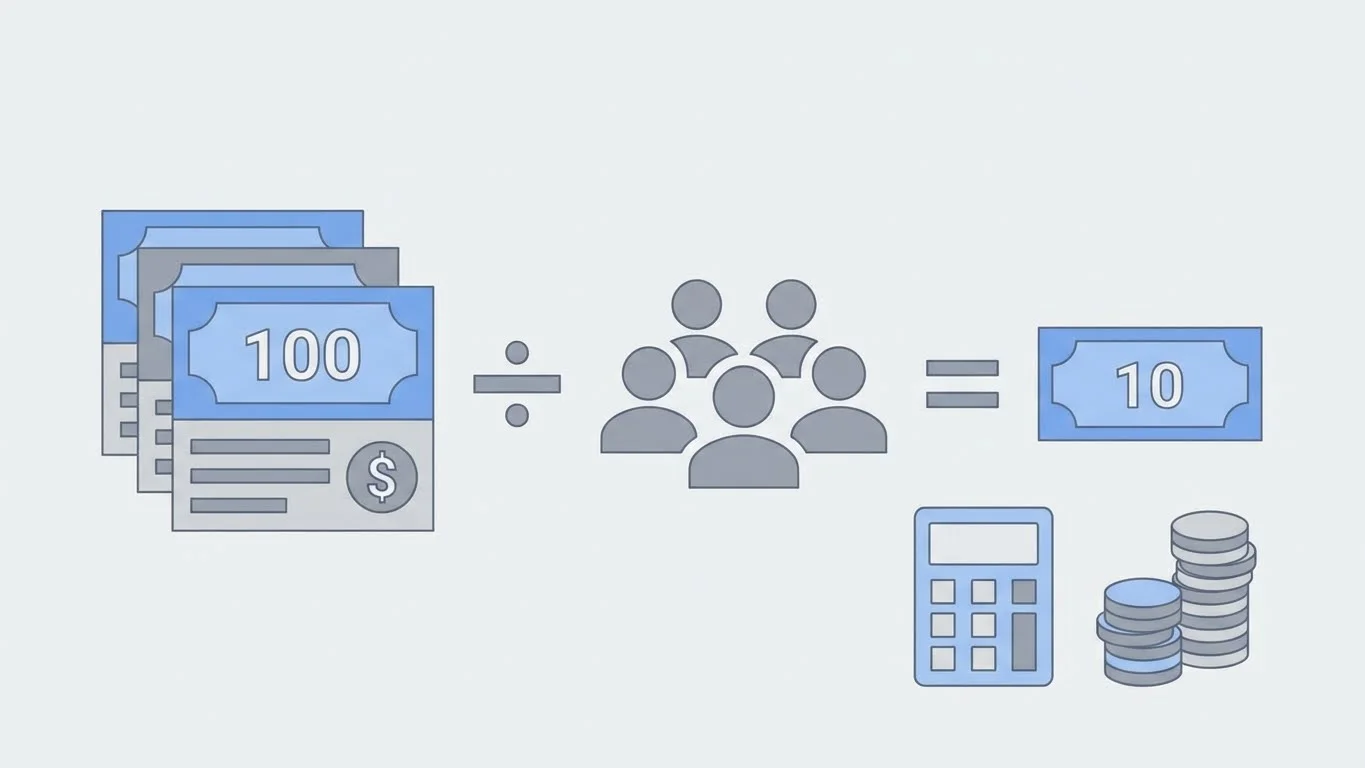
For example, if your CPA is $300 and your goal is to acquire 200 customers, your variable acquisition cost is $60,000. Adding $10,000 in fixed costs results in a $70,000 marketing budget.
Industry benchmarks provide useful guidance when setting budget ranges:
- B2B companies typically spend 7–8% of revenue on marketing
- B2C companies often allocate 9–10% of revenue
- SaaS companies in growth mode may invest 15–20% of revenue
Company age also influences budget decisions:
- Startups and young companies (1–5 years) often invest 12–20%
- Established companies (5+ years) typically spend 6–12%
Combining revenue benchmarks with growth stage and acquisition goals helps define a realistic and defensible budget range.
Step 4: Choose Your Marketing Strategies & Research Strategy Costs
With a clear budget range established, the next step is selecting marketing strategies that align with your goals and audience behavior.
Marketing strategies commonly evaluated for 2026 include:
- Search engine optimization and answer engine optimization
- Pay-per-click advertising
- Content marketing and blogging
- Email marketing
- Social media marketing and paid social
- Video marketing
- Influencer and partnership marketing
- Marketing automation and AI-powered tools
- Local SEO for location-based businesses
Each channel delivers different returns, and understanding expected ROI helps prioritize investments.
Typical ROI benchmarks include:
- Email marketing: $36–42 return for every $1 spent
- Content and SEO: 5:1 to 10:1 ROI over time
- PPC advertising: 2:1 to 4:1 ROI
- Paid social: 1.5:1 to 3:1 ROI
Execution method also affects costs and outcomes:
- In-house teams: Salaries, benefits, and software expenses
- Freelancers: Hourly or project-based pricing
- Agencies: Monthly retainers or performance-based fees
Typical 2026 pricing ranges include:
- SEO services: $500 to $20,000+ per month
- PPC management: 5–20% of ad spend
- Content marketing: $2,000 to $20,000 per month
- Social media management: $250 to $10,000 per month
- Email marketing: $300 to $2,500 per month
Understanding these costs prevents under-budgeting and unrealistic expectations.
Step 5: Create Your Budget Allocation & Plan Your Spending Mix
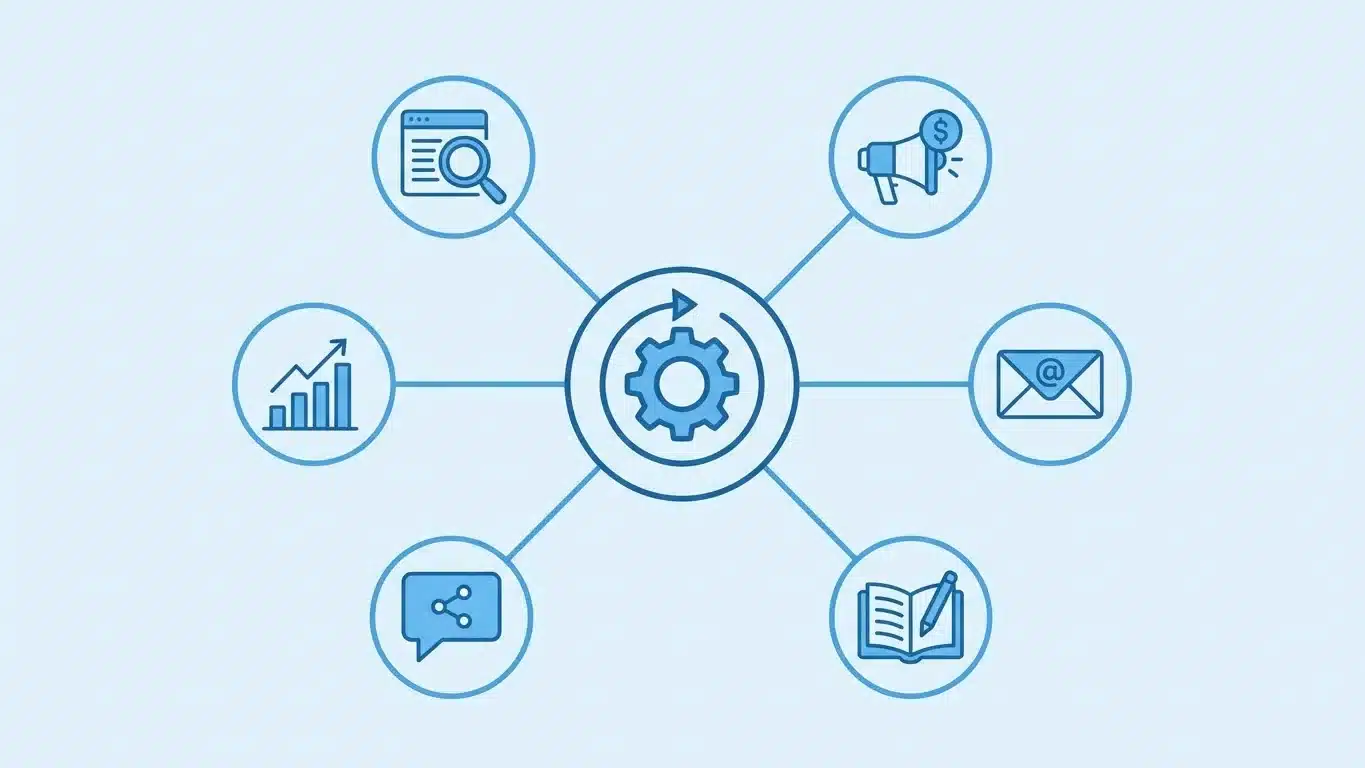
Budget allocation determines how effectively your marketing budget drives results. A structured framework helps balance risk, experimentation, and proven performance.
One widely used model is the 70/20/10 principle:
- 70% allocated to proven, high-performing channels
- 20% invested in emerging growth opportunities
- 10% reserved for experimentation and innovation
Alternative frameworks may better suit certain business models:
- Flywheel model: Focuses on customer retention and advocacy
- Owned asset model: Prioritizes channels you control, such as content and email
A sample 2026 channel allocation might include:
- Content and SEO: 25–30%
- Email marketing: 15–20%
- Paid search: 10–15%
- Paid social: 10–15%
- Video marketing: 10–12%
- Marketing technology and tools: 8–10%
- Influencer partnerships: 5–8%
Budgets should also be aligned with funnel stages:
- Top of funnel awareness: 30–35%
- Middle funnel nurturing: 35–40%
- Bottom funnel conversion: 25–35%
Content budgets are often split as follows:
- Content creation: 40%
- Distribution and amplification: 60%
Common allocation mistakes to avoid include spreading budgets too thin, over-investing in unproven channels, neglecting owned assets, underfunding tools, and ignoring retention initiatives.
Step 6: Track Performance & Optimize Quarterly
A marketing budget is only effective if performance is tracked and optimized regularly. Measurement ensures accountability and enables smarter decision-making.
Effective tracking starts with:
- Defining KPIs for each channel and campaign
- Establishing baseline benchmarks
- Selecting appropriate tracking tools and integrations
Key metrics to monitor in 2026 include:
- Customer acquisition cost
- Return on ad spend
- Customer lifetime value
- LTV to CAC ratio
- Marketing qualified leads
- Channel-specific ROI
- Conversion rates by traffic source
Best practices for budget tracking include setting benchmarks, implementing approval processes, tracking investments and returns centrally, and following leads through the full funnel.
Quarterly optimization should follow a structured process:
- Monthly reviews for tactical adjustments
- Quarterly reviews for strategic reallocations
- Annual reviews for full budget restructuring
Budgets should be reallocated when ROI significantly outperforms or underperforms expectations, acquisition costs rise without lifetime value growth, or new opportunities emerge.
Maintaining flexibility is critical. Reserving 10–15% of the budget as uncommitted funds allows teams to respond to market changes, seasonality, and emerging trends.
Common tracking mistakes include focusing on vanity metrics, relying solely on platform-reported data, using last-click attribution, and failing to connect marketing activity to revenue.
Industry-Specific Budget Benchmarks
Industry benchmarks provide helpful context for evaluating whether your marketing budget is underfunded or overextended.
Benchmarks typically vary by:
- Industry type and competitiveness
- Company revenue size
- Business model (B2B vs B2C)
While benchmarks should not dictate decisions, they serve as useful reference points when planning and defending budgets.
How to Get Leadership Buy-In for Your Budget
Gaining leadership approval requires framing the budget as a business investment rather than a cost.
Effective approaches include:
- Starting with business objectives
- Presenting historical performance data
- Quantifying expected outcomes
- Addressing risks proactively
- Requesting staged funding for new initiatives
- Clearly communicating ROI projections
Clear alignment with revenue and growth goals increases approval likelihood.
Implementation Roadmap (90-Day Timeline)
A structured rollout ensures that budget plans translate into execution.
- Days 1–30: Finalize allocation, select tools, define KPIs
- Days 31–60: Launch campaigns, publish content, begin nurturing
- Days 61–90: Analyze performance, test variations, expand winners
- Ongoing: Monitor, measure, and refine continuously
Conclusion
Planning a marketing budget in 2026 requires more than intuition or past performance. It demands a structured, goal-driven, and data-backed approach that accounts for changing platforms, rising costs, and evolving customer behavior. By following the six-step framework outlined in this guide, businesses can create budgets that support growth, maximize ROI, and remain flexible in uncertain conditions.
Marketing budgets should never be static. Regular reviews, performance tracking, and optimization ensure that spending stays aligned with results. With the right strategy, tools, and discipline, a marketing budget becomes a powerful growth engine rather than a financial constraint.

Passionate about blogging and focused on elevating brand visibility through strategic SEO and digital marketing. Always tuned in to the latest trends, I’m dedicated to maximizing engagement and delivering measurable ROI in the dynamic world of digital marketing. Let’s connect and unlock new opportunities together!