


Podcasting has evolved from a niche content format into a serious business channel. Millions of podcasts now compete for listener attention across platforms, yet only a fraction of creators successfully generate consistent income. The gap is not caused by a lack of monetization options, but by choosing the wrong monetization strategy at the wrong stage of growth.
Many podcasters invest months—or years—into content creation, audience building, and promotion without seeing any financial return. Some wait too long to monetize, believing income only comes after massive growth. Others attempt sponsorships too early, get rejected, and assume monetization “doesn’t work” for their show.
The reality is simple: every podcast can monetize, but not every monetization method works for every audience size. A podcast with 200 listeners should not use the same strategy as a podcast with 20,000 listeners. This guide exists to remove that confusion.
By 2026, podcast monetization is no longer optional for creators who want sustainability. Advertising budgets are growing, paid communities are normalized, and listeners are increasingly willing to financially support creators they trust. The key is matching monetization methods to your current position and scaling them over time.
10 Smart Ways Podcasters Are Making Money in 2026
1. Sponsorships & Host-Read Ads
How It Works: CPM vs. Flat Rate vs. Host-Read Premium
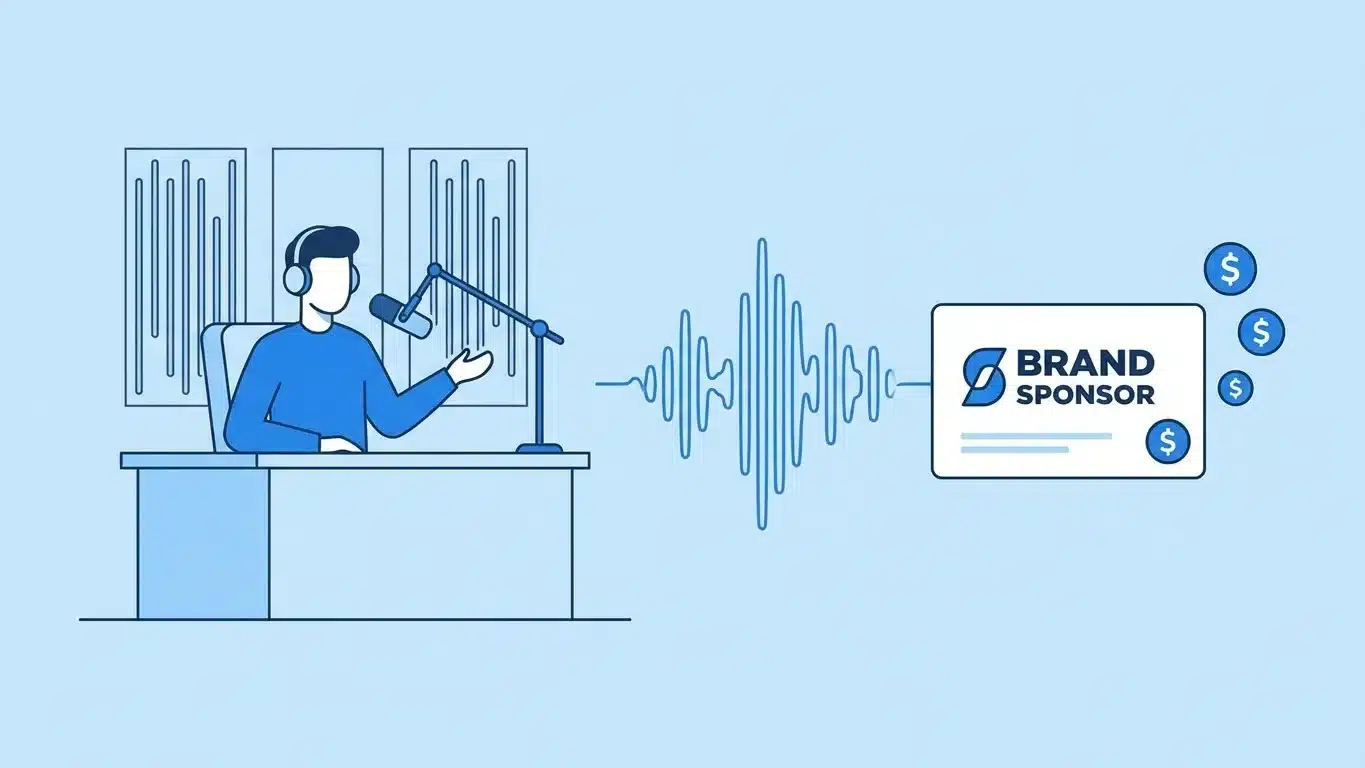
Podcast sponsorships involve brands paying podcasters to promote products or services during episodes. The value of a sponsorship depends on audience size, listener demographics, engagement level, and niche relevance.
There are three primary sponsorship pricing models used in podcasting.
- CPM (Cost Per Mille) means advertisers pay for every 1,000 downloads an episode receives. Typical CPM rates range from $15–$50 depending on niche and ad placement.
- Flat-rate sponsorships involve a fixed payment per episode, regardless of downloads. This model is common for smaller or niche podcasts.
- Host-read ads are personally read by the host and feel more authentic, allowing podcasters to charge a 10–30% premium.
Each model serves a different stage of podcast growth and audience maturity.
Finding Sponsors & Building Your Media Kit
Sponsors evaluate podcasts as advertising channels, not creative projects. A professional media kit makes it easier for brands to understand the value of your audience.
A strong media kit builds trust and shortens negotiation cycles.
- Clearly display average downloads per episode, not total downloads.
- Include audience demographics such as age range, profession, location, and interests.
- Highlight engagement signals, including email subscribers, social interactions, or listener feedback.
Podcasters can work with ad networks or pitch brands directly. Networks simplify access but reduce margins, while direct outreach requires effort but increases long-term revenue potential.
Pricing Strategy by Audience Size
Sponsorship pricing should align with realistic audience expectations. Overpricing leads to rejections, while underpricing limits growth.
- Podcasts under 1,000 downloads per episode should focus on flat-rate deals with niche brands.
- Podcasts between 1,000–5,000 downloads can offer bundled sponsorship packages across multiple episodes.
- Podcasts with 5,000+ downloads per episode can confidently use CPM-based pricing and ad networks.
Sponsorships should enhance, not interrupt, the listener experience. Poor sponsor alignment can reduce trust and long-term audience retention.
2. Affiliate Marketing
Why Affiliate Marketing Works at Any Audience Size
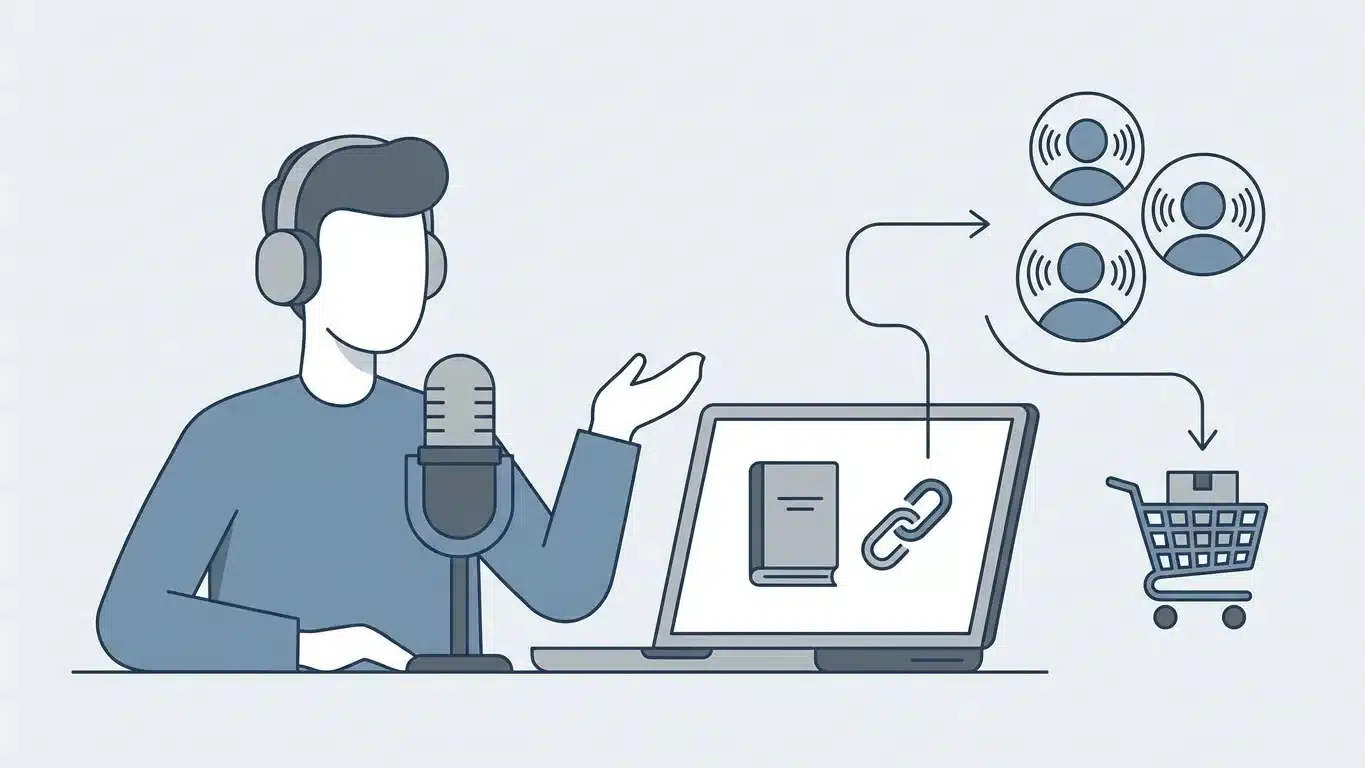
Affiliate marketing allows podcasters to earn commissions when listeners purchase products or services using unique links or promo codes. Unlike sponsorships, affiliate marketing does not require minimum downloads or approval from advertisers.
This makes affiliate marketing one of the most accessible monetization methods.
- It works with any audience size, including new podcasts.
- Revenue depends on listener trust, not listener volume.
- Affiliate mentions can remain active indefinitely in episode back catalogs.
Affiliate marketing is especially effective when products naturally fit into podcast discussions.
Best Affiliate Programs for Podcasters
Not all affiliate programs perform equally. The most effective programs align closely with listener needs and offer fair commission structures.
- Subscription-based services often provide recurring commissions, increasing lifetime value.
- Digital tools and software typically convert well for professional audiences.
- General marketplaces offer variety but lower commission rates.
Affiliate networks simplify management by consolidating tracking and payouts across multiple brands.
Implementation Strategy
Affiliate marketing success depends on authenticity and placement. Forced promotions reduce trust and conversion rates.
- Promote only products you personally use or genuinely recommend.
- Mention affiliates naturally during relevant discussions instead of scripted ads.
- Always disclose affiliate relationships to maintain transparency and compliance.
Tracking performance over time helps identify which products and placements generate the highest returns.
3. Premium Content & Subscriptions
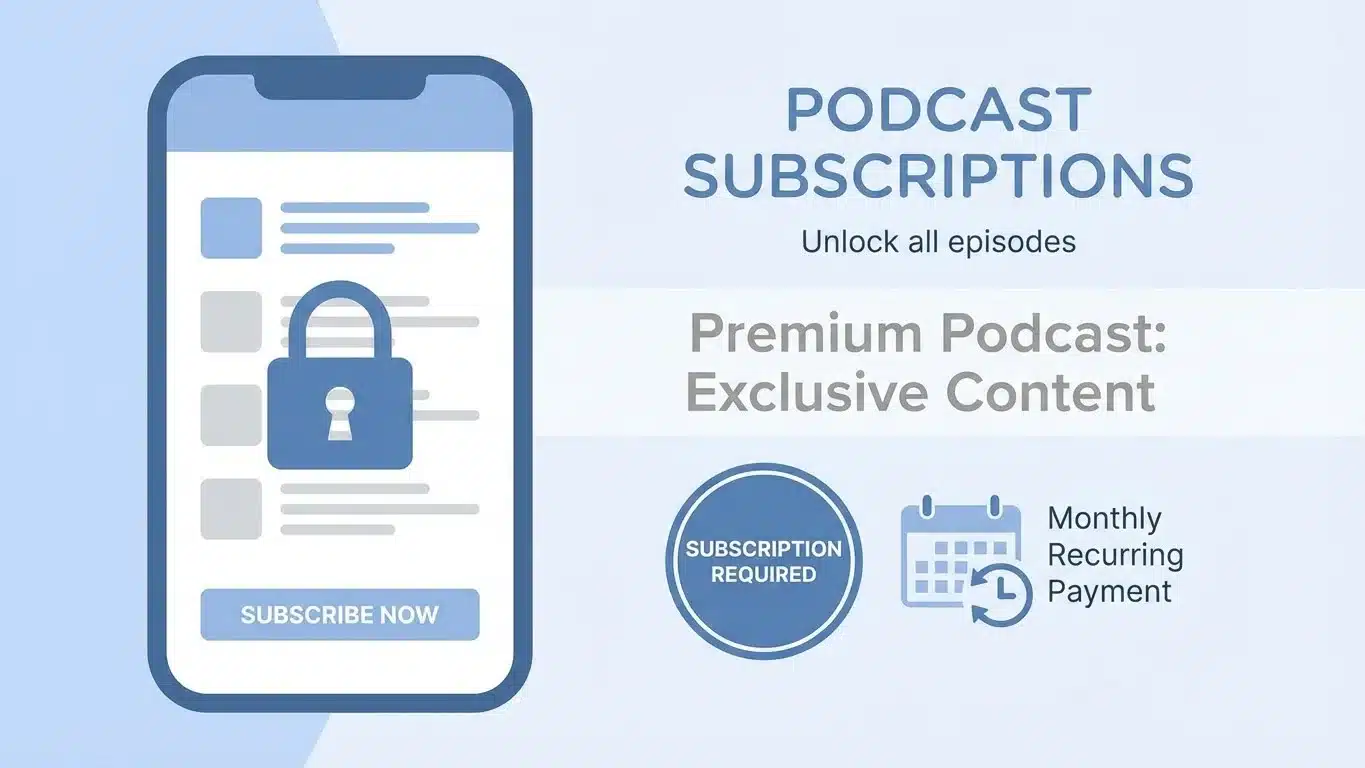
Why Subscription Models Are Exploding
Subscription-based monetization creates predictable, recurring revenue by offering listeners exclusive value in exchange for monthly payments. Unlike ads, subscriptions do not depend on fluctuating CPM rates or advertiser budgets.
Listeners are increasingly comfortable paying creators directly.
- Subscriptions reduce reliance on sponsorships.
- Monthly revenue improves financial predictability.
- Loyal listeners feel more invested in the podcast’s success.
This model works best for podcasts with strong audience trust.
Premium Content Options
Premium content must provide clear additional value beyond the free feed. Simply removing ads is rarely enough on its own.
- Ad-free episodes improve listening experience for loyal fans.
- Bonus episodes allow deeper exploration of topics.
- Early access rewards committed listeners.
Interactive elements such as live Q&As and private communities significantly increase perceived value.
Pricing Tiers & Platform Selection
Tiered pricing allows listeners to support at different commitment levels. Lower tiers focus on access, while higher tiers focus on exclusivity.
- Entry tiers typically offer early access or bonus updates.
- Mid-tier plans focus on ad-free and bonus content.
- Premium tiers include live interactions or community access.
Platforms like Patreon, Apple Podcasts, and Spotify simplify subscription management and payments.
4. Listener Donations & Community Support
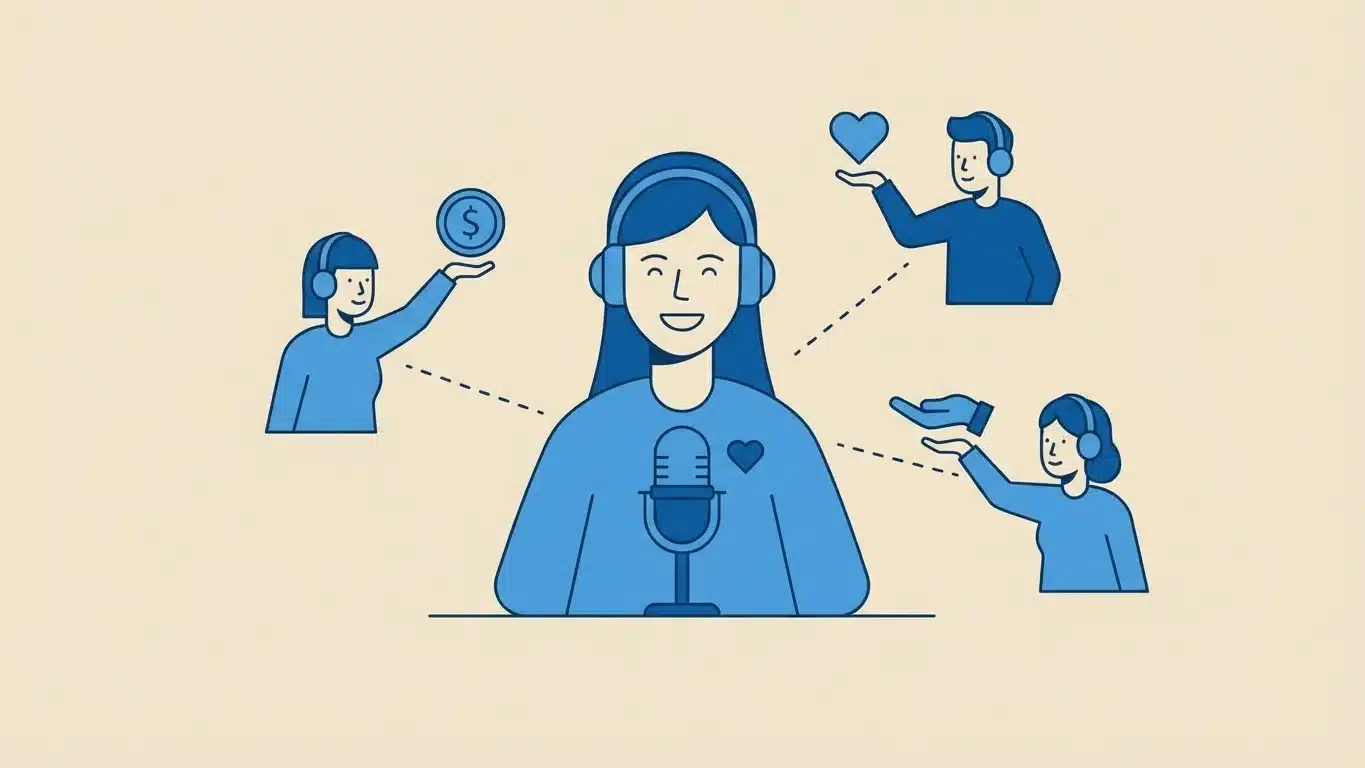
Why Donations Work at Any Audience Size
Listener-supported models allow fans to financially support a podcast through voluntary contributions. Unlike subscriptions, donations do not require long-term commitment.
This model relies on emotional connection rather than transactional value.
- No minimum audience size is required.
- Highly engaged listeners are more likely to contribute.
- Donations help offset recurring production costs.
Donations are especially effective for podcasts with strong community identity.
Platforms & Setup
Donation platforms reduce friction by making it easy for listeners to contribute quickly.
- Platforms support one-time and recurring payments.
- Multiple contribution levels encourage flexibility.
- Simple setup increases participation rates.
Donation links should be prominently displayed across all podcast touchpoints.
Crafting Your Ask
Clear communication determines donation success. Listeners want to know exactly how their money is used.
- Explain why support is needed, not just that it helps.
- Show how contributions improve the podcast.
- Share occasional updates to reinforce transparency.
While donation revenue is usually modest, it significantly improves sustainability.
5. Merchandise Sales
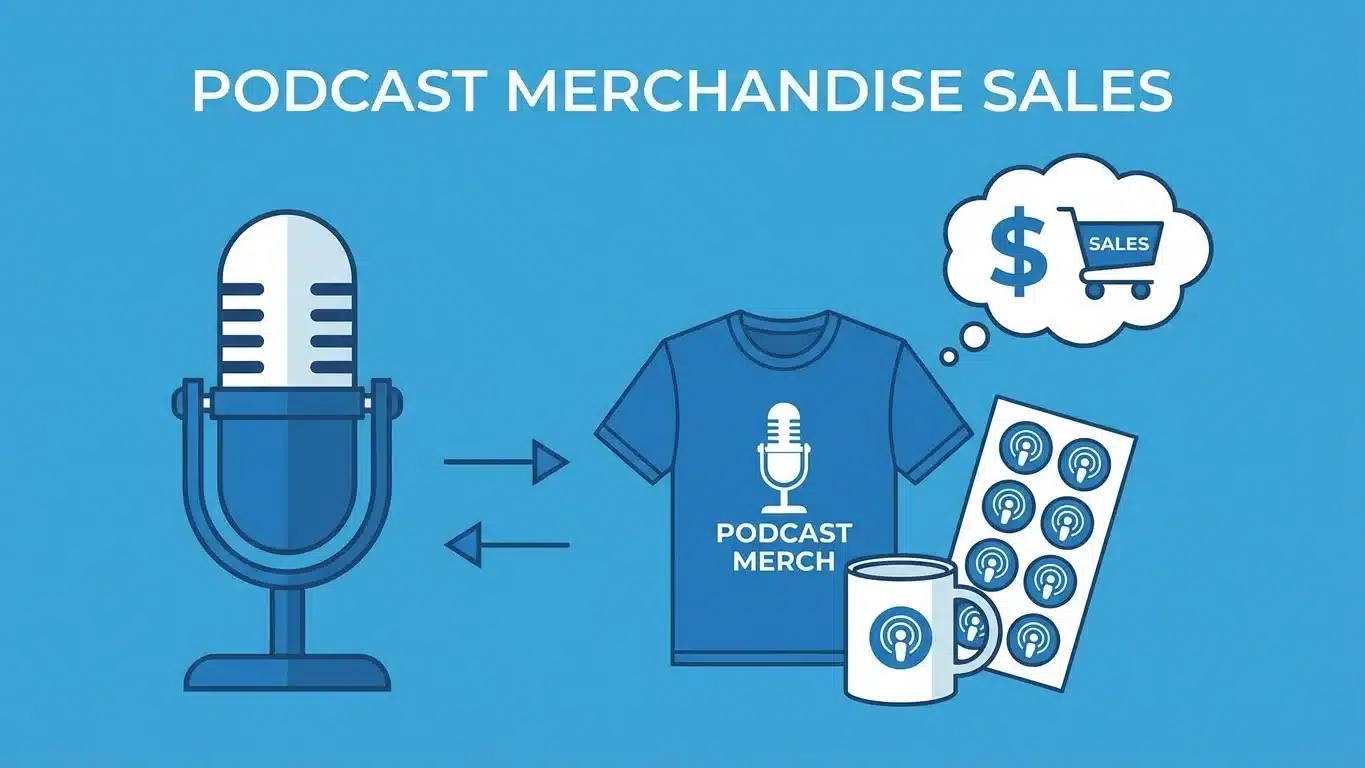
Turn Your Audience Into Walking Advertisements
Merchandise allows podcasters to monetize audience loyalty while simultaneously promoting their brand. When listeners wear or use podcast-branded products, they help spread awareness organically.
Merch works best when the podcast already has a recognizable identity or recurring themes that listeners feel connected to.
- Merchandise transforms loyal listeners into brand ambassadors.
- Fans often buy merch as a way to support the podcast, not just for the product itself.
- Merch reinforces brand recall outside podcast platforms.
Merch should complement your podcast, not distract from the content experience.
Product Ideas & Print-on-Demand Platforms
Print-on-demand services allow podcasters to sell merchandise without managing inventory or upfront costs. Products are printed and shipped only after an order is placed.
This model significantly lowers risk for creators.
- Apparel items like t-shirts and hoodies typically offer the highest margins.
- Low-cost items such as stickers encourage impulse purchases.
- Drinkware and accessories work well for lifestyle-oriented podcasts.
Print-on-demand platforms integrate easily with websites and payment systems, making setup relatively simple.
Implementation & Marketing
Merchandise should be introduced thoughtfully and promoted naturally. Over-promoting merch can reduce listener trust and engagement.
- Start with 3–5 core products instead of a large catalog.
- Keep designs simple and aligned with podcast branding.
- Promote merch sparingly during episodes, focusing on relevance.
Merch revenue varies widely but often provides steady supplementary income once established.
6. YouTube Video Distribution & Monetization
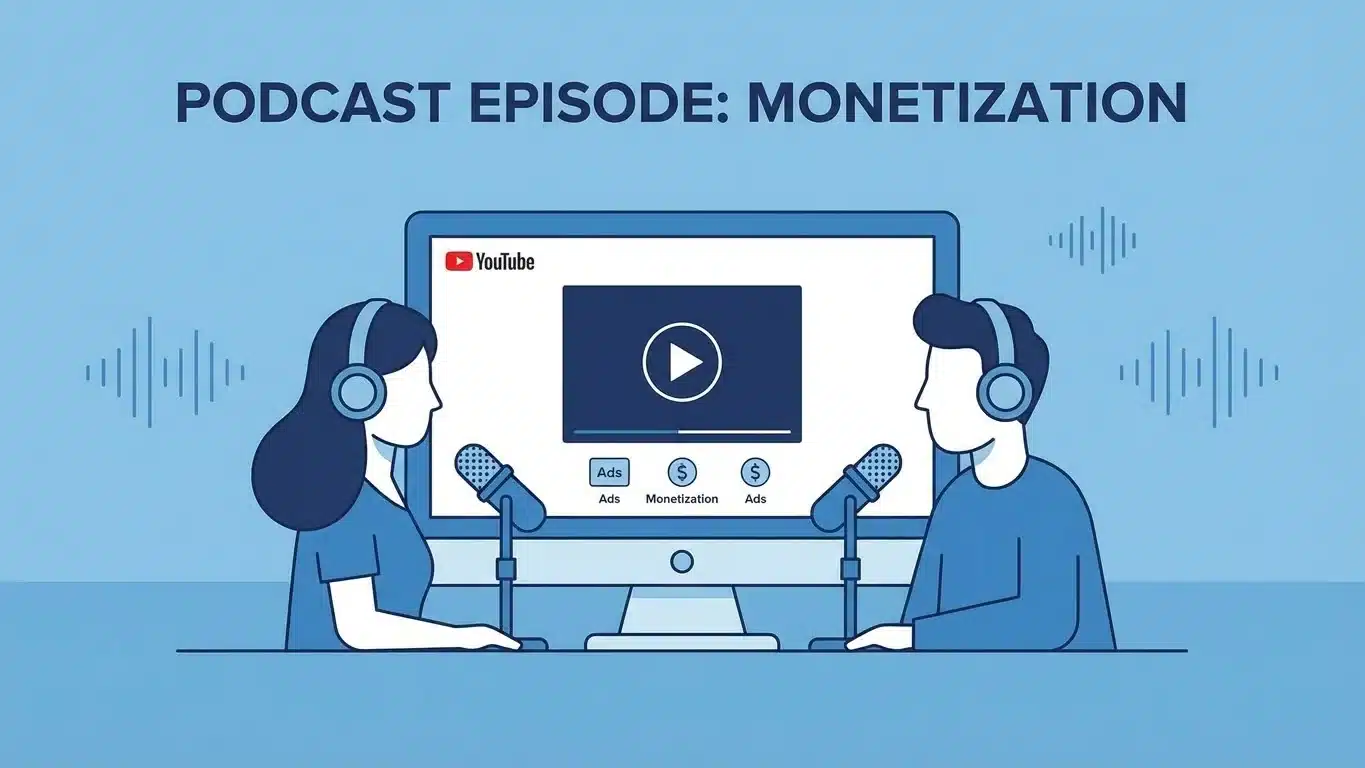
Tap Into the Fastest-Growing Podcast Consumption Channel
YouTube has become a primary platform for podcast discovery and consumption. Many listeners prefer video formats, even when content remains discussion-based.
Publishing podcasts on YouTube expands reach beyond traditional audio platforms.
- Video increases content discoverability through search and recommendations.
- Visual presence strengthens host-audience connection.
- Episodes gain longer shelf life compared to audio-only feeds.
YouTube should be treated as a distribution extension, not a replacement for audio platforms.
YouTube Monetization Models
YouTube offers multiple monetization options once eligibility requirements are met. Revenue depends on niche, audience geography, and watch time.
- Ad revenue is generated through pre-roll, mid-roll, and display ads.
- Channel memberships allow fans to pay monthly for exclusive perks.
- Sponsored segments can be integrated into video episodes.
YouTube monetization typically starts slow but scales as viewership grows.
Implementation Strategy
Uploading podcast episodes to YouTube does not require complex production. Many creators start with basic setups and improve over time.
- Record video during podcast sessions or use static visuals.
- Optimize titles, descriptions, and thumbnails for search visibility.
- Organize episodes into playlists to increase watch time.
Consistency matters more than production quality in the early stages.
7. Live Events & Speaking Engagements
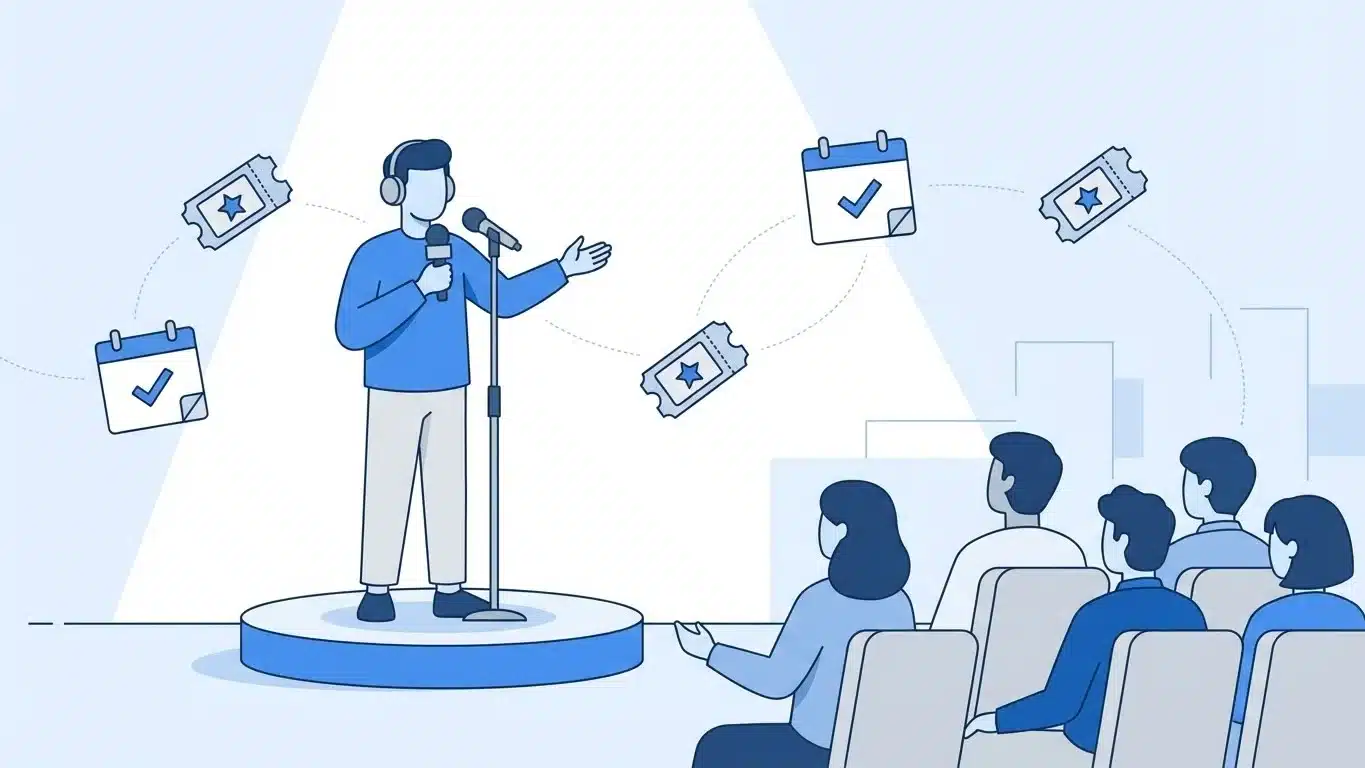
Build Community While Generating Revenue
Live events allow podcasters to connect with their audience in real time while generating high-value revenue. These events deepen trust and strengthen community bonds.
Events can be educational, interactive, or purely social.
- Live events create memorable experiences for listeners.
- Attendees feel a stronger sense of belonging.
- Events often lead to higher long-term loyalty.
This model works best once a podcast has an engaged audience base.
Virtual vs. In-Person Events
Both virtual and in-person events offer unique advantages. The choice depends on audience size, location, and resources.
- Virtual events have lower costs and global reach.
- In-person events generate higher per-attendee value.
- Hybrid events combine accessibility with exclusivity.
Starting with virtual events reduces risk and allows for easier testing.
Pricing & Promotion Strategy
Event pricing should reflect the value delivered rather than audience size alone. Clear positioning improves conversion rates.
- Entry-level events attract broader participation.
- Premium workshops justify higher pricing through exclusivity.
- Early-bird pricing encourages early commitment.
Promotion should begin weeks in advance across all owned channels.
8. Your Own Products & Services
Leverage Your Expertise Into High-Ticket Revenue
A podcast builds authority over time. That authority can be monetized through products and services that solve specific listener problems.
Unlike ads, products offer full control over pricing and margins.
- Products scale revenue without relying on advertisers.
- High-ticket offers require fewer sales to be profitable.
- Authority-based monetization strengthens brand positioning.
This approach works best when podcasters deeply understand their audience’s needs.
Product Types & Pricing
Products vary in complexity and effort, but all should deliver clear outcomes for buyers.
- Digital courses provide structured learning experiences.
- Coaching and consulting offer personalized guidance.
- Templates and tools deliver quick, actionable value.
Pricing should reflect outcomes and transformation, not production effort.
Implementation Strategy
Successful products are built with validation, not assumptions. Audience feedback reduces risk and improves launch performance.
- Identify recurring listener questions.
- Validate interest before building.
- Launch with limited access to test demand.
Product-based monetization rewards expertise and consistency.
9. Email List Building & Lead Generation
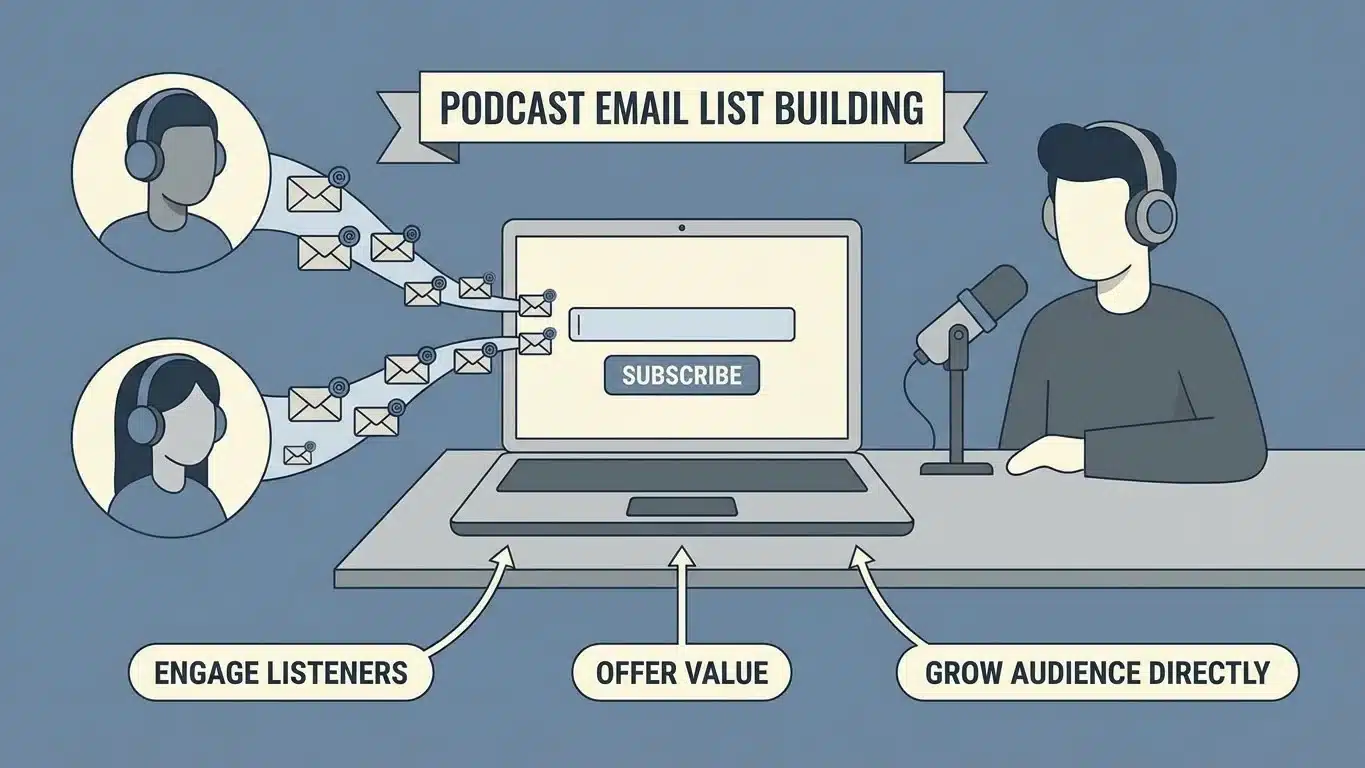
Build an Asset You Actually Own
Email lists provide direct access to listeners without relying on platform algorithms. Unlike podcast platforms, email lists remain under full creator control.
This makes email a foundational asset for long-term monetization.
- Email enables direct communication with listeners.
- Subscribers convert at higher rates than casual listeners.
- Lists retain value even if platforms change.
Email should support every monetization strategy.
Why Email Matters for Monetization
Email marketing consistently outperforms social platforms in conversion rates. It allows creators to nurture relationships over time.
- Email converts warm audiences, not cold traffic.
- Campaigns can be reused for future launches.
- Subscriber lifetime value compounds over time.
Even small lists can generate meaningful revenue.
Building Your Email List
List growth requires consistent promotion and clear incentives.
- Lead magnets encourage sign-ups.
- Exclusive content rewards subscribers.
- Embedded forms increase visibility.
Promotion should be integrated naturally into podcast episodes.
Monetizing Your Email List
Once trust is established, email becomes a powerful sales channel.
- Promote products and services.
- Share affiliate recommendations.
- Offer premium memberships or content.
Email monetization scales alongside audience growth.
10. Dynamic Ad Networks & Programmatic Platforms
Automate Ad Insertion & Revenue Optimization
Dynamic ad insertion allows podcasters to monetize episodes automatically by inserting ads dynamically across their catalog. Ads can be updated without re-editing episodes.
This model turns older episodes into ongoing revenue assets.
- Ads can be targeted by location or listener data.
- Back catalog episodes continue generating income.
- Monetization becomes more passive over time.
Dynamic ads complement direct sponsorships.
Leading Platforms in 2026
Several platforms offer dynamic ad solutions designed for podcasts.
- Acast provides advanced targeting and premium brand access.
- AdsWizz focuses on data-driven ad delivery.
- Spotify offers automated ad placements for eligible creators.
Each platform varies in requirements and revenue share.
Advantages & Trade-Offs
Dynamic ads offer convenience but come with limitations.
- Passive income with minimal effort.
- Lower control over ad selection.
- Revenue shares reduce total earnings.
Understanding trade-offs helps podcasters choose wisely.
Implementation Strategy
Proper setup ensures long-term success with dynamic ads.
- Choose one or two platforms to start.
- Meet minimum eligibility requirements.
- Monitor performance and adjust settings over time.
Dynamic ads perform best as part of a diversified monetization strategy.
FAQs
1. How Many Listeners Do I Need to Monetize My Podcast?
There is no universal listener threshold for monetizing a podcast. The minimum audience size depends entirely on the monetization method you choose.
- Affiliate marketing, donations, and selling your own products can work with very small but engaged audiences.
- Flat-rate sponsorships become realistic around 500+ downloads per episode.
- Most dynamic ad networks require 1,000+ downloads in 30 days to qualify.
- CPM-based sponsorships perform best at 5,000+ downloads per episode.
Engagement and niche relevance often matter more than raw listener numbers.
2. What’s the Best Monetization Strategy for a Brand-New Podcast?
New podcasts should focus on building trust and infrastructure before pursuing high-pressure monetization.
- Start with email list building to create an owned audience.
- Add affiliate links in show notes with no disruption to listeners.
- Include a donation link for early supporters without aggressive promotion.
- Focus on consistency and content quality during the first few months.
Avoid sponsorship outreach too early, as rejection can discourage long-term growth.
3. How Much Money Can I Realistically Make Podcasting?
Podcast income varies widely depending on audience size, monetization mix, and execution quality.
- Under 500 downloads per month: $0–$200, unless selling products or services.
- 500–2,000 downloads: $200–$1,000 with diversified income streams.
- 2,000–10,000 downloads: $1,000–$5,000 through sponsorships, affiliates, and ads.
- 10,000+ downloads: $5,000–$20,000+ with optimized monetization.
Most successful podcasters rely on multiple revenue streams, not a single method.
4. Should I Focus on One Monetization Method or Use Multiple?
Relying on one monetization method increases risk. Diversification improves stability.
- Sponsorship revenue fluctuates with advertiser budgets.
- Affiliate income depends on listener behavior.
- Products and subscriptions offer greater control but require effort.
A balanced approach usually includes:
- One passive stream (affiliate or ads)
- One scalable stream (products, subscriptions)
- One relationship-driven stream (email or community)
5. When Is the Right Time to Start Asking for Money?
You do not need to wait for a large audience to monetize—but timing and approach matter.
- Start immediately with low-friction options like affiliate links.
- Introduce donation support once listeners show engagement.
- Add sponsorships or subscriptions only when value is clearly established.
Transparency and respect for the audience are more important than timing.
Conclusion
Podcasting in 2026 is no longer just a creative outlet—it is a legitimate business opportunity. The creators who succeed financially are not necessarily those with the biggest audiences, but those who align monetization strategies with their current stage of growth.
The biggest mistake podcasters make is either delaying monetization too long or choosing strategies that don’t match their audience size. Monetization works best when it evolves alongside the podcast, not when it’s forced prematurely.

Passionate about blogging and focused on elevating brand visibility through strategic SEO and digital marketing. Always tuned in to the latest trends, I’m dedicated to maximizing engagement and delivering measurable ROI in the dynamic world of digital marketing. Let’s connect and unlock new opportunities together!