


In the world of online marketing, backlinks are like votes of confidence from other websites. They are crucial for boosting your website’s visibility and authority.

In this guide, we will explore what backlinks are, why they are important for your business, and how you can effectively get them to improve your online presence.
What Are Backlinks?
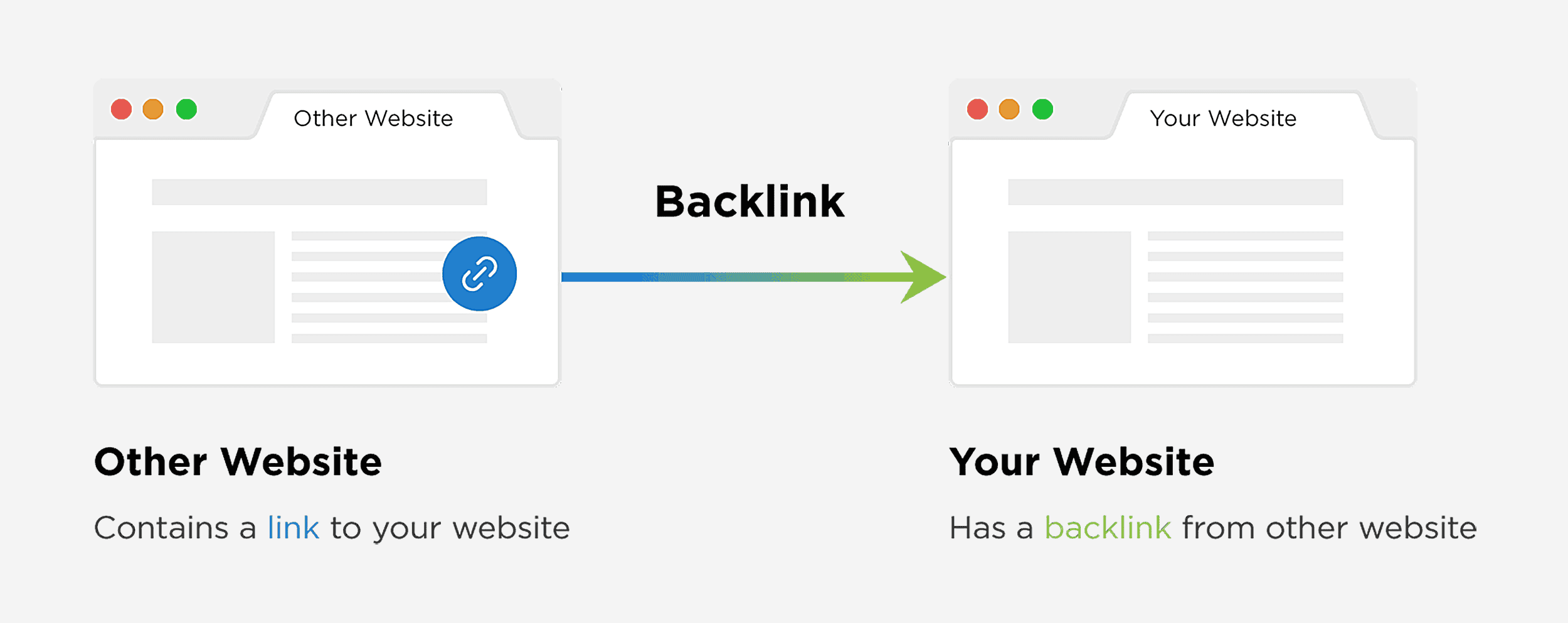
Backlinks, also known as inbound or incoming links, are links from one website to another. When another website links to your site, it is considered a backlink.
These links are like recommendations or endorsements from other sites, telling search engines that your content is valuable.
There are different types of backlinks:
- Natural Backlinks: These are links that happen organically when other websites find your content useful and link to it without you asking.
- Manual Backlinks: These are links that you actively seek out, such as through guest blogging or outreach.
- Self-Created Backlinks: These are links you create yourself, such as in forum posts or blog comments. However, these should be used carefully as they can sometimes be seen as spammy.
How Backlinks Work
Backlinks work by passing “link juice” or authority from one site to another. When a high-quality site links to your content, it transfers some of its authority to your site.
This helps search engines like Google understand that your site is trustworthy and valuable, which can improve your rankings in search results.
Not all backlinks are equal. A few high-authority links from reputable sites (e.g., Forbes, HubSpot) carry more SEO value than hundreds of low-quality links from spammy websites. Prioritize backlinks from trusted sources.
Why Backlinks Matter for Your Business
Impact on Search Engine Rankings
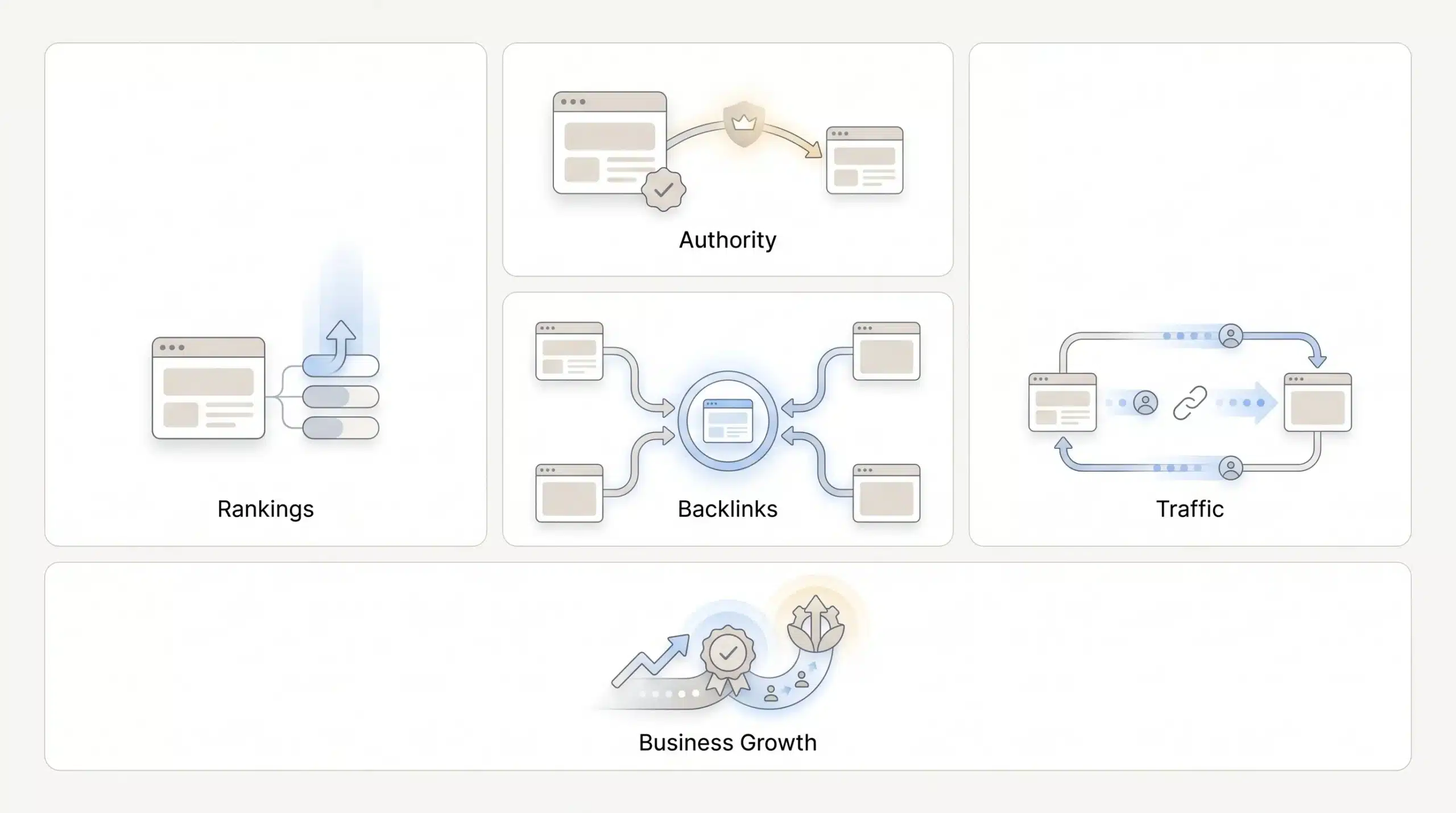
Search engines use backlinks as one of the key factors to determine the relevance and authority of a webpage.
The more high-quality backlinks you have, the more likely your site is to rank higher in search results. Higher rankings lead to more visibility and more organic traffic to your site.
Influence on Website Authority and Credibility
Backlinks from reputable sites enhance your site’s authority. When authoritative sites link to your content, it signals to search engines that your site is credible and trustworthy.
This can lead to better rankings and increased trust from your audience.
Role in Driving Referral Traffic
Backlinks also drive referral traffic to your site. When users click on a link to your site from another website, they are directed to your content.
This can lead to more visitors and potential customers, especially if the referring site has a relevant audience.
Do Backlinks Still Matter in the Age of AI Search?
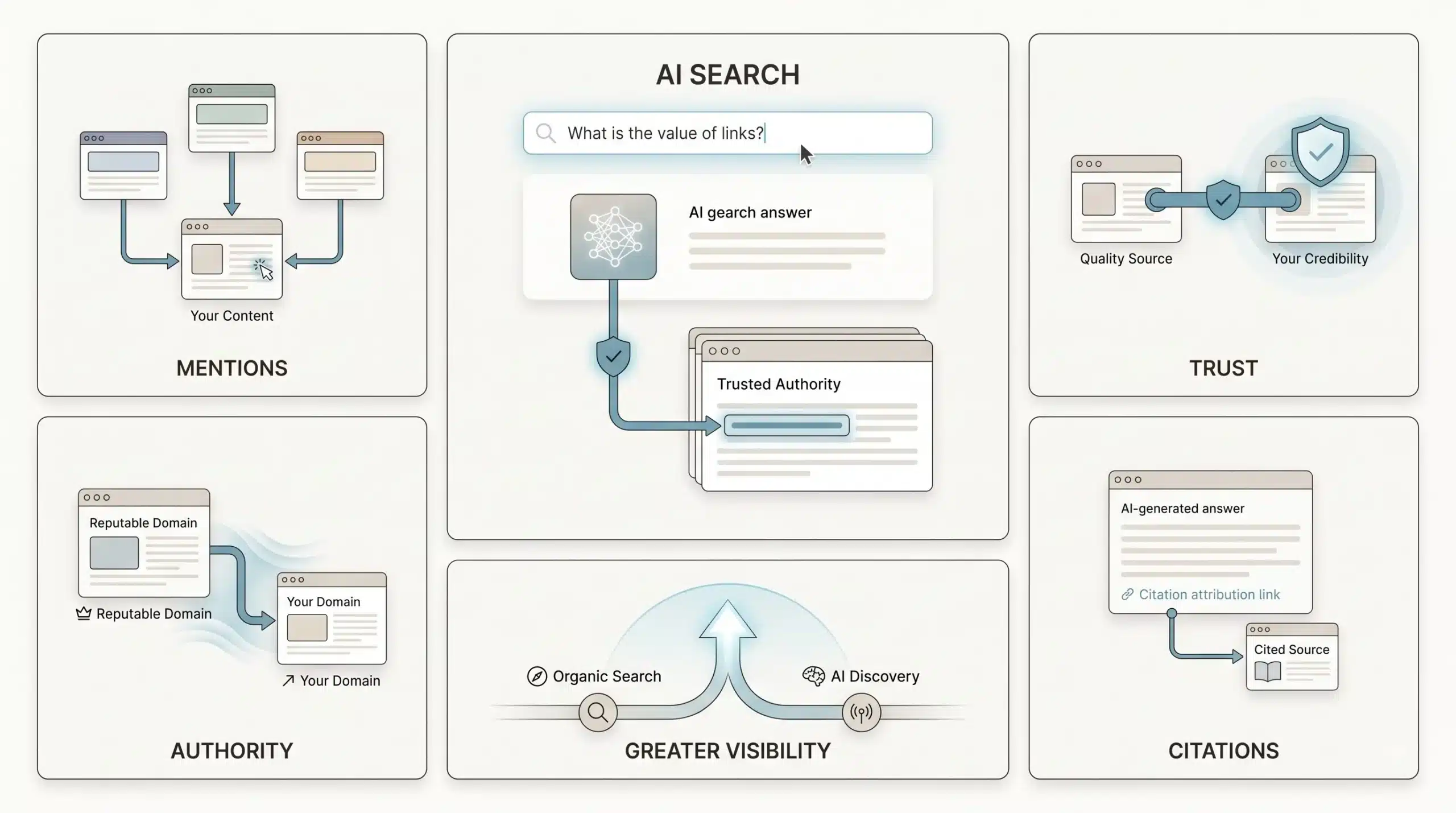
Yes, and arguably more than before. As AI Overviews, ChatGPT, and other AI search tools generate answers by pulling from indexed web content, they tend to cite sources that already carry strong organic signals, and backlinks remain one of the clearest signals of a page’s credibility.
A few things worth knowing:
- Third-party mentions increase your odds of being cited. Pages that show up on other reputable sites, whether through backlinks, reviews, or community mentions, are more likely to get pulled into AI-generated answers than pages that only exist on their own domain.
- The same link does double duty. A quality backlink helps your traditional search ranking and increases the chance an AI engine treats your content as a trustworthy source to cite.
- Quality matters even more now. Spammy or purchased links were already a risk for traditional SEO. In an AI search environment, low-trust links are even less likely to influence citations, since these systems tend to weight authority and relevance heavily.
The takeaway: don’t treat backlinks as a legacy SEO tactic that AI search is making obsolete. If anything, building genuine authority through quality links is becoming more relevant, not less.
How to Get Backlinks
Create High-Quality Content
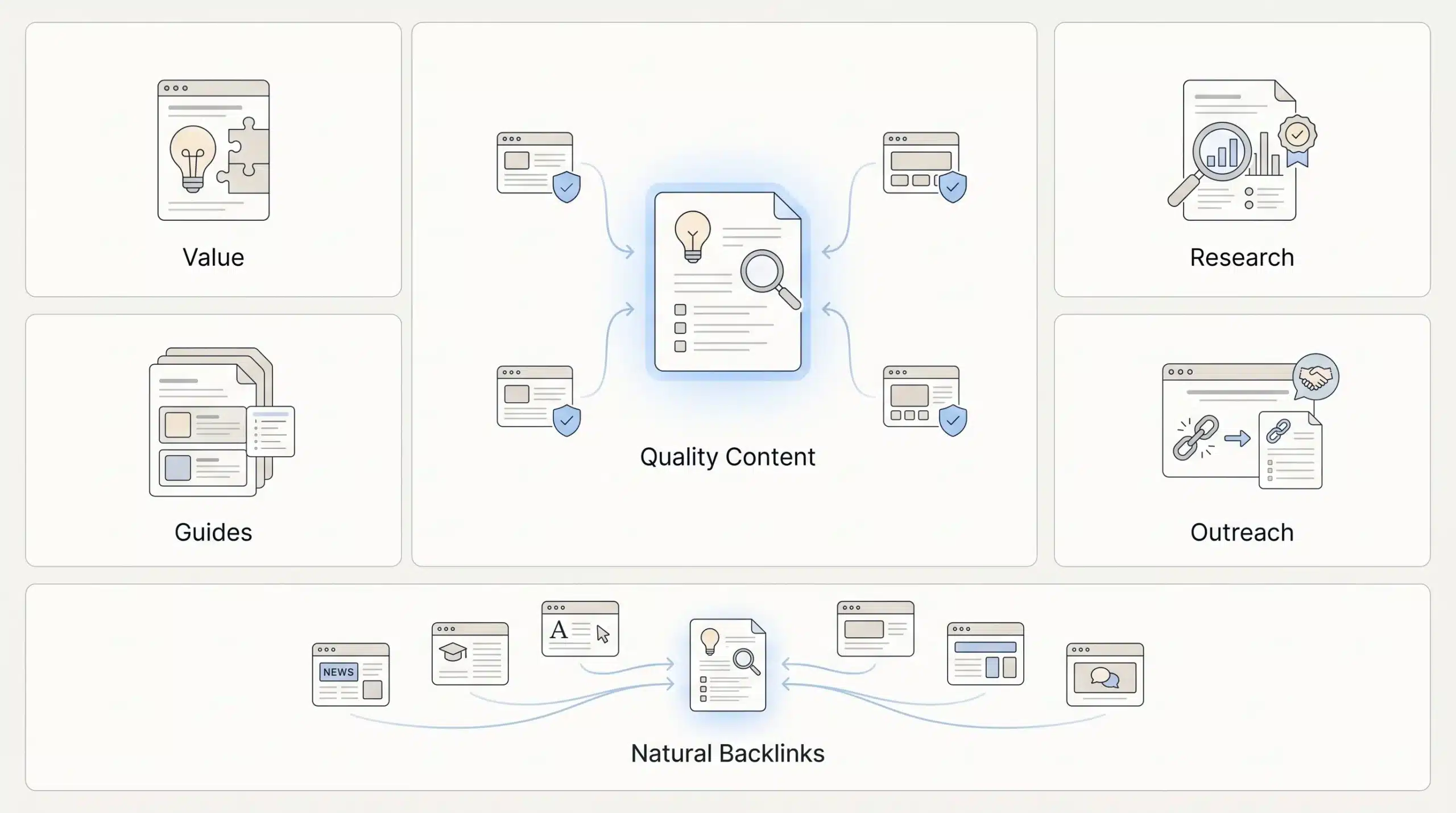
Creating high-quality, valuable content is one of the most effective ways to earn backlinks. When you produce content that is informative, engaging, and useful, other websites are more likely to link to it.
- Importance of Valuable and Shareable Content: Content that solves problems, provides unique insights, or offers useful information is more likely to be shared and linked to by others.
- Examples of Content That Attracts Backlinks: Blog posts with in-depth guides, original research, case studies, infographics, and comprehensive how-to articles tend to attract more backlinks.
Your highest-converting outreach emails often combine two tactics at once, for example, pointing out a broken link and offering a piece of original research as the replacement. A single-purpose pitch is easier to ignore than one that solves two problems for the site owner.
Guest Blogging
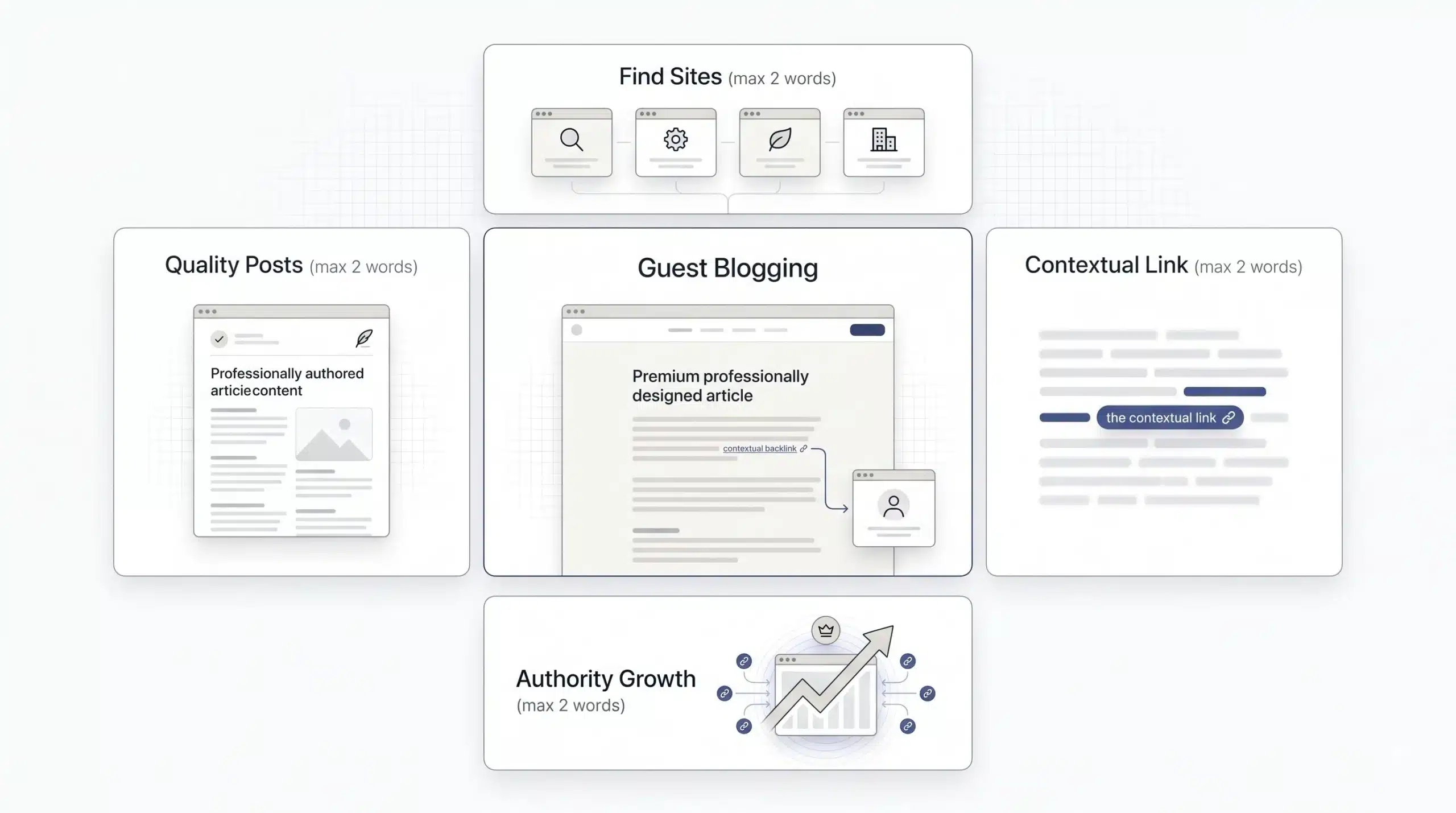
Guest blogging involves writing articles for other websites in your industry. In return, you get a backlink to your site.
- How to Find Guest Blogging Opportunities: Look for blogs or websites in your industry that accept guest posts. You can use search queries like “write for us” or “guest post” along with relevant keywords to find these opportunities.
- Tips for Writing Effective Guest Posts: Ensure your guest posts are well-written, relevant to the host site’s audience, and include a natural, contextual link back to your site.
Outreach and Relationship Building
Outreach involves contacting other websites, bloggers, or influencers to request backlinks.
- Strategies for Reaching Out to Influencers and Industry Leaders: Personalize your outreach emails, provide value to the recipient, and explain why linking to your content would benefit their audience.
- Building and Maintaining Relationships for Backlinks: Engage with influencers on social media, comment on their blogs, and offer value before asking for a backlink. Building trust and rapport can make your outreach more effective.
Use of Directories and Listings
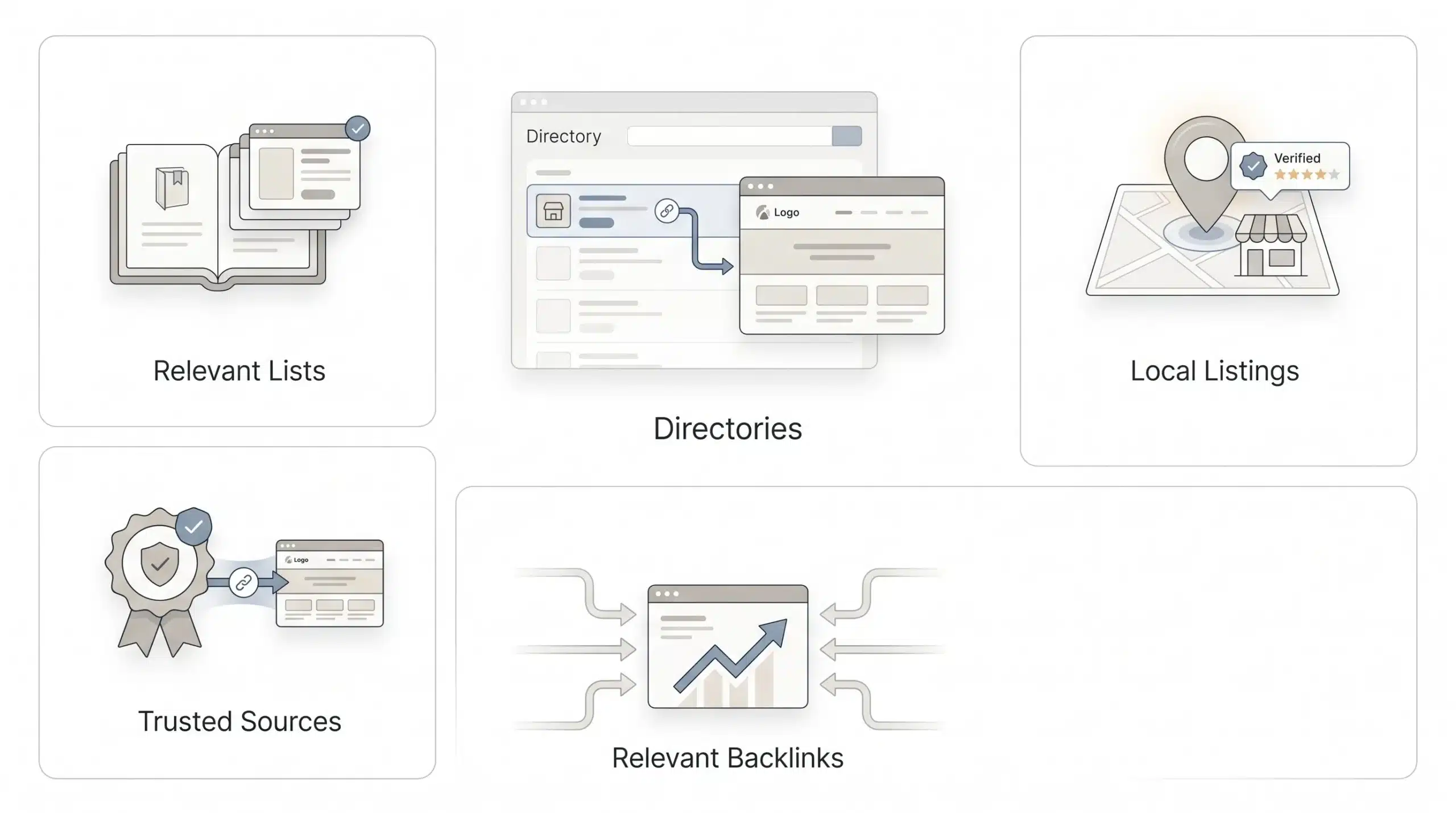
Submitting your site to online directories and listings can help you get backlinks.
- Submitting to Relevant Directories: Choose directories that are relevant to your industry or niche. Ensure that the directories are reputable and not spammy.
- Leveraging Local and Niche-Specific Listings: For local businesses, submitting to local business directories and industry-specific listings can be particularly beneficial for acquiring relevant backlinks.
Broken Link Building
Broken link building involves finding dead links on relevant websites and offering your own content as a replacement, a tactic that works because site owners want to fix broken links anyway, and you’re doing the legwork for them.
- Finding Broken Links on Other Sites: Tools like Ahrefs’ Broken Link Checker, Screaming Frog, or the Check My Links Chrome extension can scan a page and flag dead links in seconds.
- How to Offer Your Content as a Replacement: Reach out to the site owner directly, point out the exact broken link and its location on the page, and suggest your content only if it’s a genuinely close match. A weak-fit pitch gets ignored; a strong-fit one usually gets a fast yes.
- Where This Works Best: Resource pages, “further reading” sections, and old how-to guides tend to accumulate broken links over time and are the easiest targets to start with.
Use tools like Google Search Console, Ahrefs, SEMrush, or Moz to check your backlinks. This helps track progress and identify any harmful links that may need to be removed or disavowed.
Social Media and Online Communities
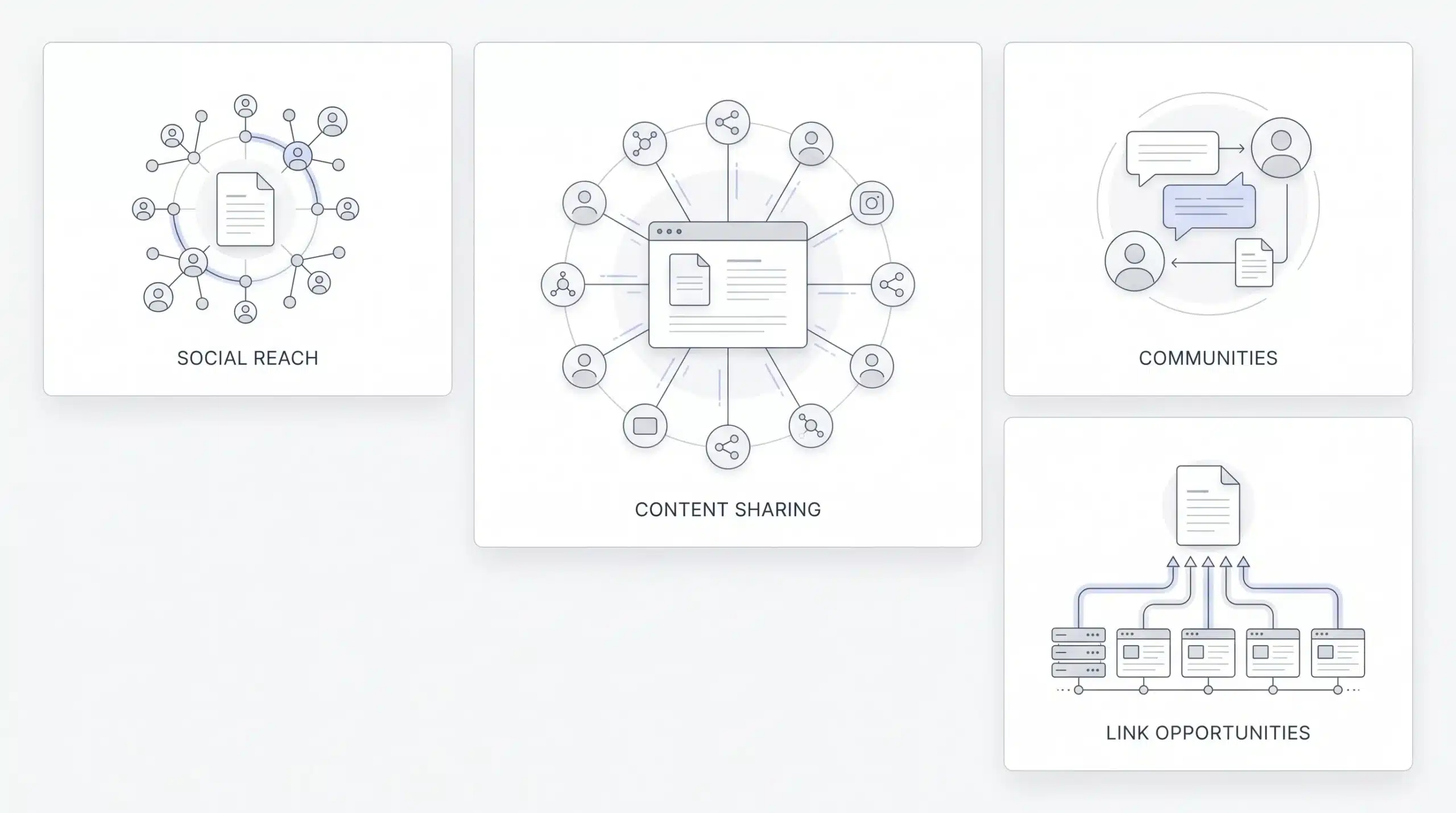
Sharing your content on social media and engaging in online communities can help you gain backlinks.
- Sharing Content on Social Platforms: Post your content on social media platforms like Facebook, Twitter, and LinkedIn. Encourage your followers to share it. Organic shares increase visibility, and visibility is what earns backlinks over time, not the share itself.
- Engaging in Forums and Online Communities: Participate in forums and online communities related to your industry. Provide valuable input and include links to your content where relevant and appropriate.
Conducting Original Research and Studies
Creating original research and studies can attract high-quality backlinks from other websites.
- Creating Data-Driven Content: Conduct surveys, studies, or research that provide valuable insights or new information. Present your findings in an easily shareable format, such as infographics or reports.
- Promoting Research to Earn Backlinks: Share your research with industry influencers, bloggers, and journalists. Offer them exclusive access or insights to encourage them to link to your study.
Tools and Resources for Building Backlinks
Several tools can help you find and analyze backlinks:
- Ahrefs: A comprehensive tool for analyzing backlinks, finding link-building opportunities, and monitoring your backlink profile.
- SEMrush: Provides detailed reports on backlinks, helps identify toxic links, and offers strategies for acquiring new backlinks.
- Moz: Offers tools for backlink analysis, domain authority tracking, and link-building insights.
- Majestic: Known for its detailed backlink analysis and link-building metrics.
- Google Search Console: Free, and the only tool on this list that shows exactly which sites Google itself has indexed as linking to you. Worth checking before paying for anything else.
Which one should you actually use? Ahrefs and SEMrush suit agencies and businesses running ongoing outreach campaigns since both cover competitor analysis alongside backlink tracking. Moz is a lighter, more affordable entry point if you’re just starting to monitor your profile. Majestic is worth adding only if you need historical link data going back further than what the others show. Google Search Console should be your baseline regardless of what else you use, since it’s free and shows Google’s own view of your links.
Useful Resources for Backlink Building Strategies:
- Blogs and Articles: Read industry blogs and articles on backlink strategies for the latest tips and techniques.
- Online Courses: Consider taking online courses on SEO and link-building to enhance your skills.
Measuring the Effectiveness of Your Backlink Strategy
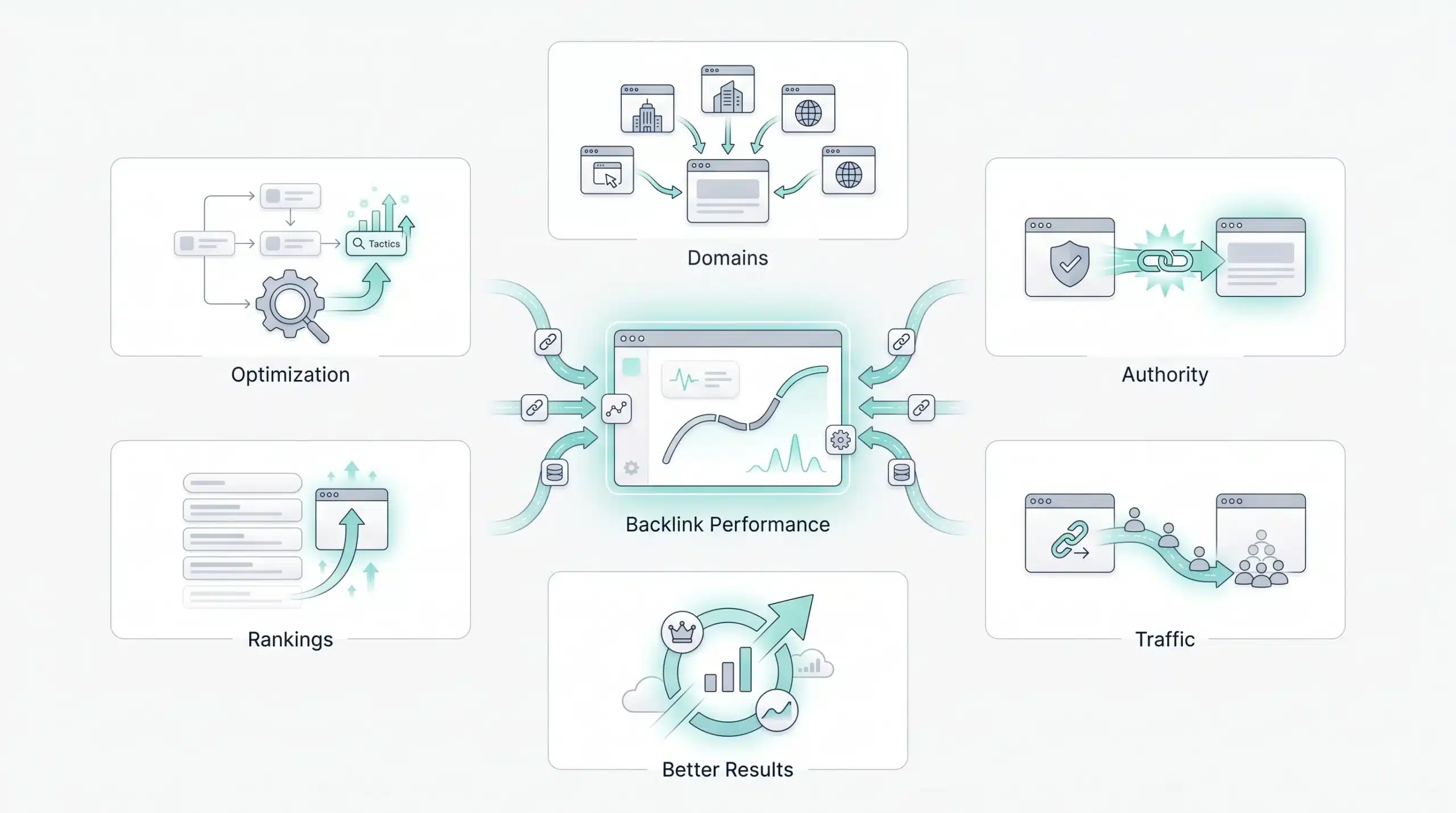
To ensure your backlink strategy is working, you need to track and analyze a few key metrics regularly, not just once after a campaign wraps.
- Referring Domains, Not Just Link Count: 50 links from 50 different domains carry more weight than 200 links from the same 10 sites. Track unique referring domains, not raw link totals.
- Domain Authority/Rating of Linking Sites: A handful of links from high-authority sites (DA/DR 50+) typically move the needle more than a large volume of low-authority ones.
- Referral Traffic: Check how much actual traffic each backlink sends, not just its SEO value. A link with real referral traffic is doing double duty.
- Ranking Movement for Target Keywords: Track keyword position changes over the 4-8 weeks after a link goes live, since backlinks take time to influence rankings.
- How to Adjust Your Strategy Based on Performance: If guest posts are driving referral traffic but not much ranking movement, and broken link building is doing the opposite, shift more effort toward whichever tactic is producing the outcome you actually need.
Common Mistakes to Avoid in Backlink Building
Avoid these common mistakes to ensure your backlink-building efforts are effective:
- Black-Hat SEO Practices: Avoid buying backlinks, joining link schemes, or using automated link-building software. These tactics violate Google’s guidelines and can lead to manual penalties or a full ranking drop.
- Risks of Low-Quality Backlinks: Links from spammy, unrelated, or low-authority sites can drag down your domain’s credibility instead of building it. A handful of strong, relevant links beats a hundred random ones.
- Over-Optimized Anchor Text: Using the exact same keyword-rich anchor text across every backlink looks manipulative to search engines. Vary your anchor text naturally, mixing branded terms, generic phrases (“click here,” “read more”), and keyword-relevant text.
- Ignoring Link Relevance: A backlink from a site that has nothing to do with your industry carries less weight and can look unnatural. Prioritize sites that are topically relevant, even if their authority is moderate.
- Reciprocal Link Overuse: Trading links back and forth in bulk (“I’ll link to you if you link to me”) used to work, but excessive reciprocal linking is now a known spam pattern. Occasional, natural link exchanges are fine; systematic ones aren’t.
Backlinks are a vital component of a successful SEO strategy. They help improve your search engine rankings, build credibility, and drive referral traffic to your site.
By creating valuable content, engaging in guest blogging, building relationships, and using other backlink-building techniques, you can enhance your online presence and achieve better results.
Remember, building high-quality backlinks takes time and effort, but the benefits for your business are well worth it.
Focus on providing value and building genuine connections, and your backlink strategy will pay off.
Frequently Asked Questions (FAQs)
1. What are backlinks?
Backlinks are links from one website to another. They are also called inbound links and are essential for SEO, as they help improve search engine rankings and drive referral traffic.
2. Why are backlinks important for my business?
Backlinks signal to search engines that your website is credible and authoritative. They help improve your search engine rankings, increase organic traffic, and boost brand visibility.
3. What are the different types of backlinks?
The main types of backlinks include:
-
DoFollow backlinks: These pass link equity (SEO value) to your website.
-
NoFollow backlinks: These do not pass link equity but can still bring referral traffic.
-
Editorial backlinks: Earned naturally when other websites mention your content.
-
Guest post backlinks: Links gained by contributing articles to other websites.
-
Directory backlinks: Links from online business directories.
4. How can I get high-quality backlinks?
You can get high-quality backlinks by:
-
Creating valuable and shareable content.
-
Guest posting on authoritative websites.
-
Reaching out for link-building collaborations.
-
Listing your business in directories.
-
Earning mentions from journalists and bloggers through HARO (Help A Reporter Out).
5. What makes a backlink high-quality?
A high-quality backlink comes from a reputable, high-authority website, is relevant to your industry, and uses natural anchor text.
6. Are all backlinks beneficial for SEO?
No, low-quality or spammy backlinks from irrelevant or untrusted sites can harm your SEO. Google may penalize your site if it detects unnatural or manipulative link-building practices.
7. How can I check my website’s backlinks?
You can check your backlinks using tools like Google Search Console, Ahrefs, SEMrush, or Moz. These tools help analyze the number, quality, and source of backlinks pointing to your site.
8. How long does it take for backlinks to impact SEO?
Backlinks take time to influence rankings. It can take a few weeks to several months for search engines to recognize and factor them into your rankings.
9. Can I buy backlinks to improve my ranking?
No, buying backlinks is against Google’s guidelines and can result in penalties, including lower rankings or deindexing of your website. It’s best to focus on organic link-building strategies.
10. How can I remove bad backlinks?
To remove bad backlinks, you can:
-
Contact the website owner and request removal.
-
Use Google’s Disavow Tool to tell search engines to ignore spammy links.