



Summary
HAL is India’s premier aerospace and defence company, deeply woven into the country’s defence, aviation, and indigenous manufacturing history. With headquarters in Bengaluru and a sprawling network of manufacturing, research, overhaul, and design offices across many Indian states, HAL plays a critical role in designing, manufacturing, and maintaining aircraft, helicopters, engines, avionics and defence-grade systems. The “hal corporate office” in Bengaluru coordinates strategy, policy, research & design, production oversight, global liaison, and governance — while multiple other divisions and facilities manage specialized work: aircraft manufacturing, helicopters, engines, avionics, overhaul, and accessories, spread across locations such as Bengaluru, Nasik, Hyderabad, Lucknow, Kanpur, Koraput, and more.

This blog provides a comprehensive view of HAL’s offices and facilities in India: their addresses, core functions, how they integrate into HAL’s larger mandate, and what makes each location vital. By the end, you’ll get a clear picture of how HAL’s network supports India’s aerospace ambitions and defence-industrial infrastructure.
Company Overview
HAL is a Government of India–owned aerospace and defence public sector undertaking, founded in 1940. Over decades, it has grown to become one of Asia’s largest aviation companies. Its scope includes design, manufacture and overhaul of combat aircraft, helicopters, unmanned aerial vehicles (UAVs), jet and turbine engines, avionics, and related aerospace hardware.
HAL’s operations span 11 dedicated Research & Development (R&D) centres and 21 manufacturing divisions spread over multiple production units across India.
HAL’s mission centers on achieving self-reliance in aerospace manufacturing for India, fulfilling defence and civil aviation needs domestically and for friendly nations, advancing indigenous design and development, and maintaining high standards of quality, safety and innovation.
As of recent years, HAL continues to expand capacities — involving new production lines, aircraft manufacturing units, engine divisions, and overhaul & maintenance facilities — aiming to support India’s growing defence and aviation demands.
HAL Offices & Major Facilities in India: Locations and Key Functions
HAL’s structure is multi-layered: a central corporate office, specialized divisions (aircraft, helicopters, engines, avionics, accessories, overhaul, research & design), and multiple production and maintenance units across states. Below are the most important locations and their functions.
HAL Corporate Office — Bengaluru, Karnataka

Address: 15/1, Cubbon Road, PB No. 5150, Bengaluru – 560001.
Core Functions:
- Overall corporate governance, strategic decision-making, management oversight
- Liaison with Ministry of Defence, government agencies, export/import divisions, global defence partners
- Policy formulation, financial planning, resource allocation, corporate compliance
- Coordination between multiple divisions — aircraft, helicopters, engines, R&D centres, overhaul divisions, accessories, etc.
- Oversight of design & research activities, approving projects, budgets, quality standards, exports, international collaboration
Significance:
As the central nerve center, this office ensures unified vision and standards across HAL’s expansive and geographically dispersed operations. It underpins coordination, compliance, strategic direction, and acts as the main corporate identity and decision-making hub for HAL.
HAL Bangalore Complex — Aircraft, Helicopter, Engine, MRO Divisions (Multiple Sub-Offices)
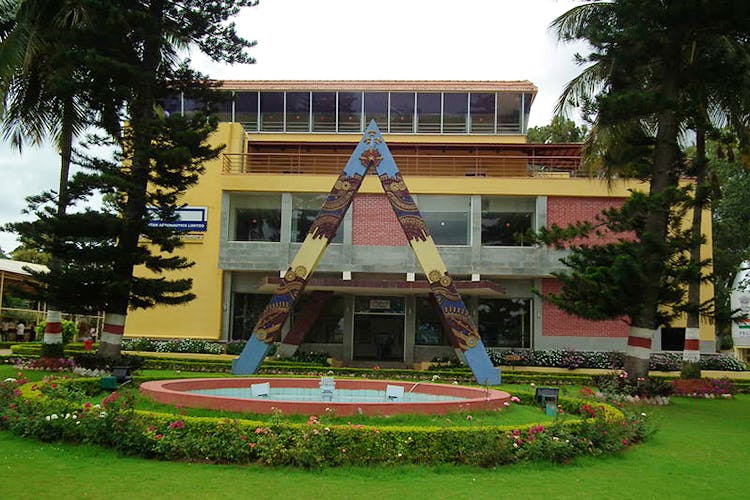
Bengaluru remains the heart of HAL’s manufacturing and R&D operations. Multiple divisions are housed here, each managing critical segments of aircraft manufacturing, engines, helicopter production, maintenance, research, and overhaul.
Key Divisions & Their Roles:
- Aircraft Division — produces fixed-wing aircraft, including light combat aircraft (e.g., HAL Tejas), trainer aircraft, and supports their assembly and testing.
- Helicopter Division / Helicopter Complex — responsible for manufacturing helicopters, maintenance, repair and overhaul (MRO) services for rotary-wing aircraft, rotorcraft design and upgrades.
- Engine Division — designs and manufactures aircraft and helicopter engines, turbo-jet/turboprop engines, and undertakes engine overhaul and servicing.
- R&D & Design Complex — houses research, avionics, mission-systems, electronics, upgrade and development units: such as Aircraft Research & Design Centre (ARDC), Aero-Engine Research & Design Centre (AERDC), Rotary Wing Research & Design Centre (RWRDC), Mission & Combat Systems R&D Centre (MCSRDC).
- Foundry & Forge Division, Aerospace Division, Overhaul & MRO Divisions, Accessories Division — produce components, maintain aircraft, support overhaul operations, produce parts, accessories, spare parts for aircraft/helicopters.
Importance:
The Bengaluru complex represents the core manufacturing and R&D nerve-centre for HAL. It merges design, production, maintenance, testing, upgrades — enabling HAL to develop indigenous aircraft, helicopters, aero engines, and provide overhaul and MRO services. This consolidation strengthens HAL’s position as India’s aerospace backbone.
Major Production & Maintenance Units Across India
HAL’s presence extends beyond Bengaluru into other states to handle diversified functions like manufacturing, avionics, overhaul, accessories, transport aircraft, and regional production capacities. Key units include:
- Nasik, Maharashtra — MiG / aircraft manufacturing and overhaul divisions, engine parts, desks for fixed-wing aircraft production / maintenance.
- Lucknow, Uttar Pradesh — Accessories Division — manufacturing or maintaining aircraft/helicopter accessories and parts.
- Kanpur, Uttar Pradesh — Transport Aircraft Division — production and maintenance for transport aircraft used by military / civil aviation.
- Koraput / Korwa / Sunabeda, Odisha / Andhra-Odisha regions — Engine divisions, manufacturing plants for aircraft engines, components, and supporting remote production capabilities.
- Hyderabad, Telangana — Avionics Division and aero-electronic manufacturing / maintenance support, research and components supply.
Role & Significance:
These satellite units ensure HAL has a pan-India manufacturing footprint, distributing load, enabling redundancy, and allowing specialization. They reduce logistic burdens, regionalize production, support maintenance & overhaul, facilitate regional skill development, and expand HAL’s capacity beyond one central location.
Also Read: GST Offices in India
What Makes HAL’s Office Network Critical to India’s Defence & Aerospace
HAL’s extensive office and facility network enables:
- Indigenous design and manufacture of aircraft, helicopters, engines, avionics — reducing reliance on foreign imports
- Integrated R&D, manufacturing, testing, overhaul and maintenance across divisions and locations
- Execution of large defence projects, meeting Indian Air Force, Army, Navy’s needs for fixed-wing aircraft, fighter jets, transport aircraft, helicopters, training aircraft, and aero-engines
- Export capabilities to friendly countries for defence hardware — supporting “Make in India” and defence export initiatives
- Research & innovation via dedicated R&D centers — enabling upgrades, customization, avionics advancements, combat systems, and future-ready aerospace technology
- Maintenance, repair & overhaul (MRO) services for active aircraft fleets — crucial for lifecycle support of aircraft/helicopters and sustaining capabilities over decades
This distributed, multi-division structure ensures resilience, scalability, and self-reliance for India’s defence manufacturing ecosystem.
FAQs
Where is the HAL corporate office located?
The HAL corporate office is at 15/1 Cubbon Road, Bengaluru 560001, Karnataka.
Is Bengaluru the headquarters of HAL?
Yes — HAL is headquartered in Bengaluru, though it has production and maintenance facilities across many Indian states.
Which major divisions of HAL are in Bangalore?
Aircraft manufacturing, helicopter manufacturing, engine division, R&D and design complex (aircraft, aero-engines, rotorcraft, avionics), overhaul and MRO divisions, foundry & forge and many support divisions are located in the Bangalore complex.
Does HAL have manufacturing facilities outside Karnataka?
Yes. HAL operates plants and divisions in Nasik (Maharashtra), Lucknow and Kanpur (Uttar Pradesh), Hyderabad (Telangana), Koraput / Korwa (Odisha / Andhra-Odisha border region) among others — covering aircraft manufacturing, avionics, accessories, transport aircraft, engines, overhaul, and maintenance.
What is the role of HAL’s R&D centers?
R&D centers are responsible for design and development of new aircraft/helicopters, aero-engines, avionics systems, upgrade programs, research on aerospace technologies, mission systems, and future-ready aviation hardware
Does HAL provide overhaul/MRO services?
Yes — HAL’s overhaul, MRO, and maintenance divisions service defence aircraft, helicopters, engines, avionics and accessories. These divisions ensure lifecycle maintenance and reliability for aircraft fleets.
Why does HAL have so many offices across India?
Because aerospace manufacturing and defence hardware involves multiple specialties — design, engine manufacturing, avionics, aircraft assembly, oversights, overhaul, accessories, etc. Distributing facilities across Indian states helps with resource allocation, regional talent utilization, logistical efficiency, and operational resilience.
Conclusion
HAL — via its “hal corporate office” and a broad network of divisions, manufacturing plants, R&D and overhaul centers across India — stands as the backbone of India’s aerospace and defence manufacturing ecosystem. With facilities in Bengaluru, Nasik, Hyderabad, Lucknow, Koraput, Kanpur, and many other regions, HAL integrates design, manufacturing, upkeep, research, and innovation under one large umbrella.
This distributed network not only supports the Indian defence forces’ varied aerial requirements — from fighter jets to transport aircraft and helicopters — but also drives indigenous manufacturing, skill development, and self-reliance in aerospace technology. As India’s defence and aviation needs expand, HAL’s role becomes even more critical, and its multi-location infrastructure positions it to meet the challenges of scale, complexity, and modernization.
Whether for defence planners, aviation professionals, students, or citizens interested in India’s aerospace infrastructure — understanding HAL’s office and facility network reveals the scale and depth of India’s journey toward aerospace self-sufficiency.