


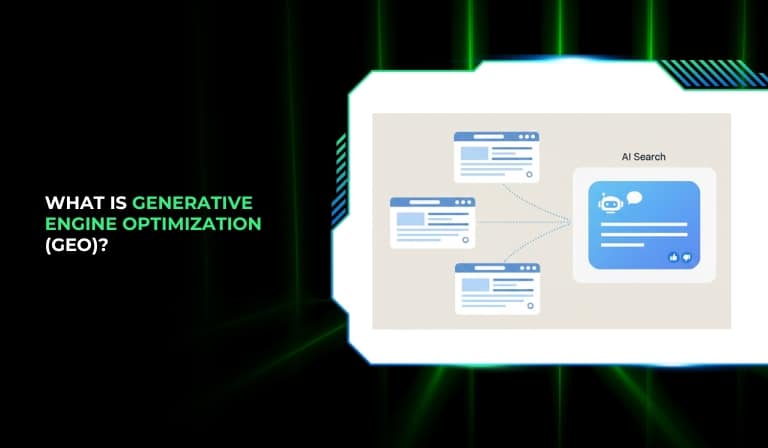
Search is no longer limited to typing a query into Google and clicking one of ten blue links. AI-powered search experiences are rapidly changing how users discover information online. Platforms like Google’s AI Overviews, ChatGPT, Gemini, Copilot, and Perplexity now generate direct, synthesized answers instead of simply listing webpages. These systems pull information from multiple sources, summarize it, and present a single response to the user.

This shift means brands and publishers are no longer competing only for rankings but for inclusion in AI-generated answers. Many businesses still rely entirely on traditional SEO, even as generative engines increasingly influence how information is consumed. This creates a major opportunity for those who adapt early.
Generative Engine Optimization, or GEO, has emerged as a response to this change. GEO focuses on optimizing content so that AI systems can understand, trust, and cite it when generating answers. Unlike traditional SEO, which prioritizes rankings and clicks, GEO prioritizes visibility, authority, and citations inside AI-generated responses.
In this guide, you will learn what GEO is, how it differs from SEO, why it requires a different mindset, and how to structure content so generative engines are more likely to reference it.
What is Generative Engine Optimization (GEO)?
Generative Engine Optimization (GEO) is the process of optimizing digital content so it can be extracted, synthesized, and cited by AI-powered search engines when they generate answers to user queries. Instead of focusing on ranking a webpage in search results, GEO focuses on making content understandable, trustworthy, and usable for generative AI systems.
GEO differs from traditional SEO in a fundamental way. SEO aims to drive traffic by ranking pages, while GEO aims to make content the source that AI engines rely on when constructing answers. In a generative search environment, being cited is often more valuable than being ranked.
GEO as a concept gained attention after academic research in 2023 highlighted how generative models select and weight sources. By 2026, GEO has become essential for brands that want to remain visible in AI-driven search experiences.
Why GEO Matters Now
Generative search engines are changing how information is delivered. Instead of showing many results, AI systems typically surface a small number of cited sources within a single answer. This dramatically reduces the number of opportunities for visibility.
Several factors make GEO especially important now:
- AI-generated answers are becoming a default experience across major platforms
- Fewer sources are cited per query, increasing competition for visibility
- Early adopters gain a long-term advantage as AI models learn which sources to trust
- GEO builds on SEO foundations but requires different execution
Ignoring GEO risks losing visibility even if traditional SEO performance remains strong.
GEO vs. AEO vs. SGE
GEO is often confused with other optimization concepts, but each serves a different purpose.
- GEO focuses on being cited and synthesized in AI-generated responses across platforms
- Answer Engine Optimization (AEO) focuses on providing direct answers for features like featured snippets
- Search Generative Experience (SGE) refers to Google’s AI-enhanced search interface rather than an optimization discipline
Understanding these distinctions helps clarify why GEO requires its own strategy.
GEO vs. Traditional SEO: Key Differences
Target Platforms
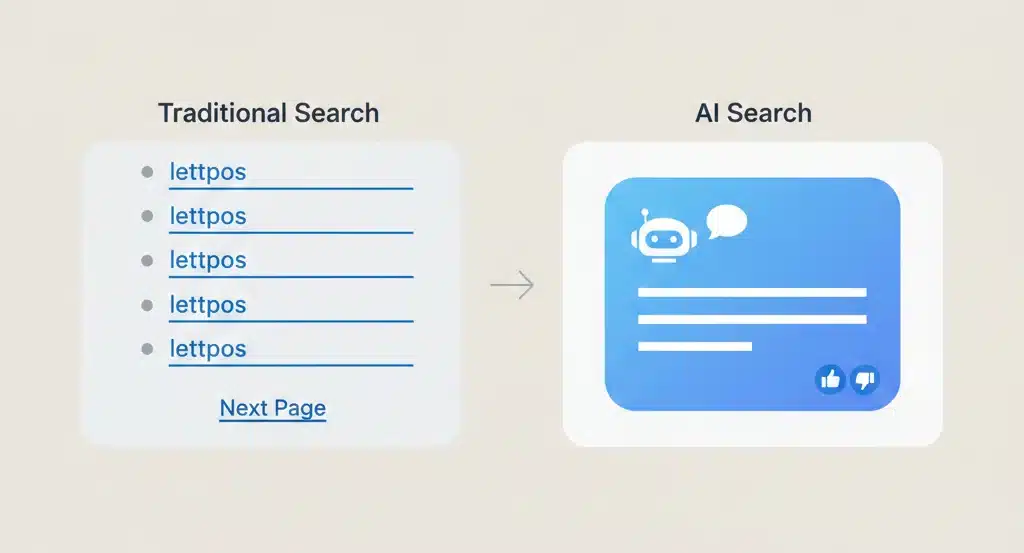
Traditional SEO is designed for search engines that return ranked lists of webpages. These include platforms where users click through to websites to find information.
GEO targets AI-powered platforms that generate answers directly. These systems may still reference websites, but the interaction often ends within the AI interface rather than on the source page. This changes how visibility is achieved and measured.
Search Results Format
SEO operates in an environment where many results can appear for a single query. Even lower-ranked pages can still receive traffic.
GEO operates in a constrained environment where AI systems typically cite only a few sources. This means:
- Fewer opportunities for inclusion
- Higher importance of clarity and authority
- Greater competition for limited citation slots
Ranking and Selection Factors
Traditional SEO relies on signals such as keywords, backlinks, technical performance, and user engagement. These help search engines rank pages relative to each other.
GEO relies on different evaluation signals, including:
- Clarity and completeness of answers
- Semantic relevance to the query
- Demonstrated expertise and trustworthiness
- Use of structured formats that AI can parse easily
- Content freshness and accuracy
AI systems prioritize content that can be confidently used to generate reliable answers.
Content Approach
SEO content is often written to capture keywords and encourage clicks. It assumes the user will read the page.
GEO content is written so the answer can stand on its own. The goal is to provide information that is immediately useful and contextually complete, even if the user never visits the website.
Traffic Impact and User Journey
SEO primarily supports mid- and bottom-funnel traffic by driving users to websites where conversions occur.
GEO plays a stronger role at the top of the funnel by building:
- Brand recognition
- Perceived authority
- Trust through repeated citations
While direct traffic may be lower, the long-term brand impact can be significant.
Why GEO Requires Different Optimization Strategies
How Generative AI Engines Work
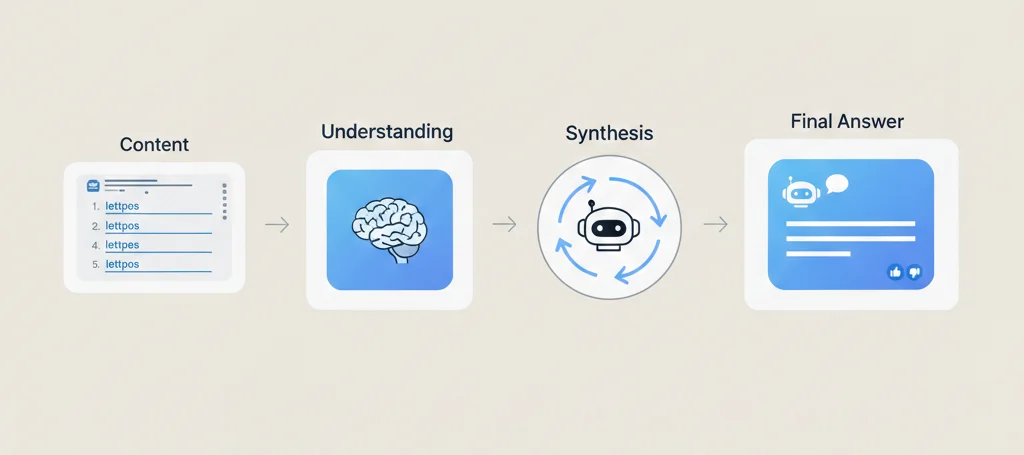
Generative AI engines process queries using natural language understanding rather than keyword matching alone. They evaluate context, intent, and meaning before selecting content to synthesize.
These systems:
- Analyze content for relevance and clarity
- Compare multiple sources to resolve inconsistencies
- Prefer content that answers questions directly
- Favor sources with consistent authority signals
As a result, keyword-heavy or vague content performs poorly in generative environments.
The Three Core GEO Principles
Effective GEO strategies are built on three principles:
- Clear: Content should answer questions directly and unambiguously
- Authoritative: Claims should be supported by evidence, expertise, or credible references
- Adaptive: Content should be updated to remain accurate and current
These principles guide how content is written and maintained over time.
Content Density vs. Keyword Density
Traditional SEO often emphasizes keyword placement and frequency. GEO prioritizes information density instead.
AI systems evaluate:
- How much useful information is present
- Whether concepts are explained thoroughly
- If the content resolves the user’s question fully
Well-structured, comprehensive explanations outperform keyword-stuffed pages.
The Shift in Mindset
GEO requires a shift in how content is planned:
- From ranking pages to informing AI answers
- From keyword lists to intent mapping
- From link-building to authority-building
- From traffic metrics to visibility and citation metrics
This mindset change is essential for long-term success.
Core GEO Optimization Strategies

Lead with Clear, Direct Answers
Generative engines favor content that answers questions immediately. The most important information should appear at the beginning of the content.
Key practices include:
- Answering the main question within the first 75–120 words
- Using concise, precise language
- Expanding with supporting details after the core answer
- Structuring content so answers are easy to extract
This approach improves both human readability and AI usability.
Cite Sources and Use Verifiable Data
AI systems prioritize content that demonstrates credibility. Including verifiable data helps establish trust.
Best practices include:
- Referencing recognized industry reports or research
- Using specific figures instead of vague claims
- Clearly attributing statistics to their source
- Avoiding unsupported or speculative statements
Content with evidence is more likely to be cited.
Use Structured Data and Schema Markup
Structured data helps AI systems understand the purpose and format of content.
Important schema types include:
- FAQPage for question-and-answer sections
- HowTo for step-by-step guides
- Article for editorial content
Using structured data does not guarantee citations, but it improves content interpretability.
Demonstrate First-Hand Experience and E-E-A-T
AI engines evaluate who created the content and why they should be trusted.
Ways to demonstrate this include:
- Clear author attribution with credentials
- Real-world examples or observations
- Original insights based on experience
- Consistent topical focus across content
Experience and expertise help distinguish authoritative content from generic summaries.
Build Topic Clusters and Topical Authority
GEO favors websites that demonstrate deep understanding of a subject.
Effective clustering involves:
- Creating a comprehensive pillar page on a core topic
- Publishing supporting articles on related subtopics
- Interlinking content to show conceptual relationships
- Maintaining consistency in terminology and coverage
This structure signals authority to AI systems.
Use Question-Based Headings
Generative engines often match content sections to user questions.
Using question-style headings:
- Aligns content with natural language queries
- Improves extractability of answers
- Helps AI systems map content to intent
Headings should reflect how users actually ask questions.
Structure Content for Easy Extraction
AI systems prefer content that is easy to parse.
This includes:
- Short paragraphs
- Logical heading hierarchy
- Clear formatting
- Emphasis on key concepts
Well-structured content reduces ambiguity.
Create Comprehensive FAQ Sections
FAQ sections closely match how users interact with AI assistants.
Effective FAQs:
- Address common and follow-up questions
- Provide concise, direct answers
- Cover both beginner and advanced concerns
- Are kept up to date
FAQs increase the chances of content being reused in AI responses.
Display Content Freshness
Generative engines favor up-to-date information.
Best practices include:
- Showing last updated dates
- Reviewing content regularly
- Updating statistics and examples as needed
Freshness signals ongoing relevance and reliability.
Use Tables for Comparisons
Tables provide structured data that AI systems can easily extract.
They are especially effective for:
- Comparisons
- Feature breakdowns
- Process summaries
Clear tables improve both readability and AI usability.
E-E-A-T: The Foundation of GEO Success
What is E-E-A-T?
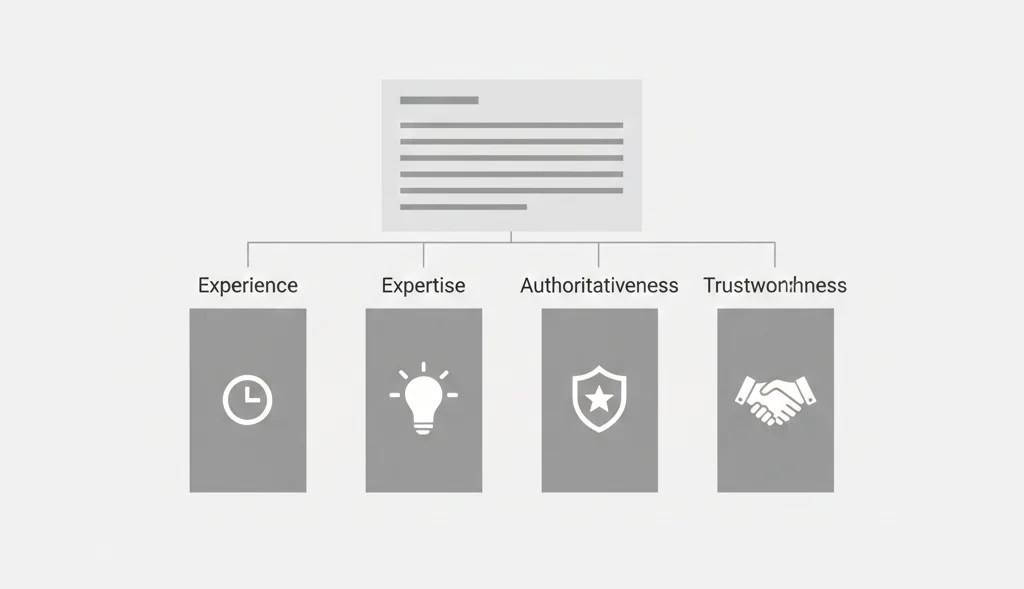
E-E-A-T stands for Experience, Expertise, Authoritativeness, and Trustworthiness. It represents how credible and reliable content appears.
Each element plays a role:
- Experience shows practical involvement
- Expertise reflects subject knowledge
- Authoritativeness indicates recognition
- Trustworthiness ensures accuracy and transparency
Why AI Prioritizes E-E-A-T
AI systems aim to reduce misinformation. As a result, they rely heavily on signals that indicate reliability.
Content with strong E-E-A-T:
- Is more likely to be cited
- Is less likely to be contradicted by other sources
- Builds long-term credibility with AI models
Demonstrating E-E-A-T for GEO
Practical ways to demonstrate E-E-A-T include:
- Publishing author bios and credentials
- Citing reputable sources
- Sharing real-world insights
- Maintaining consistency across content
E-E-A-T Beyond YMYL Topics
While E-E-A-T is critical for sensitive topics, it benefits all content in generative search. AI systems increasingly apply these standards universally.
Technical GEO Optimization Checklist
Clean and Fast-Loading Pages
Technical quality affects how AI systems access content.
Key considerations include:
- Fast page load times
- Clean HTML structure
- Content appearing early in the page code
- Responsive design for all devices
Allow AI Crawlers Access
AI platforms use dedicated crawlers to access content.
Best practices include:
- Allowing AI bots in robots.txt
- Avoiding unnecessary blocking via firewalls
- Providing clear access to public content
Blocking AI crawlers can limit visibility in generative answers.
Semantic HTML and Metadata
Semantic HTML improves content comprehension.
Important elements include:
- Proper heading hierarchy
- Use of semantic tags
- Accurate meta descriptions
- Open Graph metadata for previews
Video Optimization for GEO
Video content is increasingly used in AI answers.
Effective video optimization includes:
- Clear titles that answer questions
- Descriptive summaries and transcripts
- Structured timestamps
- Appropriate schema markup
Security and HTTPS
Secure websites are trusted more by both users and AI systems. HTTPS is a baseline requirement for credibility.
GEO Content Formatting Best Practices
Answer-Ready Structure
GEO content should be structured so answers are immediately usable.
This includes:
- Direct answers at the top
- Supporting details below
- Clear separation of ideas
- Practical examples where relevant
Content Depth and Coverage
Depth matters more than length.
Effective GEO content:
- Covers a topic from multiple angles
- Avoids surface-level explanations
- Maintains internal consistency
Keyword Use in GEO
Keywords still matter, but context matters more.
Best practices include:
- Natural use of related terms
- Alignment with query intent
- Avoidance of keyword stuffing
Formatting Elements AI Prefers
AI systems favor:
- Clear emphasis on key terms
- Lists for structured information
- Tables for comparisons
- Logical progression of ideas
Brand Embedding
Mentioning a brand naturally within authoritative content helps AI associate the brand with expertise. This should be done subtly and contextually.
Avoiding Common Mistakes
Common mistakes include:
- Publishing generic content
- Using outdated information
- Over-optimizing for keywords
- Lacking original insights
Avoiding these improves citation potential.
Measuring GEO Success: Metrics and KPIs
Share of Model (SoM)
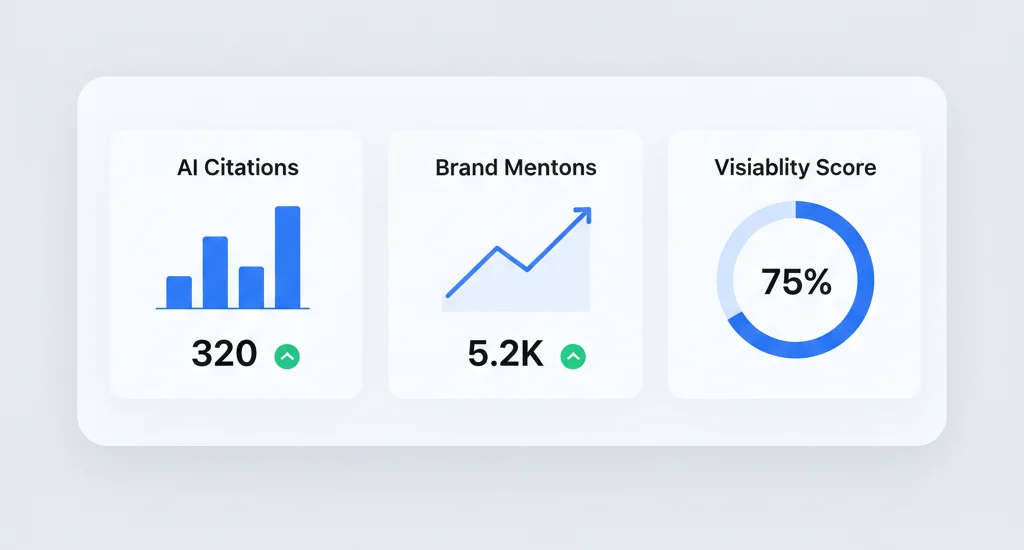
Share of Model measures how often a brand appears in AI-generated answers compared to competitors.
Tracking involves:
- Running consistent queries
- Monitoring brand mentions
- Comparing visibility over time
AI Citation Tracking
Citation tracking focuses on which pages AI systems reference.
Key insights include:
- Identifying high-performing content
- Understanding citation patterns
- Improving underperforming pages
Brand Visibility in AI Responses
Regularly reviewing how AI platforms describe a brand helps ensure accuracy and consistency.
Referral Traffic from AI Platforms
While traffic may be limited, it is still valuable.
Monitoring includes:
- Tracking referral sources
- Evaluating engagement
- Comparing conversion quality
Content Performance Indicators
Useful indicators include:
- Citation frequency
- Content freshness
- Presence of E-E-A-T signals
- Query coverage
Competitive Benchmarking
Benchmarking helps identify gaps and opportunities by comparing visibility against competitors.
GEO Timeline and Realistic Expectations
Months 1–2: Setup Phase
This phase focuses on preparation and baseline measurement.
Actions include:
- Auditing existing content
- Establishing benchmarks
- Optimizing priority pages
Results are primarily foundational.
Months 2–4: Expansion Phase
Optimization expands to more content.
Expected outcomes include:
- Early citation signals
- Improved visibility for target queries
- Recognition of effective content patterns
Months 4–6: Scaling Phase
At this stage, GEO efforts become systematic.
Outcomes include:
- Consistent citations
- Improved brand recognition
- Measurable AI-driven visibility
Common Mistakes and Fixes
Mistakes include expecting instant results, focusing on only one platform, or repurposing SEO content without restructuring.
Fixes involve patience, platform diversity, and semantic optimization.
Quarterly Expectations
Progress should be evaluated quarterly, with gradual improvements rather than immediate spikes.
GEO Tools and Resources
AI Search Monitoring
Regular testing across AI platforms helps understand how content is used.
Content Structure and Schema Tools
Structured data testing and schema tools support proper implementation.
Competitive Analysis Tools
Content and keyword research tools help identify gaps and opportunities.
Analytics and Tracking
Analytics platforms help track referral traffic and engagement from AI-driven sources.
Conclusion
Generative Engine Optimization represents a fundamental shift in how visibility is achieved online. As AI-powered search experiences become standard, relying solely on traditional SEO is no longer enough. GEO ensures that content is not only discoverable but trusted and reused by AI systems when generating answers.
GEO does not replace SEO. Instead, it complements it by addressing how information is synthesized rather than ranked. Strategies that focus on clarity, authority, and credibility benefit both approaches, making GEO a long-term investment rather than a short-term tactic.
Organizations that begin optimizing for generative engines today position themselves for sustained visibility in the years ahead. As AI continues to shape how users access information, GEO becomes an essential part of any modern content strategy.
Frequently Asked Questions (FAQs)
What is Generative Engine Optimization (GEO)?
Generative Engine Optimization (GEO) is the practice of optimizing content so AI-powered search engines can understand, synthesize, and cite it when generating answers. Instead of focusing on rankings and clicks, GEO focuses on being referenced inside AI-generated responses.
How is GEO different from traditional SEO?
SEO focuses on ranking webpages in search engine results, while GEO focuses on getting content cited within AI-generated answers. GEO prioritizes clarity, authority, and context, whereas SEO relies more heavily on keywords, backlinks, and rankings.
Does GEO replace SEO?
No, GEO does not replace SEO. GEO complements SEO by optimizing content for AI-generated answers, while SEO continues to drive traffic through traditional search results. Both strategies work best when implemented together.
Which platforms use generative search results?
Generative search results are used by AI-powered platforms such as ChatGPT, Google Gemini, Microsoft Copilot, and Perplexity. These platforms generate answers by synthesizing information from multiple sources.
Why is GEO important for businesses?
GEO is important because AI-generated answers often cite only a few sources. If your content is not optimized for GEO, it may not appear in these answers, reducing brand visibility even if your SEO performance is strong.
What type of content works best for GEO?
Content that works best for GEO includes:
- Clear explanations and definitions
- How-to guides and step-by-step content
- Educational and informational articles
- Content supported by credible data and sources
- Well-structured FAQs and comparison content
How do AI engines decide which content to cite?
AI engines evaluate content based on relevance, clarity, topical depth, credibility, freshness, and trust signals such as E-E-A-T. Content that answers questions directly and consistently is more likely to be cited.