


Understanding why customers buy is core to building effective sales and marketing strategies in 2026, as economic pressure, digital acceleration, and shifting social norms reshape decision-making across B2B and B2C markets. Buyer motives—the emotional and practical reasons behind a purchase—determine which messages, offers, and experiences convert best across channels.
What are buyer motives?
Buyer motives are the psychological, emotional, and rational factors that influence a consumer’s decision to buy, such as cost, accessibility, emotional value, societal pressure, and quality. Understanding these motives helps teams tailor positioning, content, and pricing to how different segments actually make choices, improving conversion and retention.

Three motive categories
Conscious vs. dormant
- Conscious motives are explicit and recognized by the buyer (e.g., “need it for Friday’s event,” “save money this quarter”).
- Dormant motives exist but require education, reframing, or urgency to activate (e.g., surfacing a security risk the buyer hasn’t considered).
Rational vs. emotional
- Rational motives emphasize logic—price, performance, specs, evidence, and problem-solution fit.
- Emotional motives include safety, status, admiration, fear, and belonging; emotions are a dominant driver of purchase decisions across categories.
Product vs. patronage
- Product motives arise from the item’s attributes (style, quality, features, cost).
- Patronage motives reflect trust and loyalty toward a brand or vendor, often built on consistent service and familiarity.
The 8 buyer motives in 2026
1) Financial returns and value for money
Buyers, especially in B2B, prioritize ROI, efficiency, cost control, and measurable outcomes; demonstrate proof with case studies, benchmarks, and transparent pricing. With 2026’s cost-conscious environment, value-focused messaging and bundles help win constrained budgets.
How to leverage:
- Quantify savings and time-to-value in proposals and on pricing pages.
- Offer tiered plans, flexible terms, and outcome-based case studies to reduce perceived risk.
2) Health and well-being
Many consumers will pay more for products that improve safety and wellness; credible proof of benefits and outcomes is essential. Align messaging to clear, demonstrable improvements in quality of life and safety.
How to leverage:
- Use testimonials, before/after evidence, certifications, and third-party validation in ads and product pages.
3) Need and problem-solving
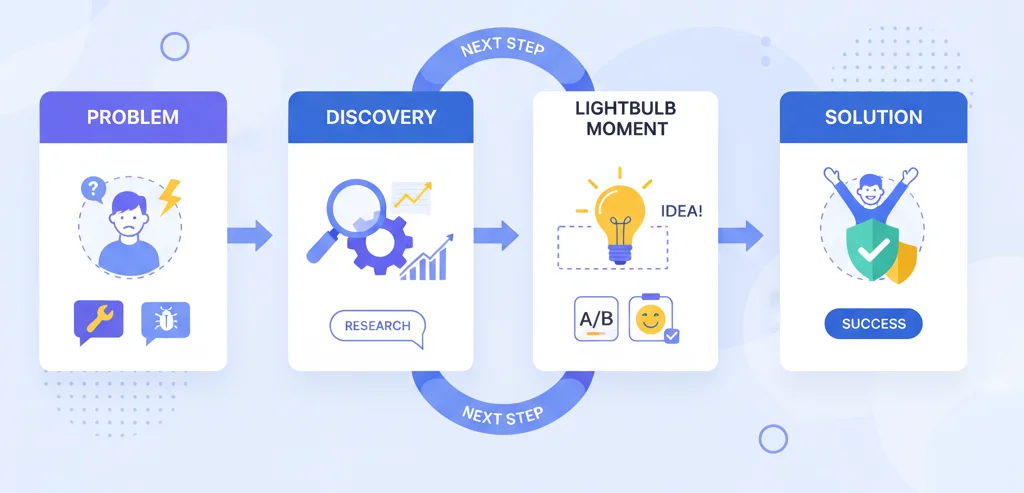
Necessity remains a core trigger; some buyers recognize their problem, others need education to connect the dots to your solution. Pain-point content and consultative discovery help transform latent needs into action.
How to leverage:
- Map content to pains by role and industry; show “job-to-be-done” fit and a fast path to relief.
4) Fear and risk avoidance

Risk framing (data loss, downtime, compliance, missed targets) motivates protective purchases; guarantees, trials, and social proof reduce anxiety. In uncertain markets, risk-mitigation offers (warranties, SLAs) are decisive.
How to leverage:
- Present the “cost of inaction,” offer money-back guarantees, and showcase third-party reviews and certifications.
5) Social status, acceptance, and FOMO
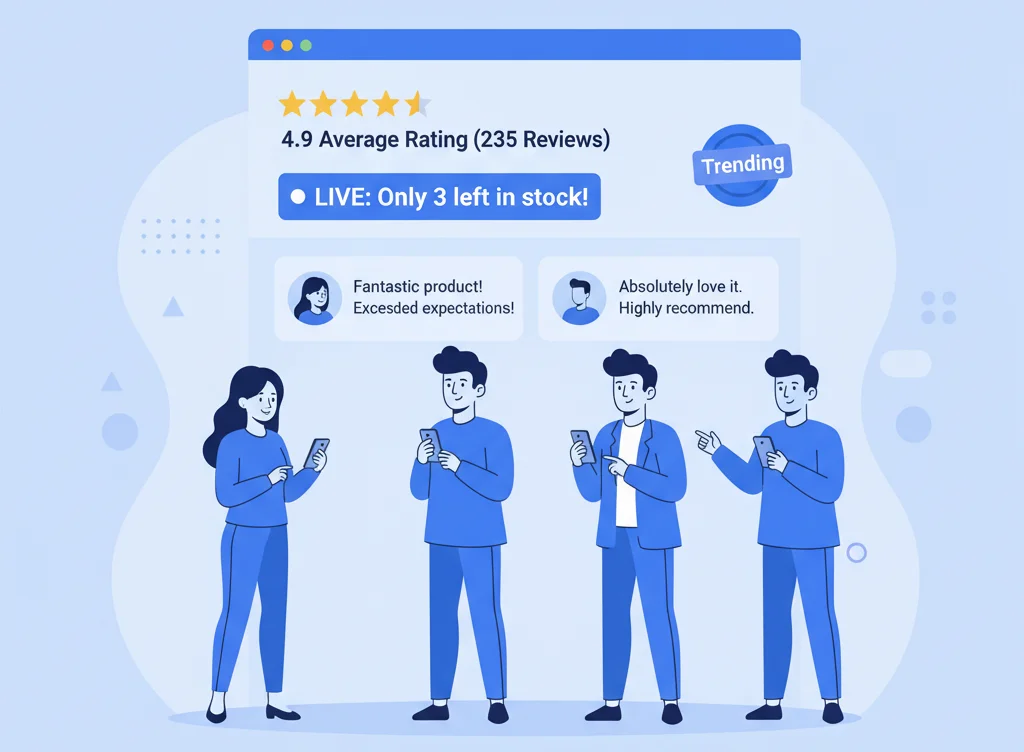
Peer influence and exclusivity drive adoption, amplified by social platforms and creator culture; limited drops and visible community signals increase desirability. Younger cohorts discover and validate purchases through social proof and trends.
How to leverage:
- Use influencers, user-generated content, waitlists, and limited-time/quantity offers; highlight “most bought” and “trending now” badges.
6) Self-growth and aspiration

People invest in tools that promise skills, performance, or life upgrades; show transformation narratives and milestone-based progress. Education, coaching, and community accelerate perceived and real gains.
How to leverage:
- Feature success stories, roadmaps, and progress tracking; bundle learning paths and accountability mechanisms.
7) Comfort, convenience, and simplicity
Frictionless experiences—fast delivery, easy setup, intuitive UX—outperform feature-heavy pitches; buyers reward time-saving solutions and low-effort onboarding. More journeys are digital-first, so speed and clarity influence conversion.
How to leverage:
- Emphasize one-click flows, quick-start templates, and concierge onboarding; quantify time saved in value propositions.
8) Pleasure and personal satisfaction
Selective indulgence persists despite budget caution; premium positioning, sensory appeal, and craftsmanship justify discretionary spend. Experiences and meaning-rich goods are resilient splurge categories in 2026.
How to leverage:
- Elevate storytelling, visuals, and tactile cues; use exclusivity and limited editions to reinforce delight and pride of ownership.
Identify motives in your audience
- Voice-of-customer research: interviews, surveys, reviews, and support logs to surface language and triggers per segment.
- Persona depth: go beyond demographics to include jobs-to-be-done, anxieties, desired outcomes, and decision criteria.
- Journey analytics: map moments where specific motives spike (e.g., checkout = risk, comparisons = financial, social = FOMO).
- Experimentation: A/B test motive-led headlines and offers; track lift by segment to refine playbooks.
B2C vs. B2B motives (at a glance)
| Dimension | B2C dominant patterns | B2B dominant patterns |
| Primary drivers | Emotion, identity, FOMO, convenience | ROI, risk reduction, consensus, efficiency—plus rising emotional ties to vendors |
| Cycle | Short, individual | Longer, multi-stakeholder |
| Proof needed | Social proof, creator validation | Business case, references, SLAs |
B2B buying remains rationally framed but still hinges on trust, de-risking, and increasingly personal stakes for champions, making emotional resonance a competitive edge.
Apply motives to your strategy
- Messaging matrix: Map each motive to segment, pain, proof assets, and CTAs; deploy across ads, landing pages, emails, and sales scripts.
- Offer architecture: Create motive-specific bundles—ROI packs (discount + ROI calculator), risk-free trials, VIP drops, learning tracks.
- Proof library: Build case studies, benchmarks, testimonials, and demo snippets aligned to each motive for fast personalization at scale.
- Measure and iterate: Attribute by segment/motive hypothesis; double down on top-performing motive-message pairs per channel.
If you’d like, a version with front matter (title, description, keywords) or platform-specific formatting (WordPress, Webflow, Ghost) can be prepared.
Conclusion
Winning in 2026 isn’t about louder campaigns—it’s about aligning every message, offer, and experience to the real motives behind a customer’s decision to buy. When teams operationalize the eight motives—financial value, health, need, risk avoidance, social proof/FOMO, self-growth, convenience, and pleasure—they turn generic outreach into precision marketing that converts. Map these motives to your segments, proof points, and CTAs, then iterate with testing to discover which motive-message pairs move each audience. The businesses that consistently reduce risk, prove value, and reflect the buyer’s aspirations will out-convert competitors—and build the kind of loyalty that compounds over time.