


Here’s a scenario that plays out constantly for growing businesses. The SEO strategy is in place. The content calendar is running. The blog posts are getting published. The team is doing everything right. And three months in, organic traffic is still flat. Six months in, there’s a little movement. A year in, things are finally starting to pick up.
Meanwhile, the business needed customers six months ago.
SEO is real and it works, but it’s slow. Painfully slow sometimes, especially in competitive niches where established players have been building domain authority for years. Social media organic reach has been declining on almost every platform. Word of mouth is great but unpredictable. And the business has targets to hit now, not in 18 months when the content strategy matures.
That’s the situation where PPC advertising stops being optional and starts being obviously necessary.
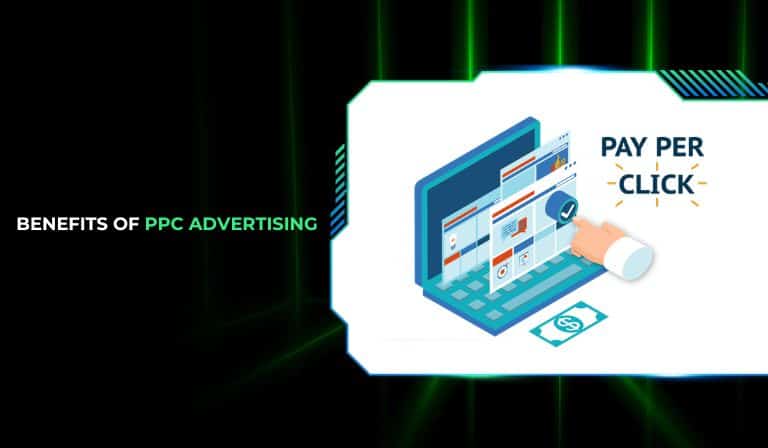
PPC, which stands for pay-per-click advertising, is the model where you pay each time someone clicks on your ad. Google Ads is the biggest player, where your ads show up at the top of search results when someone searches for a keyword you’re bidding on. But PPC also covers Meta Ads (Facebook and Instagram), Microsoft Ads (Bing), LinkedIn Ads, YouTube pre-rolls, and a bunch of other platforms. The common thread is you’re paying for clicks, not impressions, and you’re showing up in front of people based on specific targeting criteria you control.
The global PPC market was valued at over $190 billion in 2023. That’s not a number that happens because companies are wasting money. That’s a number that happens because enough businesses are seeing real returns to keep putting budget into it year after year.
But here’s the thing. The benefits of PPC advertising get talked about in such generic terms most of the time that the actual value gets lost. “Immediate results.” “Targeted traffic.” “Measurable ROI.” These phrases are technically accurate and completely useless if you don’t understand what they actually mean in practice. What does immediate look like? How targeted is targeted? What does measuring ROI actually involve?
That’s what this guide is about. Not a surface-level list of reasons PPC is good. A real look at what PPC advertising actually does for businesses, with specific examples, real numbers, and honest caveats about when it works and when it doesn’t.
What Is PPC Advertising and How Does It Actually Work
Before getting into the benefits, it helps to be clear on the mechanics, because understanding how PPC works explains why the benefits are real and not just marketing claims.
When someone searches “best CRM software for small business” on Google, Google runs an auction in milliseconds. Every advertiser who has set up a campaign targeting that keyword or related terms competes in that auction. The winner gets the top ad slot. But it’s not purely about who bids the most. Google’s Quality Score system also factors in the relevance of your ad, the expected click-through rate, and the quality of your landing page.
So then a well-optimized campaign from a smaller advertiser can beat a bigger budget competitor who wrote lazy ad copy and sends traffic to an irrelevant page. That’s actually good news for businesses that are willing to put in the work.
You set a bid (the maximum you’re willing to pay per click), a daily budget (the maximum you’ll spend per day), and targeting criteria (keywords, locations, devices, audiences, time of day). Your ad shows up when the conditions match. Someone clicks. You pay. They land on your page. Everything from there depends on how good your landing page and offer are.
On social platforms like Facebook or LinkedIn, the model is similar but triggered by audience characteristics rather than search queries. You’re not capturing someone searching for something. You’re interrupting someone mid-scroll based on who they are and what they’ve done.
Both approaches have their place. Both have distinct benefits.
The Real Benefits of PPC Advertising Explained Properly
Pay-per-click (PPC) advertising is one of the fastest ways to generate targeted traffic, leads, and sales online. Unlike search engine optimization (SEO), which can take months to show results, PPC allows businesses to appear at the top of search engine results almost immediately after launching a campaign. This makes it particularly valuable for businesses promoting new products, running seasonal offers, or entering competitive markets where organic rankings are difficult to achieve.
One of the biggest advantages of PPC is precise audience targeting. Advertisers can choose who sees their ads based on keywords, location, age, interests, device type, language, and even previous interactions with their website. This level of control helps businesses reach people who are actively searching for their products or services, resulting in more qualified traffic and better conversion rates.
Another major benefit is complete budget flexibility. Businesses can start with a modest daily budget, monitor campaign performance, and gradually increase spending as they identify profitable keywords and audiences. Since advertisers only pay when someone clicks on their ad, PPC offers greater control over marketing costs compared to many traditional advertising channels.
PPC also provides measurable results. Every click, impression, conversion, and dollar spent can be tracked through analytics tools, allowing marketers to calculate return on investment (ROI) accurately. This data-driven approach makes it easier to optimize campaigns, eliminate underperforming keywords, improve ad copy, and maximize overall profitability.
Benefit 1: You Can Be Visible Today, Not in Six Months
This is the most immediately obvious benefit and also the most genuinely useful one for businesses in a growth phase or a competitive market.
A Google Ads campaign can be live within hours of setting it up. Not weeks. Not months. Hours. Your ad can be showing at the top of Google search results for your target keywords today, even if your website is brand new and has zero organic ranking.
Compare that to SEO, where ranking for competitive keywords realistically takes anywhere from 6 to 18 months of consistent effort. Or content marketing, where building enough traffic to generate meaningful leads can take a year or more. Or social media, where building an audience organically from scratch is a multi-year project.
PPC compresses all of that. A new e-commerce brand can launch and start driving buying-intent traffic to their product pages on day one. A local plumbing company that just started can show up at the top of search results when someone in their city searches “emergency plumber near me” before they’ve collected a single Google review.
That speed to visibility is genuinely valuable. Not because patience is bad, but because businesses have cash flow needs, investor expectations, market windows, and competitive pressures that don’t wait for organic growth to catch up.
Benefit 2: You’re Reaching People Who Are Already Looking to Buy
This is the thing that separates search PPC from almost every other form of advertising. The intent.
When someone types “buy noise cancelling headphones under $200” into Google, they’re not browsing. They’re not vaguely curious. They’re ready to buy noise cancelling headphones under $200. That search query is as clear a signal of purchase intent as you can get in marketing.
Traditional advertising, whether TV, radio, or display banners, reaches people who weren’t thinking about your product at all. You’re interrupting them and hoping to create interest. Search PPC does the opposite. The person already has the need. They’re already looking. You’re just making sure your business shows up when they do.
That intent difference explains why Google Ads conversion rates are so much higher than most other advertising channels. The average conversion rate across Google Ads campaigns is around 3.75% for search ads. That sounds modest until you compare it to display advertising, which averages around 0.77%, or cold social media ads, which for many industries sit below 1%.
The quality of the traffic matters as much as the quantity. 100 clicks from people actively searching for what you sell will outperform 1,000 impressions shown to people who weren’t thinking about your category at all.
Benefit 3: The Targeting Is Remarkably Precise
On Google Ads, you target by keyword, which captures intent. But you can layer on top of that: geographic location down to a specific city or zip code, time of day, device type, audience characteristics, and income bracket for certain campaign types.
A restaurant in Chicago can show ads only to people within a 5-mile radius searching for “dinner restaurants” on a Friday or Saturday evening on a mobile device. That level of precision means the budget goes toward the most relevant possible audience instead of broadcasting to everyone and hoping some of them are relevant.
On LinkedIn Ads, you can target by job title, company size, industry, seniority level, and specific skills. A B2B software company selling to HR directors at companies with 200-500 employees can build an audience of exactly that profile. No spray and pray.
Facebook and Instagram PPC lets you target by interests, behaviors, life events, lookalike audiences built from your existing customers, and retargeting audiences based on website visits or app usage.
None of these targeting options are perfect. Every platform’s targeting has quirks and limitations. But compared to running a billboard or a TV spot and hoping the right people see it, the targeting available through PPC is extraordinarily precise.
Benefit 4: Complete Budget Control With No Minimum Spend
This one matters a lot for smaller businesses and startups. There’s no minimum budget requirement for running Google Ads or Facebook Ads. You can start with $5 a day and scale up as you see results. You can pause campaigns instantly if something comes up. You can set hard daily caps so you never accidentally overspend.
That flexibility is genuinely unusual in advertising. A billboard costs what it costs for the month. A TV spot is bought and paid for regardless of performance. A magazine ad runs in that issue and that’s it.
PPC lets you run $300 in tests to figure out what works before committing to a real budget. It lets a seasonal business run heavy ads during their busy season and spend nothing during the slow months. It lets a company that just landed a big client scale up quickly to capture more demand while the cash flow is there.
The math is also transparent. If you know your average customer lifetime value is $800 and your PPC campaign is generating customers at $120 each, the decision to scale up is obvious. If the cost per customer is $900 and lifetime value is $800, you know immediately the campaign needs fixing before you put more money in.
That clarity of the math, knowing exactly what you’re spending and what you’re getting, is something a lot of other marketing channels can’t offer.
Benefit 5: PPC Data Makes Everything Else Better
This is one of the most underappreciated benefits and also one of the most valuable for long-term marketing strategy.
When you run PPC campaigns, you learn things about your audience and your messaging that are impossible to learn any other way at the same speed. You discover which keywords actually drive conversions versus which ones just drive clicks. You find out which ad copy resonates and which falls flat. You see which landing page headline converts better. You learn which audience segments respond to which offers.
All of that data is useful far beyond the PPC campaigns themselves.
The keywords that convert well in PPC are exactly the keywords you should be prioritizing in your SEO strategy. The ad copy that gets the highest click-through rate tells you what language resonates with your audience, which you can use in your email subject lines, your website headlines, your social media posts. The landing page variant that converts better in your A/B test becomes your template for all future pages.
HubSpot has talked publicly about using their paid ad data to inform their content strategy, identifying which topics drove high-intent traffic in PPC and then building long-form content around those topics to capture organic traffic over time.
PPC gives you a fast feedback loop on messaging and audience response that normally takes much longer to develop through organic channels.
Benefit 6: Remarketing Is One of the Highest-ROI Tactics Available
Here’s a frustrating reality of website traffic. On average, 96-98% of first-time website visitors leave without converting. They looked around, maybe liked what they saw, and then got distracted, compared prices, decided to think about it, and forgot to come back.
Remarketing (also called retargeting) through PPC lets you follow those people around the internet with relevant ads after they leave. Someone who visited your pricing page gets shown an ad with a specific offer. Someone who added something to cart but didn’t check out sees an ad reminding them what they left behind. Someone who read three articles on your site gets shown an ad promoting a relevant lead magnet.
These remarketing audiences convert at dramatically higher rates than cold audiences because they already know who you are. WordStream data shows remarketing ads can be 10x more effective than standard display ads in terms of click-through rates. The audience has already self-selected as interested. You’re just staying in front of them until they’re ready to act.
For e-commerce, abandoned cart remarketing campaigns are often the single highest-ROI campaign type available. The person was close enough to buying to put something in their cart. The barrier to recovery is much lower than converting a cold visitor.
Benefit 7: You Can Test Everything Fast
In traditional advertising, testing is slow and expensive. Running two versions of a TV commercial to see which performs better requires enormous budget and time. In PPC, running two ad variants simultaneously and getting statistically meaningful data takes days, not months.
Google Ads lets you run multiple ad variations in the same ad group and automatically shows the better-performing one more often. You can test different headlines, descriptions, calls to action, landing page variations, audience segments, bid strategies, and keyword match types. All simultaneously. All with clear data on what’s working.
This testing culture that PPC naturally encourages produces compounding improvements over time. An account that’s been actively tested and optimized for two years will dramatically outperform the same account on autopilot, because every test result has made the next iteration better.
For businesses that want to understand their market, their messaging, and their customer better, PPC is one of the fastest and most reliable testing environments available.
Benefit 8: Local Businesses Get a Huge Advantage
PPC advertising levels the playing field for local businesses in a way that’s genuinely meaningful.
A local law firm, a dental practice, a home renovation company, a specialty food shop. These businesses used to compete primarily on word of mouth, local directory listings, and whatever they could afford in local print or radio. Their ability to reach new potential customers was largely constrained by geography and budget.
Google Local Services Ads, which show at the very top of search results above even regular Google Ads for local service searches, changed this significantly. A plumber in Dallas can show up at the top of results when someone in their service area searches “plumber near me” and pay only when someone calls or messages, not just clicks.
Google Ads location targeting lets local businesses spend every dollar on people within their actual service area. Not the whole country. Not even the whole city if the service area is more limited. Just the specific area where the business operates.
For a business where every customer has to be local anyway, this kind of geographic precision makes PPC extremely efficient compared to broader marketing approaches.
Benefit 9: Brand Visibility Even When People Don’t Click
Here’s something that doesn’t get talked about enough. Even when someone doesn’t click your PPC ad, seeing it has value.
Multiple studies have shown that organic click-through rates on branded searches increase when a company is also running paid ads for the same terms. People see the paid ad, don’t click it, but when they see the organic listing below it, they’re more likely to click that because the brand now looks familiar and credible. Showing up twice on the same search results page reinforces brand recognition.
There’s also the competitive angle. If you’re not bidding on your own brand terms, a competitor can run ads on your brand name and steal traffic from people who were searching specifically for you. This actually happens. It happens a lot in competitive categories. Bidding defensively on your own brand terms through PPC prevents that.
Benefit 10: PPC Works Across the Entire Funnel
One mistake people make is thinking PPC is only a bottom-of-funnel tactic for capturing ready-to-buy traffic. It’s actually useful across every stage.
At the top of the funnel, YouTube ads and display campaigns build awareness with new audiences who’ve never heard of you. At the middle of the funnel, remarketing campaigns and content promotion ads nurture people who’ve shown interest but aren’t ready to buy. At the bottom of the funnel, high-intent search ads capture people actively comparing options and ready to purchase.
A well-structured PPC strategy has campaigns addressing all three stages. The budget allocation between them depends on the business model, the sales cycle length, and the competitive landscape. But the flexibility to operate across the full funnel from a single advertising platform is genuinely useful.
Benefits of PPC Advertising for Specific Business Types
The advantages of PPC vary depending on the type of business and its marketing goals. For local businesses such as restaurants, dental clinics, salons, repair services, and real estate agencies, PPC helps attract nearby customers who are actively searching for services in their area. Location targeting ensures that advertising budgets are spent on people most likely to visit or make an inquiry.
E-commerce businesses benefit from PPC by promoting products directly to shoppers with high purchase intent. Shopping ads, search ads, and remarketing campaigns help recover abandoned carts, showcase popular products, and drive immediate online sales. Since every campaign can be optimized based on product performance, online stores can continuously improve profitability.
B2B companies often use PPC to generate qualified leads through landing pages, webinars, whitepaper downloads, or consultation requests. Decision-makers searching for business solutions can be targeted with highly relevant keywords, helping companies shorten their sales cycle and improve lead quality.
Service-based businesses such as law firms, digital marketing agencies, accountants, consultants, and healthcare providers use PPC to generate inquiries from people actively seeking professional assistance. Even businesses in highly competitive industries can secure visibility for valuable search terms without waiting months to rank organically.
E-commerce Businesses
Google Shopping ads and Meta dynamic product ads are among the highest-converting ad formats available for e-commerce. Shopping ads show product images, prices, and star ratings directly in search results, which means the person clicking already knows roughly what they’re getting and has decided it’s worth a look.
For e-commerce, the combination of shopping ads for high-intent search traffic, remarketing for abandoned cart recovery, and lookalike audience campaigns to find new customers similar to existing ones creates a full acquisition and retention system.
B2B Companies
LinkedIn Ads is expensive. Cost per click on LinkedIn is significantly higher than Google or Facebook, often $5-15 per click. But for reaching specific professional audiences at companies with specific characteristics, there’s no better paid channel.
A company selling HR software to CHROs at mid-market companies can build that exact audience on LinkedIn and know that every click is coming from someone who matches the profile. The higher CPC is justified by the higher quality of the audience.
For B2B on Google, the intent-based targeting is extremely valuable in categories where people are actively researching solutions. “Best project management software for agencies” or “enterprise accounting software comparison” are searches with clear commercial intent where showing up at the top of results with a compelling offer matters a lot.
Service Businesses
Local service ads, Google Ads with location targeting, and call-only ad campaigns (which let mobile users call directly from the ad without visiting a website) are all highly effective for service businesses.
A personal injury law firm in Atlanta, a HVAC company in Phoenix, a wedding photographer in New York. All of these businesses benefit from showing up at the top of search results when someone in their area needs exactly what they offer. The lead value is high enough to justify significant per-click costs.
The Honest Downsides of PPC Advertising
This guide would be misleading without this section. PPC has real limitations and it’s not right for every situation.
It costs money continuously. Unlike SEO, where content you created two years ago can still drive traffic today, PPC stops working the moment you stop paying. There’s no asset that accumulates over time. The traffic is rented, not owned.
It takes expertise to run well. A poorly managed Google Ads account can burn through budget fast with minimal results. Broad match keywords, poor negative keyword lists, weak ad copy, landing pages that don’t convert. These mistakes are expensive. Running PPC without knowing what you’re doing, or without hiring someone who does, is genuinely risky.
In highly competitive categories, click costs can be prohibitive. Legal, insurance, financial services, and medical keywords on Google can cost $20-50 per click or more. If your conversion rate and customer lifetime value don’t support those click costs, PPC doesn’t make financial sense.
And it’s not a substitute for building long-term organic assets. A business that relies entirely on PPC for traffic is fragile. If the platform changes its algorithm, raises prices, or disapproves your account, the traffic disappears overnight.
The businesses that use PPC best treat it as one part of a broader strategy, not the whole strategy.
Conclusion
The benefits of PPC advertising are real but they’re not magic. They require a working campaign, a decent landing page, and an offer that people actually want. When those conditions are met, PPC delivers something genuinely hard to find in marketing: fast, targeted, measurable traffic from people who are actively looking for what you sell.
For businesses that need to grow now and can’t wait for organic channels to mature, PPC is often the fastest path to validated customer acquisition. For businesses with a working organic strategy, PPC amplifies it. For businesses trying to understand their market better, the data from PPC campaigns is some of the most useful market research available.
It’s not cheap to run well. It takes expertise. It requires ongoing attention. But for businesses willing to invest in doing it properly, the returns are there.
Frequently Asked Questions
What is PPC advertising and how does it work?
PPC stands for pay-per-click. You create ads on platforms like Google, Meta, or LinkedIn, set targeting criteria, and pay each time someone clicks your ad. On search platforms like Google, your ad shows up when someone searches for keywords you’re bidding on. On social platforms, your ad shows up based on audience characteristics you’ve defined.
How quickly can PPC advertising produce results?
A campaign can be live within hours. Traffic starts flowing the same day in most cases. For businesses that need to generate leads or sales quickly rather than waiting for organic channels to build, that speed is one of PPC’s biggest practical advantages.
What’s a realistic ROI for PPC advertising?
It varies enormously by industry, campaign quality, and how well the rest of the funnel converts. Google reports that businesses make an average of $2 for every $1 spent on Google Ads, but that average includes both very well-optimized and very poorly managed accounts. Well-run PPC campaigns in the right industries regularly produce 4:1, 5:1, or higher returns. Poorly managed ones can lose money. The management quality matters as much as the budget.
How much does PPC advertising cost?
There’s no minimum. You can start with $5-10 a day on most platforms. Average costs per click vary by industry and keyword competitiveness, from under $1 for some niches to $50+ for highly competitive legal or financial keywords. The budget should be driven by what you can afford to test with and what the math of your customer acquisition economics supports.
Is PPC better than SEO?
They’re different tools for different jobs. PPC delivers immediate traffic and precise targeting but costs money continuously and stops when you stop paying. SEO builds long-term organic visibility and compounding traffic but takes months to produce results. Most successful businesses use both. PPC captures demand now while SEO builds sustainable traffic over time. Running PPC while SEO is maturing is one of the most practical approaches.
Can small businesses afford PPC advertising?
Yeah, absolutely. The no-minimum-budget model makes PPC accessible to businesses of any size. A local service business can run effective Google Ads campaigns for $500-1,000 a month and generate real customers. The key is starting with tightly focused campaigns on high-intent keywords in a limited geographic area, rather than trying to cover everything with a small budget.
What platforms should businesses use for PPC?
Google Ads for search intent-based campaigns is the starting point for most businesses. Facebook and Instagram Ads for consumer products and B2C marketing. LinkedIn Ads for B2B targeting specific professional audiences. Microsoft (Bing) Ads as a lower-cost supplement to Google, especially for older demographics. YouTube for video-based awareness campaigns. The right platform depends on where your target customer is and what type of intent you’re trying to capture.
How do you measure if PPC is working?
Look beyond clicks and impressions. Track conversions (form fills, phone calls, purchases, sign-ups) and assign a value to them. Calculate cost per conversion and cost per customer acquisition. Compare that to customer lifetime value. If you’re acquiring customers at a cost that’s profitable relative to what they’re worth, PPC is working. If cost per acquisition is higher than customer lifetime value, something needs to change in the campaign, the offer, or the landing page.
What’s the biggest mistake businesses make with PPC?
Setting up campaigns and leaving them alone. PPC requires active management: reviewing search term reports to add negative keywords, testing new ad copy, adjusting bids based on performance data, refining audience targeting, optimizing landing pages. A campaign on autopilot almost always degrades in performance over time. The businesses that get consistent returns from PPC are the ones treating it as an ongoing optimization process, not a set-it-and-forget-it channel.