


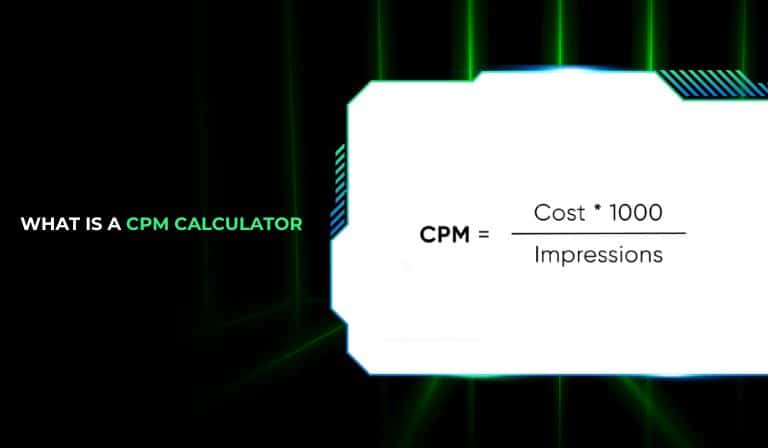
If you’ve ever stared at a media plan spreadsheet at 11 PM wondering why your Facebook budget disappeared in three days, you already know why CPM matters. It’s not some abstract textbook term marketing professors throw around. It’s the number that tells you whether your ad spend is working for you or quietly draining your bank account while you watch impressions tick up and conversions barely move.

A CPM calculator sounds simple on paper. Cost per thousand impressions, right? Divide, multiply, done. But here’s the thing — most people using one don’t actually understand what the number is telling them. They see “CPM: $8.50” and either panic or feel relieved without knowing if that’s good, bad, or completely irrelevant to their goals. That’s where things go sideways.
This guide walks through everything, not in a textbook way, but the way someone who’s actually managed ad budgets would explain it to a friend over coffee. We’re going deep into what CPM really means, how to calculate it without messing up the math, what counts as “good” across different platforms, and when you should honestly just ignore CPM altogether and look at something else.
What You Will Learn in This Guide
- How a CPM Calculator actually works and why the formula is deceptively simple
- Step-by-step math so you can calculate CPM by hand if you ever need to
- Real CPM benchmarks across Google, Meta, LinkedIn, TikTok, and more
- The difference between CPM, CPC, and CPA — and which one fits your campaign
- Practical strategies that actually lower your CPM (not vague “improve targeting” advice)
- Common mistakes people make when reading CPM numbers
- Answers to the questions people actually type into Google about CPM
Let’s get into it.
What is CPM
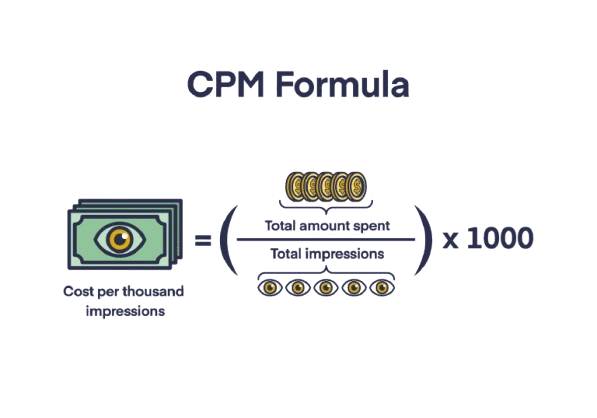
Before you touch a CPM Calculator, you need to understand what you’re even measuring. CPM stands for Cost Per Mille — “mille” being Latin for thousand, not some marketing buzzword someone invented in 2015. So CPM literally means the cost an advertiser pays for every 1,000 times their ad shows up on a screen.
Notice what that definition doesn’t say. It doesn’t say anything about clicks. It doesn’t say anything about someone buying your product. It doesn’t even say anyone looked at the ad for more than half a second. CPM is purely about visibility — how many times your ad was served, not what happened after.
That distinction trips up a lot of people, especially folks who are used to thinking in terms of conversions. You run a campaign, your CPM comes back low, and you assume that’s a win. Except low CPM with zero clicks just means you paid cheaply to be ignored by a lot of people. So yeah, understand the metric before you celebrate the number.
How Do You Calculate CPM?
This is where the actual math lives, and honestly, it’s not complicated. The formula scares people because it looks technical, but once you see it, you’ll wonder why anyone needed a calculator at all — though for anything beyond a rough mental estimate, you’ll want one anyway, especially when you’re juggling multiple campaigns with different budgets.
CPM Formula
The formula is:
CPM = (Total Campaign Cost ÷ Total Impressions) × 1,000
That’s it. No hidden variables, no secret coefficients. You take what you spent, divide it by how many times your ad was shown, then multiply by a thousand because CPM is expressed per-thousand impressions, not per single impression (which would be an absurdly tiny decimal nobody wants to look at).
Step-by-Step Calculation
Let’s say you ran a campaign and spent $500. Your ad got served 125,000 times. Here’s how you’d work it out:
- Divide cost by impressions: $500 ÷ 125,000 = 0.004
- Multiply by 1,000: 0.004 × 1,000 = $4
So your CPM is $4. That means for every thousand times your ad appeared, you paid four bucks. Simple once you see it laid out, but people mess this up constantly — usually by forgetting the multiplication step and reporting a CPM that’s off by a factor of a thousand. Yeah, it happens more than you’d think, especially in Excel sheets built at 2 AM before a client call.
Practical Examples
Let’s run a few more scenarios because numbers stick better with repetition:
- You spend $1,200 and get 300,000 impressions. CPM = ($1,200 ÷ 300,000) × 1,000 = $4.
- You spend $75 and get 50,000 impressions. CPM = ($75 ÷ 50,000) × 1,000 = $1.50.
- You spend $10,000 and get 2,000,000 impressions. CPM = ($10,000 ÷ 2,000,000) × 1,000 = $5.
Notice something? A bigger budget doesn’t automatically mean a worse or better CPM. It’s entirely about the ratio between spend and impressions, not the raw dollar amount. A $75 campaign can have a better CPM than a $10,000 one if the targeting and platform are efficient.
Common Mistakes to Avoid
Here’s where people actually screw this up in practice, not theory:
- Forgetting to convert impressions correctly. If your reporting tool shows impressions in thousands already (some platforms do this), and you don’t adjust, your CPM will look ten times higher or lower than reality.
- Mixing up CPM with CPC. These aren’t the same thing. Someone hands you a number labeled “cost per thousand” but it’s actually cost-per-click data mislabeled in a spreadsheet. Happens constantly with junior media buyers.
- Ignoring frequency. If the same 10,000 people saw your ad 50 times each, your impression count is high, but your reach is tiny. CPM doesn’t tell you that on its own — you need to check reach and frequency separately.
- Comparing CPM across platforms without context. A $2 CPM on a random display network and a $2 CPM on LinkedIn are not the same quality of impression. LinkedIn’s audience is narrower and more expensive to reach for a reason.
What Is CPM?
Okay, let’s zoom out and actually define this properly, because “cost per thousand impressions” is technically correct but doesn’t tell you much about how it functions in the real world of buying ads.
Definition of Cost Per Thousand Impressions
CPM is a pricing model where advertisers pay based on how many times their ad is displayed, grouped in units of a thousand. If a platform quotes a $10 CPM, that means you’re paying $10 every time your ad accumulates a thousand impressions — regardless of whether anyone engages with it.
How CPM Works
Here’s the mechanic behind it. When you set up a campaign on a platform like Google Ads or Meta and choose CPM as your bidding strategy, you’re essentially telling the platform, “I’ll pay this rate for exposure.” The platform then serves your ad based on availability, competition from other advertisers, and how well your targeting matches available inventory. You get charged once impressions accumulate, not based on outcomes.
This is fundamentally different from performance-based models. With CPM, the platform’s job is just to show your ad to the audience you specified. What happens after — click, ignore, buy, scroll past — isn’t factored into the price you pay.
CPM in Digital Advertising
In digital advertising, CPM became the dominant model early on because it mirrored how traditional media (TV, radio, print) already priced ads — based on audience reach, not response. When display advertising exploded in the early 2000s, CPM carried over naturally because publishers wanted guaranteed revenue from impressions, not a gamble on whether users would click.
Where CPM Is Commonly Used
CPM shows up most in:
- Display advertising networks
- Video pre-roll ads (YouTube, connected TV)
- Social media awareness campaigns
- Programmatic advertising exchanges
- Sponsored content placements on publisher sites
Basically, anywhere the goal is visibility rather than immediate action, CPM tends to be the pricing structure of choice.
Why Is Calculating CPM Important?
Some people ask why bother calculating this at all when platforms already show you the number in the dashboard. Fair question. But knowing how to calculate CPM yourself — and understanding what drives it — matters for a few real reasons.
Budget Planning
If you know your target CPM ahead of time, you can reverse-engineer your budget. Say you want 500,000 impressions and your historical CPM on a platform runs around $6. That tells you upfront you’ll need roughly $3,000 before you even launch the campaign. Without that math, you’re just guessing and hoping the budget stretches far enough.
Campaign Performance Analysis
CPM by itself doesn’t tell the whole story, but tracked over time, it tells you if your costs are creeping up. If your CPM was $5 last month and it’s $9 this month with the same targeting, something changed — increased competition, audience fatigue, seasonal demand, or your ad relevance score dropped. That’s a signal to investigate, not ignore.
Comparing Advertising Platforms
Different platforms have wildly different CPMs, and calculating this consistently lets you compare apples to apples. LinkedIn will almost always cost more per thousand impressions than a generic display network because the audience is more valuable to B2B advertisers. Knowing your actual CPM lets you decide where your money stretches further for your specific goal.
Measuring Brand Awareness Campaigns
For campaigns purely about getting your brand in front of eyeballs — think a new product launch or a rebrand — CPM is basically the primary metric that matters. You’re not chasing clicks or sales yet. You’re chasing exposure, and CPM tells you exactly what that exposure costs.
Why Use an Online CPM Calculator?
Sure, you can do the math by hand. It’s not hard. But here’s why an online CPM Calculator still earns its place in your workflow.
Faster Calculations
When you’re managing multiple campaigns across different platforms, doing mental math or opening a calculator app for every single one gets old fast. A dedicated CPM Calculator lets you punch in numbers and get results instantly, without breaking your workflow.
Reduces Manual Errors
Look, everyone’s made the mistake of forgetting a zero or mixing up which number goes in the numerator. A calculator built specifically for this removes that risk. You’re not relying on your own arithmetic under deadline pressure.
Saves Time
Multiply this across a media buyer handling twenty campaigns a week, and the time saved adds up. Instead of manually calculating each one, a CPM Calculator turns a five-minute task into a ten-second one.
Useful for Campaign Forecasting
Before you even spend a dollar, you can use a CPM Calculator to model different budget scenarios. What if you had $2,000 instead of $1,000? What if your CPM dropped by a dollar due to better targeting? You can test these scenarios instantly without touching a live campaign.
Ideal for Marketers, Agencies, and Business Owners
Whether you’re a solo business owner running your first Facebook campaign or an agency managing budgets for a dozen clients, a CPM Calculator removes friction from a task that would otherwise eat into time better spent on strategy.
CPM Benchmarks Across Popular Advertising Platforms
This is honestly the part people care about most. What’s a “normal” CPM? Numbers shift constantly based on season, industry, and competition, but here’s a realistic range based on what’s typically reported across platforms.
| Platform | Typical CPM Range | Notes |
|---|---|---|
| Google Display Network | $2 – $5 | Broad reach, generally cheaper impressions |
| Meta (Facebook & Instagram) | $5 – $12 | Varies heavily by audience and placement |
| $30 – $65 | Premium due to professional targeting | |
| X (Twitter) | $5 – $10 | Fluctuates with trending events and news cycles |
| TikTok | $4 – $10 | Depends heavily on creative format and audience |
| $3 – $8 | Lower competition than Meta in most niches | |
| YouTube | $4 – $10 | Video pre-roll tends to run mid-range |
| Programmatic Display Networks | $1 – $4 | Often the cheapest, but quality varies widely |
Now, don’t take these as gospel. Your actual CPM will swing based on your industry, your targeting precision, seasonality (holiday season CPMs spike everywhere), and how competitive your niche is. A finance company running LinkedIn ads is going to see numbers on the higher end of that range, sometimes blowing past $65 entirely, because finance keywords and audiences are expensive across the board.
CPM vs Other Advertising Metrics
People throw around CPM, CPC, and CPA like they’re interchangeable. They’re not. Each one measures a completely different thing, and mixing them up leads to bad budget decisions.
Difference Between CPC, CPM, and CPA
What is CPC?
CPC stands for Cost Per Click. You only pay when someone actually clicks your ad. This shifts the risk toward the platform — if your ad gets shown a million times but nobody clicks, you pay nothing. Great for performance-focused campaigns where action matters more than exposure.
What is CPM?
As covered, CPM is cost per thousand impressions. You pay for visibility regardless of engagement. This shifts the risk toward the advertiser — you might pay for a ton of impressions that generate zero clicks or interest.
What is CPA?
CPA is Cost Per Acquisition (sometimes called cost per action). You pay only when a specific action happens — a purchase, a signup, a lead form submission. This is the most performance-tied model of the three and usually the most expensive per unit because the platform is taking on the most risk to deliver that outcome.
Comparison Table
| Metric | You Pay For | Best For | Risk Level for Advertiser |
|---|---|---|---|
| CPM | Every 1,000 impressions | Brand awareness | High — no guarantee of engagement |
| CPC | Each click | Traffic, engagement | Medium — click doesn’t guarantee conversion |
| CPA | Each completed action | Conversions, sales | Low — you only pay for results |
Advantages and Disadvantages of Each Model
CPM’s advantage is predictability and scale — great for getting a message in front of huge audiences fast. The disadvantage is you’re paying regardless of outcome, so a poorly targeted campaign burns cash without producing anything.
CPC’s advantage is you only pay when someone shows interest. The disadvantage is clicks can be expensive in competitive niches, and a click doesn’t guarantee a sale — you can pay a lot for people who bounce immediately.
CPA’s advantage is the tightest link between spend and results. The disadvantage is platforms usually charge a premium for this model since they’re absorbing more risk, and it often requires more data and optimization time before it performs well.
Which Pricing Model Should You Choose?
This isn’t a one-size-fits-all decision. It depends entirely on what you’re actually trying to accomplish with the campaign.
Choosing Based on Campaign Objectives
Brand Awareness
If your goal is simply to get your name and message in front of as many relevant eyes as possible, CPM makes the most sense. You’re not expecting immediate action — you’re planting seeds for future recognition and recall.
Website Traffic
If you want people landing on your site, CPC usually makes more sense. You’re paying for the click itself, which aligns your spend directly with the action you actually want.
Lead Generation
CPA or a hybrid CPL (cost per lead) model tends to work better here, since you want form fills or signups, not just clicks or impressions.
Sales and Conversions
CPA is generally the strongest fit, assuming your platform has enough conversion data to optimize properly. Without sufficient data volume, though, CPA campaigns can struggle to find their footing early on.
E-commerce Campaigns
Often a blend — CPM for top-of-funnel awareness and retargeting, then CPC or CPA for the conversion-focused layers further down the funnel.
When Should You Use CPC Instead of CPM?
There are specific situations where CPC just makes more sense than paying for pure visibility.
Performance-Focused Campaigns
If success is measured by clicks, sign-ups, or direct traffic, CPC aligns your spend with what you actually care about.
Small Advertising Budgets
With a tight budget, you generally want every dollar tied to a specific action. CPM can burn through a small budget on impressions without producing tangible results, which stings a lot more when you don’t have room for experimentation.
High-Intent Keywords
In search advertising particularly, high-intent keywords (think “buy running shoes online”) convert well, so paying per click when someone’s actively searching to buy makes far more sense than paying for impressions.
Lead Generation Campaigns
When the goal is capturing contact information or driving specific actions, CPC (or CPA) ties your spend closer to what actually matters for the funnel.
Conversion-Focused Advertising
Anytime the bottom line is sales or signups rather than reach, CPC generally gives you tighter control over cost efficiency than CPM does.
Strategies to Lower CPM
Nobody wants to overpay for impressions. Here’s what actually moves the needle, not vague advice like “just optimize your targeting” without explaining how.
Improve Audience Targeting
Broad targeting often costs less per impression but reaches people who don’t care about your product, which tanks your engagement rate and eventually your ad relevance score — which then raises your CPM anyway. Narrower, well-defined audiences frequently perform better long-term even if the initial CPM looks slightly higher.
Increase Ad Relevance
Platforms reward ads that match user interest with cheaper delivery. If your ad copy, creative, and landing page all align tightly with what your audience actually wants, platforms like Meta and Google will serve your ad more cheaply because it performs better in their auction systems.
Optimize Creatives
Stale, generic creative gets ignored, and ignored ads get penalized with higher costs over time. Fresh, specific creative that actually speaks to a real problem your audience has tends to earn better delivery rates.
Test Multiple Ad Formats
Video, carousel, static image, collection ads — each performs differently depending on platform and audience. Testing formats side by side often reveals one format quietly outperforming the rest at a lower CPM.
Improve Quality Score
On platforms like Google Ads, Quality Score directly impacts how much you pay. Better landing page experience, tighter keyword relevance, and higher expected click-through rate all push your Quality Score up and your costs down.
Refine Placements
Automatic placements sometimes throw your ad into low-value inventory. Manually reviewing and excluding poor-performing placements (certain apps, certain partner sites) often trims wasted spend and lowers average CPM.
Seasonal Bidding Strategies
CPMs spike around Black Friday, the winter holidays, and major cultural events because competition for ad space goes up across the board. Adjusting your bidding strategy and timing campaigns around these windows — or bidding more aggressively only when it truly matters — helps control costs.
Best Practices for Better Campaign Performance
Beyond just lowering CPM, here’s what actually keeps campaigns healthy over time.
Monitor Campaign Metrics Regularly
Don’t set a campaign and check back in three weeks. CPM, CTR, and conversion rates shift daily based on competition and algorithm changes. Weekly check-ins, at minimum, catch problems before they burn through your budget.
A/B Testing
Test one variable at a time — headline, image, audience, placement — so you actually know what caused a change in performance instead of guessing.
Audience Segmentation
Different segments of your audience respond to different messaging. Segmenting lets you tailor creative and bids more precisely instead of using a single blanket approach for everyone.
Budget Optimization
Shift spend toward what’s actually working. If one ad set consistently delivers lower CPM and better engagement, feed it more budget rather than spreading dollars evenly across underperformers.
Creative Refresh Cycles
Ad fatigue is real. The same creative shown repeatedly to the same audience loses effectiveness over time, and CPM often creeps up as engagement drops. Refreshing creative every few weeks keeps performance steady.
Performance Reporting
Regular, clear reporting — even if it’s just for yourself — helps spot trends before they become expensive problems. Track CPM alongside CTR and conversion rate, not in isolation.
Conclusion
So here’s where it all lands. A CPM Calculator isn’t going to magically fix a bad campaign, and it’s not going to tell you if your creative is any good or if your audience actually wants what you’re selling. What it does is give you a clear, honest number for what you’re paying to get in front of people. That’s it. Nothing more, nothing less.
And that’s exactly why it matters so much. Once you know your CPM, you can plan a budget without guessing. You can compare platforms without getting fooled by vanity numbers. You can catch a campaign quietly going sideways before it burns through your whole month’s spend. That’s real value, not some abstract marketing concept.
The mistake most people make isn’t miscalculating CPM. It’s treating it like the whole story. It never is. Pair it with CTR, conversion rate, and a bit of common sense about your audience, and suddenly the number actually means something. Ignore that, and you’re just staring at a dollar figure with no context, feeling good or bad about it for no real reason.
Honestly, once you’ve run a few campaigns and watched how CPM shifts with your targeting, your creative, and the season, it stops feeling like a mysterious metric. It becomes just another number you check the same way you’d check your bank balance before making a purchase. Not exciting, but necessary. And that’s really all a CPM Calculator is meant to be — a quick, reliable way to keep your ad spend honest, so you can spend less time second-guessing your budget and more time actually improving the campaign itself.
Frequently Asked Questions
What is considered a good CPM?
Honestly, it depends entirely on your platform and industry. A $3 CPM on Google Display might be solid, while that same number on LinkedIn would be almost impossible to find. Compare your CPM against your own historical data and industry-specific benchmarks, not a single universal number.
When a high CPM is acceptable?
If a high CPM comes with strong engagement, conversions, or brand lift, it’s not automatically bad. Paying more for a highly qualified, hard-to-reach audience can be worth it if the results justify it.
Can CPM Predict Campaign Success?
Not on its own, nope. CPM tells you cost efficiency of reach, nothing about whether people actually cared about what they saw. You need to pair it with CTR, conversion rate, and engagement metrics to get the full picture.
Is a Lower CPM Always Better?
Not necessarily. A dirt-cheap CPM paired with zero engagement usually means your ad reached the wrong audience or low-quality inventory. Sometimes a slightly higher CPM tied to a better-targeted, more engaged audience delivers more actual value.
How Can I Reduce My CPM?
Sharpen your targeting, improve your creative relevance, test different ad formats, and keep an eye on your Quality Score or ad relevance diagnostics depending on platform. Also, timing matters — avoid peak competition periods if your budget is tight.
Which Platforms Usually Have the Lowest CPM?
Generally, programmatic display networks and Google Display Network tend to run cheapest, often in the $1–$5 range. LinkedIn sits at the opposite end due to its narrow, professional audience.
Can CPM Be Used for Lead Generation Campaigns?
It can, especially at the top of the funnel to build awareness before retargeting with CPC or CPA campaigns further down. But relying solely on CPM for direct lead capture usually isn’t efficient since it doesn’t optimize for action.
What Is a Good CPM for E-commerce?
Typically somewhere between $5 and $15 depending on platform and season, though this swings a lot during high-competition periods like Q4 holiday shopping.
How Often Should I Monitor CPM?
Weekly at minimum for active campaigns, daily if you’re running paid spend during high-competition windows like holiday sales or product launches.
Does Ad Quality Really Affect CPM?
Yes, significantly. Platforms like Meta and Google factor in relevance and engagement predictions into their auction systems. Higher predicted engagement often means cheaper delivery, even at the same bid amount.
Should Small Businesses Worry About CPM at All?
Yes, especially with limited budgets. Understanding CPM helps small businesses forecast exactly how far their ad dollars will stretch before launching a campaign, avoiding nasty budget surprises halfway through.