



Search engine optimization (SEO) is a long-term strategy. Businesses invest time and resources into improving their website visibility, creating high-quality content, and optimizing technical performance. However, without measuring results properly, it can be difficult to understand whether these efforts are truly improving search performance. Many websites publish content and build backlinks, but they often lack a clear method to evaluate progress.

SEO benchmarking helps solve this problem. It provides a structured way to measure SEO performance by comparing current results with past performance, competitors, or industry standards. By benchmarking important metrics such as rankings, traffic, and engagement, businesses can identify gaps, understand growth opportunities, and make better strategic decisions.
In this guide, you will learn what SEO benchmarking is, why it matters, and how to track the metrics that truly impact your website’s search performance. The article also explains how to establish benchmarks, analyze competitors, and build an effective SEO benchmarking strategy for long-term growth.
What Is SEO Benchmarking?
SEO benchmarking is the process of measuring a website’s search engine performance using specific metrics and comparing those results against a baseline. This baseline could be historical data, competitor performance, or industry averages. The main goal of benchmarking is to understand where your website currently stands and how it can improve over time.
Benchmarking allows businesses to move beyond assumptions and focus on data-driven SEO strategies. By tracking key metrics regularly, marketers can evaluate whether their SEO initiatives are producing measurable results.
SEO Audit vs SEO Monitoring vs SEO Benchmarking
Although these terms are often used together, they represent different parts of the SEO process.
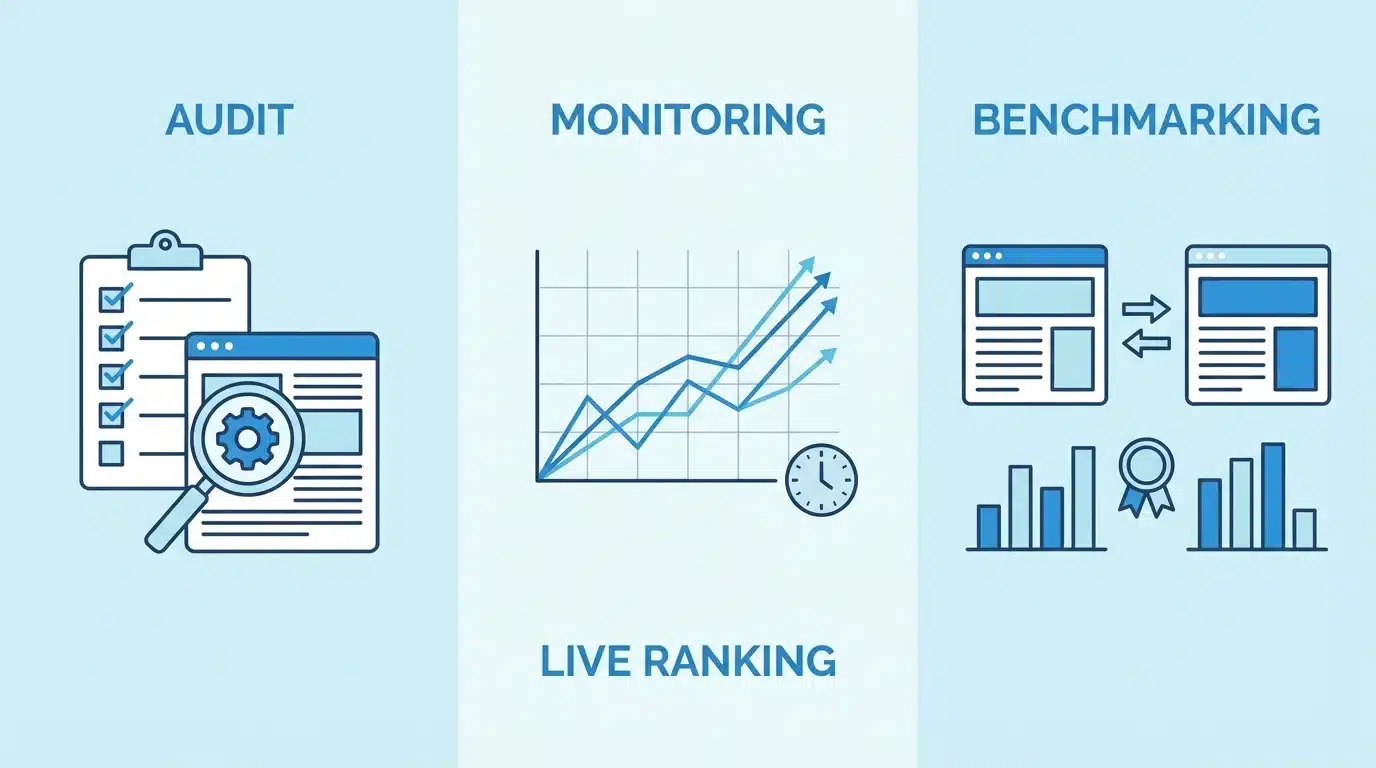
An SEO audit focuses on identifying problems or opportunities within a website. It evaluates technical issues, on-page optimization, site structure, and other elements that may affect rankings.
SEO monitoring refers to tracking ongoing SEO performance. This includes regularly checking keyword rankings, traffic patterns, and technical indicators.
SEO benchmarking goes one step further. Instead of only tracking performance, benchmarking compares results against a defined standard. This allows marketers to measure progress and determine whether SEO performance is improving or falling behind competitors.
Why SEO Benchmarking Matters
Understand Your Current SEO Performance
Benchmarking helps businesses establish a clear picture of their current SEO performance. Without benchmarks, it becomes difficult to know whether traffic or rankings are performing well or poorly.
By analyzing historical data and setting baseline metrics, organizations can identify realistic expectations and track meaningful improvements.
Identify Competitive Gaps
Search results are competitive. Your website is not only trying to improve internally but also competing against other sites targeting the same keywords.
SEO benchmarking helps identify where competitors outperform your website. This could include stronger backlinks, more optimized content, or better technical performance.
Set Measurable SEO Goals
Clear benchmarks allow businesses to set realistic SEO goals. Instead of vague targets, teams can define measurable objectives based on performance data.
Some examples include:
- Increasing organic traffic by a certain percentage
- Improving rankings for priority keywords
- Increasing conversions generated from organic traffic
- Improving click-through rates in search results
Adapt to Search Engine Changes
Search engines frequently update their algorithms and introduce new ranking signals. Benchmarking allows businesses to monitor how these changes affect their search performance.
By tracking metrics regularly, marketers can quickly identify performance drops or improvements and adjust their strategy accordingly.
Improve ROI from SEO Efforts
SEO often requires long-term investment in content, technical improvements, and link building. Benchmarking connects SEO metrics with business outcomes such as leads, sales, or customer acquisition.
This helps organizations demonstrate the value of SEO and justify continued investment in search optimization.
Types of SEO Benchmarking
Internal SEO Benchmarking
Internal benchmarking compares current SEO performance with past performance.
This approach focuses on measuring growth over time. For example, a business may track how its organic traffic, keyword rankings, or backlinks have improved compared to previous months or years.
Internal benchmarking is useful for understanding whether ongoing SEO efforts are producing steady improvement.
Competitive SEO Benchmarking
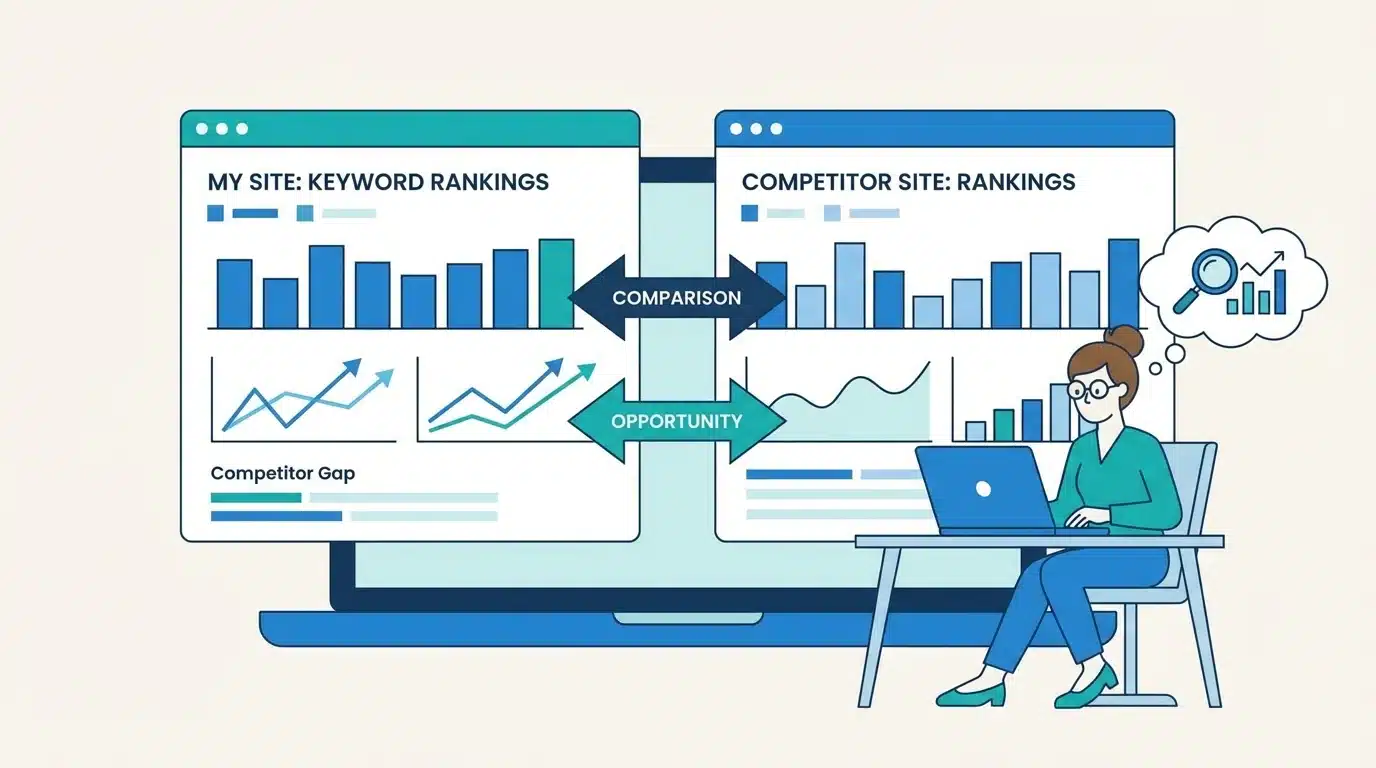
Competitive benchmarking involves comparing your website’s SEO performance against competitors.
By analyzing competitor rankings, backlinks, and content strategies, businesses can identify opportunities where they can improve their own search visibility.
This type of benchmarking helps uncover keyword gaps, link-building opportunities, and content ideas.
Industry SEO Benchmarking
Industry benchmarking compares SEO performance with industry standards or averages.
Different industries have different levels of search competition. Understanding industry benchmarks helps businesses set realistic expectations for traffic growth, ranking improvements, and content performance.
Technical SEO Benchmarking
Technical benchmarking focuses on measuring technical performance indicators such as page speed, crawlability, indexation, and site structure.
Technical issues can significantly affect search rankings and user experience. Benchmarking these metrics ensures that a website maintains strong technical health.
Key SEO Metrics to Benchmark (Track What Matters)

Tracking the right metrics is essential for effective SEO benchmarking. Focusing on meaningful indicators helps businesses understand both search visibility and user engagement.
Organic Traffic
Organic traffic measures the number of visitors coming to a website through search engines.
Monitoring organic traffic trends helps determine whether SEO strategies are successfully attracting more users from search results.
Important factors to evaluate include:
- Total organic sessions
- Growth trends over time
- Traffic to specific pages
- Traffic from different search queries
Keyword Rankings
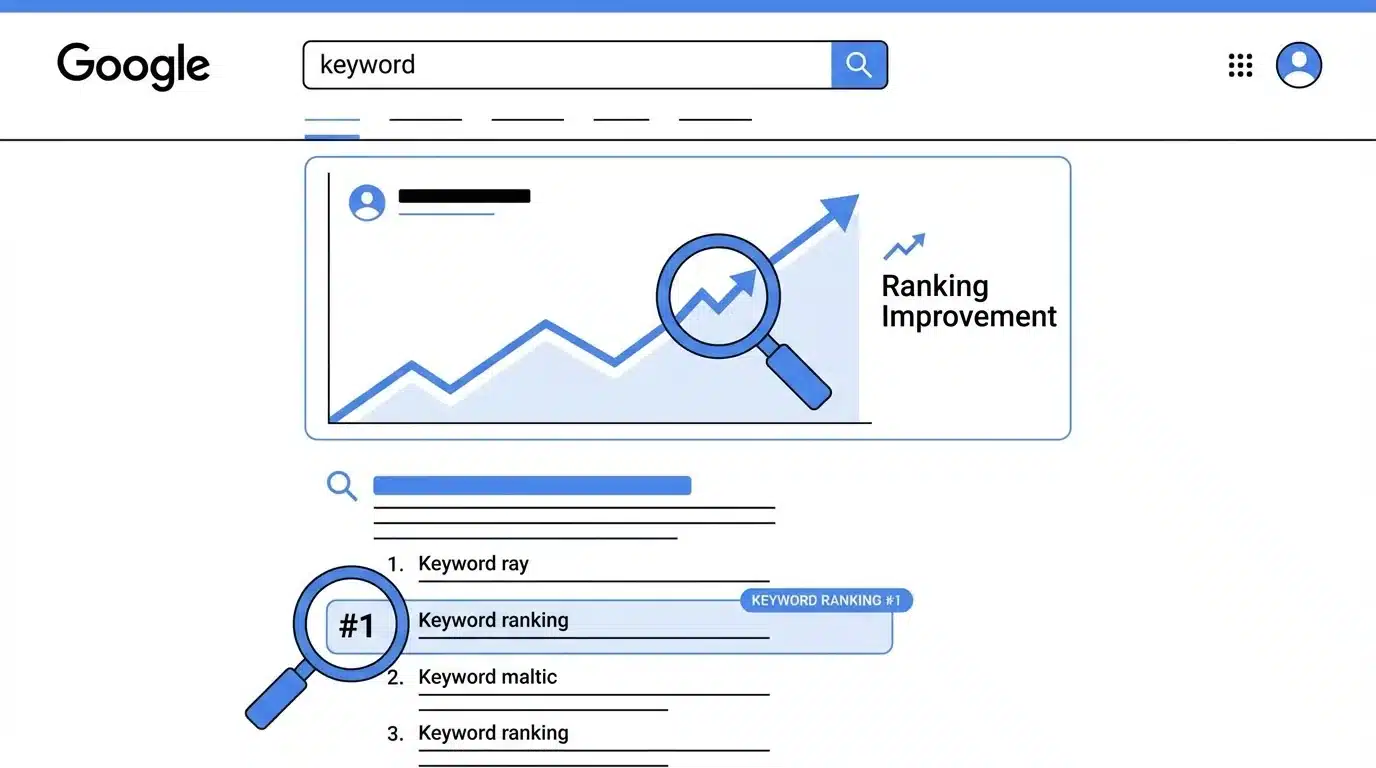
Keyword rankings indicate where a website appears in search results for specific search terms.
Monitoring rankings helps businesses understand whether optimization efforts are improving visibility.
Key ranking indicators include:
- Position changes for target keywords
- Rankings for new keywords
- Visibility across different keyword categories
- Rankings compared with competitors
Clicks and Impressions
Clicks represent the number of users who click on a website’s search listing, while impressions indicate how often that listing appears in search results.
Tracking these metrics helps measure search visibility and user interaction.
Important aspects include:
- Growth in impressions
- Changes in click volume
- Performance across different queries
- Page-level search visibility
Click-Through Rate (CTR)
Click-through rate measures the percentage of users who click a search result after seeing it.
CTR is influenced by several factors including:
- Title tags
- Meta descriptions
- Rich results
- Search intent alignment
Benchmarking CTR helps businesses identify opportunities to improve search result attractiveness.
Organic Conversion Rate
Organic conversion rate measures how effectively organic traffic turns into meaningful actions such as leads, purchases, or sign-ups.
This metric helps connect SEO performance with business outcomes.
Important conversion indicators include:
- Lead generation from organic traffic
- Sales generated through search traffic
- Conversion rates across landing pages
- User journey behavior
Engagement Metrics
User engagement metrics help evaluate how visitors interact with website content.
These metrics can indicate whether the content satisfies user intent.
Common engagement metrics include:
- Bounce rate
- Average engagement time
- Pages per session
- Returning visitor rate
Backlinks and Referring Domains
Backlinks are links from other websites pointing to your site. Referring domains represent the number of unique websites linking to your pages.
Backlinks remain an important ranking factor in search engines.
Benchmarking backlink growth helps evaluate link-building success.
Key indicators include:
- Total backlinks
- Growth in referring domains
- Link quality and authority
- Anchor text diversity
Domain Authority or Domain Rating
Domain authority or domain rating estimates the overall strength of a website’s backlink profile.
Although these metrics are created by SEO tools rather than search engines, they provide a useful benchmark for comparing website authority.
Higher authority scores generally indicate stronger link profiles and improved ranking potential.
Share of Voice (SOV)
Share of Voice measures how much search visibility your website has compared with competitors.
This metric evaluates how frequently your website appears in search results for targeted keyword groups.
Key factors used to calculate SOV include:
- Ranking positions
- Search volume
- Keyword coverage
Core Web Vitals and Page Speed
Core Web Vitals are performance metrics related to user experience.
These include:
- Loading performance
- Visual stability
- Interactivity
Benchmarking page speed and Core Web Vitals ensures that a website provides a fast and smooth experience for users.
How to Set Your SEO Benchmark Baseline
Step 1: Define Your SEO Goals
Before benchmarking performance, businesses must define clear SEO goals.
These goals help determine which metrics should be tracked and evaluated.
Common SEO objectives include:
- Increasing organic traffic
- Improving keyword rankings
- Generating more leads or sales
- Expanding keyword coverage
Step 2: Identify Your SEO Competitors
SEO competitors are not always the same as direct business competitors.
Websites that rank for your target keywords are your true search competitors. Identifying these sites helps create meaningful benchmarks for comparison.
Step 3: Collect Current SEO Data
Once competitors and goals are identified, the next step is gathering current SEO data.
This data typically includes:
- Organic traffic statistics
- Keyword ranking positions
- Backlink profiles
- Technical performance metrics
- Engagement indicators
Step 4: Establish Benchmark Metrics
After collecting baseline data, businesses should document their benchmark metrics.
These benchmarks represent the starting point for measuring future SEO progress.
Benchmarks should be organized into clear categories such as traffic, rankings, backlinks, and technical performance.
Step 5: Set Realistic Timeframes
SEO results typically take time to appear.
Setting realistic evaluation periods helps avoid incorrect conclusions.
Common benchmark timelines include:
- Monthly performance reviews
- Quarterly strategy adjustments
- Yearly growth evaluations
How to Conduct Competitive SEO Benchmarking

Analyze Competitor Keyword Rankings
Analyzing competitor keyword rankings helps identify keyword opportunities your website may be missing.
Important elements to review include:
- Keywords competitors rank for
- Keyword gaps between sites
- High-volume keyword opportunities
- Long-tail keyword coverage
Compare Content Performance
Content plays a major role in SEO success.
Studying competitor content helps identify topics, formats, and strategies that generate strong search visibility.
Areas to evaluate include:
- Content depth and structure
- Topic coverage
- Search intent alignment
- Content freshness
Evaluate Technical SEO Performance
Technical factors affect both search engine crawling and user experience.
When benchmarking technical performance, businesses should examine:
- Page load speed
- Mobile optimization
- Crawl errors
- Indexation status
- Site architecture
Review Backlink Profiles
Backlinks remain one of the strongest signals used by search engines to evaluate authority.
Competitive backlink analysis helps discover link-building opportunities.
Important factors include:
- Number of referring domains
- Link quality
- Link sources
- Content that attracts backlinks
Monitor SERP Features and Visibility
Search engine results pages now contain multiple features beyond standard listings.
Monitoring these features helps businesses understand additional visibility opportunities.
Common SERP features include:
- Featured snippets
- Knowledge panels
- Image packs
- Local results
Tracking these features helps identify areas where competitors may be capturing additional search visibility.
Tools for SEO Benchmarking
Google Analytics
Google Analytics provides insights into user behavior and traffic sources.
It allows businesses to analyze:
- Organic traffic growth
- User engagement patterns
- Conversion performance
- Landing page performance
Google Search Console
Google Search Console provides direct data from Google about search performance.
Key features include:
- Search queries and keyword impressions
- Click-through rates
- Index coverage reports
- Page performance data
SEMrush
SEMrush offers tools for competitive analysis and keyword tracking.
Marketers can use it to evaluate:
- Keyword rankings
- Competitor visibility
- Backlink profiles
- Traffic estimates
Ahrefs
Ahrefs is widely used for backlink analysis and competitor research.
Important capabilities include:
- Backlink monitoring
- Keyword ranking analysis
- Content gap discovery
- Competitive link opportunities
Moz
Moz provides tools for measuring domain authority and tracking keyword rankings.
It is commonly used for evaluating domain strength and monitoring ranking trends.
SEO Benchmarking Strategies for Long-Term Success
Focus on High-Impact Metrics
Not all SEO metrics carry the same importance. Businesses should prioritize indicators that directly influence search visibility and revenue.
Key focus areas include:
- Organic traffic growth
- Keyword rankings
- Conversion performance
- Backlink strength
Track Trends Instead of Single Data Points
SEO performance often fluctuates in the short term.
Analyzing long-term trends provides more reliable insights than focusing on daily changes.
Trend analysis helps identify patterns and long-term improvements.
Segment Your SEO Data
Segmenting data helps businesses gain deeper insights into SEO performance.
Important segmentation categories include:
- Individual pages
- Keyword groups
- Content topics
- Geographic regions
Benchmark Against the Right Competitors
Comparing performance with the correct competitors ensures meaningful insights.
Benchmarking against irrelevant or significantly larger websites may lead to unrealistic expectations.
Update Benchmarks Regularly
SEO benchmarks should evolve as performance improves.
Regular updates ensure that benchmarks remain relevant and continue to challenge growth.
Best Practices for Effective SEO Benchmarking
Effective SEO benchmarking requires consistent processes and data management.
Some best practices include:
- Establishing regular SEO reporting schedules
- Using dashboards to track performance metrics
- Aligning SEO metrics with business goals
- Monitoring search engine algorithm updates
- Combining quantitative data with strategic insights
These practices help organizations maintain a structured and reliable benchmarking framework.
Conclusion
SEO benchmarking is a crucial process for understanding whether search optimization efforts are producing meaningful results. Without benchmarking, businesses may struggle to evaluate progress or identify areas that require improvement.
By tracking key metrics such as traffic, rankings, engagement, backlinks, and technical performance, organizations can build a clear picture of their SEO performance. Competitive benchmarking further enhances this process by revealing opportunities to outperform competitors in search results.
When implemented consistently, SEO benchmarking allows businesses to set realistic goals, measure growth, and continuously improve their search visibility. Over time, this data-driven approach supports stronger SEO strategies and more sustainable online growth.