



The eCommerce industry has grown rapidly over the past decade, and search engines play a major role in how customers discover products online. When people want to buy something, they often start with a search query on a search engine. If your online store appears in those search results, you have a higher chance of attracting visitors who are already interested in purchasing.

Search engine optimization (SEO) helps eCommerce businesses improve their visibility in organic search results. Instead of relying only on paid advertisements, SEO allows online stores to gain consistent traffic from search engines. When implemented properly, it can help businesses increase product visibility, build brand trust, and generate long-term revenue.
In recent years, search engines have become more advanced in understanding user intent, website quality, and user experience. Factors such as page speed, mobile usability, structured data, and helpful content now play a major role in ranking websites. Because of this, eCommerce SEO is no longer just about adding keywords to product pages.
This guide explains twelve effective eCommerce SEO strategies that can help online stores improve their search rankings and attract more potential customers in 2026.
What Is eCommerce SEO?
eCommerce SEO is the process of optimizing an online store so that its product pages, category pages, and other content appear higher in search engine results. The goal is to make it easier for potential customers to find products when they search for related terms.
Unlike traditional websites, eCommerce sites often contain hundreds or thousands of pages. Each product page, category page, and filter page can potentially appear in search results. Because of this, eCommerce SEO requires careful optimization of many different elements.
eCommerce SEO focuses on improving the visibility of product listings and ensuring that search engines can understand the content of the website. This includes optimizing product descriptions, improving site structure, implementing structured data, and creating helpful content that supports product discovery.
Search engines evaluate many factors when ranking eCommerce pages. These factors include page relevance, website speed, mobile usability, internal linking, and the overall user experience. A well-optimized eCommerce site helps search engines understand what products it offers and whether those pages are useful for users.
Why SEO Matters for eCommerce Websites
SEO is one of the most valuable digital marketing strategies for online stores because it helps attract customers who are actively searching for products. When an eCommerce website ranks higher in search results, it gains more visibility and traffic.
Organic traffic can generate consistent visitors without ongoing advertising costs. Unlike paid campaigns that stop producing results when the budget ends, SEO can continue driving traffic over time.
Another important benefit is trust. Many users consider organic search results to be more trustworthy than paid advertisements. When a store appears in the top search results, customers may view it as more credible.
SEO also improves the discoverability of products. Customers often search for very specific items, such as a particular brand, material, or feature. By optimizing product pages and category pages, online stores can appear for these searches and reach highly relevant audiences.
Common SEO Challenges for eCommerce Stores
eCommerce websites face several unique SEO challenges due to the complexity of online stores. Managing large product catalogs and ensuring that each page provides value to search engines and users can be difficult.
Some of the most common SEO challenges include:
- Duplicate product descriptions that come from manufacturers
- Large numbers of pages that make crawling and indexing difficult
- Thin content on product pages with limited information
- Faceted navigation creating multiple versions of similar pages
- Handling out-of-stock or discontinued products
Addressing these challenges requires careful planning of site structure, content quality, and technical SEO elements.
12 eCommerce SEO Tips for Better Rankings in 2026
1. Perform Keyword Research Based on Buyer Intent

Keyword research is the foundation of any SEO strategy. For eCommerce websites, it is important to understand how customers search for products and what type of queries they use before making a purchase.
Buyer intent refers to the purpose behind a search query. Some users are looking for information, while others are ready to buy. Identifying these differences helps businesses target the right keywords for product pages and supporting content.
Effective keyword research for eCommerce includes:
- Identifying transactional keywords that indicate purchase intent
- Finding long-tail keywords that describe specific products or features
- Understanding common product attributes that customers search for
By targeting the right keywords, online stores can attract visitors who are more likely to convert into customers.
2. Optimize Product Pages (PDPs) for Search and Conversions

Product detail pages are one of the most important parts of an eCommerce website because they directly influence both search rankings and purchasing decisions.
A well-optimized product page provides clear and detailed information about the product. This helps search engines understand the content while also helping customers make informed decisions.
Important elements of product page optimization include:
- Writing unique product descriptions instead of copying manufacturer content
- Using clear product titles that include relevant keywords
- Adding detailed specifications and product features
- Including high-quality images that show the product from different angles
- Providing FAQs that address common customer questions
When product pages provide useful and detailed information, they are more likely to perform well in search results.
3. Create SEO-Optimized Category Pages

Category pages organize products into logical groups and help users navigate an online store more easily. These pages can also rank for broader search terms related to product types.
Optimizing category pages helps search engines understand the relationship between products and categories.
Key improvements for category pages include:
- Adding descriptive text that explains the category and its products
- Optimizing page titles and headings with relevant keywords
- Including internal links to related categories or popular products
Well-structured category pages help both users and search engines discover products more efficiently.
4. Improve Website Structure and Navigation
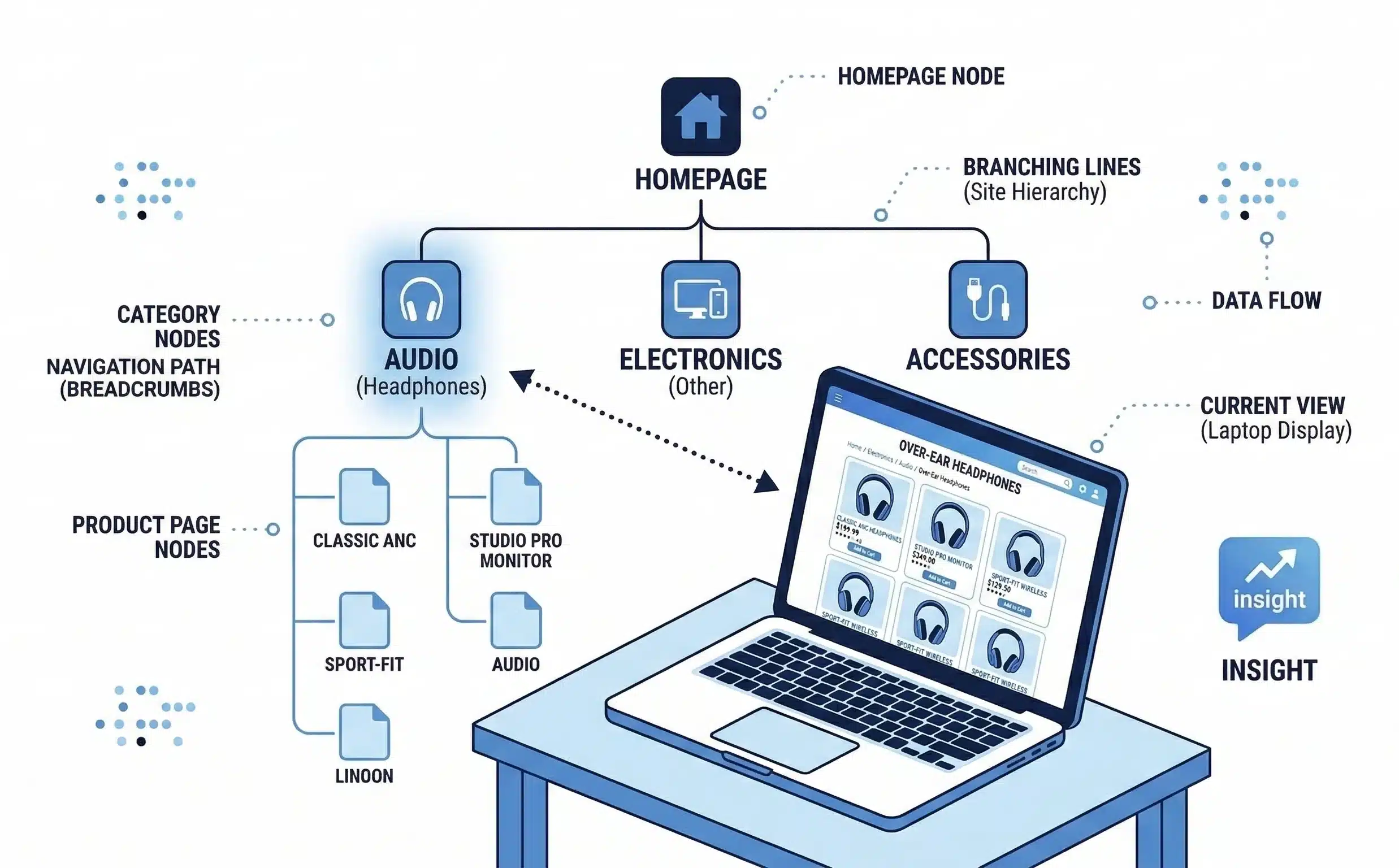
Website structure plays an important role in both user experience and SEO. A clear and logical structure makes it easier for search engines to crawl the site and understand the relationship between pages.
A well-organized eCommerce site typically follows a hierarchy that moves from the homepage to categories and then to individual product pages.
Important elements of good site structure include:
- Organizing products into clear categories and subcategories
- Using breadcrumb navigation to show page hierarchy
- Ensuring important pages are accessible within a few clicks
A strong site structure improves usability and helps distribute page authority throughout the website.
5. Optimize Filters and Faceted Navigation
Many eCommerce websites allow users to filter products by attributes such as size, color, brand, or price. While this improves user experience, it can create multiple URL variations that show similar content.
If these filter pages are not managed correctly, search engines may see them as duplicate content. This can waste crawl resources and dilute ranking signals.
To manage faceted navigation effectively, businesses should:
- Identify which filter combinations provide useful search value
- Prevent unnecessary filter pages from being indexed
- Use canonical tags to indicate the preferred page version
Proper management of filters helps maintain a clean and efficient website structure.
6. Use Customer Reviews and Q&A for SEO

Customer reviews and question-and-answer sections provide valuable user-generated content for product pages. This type of content often includes natural language that reflects how customers talk about products.
Reviews can improve SEO by adding fresh and relevant information to product pages. They also help build trust among potential buyers.
Benefits of reviews and Q&A include:
- Adding additional keywords naturally through user feedback
- Providing insights about product performance and features
- Increasing credibility through real customer experiences
Encouraging customers to leave reviews can enhance both search visibility and conversions.
7. Improve Page Speed and Core Web Vitals
Page speed is an important ranking factor and a critical part of user experience. Slow websites can lead to higher bounce rates and lower conversion rates.
Search engines evaluate performance metrics known as Core Web Vitals, which measure how quickly a page loads and becomes interactive.
Improving page speed can involve several optimizations:
- Compressing and optimizing images
- Reducing unnecessary scripts and code
- Using caching to store frequently accessed data
- Implementing a content delivery network (CDN)
Faster websites provide a smoother experience for users and are more likely to perform well in search rankings.
8. Optimize for Mobile Shopping

Mobile devices now account for a large portion of online shopping traffic. Search engines use mobile-first indexing, which means they primarily evaluate the mobile version of a website when determining rankings.
A mobile-optimized eCommerce site ensures that customers can browse products and complete purchases easily on smaller screens.
Important mobile optimization practices include:
- Using responsive website design
- Ensuring navigation menus are easy to use on mobile devices
- Simplifying the checkout process for mobile users
Improving the mobile experience helps reduce friction and improves engagement.
9. Implement Structured Data (Schema Markup)
Structured data helps search engines understand the content of a webpage more clearly. For eCommerce websites, product schema markup can provide additional details about products.
This structured information can include price, availability, ratings, and product descriptions.
Implementing structured data can help search engines display enhanced search results, such as rich snippets that include ratings and pricing information.
Common schema types for eCommerce include:
- Product schema
- Review and rating schema
- Offer schema for pricing and availability
These enhancements can make search listings more informative and attractive to users.
10. Strengthen Internal Linking
Internal linking connects different pages within the same website. For eCommerce sites, internal links help users navigate between categories, products, and related content.
A strong internal linking strategy improves crawlability and helps distribute page authority across the site.
Examples of internal linking opportunities include:
- Linking category pages to popular products
- Showing related products on product pages
- Connecting blog content with relevant product pages
Well-planned internal linking helps search engines understand how different pages relate to each other.
11. Create Content That Supports Product Discovery
Content marketing can play a major role in helping customers discover products during the research phase. Many users search for guides, comparisons, or recommendations before making a purchase.
Creating helpful content allows eCommerce websites to target informational search queries and guide users toward relevant products.
Examples of useful content include:
- Buying guides that explain how to choose a product
- Product comparison articles
- Tutorials that demonstrate product usage
These types of content help attract visitors earlier in the buying journey and support product discovery.
12. Manage Out-of-Stock and Discontinued Products Correctly
Out-of-stock products are common in eCommerce, but removing these pages without a proper strategy can negatively affect SEO.
If a product is temporarily unavailable, keeping the page active allows it to maintain its search visibility. The page can inform users when the product will return or suggest alternative items.
When products are permanently discontinued, businesses may need to redirect those pages to similar products or relevant categories.
Effective management of unavailable products helps preserve search rankings and ensures users can still find relevant alternatives.
Technical SEO Best Practices for eCommerce
Technical SEO ensures that search engines can efficiently crawl, understand, and index an eCommerce website. Without proper technical optimization, even well-written content may struggle to rank.
Important technical SEO practices include:
- Fixing broken links and crawl errors
- Creating and maintaining XML sitemaps
- Using robots.txt to control crawling
- Implementing canonical tags to prevent duplicate content
- Keeping URLs clear and descriptive
Technical optimization forms the foundation that supports all other SEO efforts.
Conclusion
eCommerce SEO is an essential strategy for online stores that want to increase visibility and attract potential customers through search engines. By optimizing product pages, improving website structure, and focusing on user experience, businesses can create a strong foundation for long-term organic growth.
Implementing the strategies discussed in this guide can help online stores improve their rankings, reach more customers, and compete effectively in the growing digital marketplace. As search engines continue to evolve, maintaining a consistent focus on high-quality content, technical optimization, and user satisfaction will remain key to sustainable SEO success.
FAQs
What is eCommerce SEO?
eCommerce SEO is the process of optimizing an online store so that its product pages, category pages, and other content appear higher in search engine results. It involves improving elements such as keyword usage, product descriptions, website structure, page speed, and technical SEO. The goal is to make it easier for search engines to understand the website and for customers to discover products when they search online.
Why is SEO important for eCommerce websites?
SEO helps eCommerce websites attract organic traffic from search engines. When a store ranks higher in search results, more potential customers can find its products. This can lead to increased website traffic, improved brand visibility, and more sales without relying only on paid advertising.
How do product pages affect eCommerce SEO?
Product pages are one of the most important ranking elements for an eCommerce website. Well-optimized product pages provide detailed descriptions, clear titles, relevant keywords, and high-quality images. These elements help search engines understand the product and help customers make purchasing decisions.
What is buyer intent in eCommerce SEO?
Buyer intent refers to the purpose behind a search query. In eCommerce SEO, understanding buyer intent helps businesses target keywords that users search for when they are ready to purchase or researching products. Optimizing pages for transactional and product-focused keywords can attract more qualified traffic.
How do customer reviews help SEO?
Customer reviews add user-generated content to product pages, which can provide additional keywords and fresh information. Reviews also help build trust among customers and can improve click-through rates when ratings appear in search results through structured data.
What is structured data in eCommerce?
Structured data is a type of code added to webpages that helps search engines better understand the content of the page. For eCommerce websites, product schema can provide information such as product name, price, availability, and ratings. This can help search engines display rich results that provide more details directly in search listings.
How does page speed affect eCommerce SEO?
Page speed is an important ranking factor and also affects user experience. Slow websites may cause users to leave before viewing products. Improving page speed through image optimization, caching, and efficient coding can help improve both search rankings and conversions.
How should eCommerce sites handle out-of-stock products?
If a product is temporarily out of stock, the product page should remain active and inform users when the product may become available again. If the product is permanently discontinued, the page can be redirected to a similar product or category to preserve SEO value and guide users to alternative options.