


Local SEO works well when you manage one location. You optimize one Google Business Profile, create one location page, collect reviews, and track rankings. But when a business expands to 5, 10, 50, or even 500 locations, the same manual methods stop working.

At scale, complexity increases. Each location has different addresses, phone numbers, staff, reviews, competitors, and local search behavior. If there is no structure, errors multiply quickly.
The most common problems businesses face when scaling local SEO include inconsistent business information, duplicate content, weak reporting systems, and poor reputation management. For example, if NAP (Name, Address, Phone number) is not standardized across directories, search engines receive mixed signals. If location pages are copied and pasted with only city names changed, they become thin pages that struggle to rank.
The solution is not to “do more SEO.” The solution is to build systems. Scalable local SEO shifts from one-time tasks to repeatable workflows. Instead of treating each location as a separate project, businesses create standardized frameworks that work across all locations.
When processes are centralized and structured, growth becomes manageable. That is how local SEO holds up at scale.
What Makes a Local SEO Strategy “Scalable”?
A scalable local SEO strategy is one that can grow from one location to many without breaking. Working with a reputable local SEO company can help ensure your strategy is both efficient and effective at scale.
It includes:
- Repeatable frameworks that can be applied to every location
- Templates for content, pages, and responses
- Automation wherever possible
- Centralized data management
- Clear workflow ownership
- Location-level tracking and reporting
Scalability also requires thinking in terms of entities. Each location is its own entity with its own data, reviews, services, and signals. When structured properly, search engines understand these relationships clearly.
Without scalability, every new location increases workload exponentially. With scalability, every new location follows a proven system.
Now let’s break down the 10 scalable local SEO practices that drive rankings.
10 Scalable Local SEO Practices
1. Build a Centralized Local Data Infrastructure
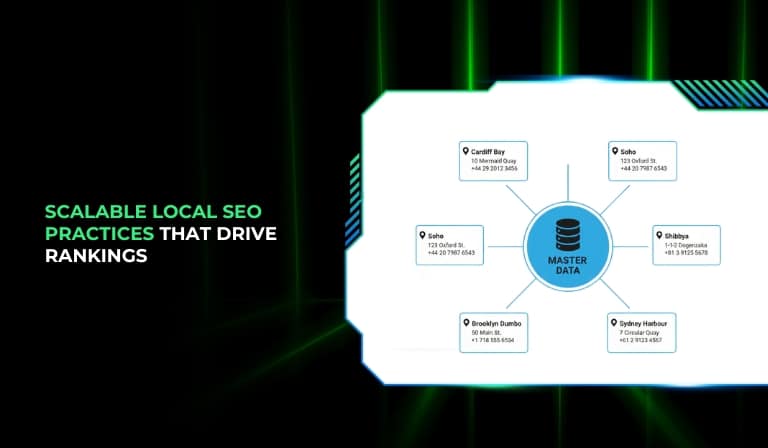
A centralized data infrastructure means all location information is managed from one trusted source.
When businesses store location data in different places—spreadsheets, emails, websites, and directories—errors happen. A centralized system eliminates confusion and reduces inconsistencies.
Why it matters:
- Prevents NAP inconsistencies
- Reduces citation errors
- Enables faster updates across platforms
- Supports automation and integrations
How to scale it:
- Create a master location database that includes every location’s details
- Standardize data fields such as:
- Name
- Address
- Phone number
- Opening hours
- Categories
- Services
- Use structured storage like a CMS, CRM, or centralized spreadsheet
- Sync this data across:
- Website pages
- Google Business Profiles
- Business directories
When one source controls all information, updates become easy and accurate.
2. Operationalize Google Business Profile (GBP) Management
Google Business Profile (GBP) is one of the strongest ranking factors in local search. But managing dozens of profiles manually leads to inconsistency.
Operationalizing GBP means creating standard processes for every location.
Core areas to standardize:
- Categories and attributes
- Business descriptions
- Services and product listings
- Photo and video uploads
- Q&A monitoring
- Posting schedule
Scaling framework:
- Decide which actions are centralized and which are location-managed
- Use review response templates for consistency
- Perform bulk updates when possible
- Monitor suspensions and duplicate listings regularly
- Create a launch SOP for every new location
When GBP management is structured, local pack visibility becomes more predictable and stable.
3. Programmatic Location Landing Pages (Built on an Entity Model)
Location landing pages are essential for ranking in organic results. But many businesses fail by creating thin, duplicate pages.
Common reasons location pages fail:
- Only city name changes
- Minimal local information
- No unique value
- Overuse of keywords
A scalable framework solves this.
Scalable page structure:
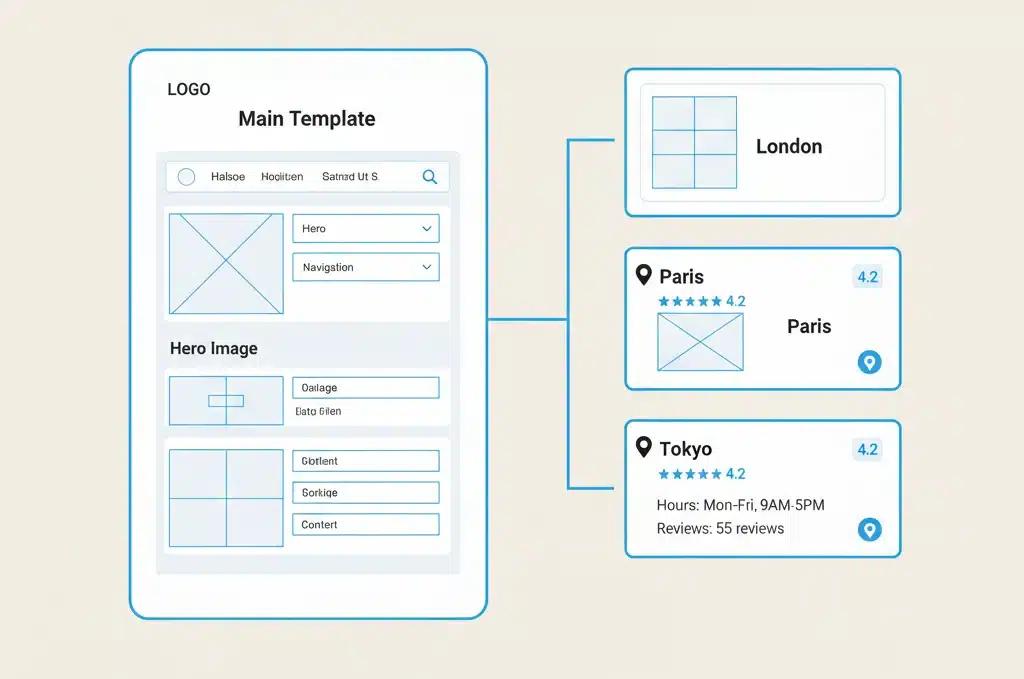
- Use a strong template with consistent sections
- Dynamically insert local data (address, hours, services)
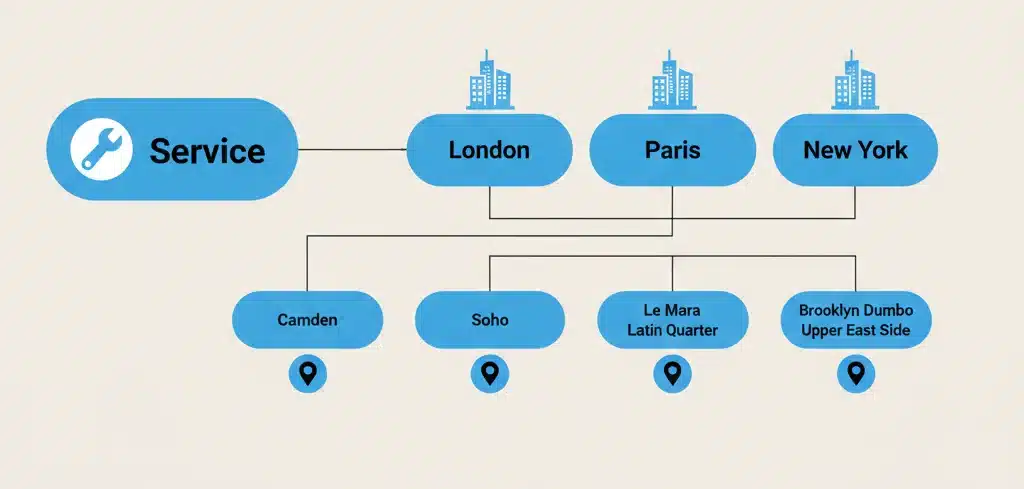
- Structure around entity relationships such as:
- Service → City
- City → Neighborhood
- Include unique local elements like:
- Testimonials from that location
- Local staff information
- Case studies
- Build strong internal linking between service and location pages
When structured correctly, programmatic pages scale without becoming low quality.
4. Standardized Location Page Templates with Unique Local Value
Templates are essential for scaling, but uniqueness is equally important.
A standardized template ensures consistency in layout and structure. Unique local value ensures the page remains relevant and useful.
To avoid duplicate thin pages:
- Add local storytelling elements
- Include driving directions specific to the area
- Embed maps for each location
- Add location-specific FAQs
- Mention neighborhoods served
- Use a hub-and-spoke structure across cities or states
The hub-and-spoke model connects broader service pages to city-level pages, improving internal linking and authority flow.
This balance between structure and uniqueness is critical for sustainable rankings.
5. Reputation Management Workflows That Work Across the Board
Reviews strongly influence local rankings and click-through rates. At scale, review management must be automated and structured.
Why reviews matter:
- They act as trust signals
- They influence customer decisions
- They affect local pack performance
Scalable review system:
- Automate SMS or email review requests after service
- Generate location-specific review links
- Create a clear escalation workflow for negative reviews
- Use structured response templates for positive and negative feedback
- Track monthly review growth by location
Without a system, reviews become inconsistent. With a workflow, reputation becomes a measurable asset.
6. NAP Audit & Citation Management at Scale
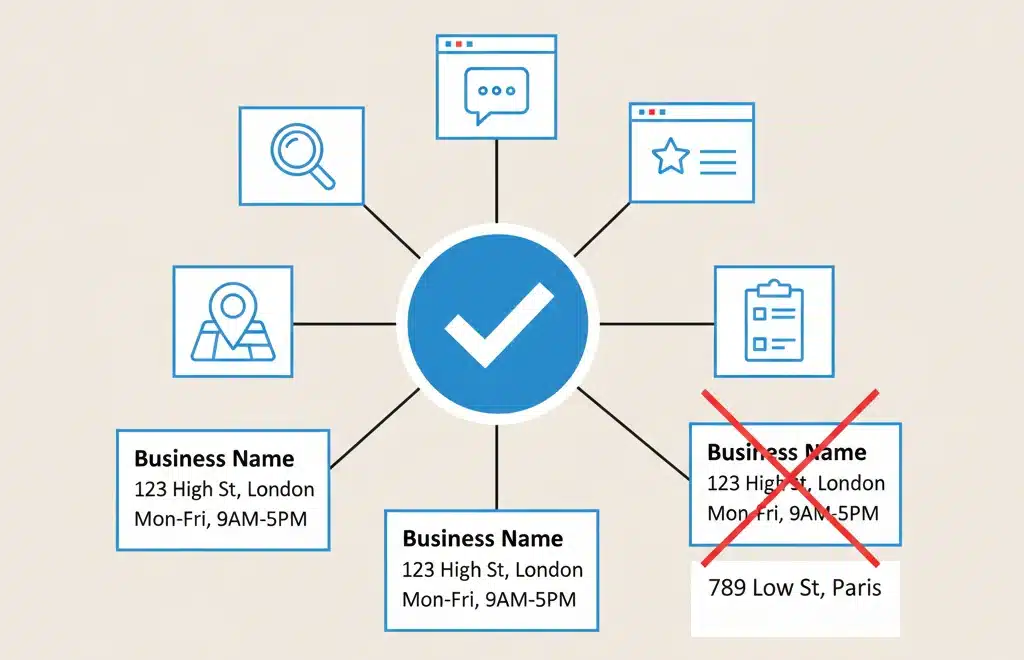
NAP consistency remains a foundational element of local SEO. Inconsistent citations confuse search engines.
To manage citations at scale:
- Conduct bulk NAP audits
- Identify and remove duplicate listings
- Claim high-priority directories
- Use citation management tools where appropriate
- Maintain a citation tracking sheet
- Perform quarterly maintenance checks
Regular auditing prevents long-term damage and protects location authority.
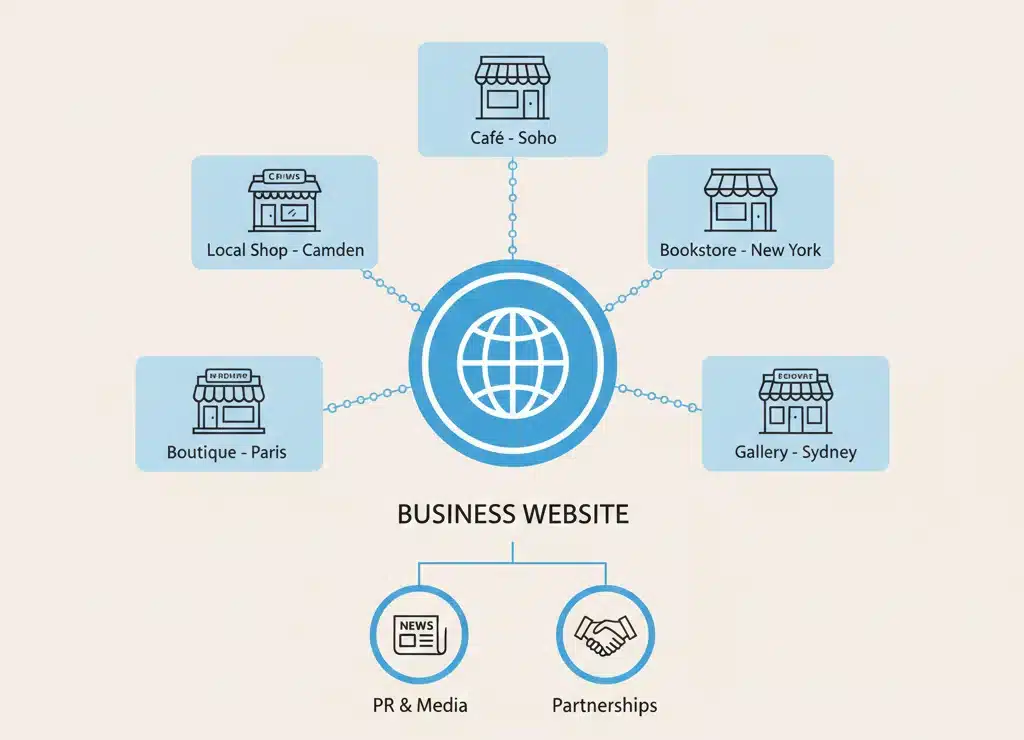
7. Off-Page Local Signal Growth at Scale
Off-page signals help search engines measure authority and local relevance.
What counts as local signals:
- Local backlinks
- Sponsorships
- Community partnerships
- Local press mentions
Scalable link building framework:
- Create city-level prospecting templates
- Join chambers of commerce
- Develop an event sponsorship SOP
- Conduct local resource page outreach
- Combine national authority with local authority
When each location builds localized authority, rankings become stronger and more stable.
8. Location-Specific Content Systems (Not Random Blog Posts)
Random blog posts do not scale effectively. A structured content system does.
Content playbooks should include:
- Local service pages
- City-specific blog topics
- Event-driven content
- FAQ clusters per location
Scalable content model:
- Use a hub-and-spoke structure
- Repurpose content frameworks across locations
- Maintain an editorial calendar by region
- Prevent keyword cannibalization
This structured approach strengthens topical authority at both national and local levels.
9. Measurement That Doesn’t Break at Scale
Tracking overall traffic is not enough in multi-location SEO. Performance must be segmented by location.
Key metrics to track:
- Local pack rankings
- Organic traffic per location
- Calls and direction clicks
- Conversion rates by location
- Review growth rate
Reporting structure:
- Create dashboards for headquarters
- Provide summaries for regional managers
- Deliver performance snapshots to individual locations
- Compare monthly trends
- Identify underperforming areas quickly
When measurement is location-specific, optimization becomes targeted and efficient.
10. Build Repeatable SOPs for Every New Location
Growth should not create chaos. Every new location should follow the same structured process.
Create a launch checklist that includes:
- Website page creation
- Google Business Profile setup
- Citation submissions
- Review automation setup
- Analytics and tracking configuration
Define workflow ownership:
- Assign responsibility for content
- Assign responsibility for reviews
- Assign responsibility for technical SEO
- Establish approval processes
- Schedule ongoing optimization cycles
When SOPs are documented, scaling becomes predictable.
Build Systems, Not Just SEO Wins
Scalable local SEO is about long-term systems, not short-term tactics. Businesses that rely only on quick ranking wins often struggle when they expand.
Operational thinking creates compounding results. Each optimized location strengthens overall authority. Each new review improves trust. Each structured page reinforces entity relationships.
When systems are in place, local SEO becomes an operational asset rather than a marketing experiment. Over time, this structured approach strengthens visibility, stability, and long-term growth.
Conclusion
Scaling local SEO is not about doing more work for every new location. It is about building structured systems that grow with your business. When you centralize data, standardize workflows, create strong location pages, manage reviews properly, and track performance by location, you create a foundation that supports long-term rankings. Businesses that focus on repeatable processes instead of one-time tactics are able to expand confidently without losing visibility. In the long run, scalable local SEO turns growth into an advantage, not a challenge.
FAQs
Q1. Can I use one Google Business Profile for all locations?
No. Each physical location should have its own Google Business Profile. Combining multiple locations into one listing creates confusion and reduces visibility in local search results.
Q2. How do I avoid duplicate content across city pages?
Use standardized templates but add unique local value such as testimonials, FAQs, staff details, and localized service information. Avoid simply changing city names.
Q3. How do I track local SEO performance by location?
Use analytics tools and dashboards that segment data by landing page and location. Track rankings, traffic, conversions, and reviews separately for each location.
Q4. How many location pages should I create?
Create one dedicated page per physical location. Avoid creating unnecessary pages for areas where you do not have a physical presence.
Q5. What is the biggest scaling mistake businesses make?
The biggest mistake is treating every location as a separate project without building centralized systems. Without structure, errors multiply and rankings decline.