


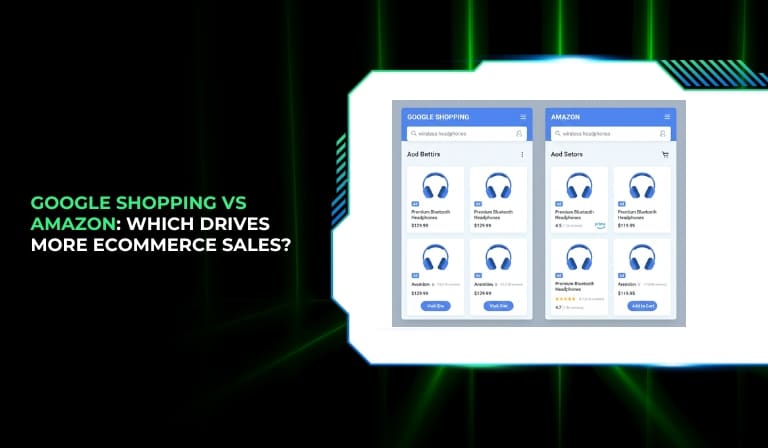
Ecommerce businesses today have more selling and advertising options than ever before. Among all available platforms, Google Shopping and Amazon stand out as the two biggest drivers of online product discovery and sales. Both platforms attract millions of shoppers every day, but they work in very different ways. One focuses on search-based product comparison, while the other is built entirely around ready-to-buy customers.

This blog explains how Google Shopping and Amazon work, how they differ, and which platform can drive more ecommerce sales depending on your business goals. By the end of this guide, you will have a clear understanding of where each platform performs best and how to choose the right one for your brand.
What Is Google Shopping?
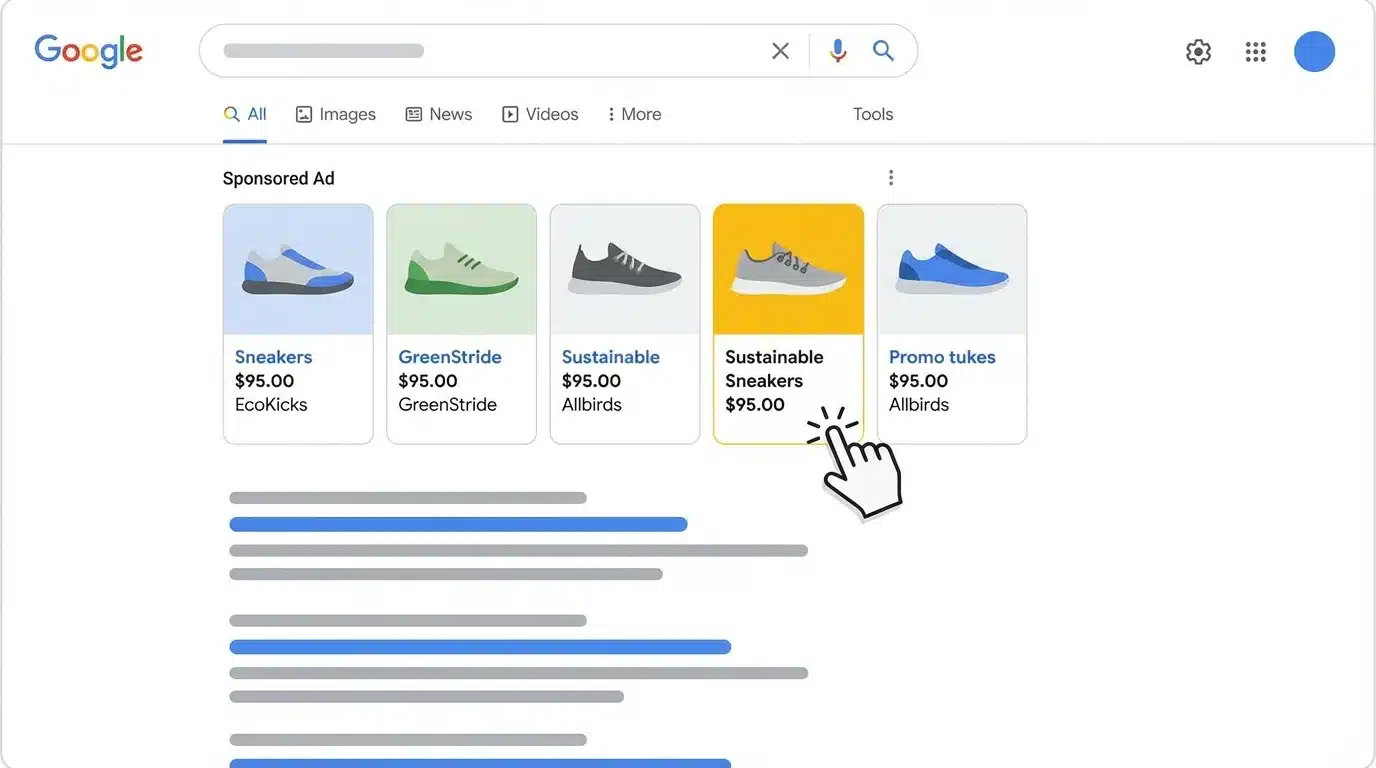
Google Shopping is a product discovery and comparison platform that shows products directly inside Google search results. Instead of selling products itself, Google Shopping acts as a bridge between shoppers and online stores.
Google Shopping works by using product data submitted by merchants through a product feed. When users search for a product on Google, relevant product listings appear with images, prices, store names, and ratings. These listings help users compare options before clicking through to a seller’s website.
Key characteristics of Google Shopping:
- Products appear when users search for related keywords on Google
- Shoppers are sent to the merchant’s own website to complete the purchase
- Pricing, product quality, and relevance influence visibility
- Best suited for brands that want traffic and sales on their own ecommerce store
Google Shopping is especially useful for businesses that want to build long-term brand value while still generating sales from high-intent searches.
What Is Amazon?
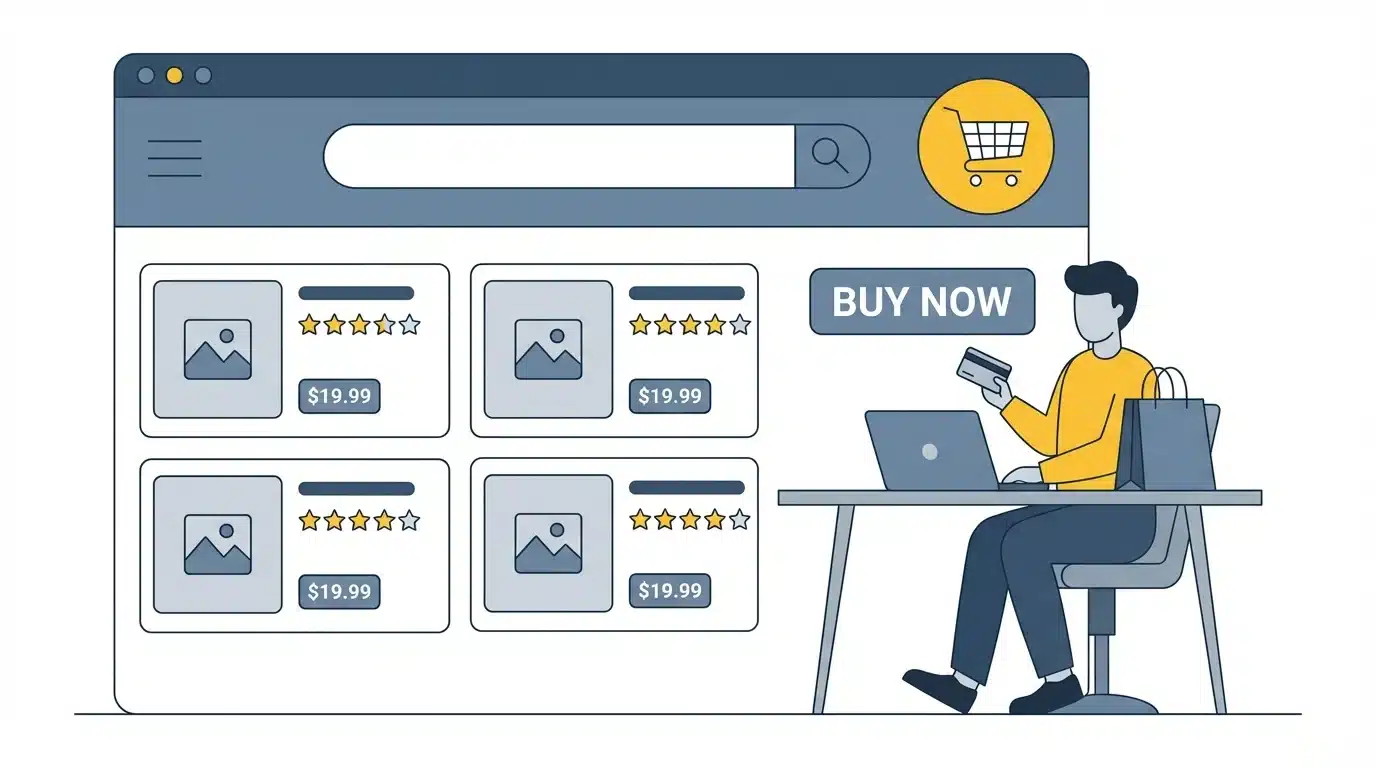
Amazon is the world’s largest ecommerce marketplace where buyers search, compare, and purchase products without leaving the platform. Unlike Google Shopping, Amazon owns the entire buying experience, from product discovery to checkout and delivery.
Sellers list their products directly on Amazon’s marketplace and compete with other sellers offering similar products. Amazon also provides advertising options that allow sellers to promote products within search results and product pages.
Key characteristics of Amazon:
- Customers come with a strong intent to purchase
- Checkout, payment, and delivery are handled by Amazon
- Product rankings depend heavily on sales performance and reviews
- Ideal for sellers focused on fast sales and high conversion rates
Amazon’s strength lies in trust, convenience, and its massive base of loyal shoppers.
Google Shopping vs. Amazon: At-a-Glance Comparison
This comparison helps explain the core difference between the two platforms at a high level.
- Google Shopping is a product discovery and comparison channel
- Amazon is a complete ecommerce marketplace
- Google Shopping sends traffic to your website
- Amazon keeps shoppers within its ecosystem
- Google Shopping supports brand visibility and customer ownership
- Amazon prioritizes transaction speed and volume
Both platforms can drive ecommerce sales, but they do so in very different ways.
Traffic Source & Buyer Intent Comparison
Buyer Intent on Google Shopping
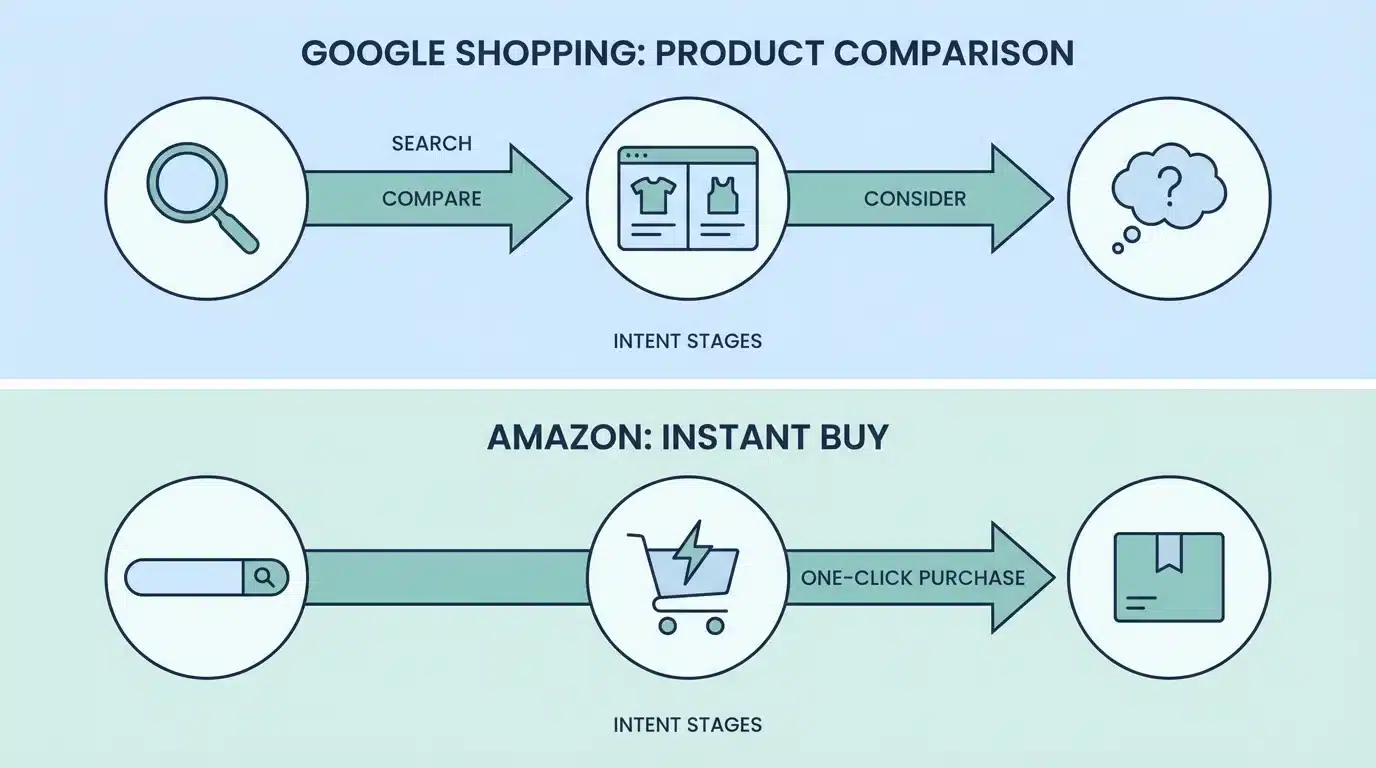
Google Shopping attracts users who are actively researching products. These shoppers usually compare prices, features, and brands before making a decision.
How buyer intent works on Google Shopping:
- Users often compare multiple stores before buying
- Many shoppers are still deciding between options
- Intent ranges from medium to high
- Strong influence on early and mid-funnel decisions
Google Shopping is powerful for influencing purchase decisions and guiding shoppers toward your brand.
Buyer Intent on Amazon
Amazon shoppers usually arrive with a clear intention to buy. Many users start their product search directly on Amazon rather than on Google.
How buyer intent works on Amazon:
- Shoppers are often ready to purchase immediately
- Trust in reviews and Prime delivery increases confidence
- Buying decisions happen faster
- Strong focus on lower-funnel conversions
Amazon generally delivers faster sales because customers are already in buying mode.
Advertising Models: How Each Platform Promotes Products
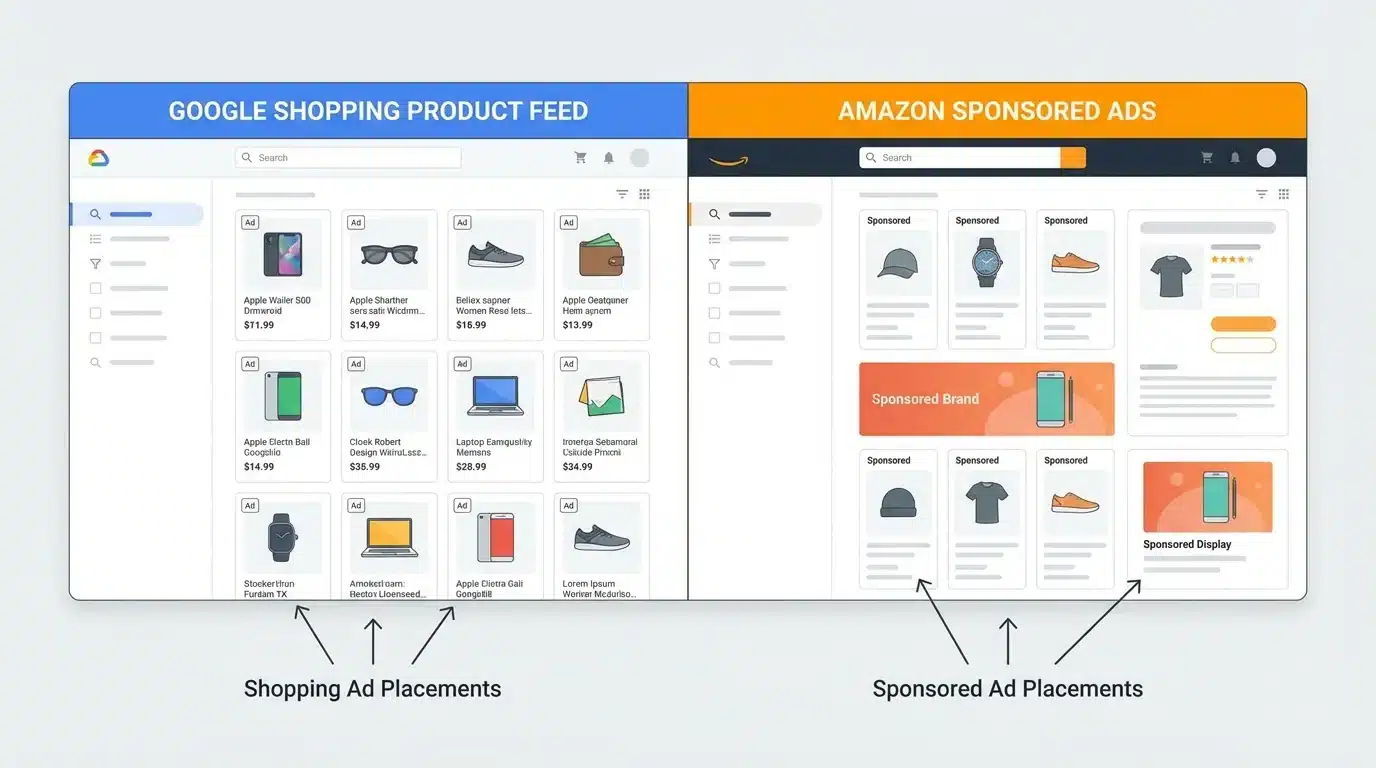
Google Shopping Advertising Model
Google Shopping ads are powered by product data rather than keywords alone. Advertisers submit detailed product information, and Google decides when to show listings based on relevance and bidding.
How Google Shopping ads work:
- Product feed determines ad eligibility
- Bids control how competitive your ads are
- Ads appear in search results and Google Shopping tabs
- Visibility depends on product quality and pricing
This model rewards well-optimized product listings and competitive pricing.
Amazon Advertising Model
Amazon offers multiple ad formats designed to promote products within its marketplace. These ads appear in search results and on product pages.
Amazon advertising options include:
- Sponsored Products for individual listings
- Sponsored Brands for brand-level visibility
- Sponsored Display for remarketing within Amazon
Amazon ads focus on increasing product visibility at the point of purchase.
Cost Comparison: CPC, Fees & Overall Investment
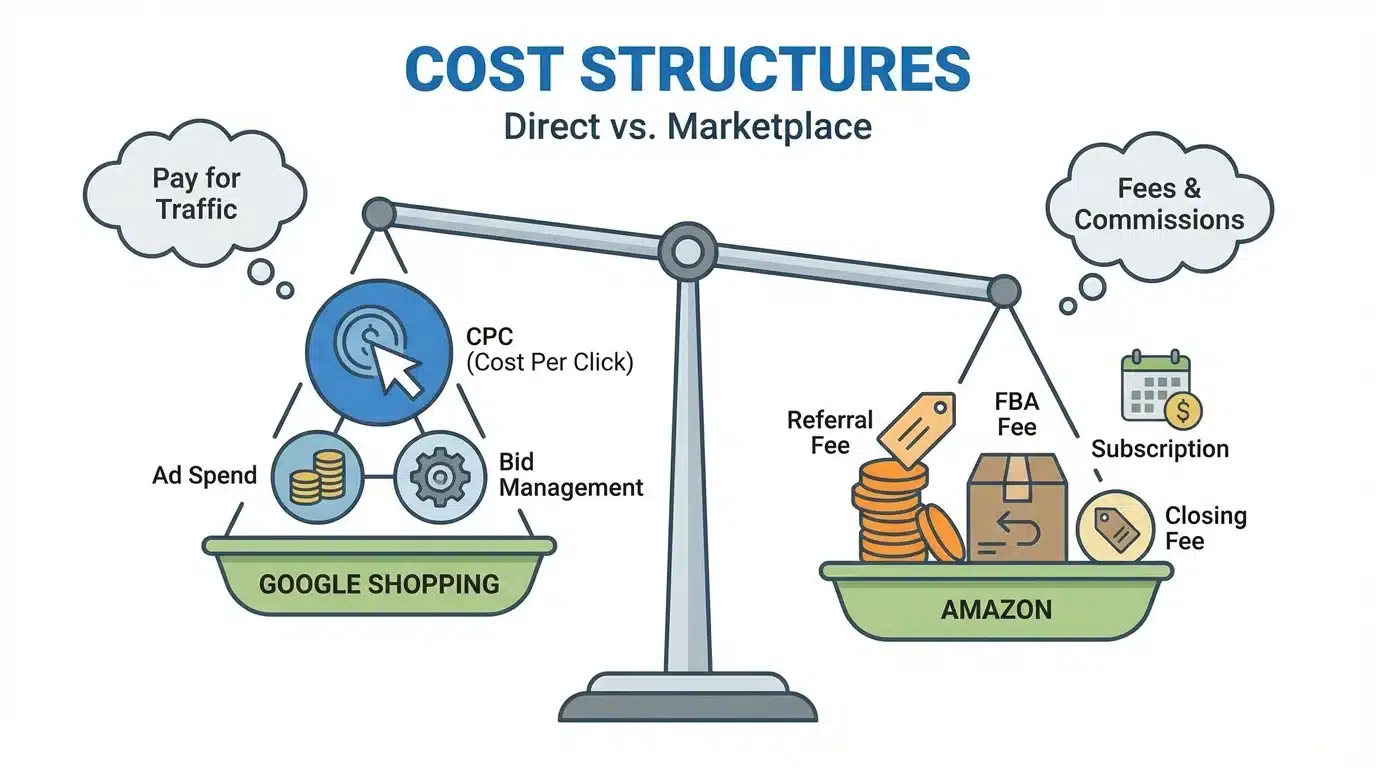
Costs on Google Shopping
Google Shopping follows a pay-per-click model. Advertisers only pay when users click on their product listings.
Key cost factors on Google Shopping:
- Cost depends on competition and bidding strategy
- Budgets are flexible and adjustable
- No platform selling fees beyond ad spend
- Profit margins depend on conversion rate and site performance
Costs can be controlled more easily if campaigns are managed properly.
Costs on Amazon
Selling on Amazon involves multiple costs beyond advertising.
Common Amazon costs include:
- Referral fees on each sale
- Advertising cost-per-click
- Fulfillment and storage fees
- Monthly seller account fees
These combined costs can significantly reduce profit margins.
Conversion Rates: Which Platform Converts Better?
Amazon generally delivers higher conversion rates because of trust, reviews, and convenience. Shoppers feel confident buying directly on Amazon without researching external websites.
Google Shopping conversion rates depend heavily on the quality of the merchant’s website. If the website is slow, confusing, or lacks trust signals, conversions can drop.
In short, Amazon converts better on average, while Google Shopping performance varies more by business quality.
Branding, Visibility & Customer Ownership
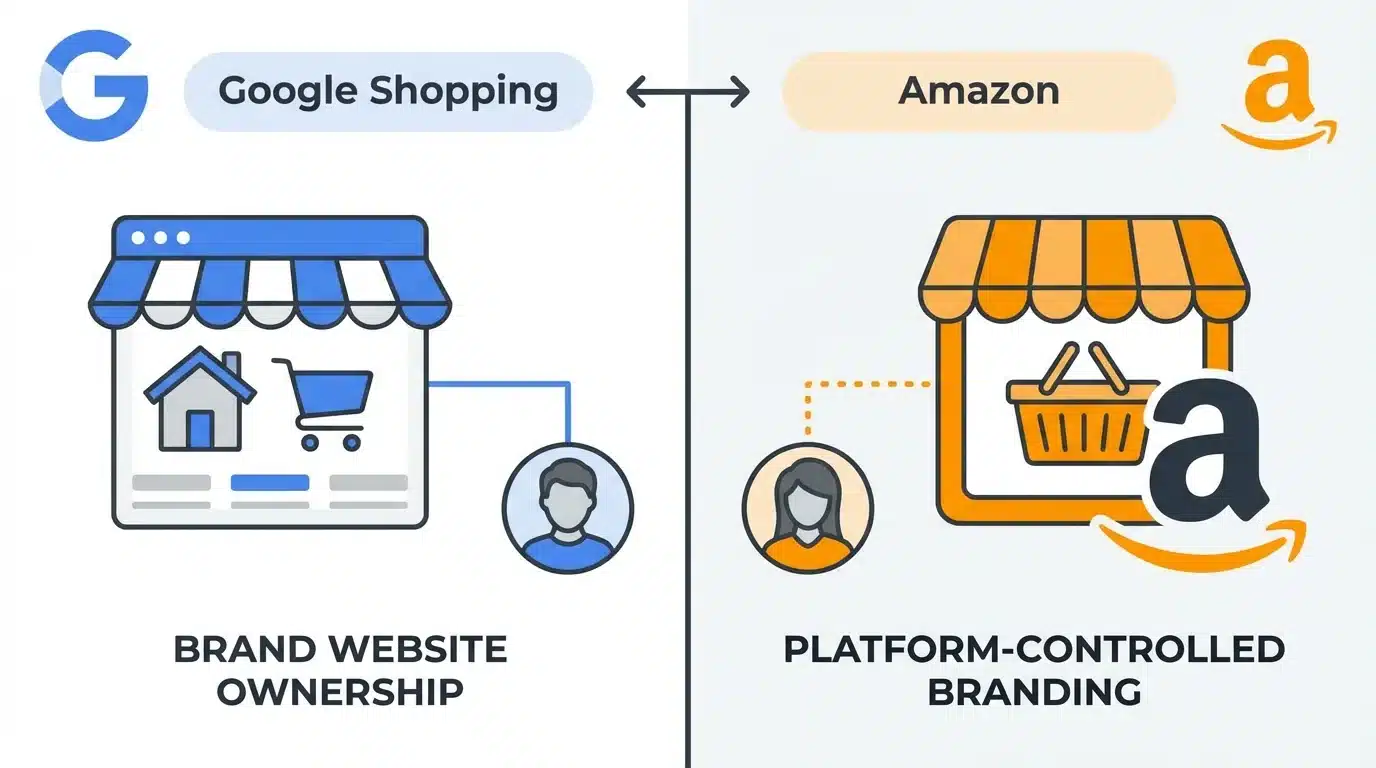
Branding on Google Shopping
Google Shopping allows brands to maintain full control over customer experience and branding.
Branding advantages include:
- Full ownership of website traffic
- Ability to collect customer data
- Strong remarketing opportunities
- Better long-term brand recall
This makes Google Shopping ideal for building brand equity.
Branding on Amazon
Amazon limits brand control because the platform owns the customer relationship.
Branding limitations include:
- Limited access to customer data
- Strong focus on price and reviews
- High dependency on Amazon’s rules
While Amazon drives sales, it offers less freedom for brand building.
Competition & Market Saturation
Competition exists on both platforms, but the nature of competition differs.
On Google Shopping, sellers compete based on price, relevance, and product quality. On Amazon, sellers compete heavily on price, reviews, and delivery speed.
Amazon is often more saturated, especially in popular product categories. Google Shopping offers slightly more room for differentiation through branding and website experience.
Product Type Performance: What Sells Better Where?
Certain products perform better depending on the platform.
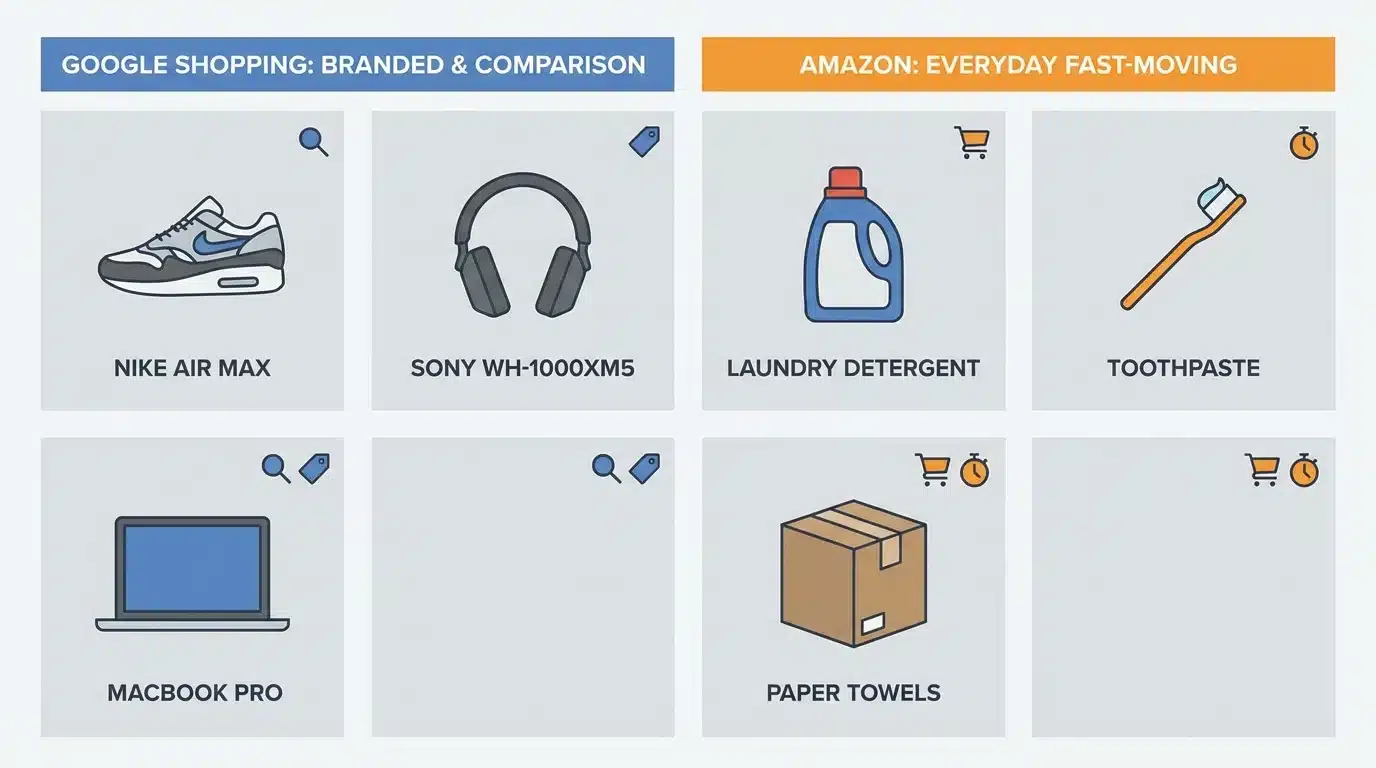
Products that do well on Google Shopping:
- High-consideration products
- Branded items
- Products requiring comparison
Products that do well on Amazon:
- Everyday consumer goods
- Low to mid-priced products
- Products with strong reviews
Understanding your product category helps determine the right platform.
Scalability & Long-Term Growth Potential
Scaling with Google Shopping
Google Shopping supports long-term growth by driving traffic to your owned ecommerce store.
Scaling advantages include:
- Integration with SEO and search ads
- Strong remarketing potential
- Better lifetime customer value
Growth depends on improving website performance and brand trust.
Scaling with Amazon
Amazon makes scaling faster due to its massive customer base.
Scaling advantages include:
- Access to Prime shoppers
- International marketplace expansion
- Built-in logistics support
However, long-term dependency can be risky.
Pros & Cons Summary
Google Shopping: Pros and Cons
Pros:
- Strong brand control
- Customer ownership
- Flexible advertising costs
Cons:
- Lower average conversion rates
- Requires a strong website
Amazon: Pros and Cons
Pros:
- High purchase intent
- Faster conversions
- Built-in trust and logistics
Cons:
- High fees
- Limited branding control
Google Shopping vs. Amazon: Which Drives More Ecommerce Sales?
Amazon often drives higher immediate sales volume due to strong buying intent. Google Shopping drives sustainable growth by building brand value and customer relationships.
The platform that drives more sales depends on your goals. Short-term sales often favor Amazon, while long-term brand growth favors Google Shopping.
Should You Use Google Shopping, Amazon, or Both?
Some businesses succeed using only one platform, but many achieve better results by using both together.
Google Shopping works well for discovery and brand building. Amazon works best for fast conversions. A hybrid strategy allows businesses to capture customers at different stages of the buying journey.
Conclusion
Google Shopping and Amazon are not direct replacements for each other. They serve different purposes in ecommerce growth. Amazon excels at driving quick, high-intent sales, while Google Shopping supports long-term brand building and customer ownership.
For most ecommerce businesses, the smartest approach is not choosing one over the other, but understanding how each platform fits into a complete sales and marketing strategy.
Frequently Asked Questions (FAQs)
1. Is Google Shopping better than Amazon for ecommerce sales?
Google Shopping is better for businesses that want to drive traffic to their own website, build a brand, and own customer relationships. It works especially well for products that require comparison or research. Amazon, on the other hand, often generates faster sales because shoppers are already ready to buy.
2. Why does Amazon usually have higher conversion rates than Google Shopping?
Amazon has higher conversion rates because customers trust the platform, see reviews instantly, and can complete purchases quickly. Features like fast delivery and easy returns reduce buying hesitation, which leads to more completed purchases.
3. Can small ecommerce businesses succeed on Google Shopping?
Yes, small ecommerce businesses can succeed on Google Shopping if they have competitive pricing, clear product data, and a well-optimized website. Google Shopping allows smaller brands to compete by focusing on product relevance and quality rather than brand size alone.
4. Is selling on Amazon expensive?
Selling on Amazon can be costly due to referral fees, advertising costs, fulfillment fees, and monthly seller fees. While Amazon can generate high sales volume, these costs can reduce profit margins, especially for low-priced products.
5. Does Google Shopping allow better brand control than Amazon?
Yes, Google Shopping offers much better brand control. Shoppers are redirected to your website, where you control the design, messaging, pricing strategy, and customer experience. Amazon limits branding because all sellers operate within the same marketplace layout.
6. Which platform is better for new product launches?
Google Shopping is often better for new product launches because it supports product discovery and comparison. Amazon relies heavily on reviews and sales history, which new products usually lack, making it harder to gain visibility early on.
7. Can I use both Google Shopping and Amazon together?
Yes, many ecommerce brands use both platforms together. Google Shopping helps attract and educate potential customers, while Amazon captures shoppers who are ready to purchase. Using both can improve overall sales performance across the buyer journey.
8. Which platform is better for long-term ecommerce growth?
Google Shopping is generally better for long-term growth because it supports brand building, customer data ownership, and repeat sales. Amazon is powerful for scaling sales quickly, but long-term dependency can limit brand independence.
9. Do Google Shopping ads require keyword targeting like search ads?
No, Google Shopping ads rely mainly on product data rather than keywords. Google matches products to searches based on product titles, descriptions, pricing, and relevance, though bidding still plays an important role.
10. How should I decide between Google Shopping and Amazon?
The decision depends on your business goals. If your priority is fast sales and high conversion rates, Amazon may be the better choice. If you want to build a strong brand, own customer relationships, and grow sustainably, Google Shopping is usually the better option.

Passionate about blogging and focused on elevating brand visibility through strategic SEO and digital marketing. Always tuned in to the latest trends, I’m dedicated to maximizing engagement and delivering measurable ROI in the dynamic world of digital marketing. Let’s connect and unlock new opportunities together!