


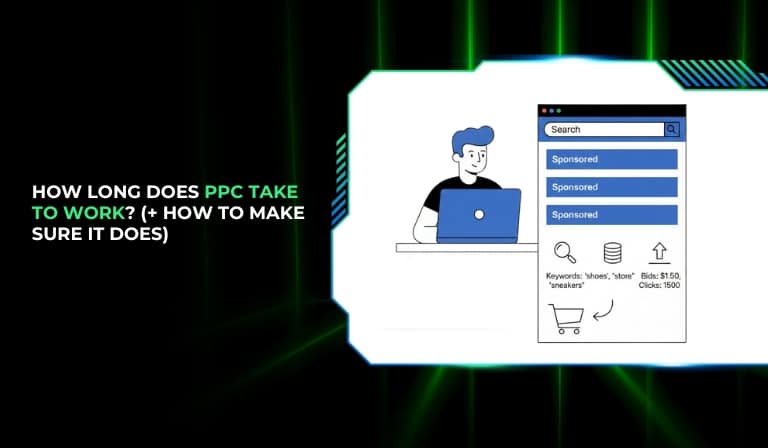
Pay-per-click (PPC) advertising is often promoted as a fast way to get traffic and leads. Because of this, many businesses expect immediate results as soon as their ads go live. When those results do not appear right away, PPC is sometimes labeled as ineffective or expensive.

In reality, PPC does not fail because it takes time—it fails because expectations are unrealistic. While PPC is faster than many other marketing channels, it still requires data, testing, and optimization before it delivers consistent and profitable results. Understanding the actual PPC timeline helps businesses make better decisions and avoid stopping campaigns too early.
This blog explains how long PPC really takes to work and what you can do to make sure it delivers results.
What Is PPC and Why Results Are Not Instant
PPC, or pay-per-click advertising, is a digital advertising model where advertisers pay only when someone clicks on their ad. These ads appear on search engines, websites, and social platforms based on targeting rules such as keywords, audience behavior, location, and interests.
Although ads can start showing quickly, performance does not stabilize immediately. PPC platforms rely on data to optimize campaigns. Without enough data, the system cannot accurately determine which ads, keywords, or audiences perform best.
PPC results are not instant because:
- Ad platforms run auctions for every impression
- Performance depends on relevance, competition, and Quality Score
- Algorithms need time to learn user behavior
- Conversion patterns take time to emerge
PPC is fast to launch, but optimization is what makes it effective.
How Long Does PPC Take to Work?
PPC typically takes one to three months to show meaningful and reliable results. This does not mean nothing happens before that. Traffic and clicks often start within days, but consistent performance takes longer.
The definition of “working” also matters. For some businesses, PPC working may mean traffic. For others, it means leads, sales, or positive return on ad spend (ROAS). These outcomes require more than just impressions and clicks.
In most cases:
- Early activity happens quickly
- Optimization happens over weeks
- Stability and scalability happen after sufficient testing
PPC Timeline Explained: What Happens Month by Month
Month 1: Setup, Launch & Data Collection
The first month is focused on building the foundation and gathering initial data. During this stage, campaigns are being introduced to the platform and users.
In this phase:
- Campaigns are structured and launched
- Keywords, audiences, and locations are tested
- Ads begin receiving impressions and clicks
- Conversion data starts accumulating
- Performance may fluctuate significantly
Conversions may be inconsistent because the platform is still learning which users are most likely to take action. Costs may appear high at this stage, which is normal for new campaigns.
Month 2: Optimization & Performance Improvement
The second month is where PPC starts becoming more efficient. With initial data available, decisions can now be made based on real performance instead of assumptions.
During this phase:
- High-performing keywords and ads are identified
- Low-performing elements are paused or refined
- Click-through rates begin to improve
- Cost per click and cost per conversion start decreasing
- Targeting becomes more accurate
This month focuses on reducing wasted spend and improving relevance, which directly impacts campaign efficiency.
Month 3: Testing, Scaling & Stability
By the third month, clear performance trends usually emerge. At this stage, campaigns are no longer in trial mode and can be optimized with confidence.
In this phase:
- Conversion performance stabilizes
- Winning ads and keywords are scaled
- Budgets are adjusted strategically
- Performance becomes more predictable
- Expansion opportunities become clearer
This is typically the point where PPC can be evaluated fairly in terms of profitability and long-term value.
Factors That Affect How Fast PPC Starts Working
Industry Competition
Different industries experience different PPC timelines. Highly competitive industries require more time and budget to generate reliable results.
Competition affects:
- Cost per click
- Speed of data collection
- Difficulty of achieving strong Quality Scores
Low-competition industries often see faster results due to lower costs and less aggressive bidding.
Budget Size & Consistency
Budget directly impacts how fast a campaign collects data. Smaller budgets limit impressions and slow down learning.
Budget considerations include:
- Daily spend consistency
- Ability to test multiple keywords or ads
- Speed at which statistically useful data is collected
Frequent budget changes can slow optimization.
Keyword Intent & Match Types
Not all keywords perform equally. Keywords with high intent typically convert faster than general or informational keywords.
Important factors include:
- Commercial vs research intent
- Match type selection
- Search behavior relevance
High-intent keywords usually deliver faster and more measurable results.
Landing Page Experience
Even strong ads will underperform if landing pages are weak. PPC performance is closely tied to what happens after the click.
Landing page factors include:
- Message consistency with the ad
- Page speed and usability
- Clear calls to action
- Simple conversion paths
Poor landing pages often delay results regardless of ad quality.
Campaign Structure & Account History
Well-structured accounts perform better and optimize faster. New accounts also take longer to stabilize compared to older accounts with historical data.
Structure influences:
- Data clarity
- Optimization efficiency
- Algorithm learning speed
Clean structure leads to faster insights and better control.
Signs Your PPC Is Working (Even If ROI Is Not There Yet)
PPC can show progress before profits appear. These early indicators signal that campaigns are moving in the right direction.
Common positive signs include:
- Increasing click-through rate (CTR)
- Gradual reduction in cost per click (CPC)
- Improving Quality Scores
- More relevant traffic behavior
- Higher engagement on landing pages
These signals indicate that optimization efforts are effective.
Why PPC Sometimes Takes Longer Than Expected
Some PPC campaigns struggle not because PPC is slow, but because of underlying issues.
Common reasons include:
- Incorrect keyword targeting
- Poor or missing conversion tracking
- Weak landing page experience
- Frequent major changes during learning phase
- Unrealistic expectations
Fixing these issues often accelerates results.
How to Make Sure PPC Works Faster and Better
Start With Clear Goals and KPIs
Clear objectives guide optimization decisions and prevent wasted effort.
Goals may include:
- Traffic growth
- Lead generation
- Sales
- Brand visibility
Without defined goals, performance is difficult to measure accurately.
Focus on High-Intent Keywords First
High-intent keywords help campaigns generate meaningful results faster.
Benefits include:
- Better conversion rates
- Faster performance validation
- Lower wasted spend
These keywords align closely with purchase-ready users.
Continuously Optimize Ads and Bids
Ad performance improves through testing and refinement.
Optimization includes:
- Testing headlines and descriptions
- Adjusting bids based on performance
- Pausing low-performing ads
Small improvements compound over time.
Improve Landing Pages Early
Landing page improvements can significantly impact conversion rates.
Key areas include:
- Clear messaging
- Strong call-to-action
- Reduced friction in forms
- Mobile usability
Improving landing pages early speeds up overall results.
Track Everything Accurately
Accurate tracking is essential for optimization.
Tracking should include:
- Primary conversions
- Secondary engagement actions
- Cost per conversion data
Without reliable data, optimization decisions become guesswork.
Give the Algorithm Time to Learn
PPC platforms require stable conditions to optimize effectively.
Best practices include:
- Avoiding frequent structural changes
- Letting campaigns run long enough to gather data
- Making gradual adjustments
Patience often improves performance.
PPC vs SEO Timelines: Why PPC Is Faster (But Not Instant)
PPC delivers faster visibility than SEO, but it still requires time to mature.
Key differences:
- PPC drives traffic quickly but needs optimization
- SEO takes longer but compounds over time
- PPC performance depends on ongoing spend
- SEO builds long-term authority
Using both together often produces the best results.
Common PPC Timeline Myths
Many misconceptions lead to poor PPC decisions.
Common myths include:
- PPC works instantly
- More budget guarantees success
- PPC failure in one week means permanent failure
Understanding reality prevents premature campaign shutdowns.
How Long Should You Run PPC Before Judging Results?
PPC should be evaluated only after enough data has been collected.
Before deciding, consider:
- At least one to three months of data
- Consistent tracking accuracy
- Multiple optimization cycles completed
Judging too early often leads to incorrect conclusions.
Conclusion
PPC is one of the fastest ways to reach potential customers, but it is not instant. It requires structured setup, continuous optimization, and realistic expectations. Campaigns typically need time to collect data, refine targeting, and stabilize performance.
Businesses that allow PPC to mature and focus on optimization rather than impatience are far more likely to see sustainable success. With the right strategy and timeline expectations, PPC can become a reliable and scalable growth channel.
Frequently Asked Questions (FAQs)
1. How long does PPC usually take to show results?
PPC can start generating impressions and clicks within a few days of launch. However, meaningful and consistent results—such as stable conversions and reliable cost per lead—usually take one to three months. This time allows platforms to collect enough data for optimization.
2. Can PPC work immediately after launching ads?
PPC can deliver traffic immediately, but performance is often unstable at first. Early results may include clicks without conversions or fluctuating costs. Consistent performance requires time for testing, optimization, and algorithm learning.
3. Why do most PPC campaigns need around three months?
PPC campaigns need time to gather data, identify high-performing keywords and ads, and remove inefficiencies. The first month focuses on data collection, the second on optimization, and the third on stabilization and scaling, which is why three months is commonly used as a benchmark.
4. What does “PPC working” actually mean?
PPC “working” can mean different things depending on goals. For some businesses, it means increased traffic. For others, it means leads, sales, or a positive return on ad spend. True PPC success is usually measured by consistent and profitable conversions.
5. What factors can slow down PPC results?
Several factors can delay PPC success, including high competition, low budgets, poor keyword intent, weak landing pages, incorrect tracking, and frequent changes during the learning phase. Addressing these issues can significantly improve timelines.
6. How can I tell if my PPC campaign is improving?
Early signs of improvement include higher click-through rates, lower cost per click, better Quality Scores, and more relevant user engagement. These indicators often appear before strong conversion results.
7. Does increasing the budget make PPC work faster?
A higher budget can speed up data collection, but it does not guarantee success. Without proper targeting, ad quality, and landing page optimization, increasing spend may simply increase wasted budget.
8. Is PPC faster than SEO?
Yes, PPC generally delivers traffic faster than SEO. However, PPC still requires time for optimization, while SEO focuses on long-term growth. Many businesses use both together for balanced results.
9. How long should I run PPC before deciding if it’s effective?
PPC should typically be evaluated after at least one to three months of consistent data. This allows enough time for testing, optimization, and performance stabilization before making informed decisions.