


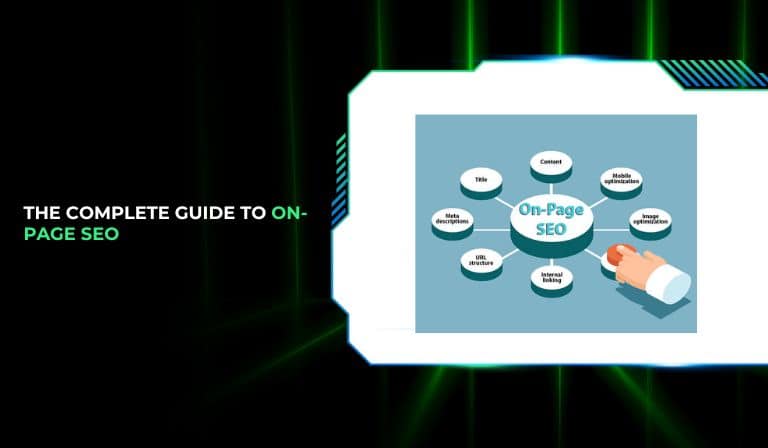
If you want more rankings, more traffic, and more qualified leads from Google, you don’t just need “SEO.” You need a solid foundation that helps search engines understand your website and helps users trust your content. That foundation is on-page SEO.
On-page SEO is one of the most controllable and repeatable parts of an SEO strategy. Unlike backlinks or algorithm changes, you can directly improve your pages by optimizing content, structure, and technical signals that influence how your website appears in search results.
In this complete guide, you’ll learn what on-page SEO is, why it matters today, and the most important elements you must optimize. You’ll also discover how professional on page SEO services approach the process to deliver consistent improvements in visibility, clicks, and conversions.
What Is On-Page SEO?
On-page SEO (also called on-site SEO) is the process of optimizing individual webpages to improve their search engine rankings and earn organic traffic.
It includes everything you can control on your website page itself, such as:
- Page content (quality, depth, intent match)
- Headline and subheadings (H1, H2, H3 structure)
- Title tag and meta description optimization
- Internal linking and external linking
- URL structure
- Image optimization (alt text, file size, relevance)
- Keyword placement and topic relevance
- Trust-building signals (experience, expertise, authority, credibility)
- Page usability (readability, navigation, structure)
Many people assume on-page SEO means “add keywords and publish content.” In reality, it’s much broader.
A high-performing on-page SEO strategy is a combination of:
- Content SEO: what you say and how useful it is
- Technical on-page SEO: how your page is built and presented
- User-focused optimization: how easy it is for visitors to consume and take action
This is why on-page SEO has become a major part of modern on page SEO services, especially for businesses that want long-term growth without relying only on ads.
On-Page SEO vs Off-Page SEO: What’s the Difference?
Understanding the difference helps you build a balanced SEO plan.
On-page SEO includes:
- Content quality and structure
- HTML tags (title, headings, meta tags)
- Internal linking
- Image optimization
- Keyword relevance and intent alignment
- User experience and readability
Off-page SEO includes:
- Backlinks from other websites
- Brand mentions
- Digital PR
- Social signals (indirect effects)
- Reputation and authority growth across the web
A simple way to think about it is:
On-page SEO makes your website worthy of ranking. Off-page SEO helps prove it.
Why On-Page SEO Is Important
On-page SEO is important because it helps search engines understand:
- What your page is about
- Who it is for
- Whether it is relevant to the user’s query
- Whether it offers a good experience
- Whether it deserves to rank above other results
Search engines are constantly improving their ability to interpret content and match it with user intent. That means basic optimization is no longer enough.
Also Read: Kajaria Tiles Offices in India
When on-page SEO is done correctly, it helps you:
- Improve keyword rankings
- Increase click-through rate (CTR)
- Reduce bounce rates
- Improve user engagement
- Drive higher-quality leads
- Strengthen your website’s authority over time
A strong on-page strategy is also essential for scaling SEO. It’s much easier to grow a site with 200 optimized pages than a site with 200 random pages that don’t follow consistent best practices.
This is exactly why businesses invest in professional on page SEO services—to create a repeatable system that keeps delivering results month after month.
Core Principles of Modern On-Page SEO
Before we move into specific factors, let’s cover a few key principles that guide successful on-page work today.
1. Optimize for users first, then search engines
Search engines reward content that satisfies real people. If a page is written only to include keywords, it will struggle to build trust and engagement.
2. Match content to search intent
Two pages can target the same keyword, but the page that matches user intent best will usually win.
For example:
- Someone searching “best running shoes” expects comparisons and recommendations
- Someone searching “how to clean running shoes” expects a step-by-step guide
3. Structure content for clarity
Search engines don’t just read your page; they evaluate how it’s organized. Good formatting helps both crawlers and humans understand content quickly.
4. On-page SEO is not one-time work
Even the best pages lose rankings if they become outdated. Competitors update content. Search intent evolves. Google updates algorithms.
That’s why strong on page SEO services focus on ongoing optimization, not just setup.
Chapter 1: 13 Essential On-Page SEO

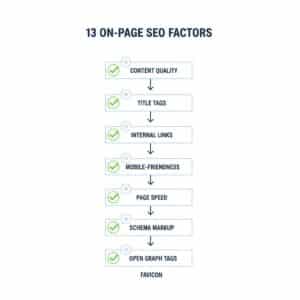
Factors You Need To Know
Let’s break down the most important on-page SEO factors that can make or break your performance.
1. High-Quality, Helpful Content
Content quality is the foundation. Your content must be:
- Relevant to the query
- Accurate and updated
- Easy to understand
- Deep enough to satisfy the topic
- Better than competitors (not just “different”)
Helpful content answers questions, gives examples, provides steps, and reduces confusion.
2. Search Intent Alignment
Search intent is one of the biggest ranking levers today. Always ask:
- Why is the user searching this?
- What outcome do they want?
- What format is best for their needs?
If you write a long educational guide but users want quick pricing or a list, you’ll lose rankings.
3. Keyword Placement and Topic Coverage
On-page SEO still involves keyword strategy, but it’s no longer about repeating the same keyword everywhere.
A well-optimized page naturally includes:
- Primary keyword in key places
- Related terms and variations
- Supporting subtopics that complete the topic
4. Title Tag Optimization
Your title tag is one of the strongest ranking and CTR signals. It’s also the first impression in search results.
5. Meta Description Optimization
Meta descriptions don’t directly “rank” a page, but they strongly influence clicks. More clicks can mean more traffic and stronger performance signals over time.
6. Header Tag Structure (H1, H2, H3)
Headers improve readability and organization. They also help search engines understand:
- The page topic
- The subtopics
- The hierarchy of information
7. Internal Linking Strategy
Internal links guide crawlers and users across your website. They help distribute authority and improve indexing.
8. External Links for Trust and Context
External links (to credible sources) build trust and provide context, especially for data-based content.
9. URL Structure
A clean URL is easier to crawl and understand. Ideally, it should be:
- Short
- Descriptive
- Keyword-relevant
- Free from unnecessary parameters
10. Image Optimization
Optimized images improve load speed and accessibility. They also help you rank in image-based discovery platforms.
11. Page Speed and Performance
Even the best content can struggle if the page loads slowly.
12. Mobile Usability
Your pages must be easy to read and navigate on smartphones.
13. Content Freshness and Updating
Updating pages regularly keeps them competitive.
Chapter 2: How To Apply E-E-A-T To Your Site & Boost On-Page SEO

E-E-A-T stands for:
- Experience
- Expertise
- Authoritativeness
- Trustworthiness
This is not a single ranking factor, but it influences how search engines assess quality.
How to Improve E-E-A-T Signals
Here are practical ways:
Add real experience to content
Include:
- Personal testing results
- Screenshots or walkthroughs
- Examples from real projects
- Case studies
Showcase expertise
Add:
- Author bios
- Credentials and background
- Clear explanations and references
Build authority
Authority grows when other pages and sites reference you, but on-page authority can also be improved by:
- Strong internal linking
- Content depth
- Consistent topical coverage
Improve trust elements
Trust signals include:
- Accurate information
- Clear contact details
- Transparent business details
- Updated content
Many on page SEO services prioritize E-E-A-T improvements because they raise the overall quality perception of a site, especially in competitive industries.
Chapter 3: Title Tag Optimization (Complete How-To)
Your title tag is your page headline inside search results.
Best practices for title tags:
- Include the primary keyword naturally
- Keep it clear and specific
- Make it benefit-driven
- Avoid keyword stuffing
- Use numbers and clarity when appropriate
Examples of strong title tags:
- “On-Page SEO Checklist: 15 Steps to Improve Rankings”
- “Complete Guide to On-Page SEO for Beginners”
A title tag should do two jobs:
- Explain what the page is about
- Persuade the searcher to click
Chapter 4: How To Create Awesome Meta Descriptions
Meta descriptions are short previews of your page.
A strong meta description should:
- Summarize the value of the page
- Match search intent
- Encourage clicks with a clear benefit
- Include the keyword naturally
Example format:
“Learn how to optimize titles, headers, internal links, and content with this complete on-page SEO guide. Improve rankings, traffic, and conversions.”
Meta descriptions are a key focus area in most on page SEO services, because even a small improvement in CTR can create significant growth over time.
Chapter 5: 12 Headline Writing Tips To Drive Traffic & Clicks
Your headline (H1) is the first thing users see on the page.
A good headline should:
- Match what the user searched for
- Be specific, not vague
- Set expectations clearly
- Make the page feel worth reading
A strong H1:
“The Complete Guide to On-Page SEO: Best Practices That Work”
A weak H1:
“SEO Tips You Should Know”
One is clear, the other is generic.
Chapter 6: How To Use Header Tags (SEO Best Practices)
Header tags organize your page like a book.
Best practices:
- Use one H1 per page
- Use H2 for main sections
- Use H3 for subsections
- Keep headers descriptive and helpful
- Include keywords naturally when relevant
Headers help search engines interpret topic coverage and allow users to skim and still find what they need.
Chapter 7: SEO Writing (Top Tips to Master the Art)
SEO writing is not “writing for Google.” It’s writing content that:
- Answers real questions
- Uses clear structure
- Stays focused on intent
- Includes relevant terms naturally
Practical SEO writing tips:
- Use short paragraphs
- Add examples and steps
- Avoid fluff
- Write in simple language
- Use lists where helpful
- Support claims with facts when needed
The most important rule is: make it useful.
Chapter 8: Keyword Cannibalization (How to Identify and Fix It)
Keyword cannibalization happens when multiple pages compete for the same keyword.
This can cause:
- Ranking instability
- Lower CTR
- Confused search engines
- Weaker authority signals
How to fix cannibalization:
- Merge similar pages
- Redirect old pages
- Re-optimize each page for a different intent
- Strengthen internal linking structure
This is a common problem discovered in audits done through on page SEO services, especially on older websites with years of content.
Chapter 9: Internal and External Links That Drive Clicks and Conversions
Internal linking best practices:
- Link to relevant pages naturally
- Use descriptive anchor text
- Add links in high-visibility sections
- Build topic clusters with supporting pages
External linking best practices:
- Link to credible sources
- Use external links to support facts
- Avoid linking to low-quality pages
Links improve user experience and add context. They also encourage deeper browsing, which supports engagement.
Chapter 10: How To Do a Content Audit (Ultimate Checklist)
A content audit helps you understand what’s working and what’s holding you back.
What to check in an audit:
- Pages with traffic declines
- Thin content
- Outdated pages
- Duplicate or overlapping topics
- Pages with high impressions but low clicks
- Pages with strong traffic but low conversions
Common audit actions:
- Update and improve content
- Merge similar pages
- Remove low-quality pages
- Refresh titles and meta descriptions
- Improve internal links
A proper content audit is one of the most valuable services included in professional on page SEO services.
Chapter 11: 12 Important Image SEO Tips
Images make content easier to consume, but they also create technical load if not optimized.
Image SEO best practices:
- Compress images without losing quality
- Use descriptive file names
- Add accurate alt text
- Avoid uploading huge image files
- Use responsive images for mobile
- Ensure images support the content
Image optimization improves speed, accessibility, and user experience.
On-Page SEO Is a Continuous Process
A common mistake is thinking on-page SEO ends when a page is published.
In reality, the best SEO teams:
- Update content regularly
- Improve on-page structure
- Refresh older content
- Monitor changing search intent
- Improve CTR using titles and meta descriptions
This is why on-page SEO is one of the best long-term investments for any business focused on organic growth.
FAQs
What is on-page SEO?
On-page SEO is the practice of optimizing webpages to improve rankings and earn organic traffic. It includes optimizing content, HTML tags, links, images, and page structure so search engines and users can better understand the page.
Why is on-page SEO important?
On-page SEO helps search engines evaluate relevance and quality. It also improves user experience, increases CTR, and supports higher rankings over time.
Are on page SEO services worth it?
Yes, especially if your website has multiple pages, inconsistent optimization, or competitive keywords. Professional on page SEO services usually include audits, content improvements, technical fixes, and CTR optimization.
What is the most important part of on-page SEO?
The most important part is creating content that matches search intent and delivers real value. Without helpful content, other optimizations have limited impact.
How often should on-page SEO be updated?
Ideally, review key pages monthly and update important content every few months depending on competition and industry changes.
Conclusion
On-page SEO is the foundation of organic growth. It helps search engines understand your content, helps users trust your website, and improves your ability to rank consistently.
The best results come from combining strong content with clean structure, optimized titles, smart internal linking, and continuous improvement through audits and updates.
If you want long-term rankings and steady traffic growth, mastering on-page SEO is not optional—it’s essential. And for businesses that want faster, more reliable results, investing in professional on page SEO services can be the difference between stagnation and sustained growth.