


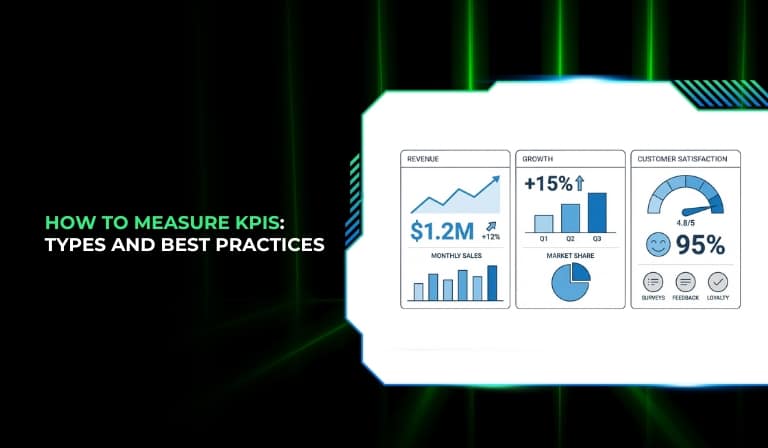
In 2026, businesses operate in an environment where decisions are increasingly driven by data rather than assumptions. As organizations adopt advanced analytics, automation, and performance-driven strategies, measuring what truly matters has become a necessity rather than an option. This is where Key Performance Indicators, commonly known as KPIs, play a crucial role.

KPIs help businesses understand whether their strategies are working, where improvements are needed, and how resources should be allocated. Without proper KPI measurement, teams risk focusing on activities that look busy but fail to deliver meaningful results. Measuring KPIs correctly enables accountability, improves performance tracking, and supports smarter decision-making across departments.
This guide explains what KPIs are, the different types businesses should track, how to set and measure them using a structured framework, and the best practices to follow in 2026. It is designed for marketing managers, business leaders, and analytics professionals who want a clear and practical understanding of KPI measurement.
What Are KPIs?
KPIs, or Key Performance Indicators, are measurable values that show how effectively an organization is achieving its most important business objectives. They act as performance signals, helping teams evaluate progress toward specific outcomes rather than vague goals.
KPIs are often confused with metrics and goals, but they serve different purposes. Goals describe what you want to achieve, metrics measure activities or outputs, and KPIs focus only on the most critical measurements tied directly to business success. Not every metric qualifies as a KPI.
In 2026, KPIs are especially important because businesses operate in highly competitive and fast-changing markets. Well-defined KPIs help organizations prioritize efforts, allocate budgets efficiently, and respond quickly to performance changes. They also support transparency and accountability by making expectations and results visible to stakeholders.
Common misconceptions include tracking too many KPIs, using generic KPIs without context, or treating KPIs as static numbers that never change. In reality, effective KPIs evolve with business strategy and market conditions.
When used correctly, KPIs guide growth by highlighting what is working, identifying gaps, and enabling data-backed decisions that improve overall performance.
Types Of KPIs Every Business Should Track
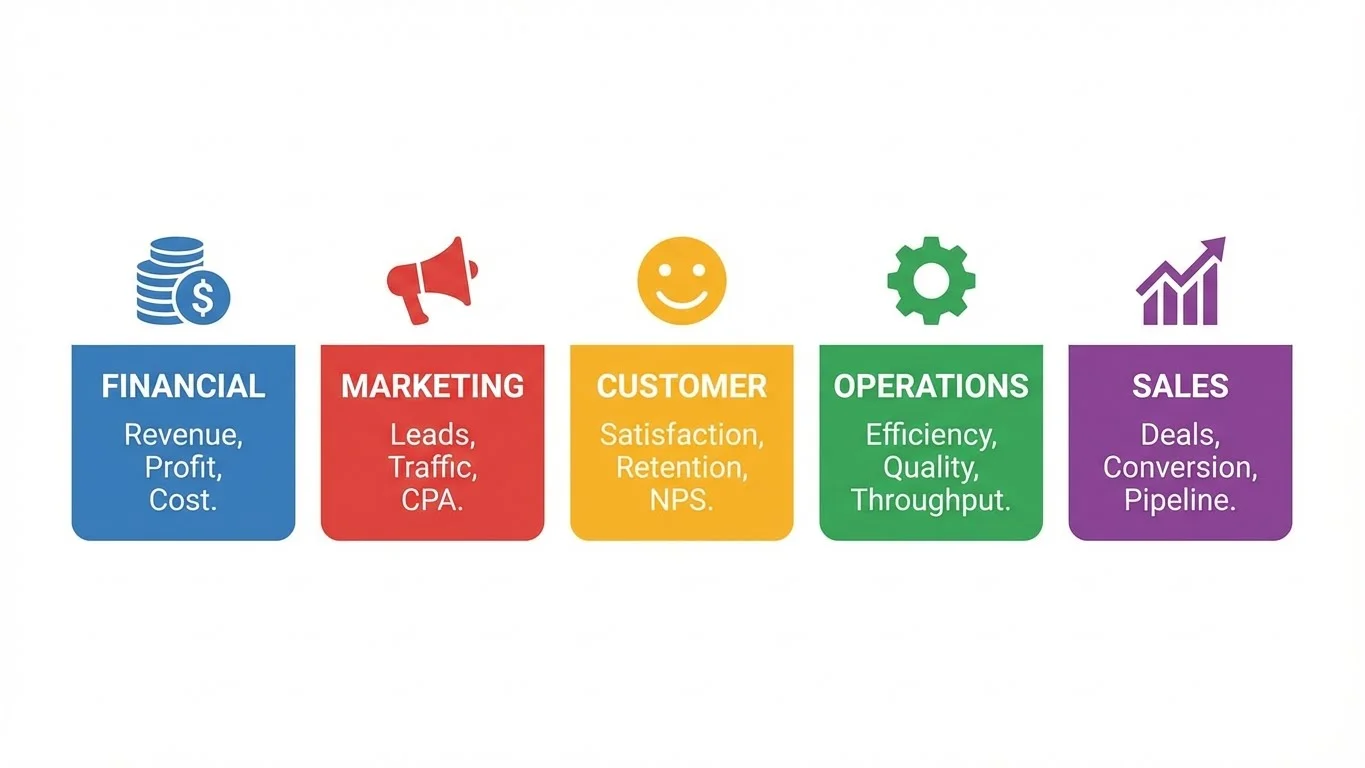
Different business functions require different KPIs. Tracking the right types ensures a balanced view of performance across financial health, marketing impact, customer experience, operations, and sales.
1. Financial KPIs
Financial KPIs measure the monetary performance of a business and are often the primary focus for executives and leadership teams. These indicators reflect profitability, efficiency, and long-term sustainability.
Common financial KPIs include:
- Revenue growth rate
- Profit margin
- Customer lifetime value (CLV)
- Return on Investment (ROI)
- Cost per acquisition (CPA)
These KPIs matter because they directly show whether the business is generating value from its activities. Financial KPIs help leaders assess risk, forecast growth, and make strategic investment decisions.
2. Marketing KPIs
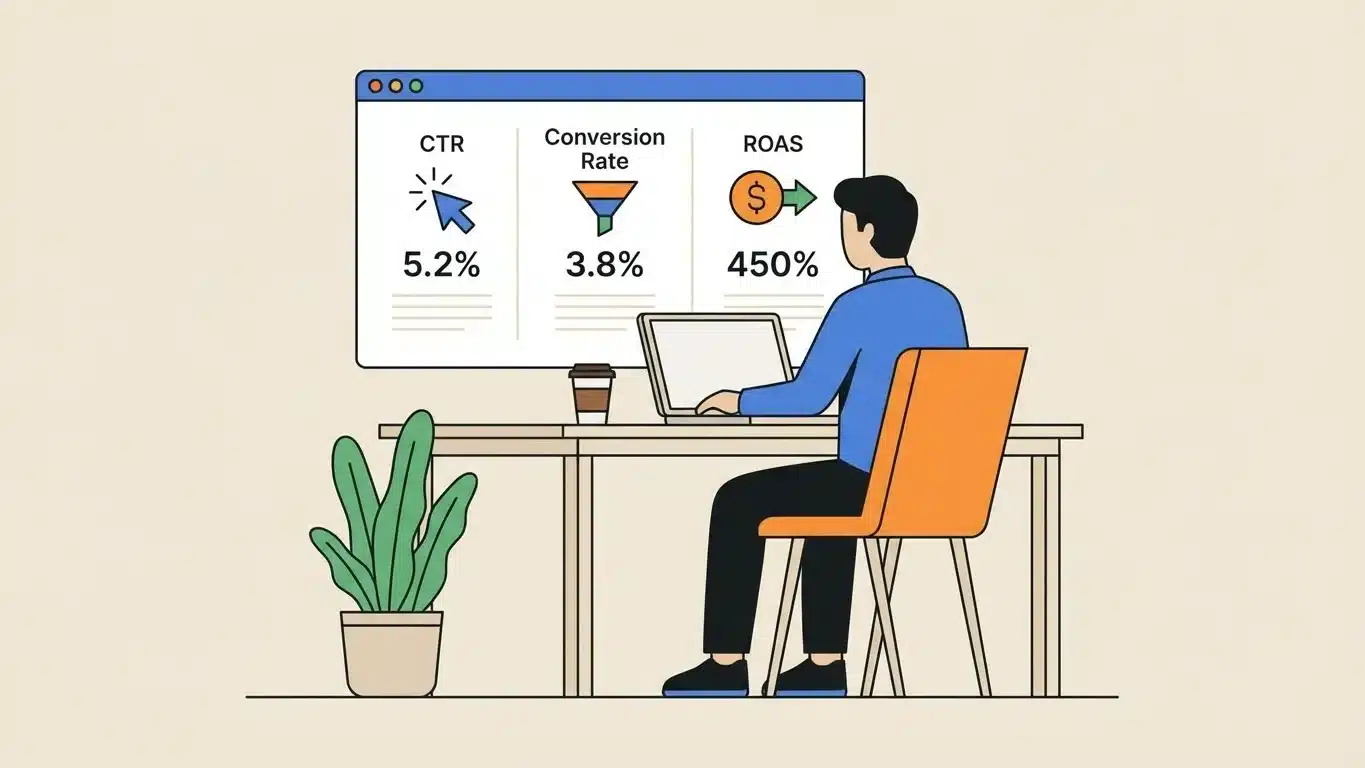
Marketing KPIs measure how effectively marketing efforts contribute to business goals such as lead generation, customer acquisition, and revenue growth. They help teams understand campaign performance and optimize spending.
Key marketing KPIs include:
- Click-through rate (CTR)
- Conversion rate
- Cost per lead (CPL)
- Marketing qualified leads (MQLs)
- Customer acquisition cost (CAC)
- Return on ad spend (ROAS)
Aligning marketing KPIs with business goals ensures that marketing efforts support revenue growth rather than focusing only on engagement or visibility.
3. Customer / Service KPIs
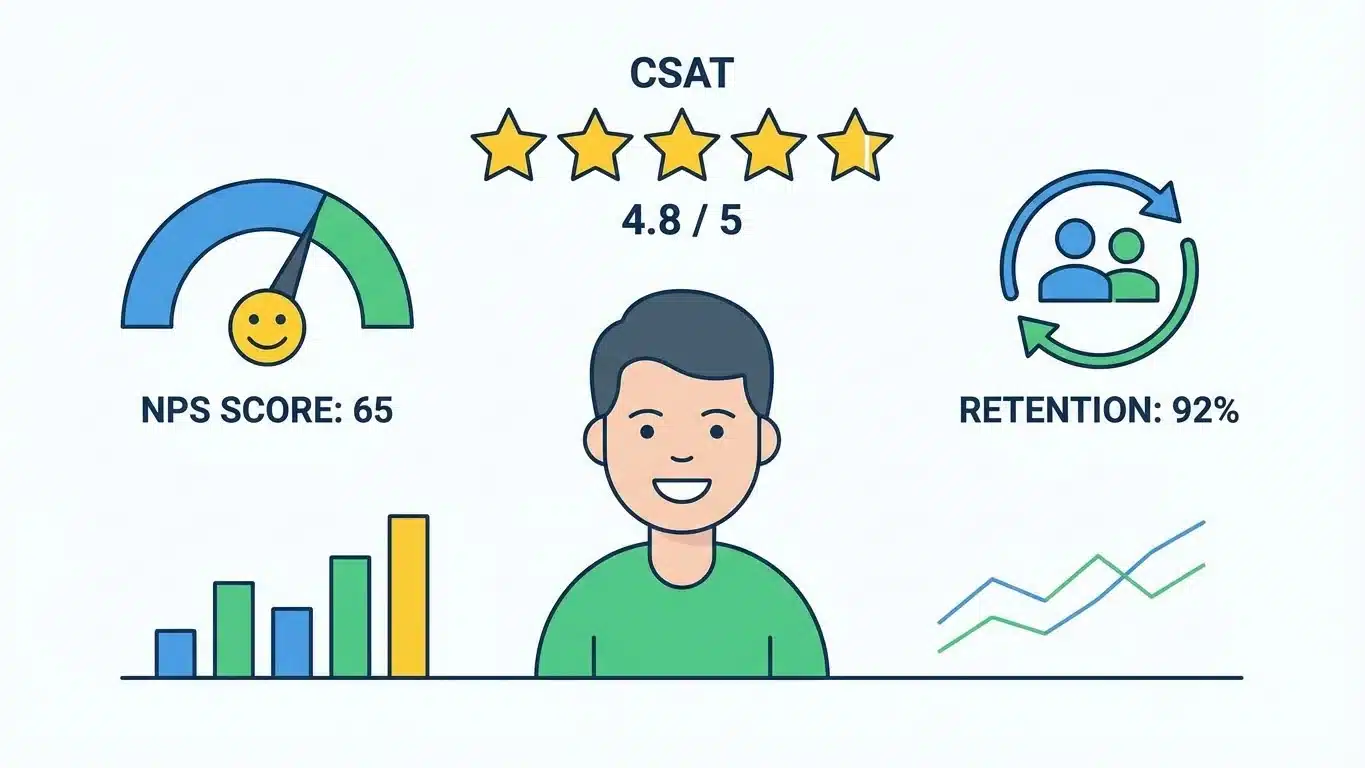
Customer and service KPIs evaluate the quality of customer experience and long-term relationship strength. These indicators are essential for retention-focused growth strategies.
Common customer KPIs include:
- Customer satisfaction score (CSAT)
- Net Promoter Score (NPS)
- Customer retention rate
- Customer churn rate
- Average response time
These KPIs matter because satisfied customers are more likely to stay, repurchase, and recommend the business, directly impacting revenue and brand reputation.
4. Operational / Process KPIs
Operational KPIs measure how efficiently a business runs its internal processes. They help identify bottlenecks, inefficiencies, and areas for improvement.
Examples of operational KPIs include:
- Employee productivity
- Project completion rate
- Quality metrics
- Efficiency ratios
- Time to market
Tracking these KPIs supports operational excellence by improving consistency, reducing waste, and enabling faster execution.
5. Sales KPIs (If Applicable)
Sales KPIs focus on the effectiveness of sales teams and processes. They provide insight into deal quality, pipeline health, and revenue predictability.
Key sales KPIs include:
- Sales conversion rate
- Average deal size
- Sales cycle length
- Win rate
- Pipeline velocity
These KPIs help sales leaders improve forecasting accuracy and identify opportunities to shorten sales cycles and increase deal value.
How To Set And Measure KPIs: Step-By-Step Framework
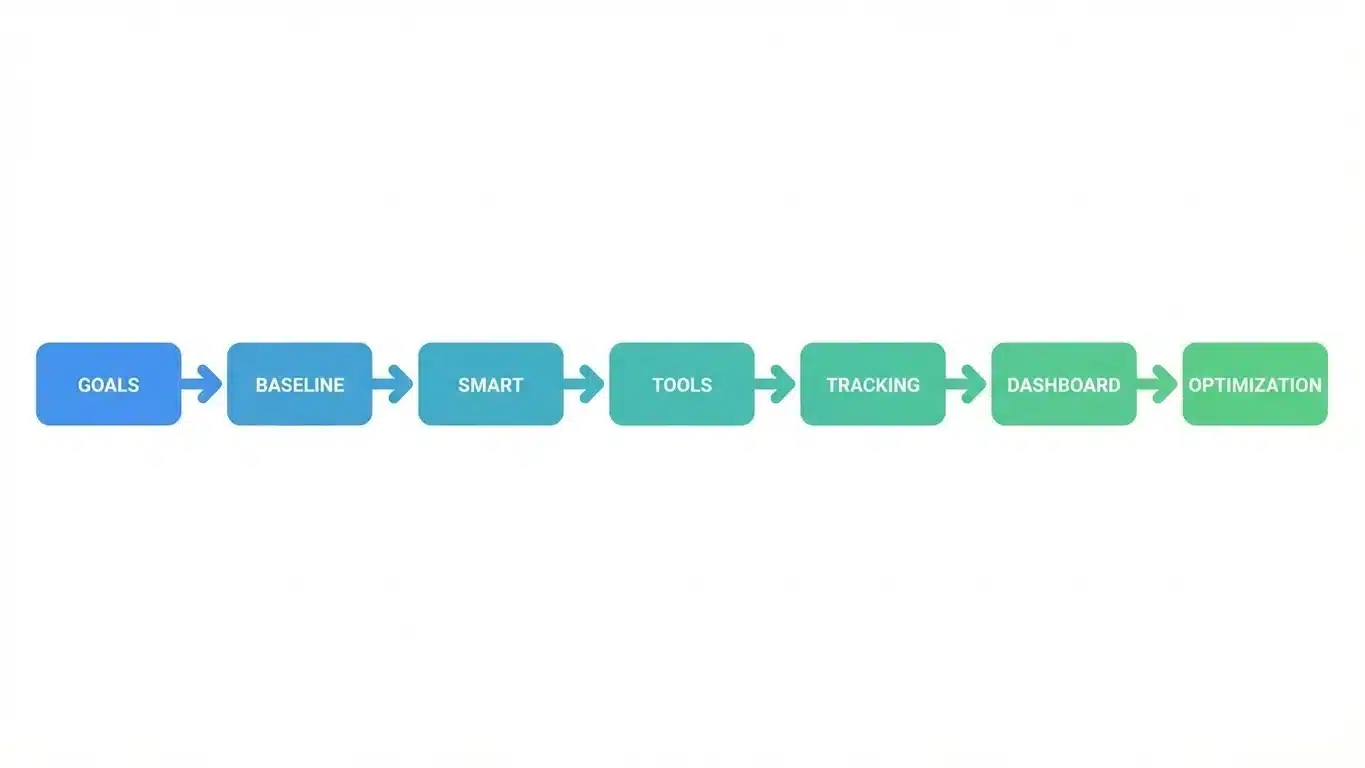
Measuring KPIs effectively requires a structured approach. Following a clear framework ensures that KPIs remain relevant, accurate, and actionable.
Step 1: Define Clear Business Objectives
Before selecting KPIs, businesses must clearly define their objectives. KPIs should always support overall strategy rather than existing in isolation.
Key considerations include:
- Aligning KPIs with organizational goals
- Defining what success looks like
- Ensuring KPIs support long-term priorities
Without clear objectives, KPI measurement loses direction and meaning.
Step 2: Know Your Baseline Metrics
Baseline metrics represent current performance levels and provide context for future improvement. Understanding where you stand helps set realistic and meaningful targets.
This step involves:
- Reviewing historical performance data
- Identifying trends and patterns
- Comparing performance against industry benchmarks when available
Baselines prevent unrealistic expectations and support accurate progress tracking.
Step 3: Use the SMART Method
The SMART framework ensures that KPIs are practical and effective.
SMART KPIs are:
- Specific: Clearly defined and focused
- Measurable: Quantifiable and trackable
- Achievable: Realistic based on resources and constraints
- Relevant: Directly tied to business objectives
- Time-bound: Measured within a defined timeframe
Using SMART criteria improves clarity and accountability.
Step 4: Choose the Right Tools and Software
KPI measurement depends on reliable tools that collect and analyze data accurately. Tool selection should match business needs and technical capabilities.
Common considerations include:
- Compatibility with existing systems
- Real-time versus scheduled reporting needs
- Cost versus value of the platform
Popular KPI tools include Google Analytics 4, HubSpot, and Tableau.
Step 5: Establish Measurement and Tracking Methods
Clear tracking processes ensure consistency and reliability in KPI measurement.
Important elements include:
- Defining how often KPIs are measured
- Assigning ownership and responsibility
- Setting data quality and accuracy standards
This step reduces confusion and improves trust in reported results.
Step 6: Create Dashboards and Reporting Systems
Dashboards translate raw data into visual insights that are easy to understand and act upon.
Effective dashboards include:
- Clear visual representations of KPIs
- Automated reporting schedules
- Controlled access for stakeholders
- Alerts for performance changes or thresholds
Dashboards help decision-makers respond quickly to trends and issues.
Step 7: Monitor, Analyze, and Adjust
KPI measurement is an ongoing process. Regular monitoring ensures KPIs remain aligned with business needs.
This step involves:
- Reviewing KPIs weekly or monthly
- Analyzing trends rather than isolated numbers
- Identifying root causes of performance changes
- Adjusting strategies based on insights
Continuous improvement ensures KPIs remain useful and relevant.
Best Practices For Measuring KPIs In 2026
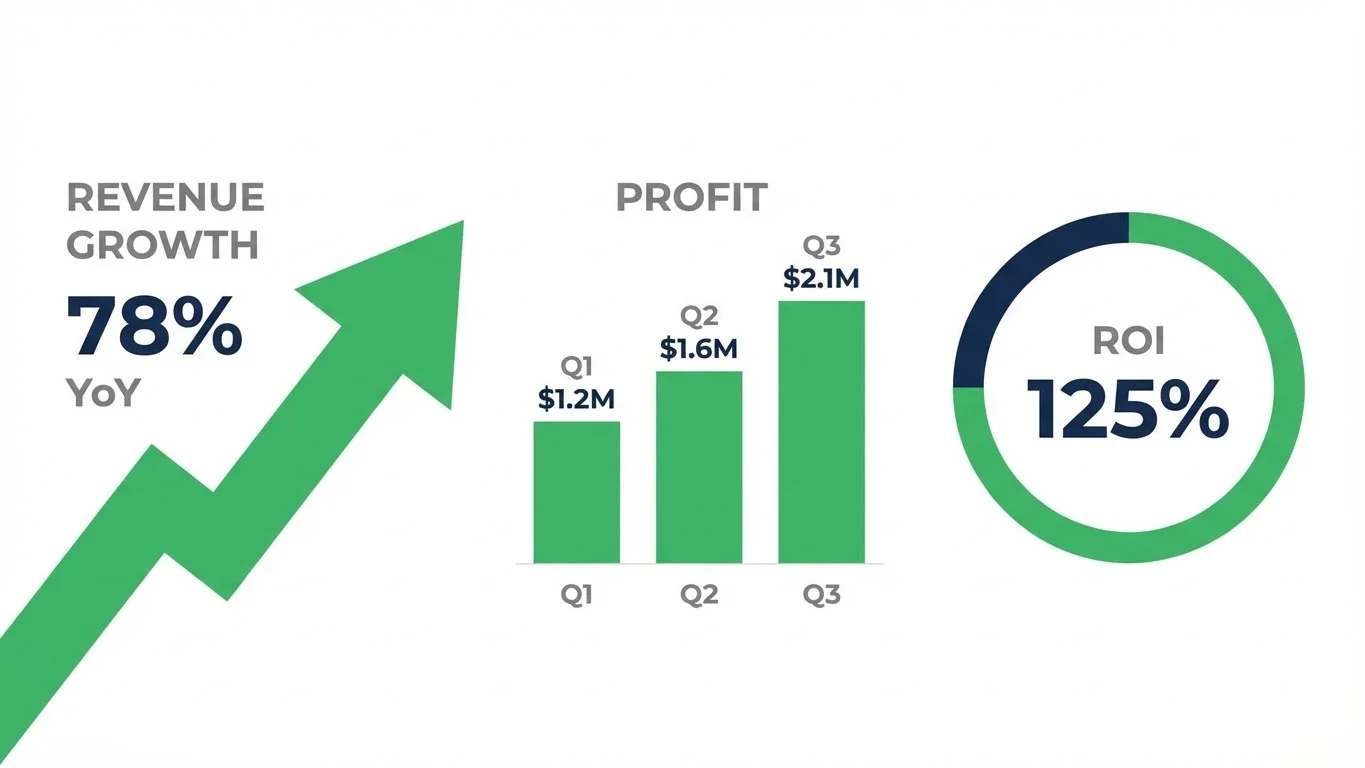
As technology and business models evolve, KPI measurement practices must also adapt.
1. Technology and Automation
Automation improves accuracy and efficiency in KPI tracking.
Best practices include:
- Automating data collection and reporting
- Integrating multiple data sources
- Using cloud-based platforms for accessibility
Automation reduces manual errors and saves time.
2. Data Quality and Accuracy
Reliable KPIs depend on high-quality data.
Key practices include:
- Implementing data governance standards
- Regular audits of tracking systems
- Cleaning and validating data consistently
Poor data quality undermines decision-making.
3. Communication and Transparency
KPIs should be visible and understandable across teams.
Effective communication includes:
- Sharing KPI results regularly
- Making data accessible to stakeholders
- Encouraging accountability through transparency
Clear communication aligns teams around shared goals.
4. Flexibility and Adaptation
KPIs should evolve as business priorities change.
Best practices include:
- Reviewing KPIs quarterly
- Adjusting KPIs during market or strategy shifts
- Avoiding vanity metrics that lack business impact
Flexibility keeps KPIs relevant.
5. Balanced Scorecard Approach
A balanced approach ensures no single metric dominates decision-making.
This involves:
- Tracking financial, customer, internal process, and learning metrics
- Balancing leading and lagging indicators
- Maintaining a holistic view of performance
Balanced scorecards support sustainable growth.
6. Benchmarking Against Industry Standards
Benchmarking provides context for performance evaluation.
Key activities include:
- Comparing KPIs with industry averages
- Identifying performance gaps
- Setting achievable yet aspirational targets
Benchmarking helps define competitive positioning.
Tools And Platforms For KPI Measurement
Different tools support different measurement needs.
1. Analytics Platforms
Analytics tools track user behavior and performance data.
Common platforms include:
- Google Analytics 4
- Adobe Analytics
- Mixpanel
2. Business Intelligence Tools
BI tools focus on data visualization and analysis.
Popular options include:
- Tableau
- Power BI
- Looker
3. CRM and Marketing Automation
CRM platforms integrate customer and marketing data.
Common tools include:
- HubSpot
- Salesforce
- ActiveCampaign
- Marketo
4. Industry-Specific Solutions
Some businesses require specialized KPI tools, such as:
- E-commerce performance platforms
- SaaS metrics tools
- Content marketing analytics solutions
These tools address industry-specific measurement needs.
Conclusion
Measuring KPIs in 2026 is no longer about tracking numbers for reporting purposes. It is about understanding performance, improving decision-making, and driving sustainable growth. By selecting the right types of KPIs, using a structured measurement framework, and following best practices, businesses can turn data into actionable insights.
A thoughtful approach to KPI measurement enables organizations to stay competitive, adapt to change, and focus on what truly drives success. Starting with clear objectives and continuously refining KPIs ensures long-term value from performance measurement efforts.

Passionate about blogging and focused on elevating brand visibility through strategic SEO and digital marketing. Always tuned in to the latest trends, I’m dedicated to maximizing engagement and delivering measurable ROI in the dynamic world of digital marketing. Let’s connect and unlock new opportunities together!