


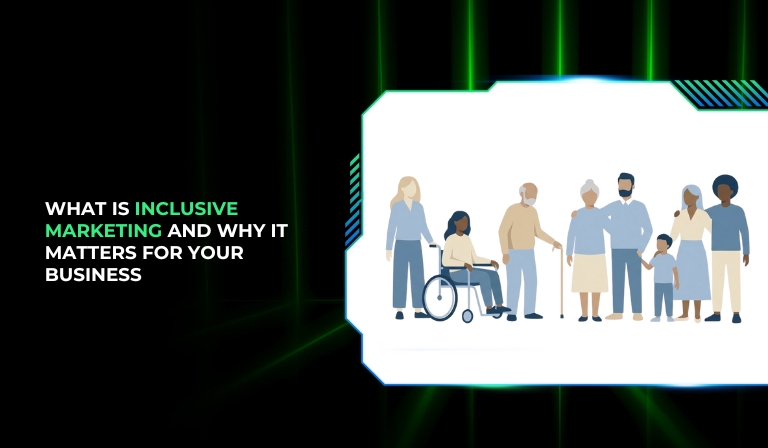
Modern consumers expect more from brands than just good products or services. They want to see themselves represented, respected, and understood. Research consistently shows that diverse and inclusive marketing influences how people perceive brands and whether they choose to support them. Inclusive marketing is no longer a “nice-to-have” concept—it is a business necessity in today’s global and diverse marketplace.

Inclusive marketing focuses on representing and serving people of different identities, abilities, cultures, and backgrounds in a genuine way. For businesses, this approach helps build trust, expand audience reach, and create long-term loyalty. Inclusive marketing is essential for building credibility, strengthening brand relationships, and driving sustainable business growth.
In this blog, we will clearly define inclusive marketing, explain why it matters for your business, explore data-backed insights, outline how to implement an inclusive marketing strategy, highlight real-world examples, and identify common mistakes to avoid.
What Is Inclusive Marketing?
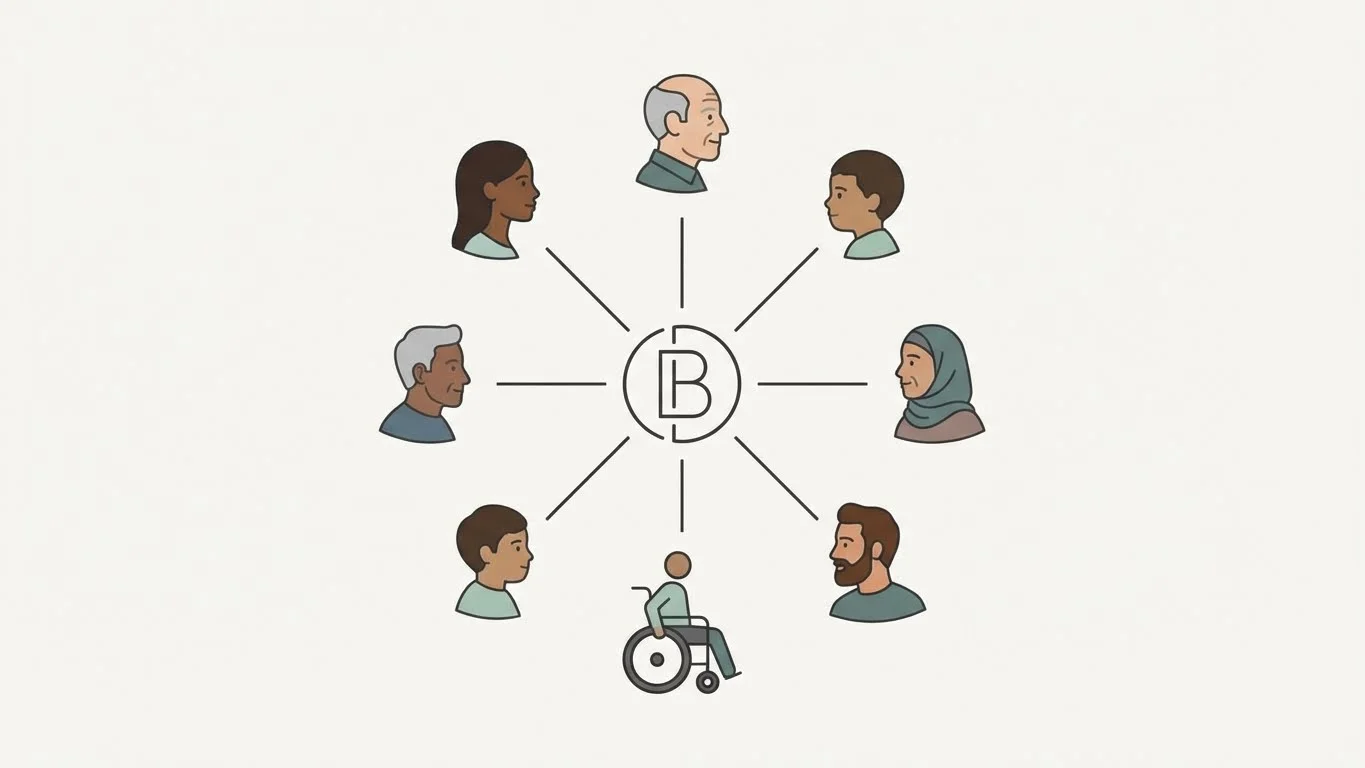
Inclusive marketing is a strategic approach to marketing that ensures people from diverse backgrounds feel seen, respected, and valued in brand communications. It includes representation across dimensions such as disability, gender, age, ethnicity, socio-economic status, religion, sexual orientation, and body type.
At its core, inclusive marketing goes beyond surface-level diversity. It focuses on creating a genuine sense of belonging and recognition rather than symbolic or token representation. Authenticity is the foundation of inclusive marketing, meaning brands must understand the communities they represent and communicate with honesty and respect.
Key ideas behind inclusive marketing include:
- Representing real people and real experiences
- Ensuring messages resonate with diverse audiences
- Designing content that is accessible and understandable to everyone
How It Differs from Traditional Marketing
Traditional marketing often relies on broad, one-size-fits-all messaging designed for a narrow “average” customer. This approach can unintentionally exclude or overlook large segments of the population.
Inclusive marketing, on the other hand:
- Segments audiences more thoughtfully
- Tailors messaging to reflect different identities and experiences
- Focuses on meaningful representation rather than generic visuals
- Avoids stereotypes and oversimplified narratives
Instead of speaking at audiences, inclusive marketing aims to speak with them.
Key Principles of Inclusive Marketing
Inclusive marketing is guided by several core principles that ensure it is genuine and effective:
- Authenticity
Understanding why inclusion matters to your brand and avoiding performative or publicity-driven actions. - Diverse voices from the ground up
Involving people from different communities early in campaign planning, not just at the execution stage. - Accessibility
Ensuring content can be used and understood by people with disabilities through captions, alt text, and clear design. - Clear communication
Using simple, jargon-free language that is easy for diverse audiences to understand. - Cultural sensitivity
Respecting cultural differences and avoiding assumptions or stereotypes.
Why Inclusive Marketing Matters for Your Business

Consumer Demand and Brand Perception
Consumer expectations have changed significantly. People increasingly evaluate brands based on their values and how well they reflect real-world diversity. Studies show that inclusive marketing strongly influences brand perception and purchasing decisions.
Key consumer insights include:
- A majority of consumers say inclusive marketing affects how they view a brand
- Brands with strong diversity scores see significantly higher consumer preference
- Consumers are more loyal to brands that demonstrate commitment to diversity and inclusion
- Audiences expect authenticity, not scripted or symbolic representation
When people feel represented, they are more likely to trust and support a brand.
Business Benefits of Inclusive Marketing
Inclusive marketing delivers measurable business advantages when implemented correctly:
- Broader audience reach
Inclusive messaging helps brands connect with underserved or overlooked markets. - Increased brand loyalty
Representation builds emotional connections, which leads to long-term loyalty. - Better brand reputation
Demonstrates responsibility, fairness, and social awareness. - Higher engagement levels
Campaigns that reflect diverse experiences tend to generate more interaction. - Positive word-of-mouth
Inclusive campaigns encourage sharing and community advocacy. - Competitive advantage
Brands that embrace inclusion stand out in crowded markets.
Avoiding Brand Pitfalls
Failing to practice inclusive marketing can expose brands to several risks:
- Backlash from tone-deaf or culturally insensitive campaigns
- Public criticism amplified through social media
- Lost opportunities in growing and diverse markets
- Damage to long-term brand credibility
Internal Business Benefits
Inclusive marketing also benefits organizations internally:
- Improved employee morale and job satisfaction
- Higher retention rates
- Stronger company culture rooted in shared values
- Employees become more confident advocates for the brand
The Business Case: Statistics and Consumer Insights
Key Statistics on Consumer Behavior
Data strongly supports the impact of inclusive marketing on consumer behavior:
- A majority of consumers state that inclusive or diverse marketing influences brand perception
- Brands with high diversity scores experience significantly higher consumer preference
- Consumers are more likely to act on ads they perceive as inclusive
- Brand loyalty increases when companies demonstrate commitment to diversity
- Many consumers believe advertising plays a role in shaping societal perceptions
These insights show that inclusive marketing directly affects both perception and action.
Market Opportunity
Inclusive marketing also unlocks major market opportunities:
- Over one billion people worldwide live with some form of disability, representing significant untapped potential
- Millennials and Gen Z actively prioritize authenticity, representation, and values alignment
- Diverse age groups, cultures, and abilities continue to shape global consumer markets
Businesses that fail to acknowledge this diversity risk falling behind.
How to Implement an Inclusive Marketing Strategy
Understand Your Diverse Audience
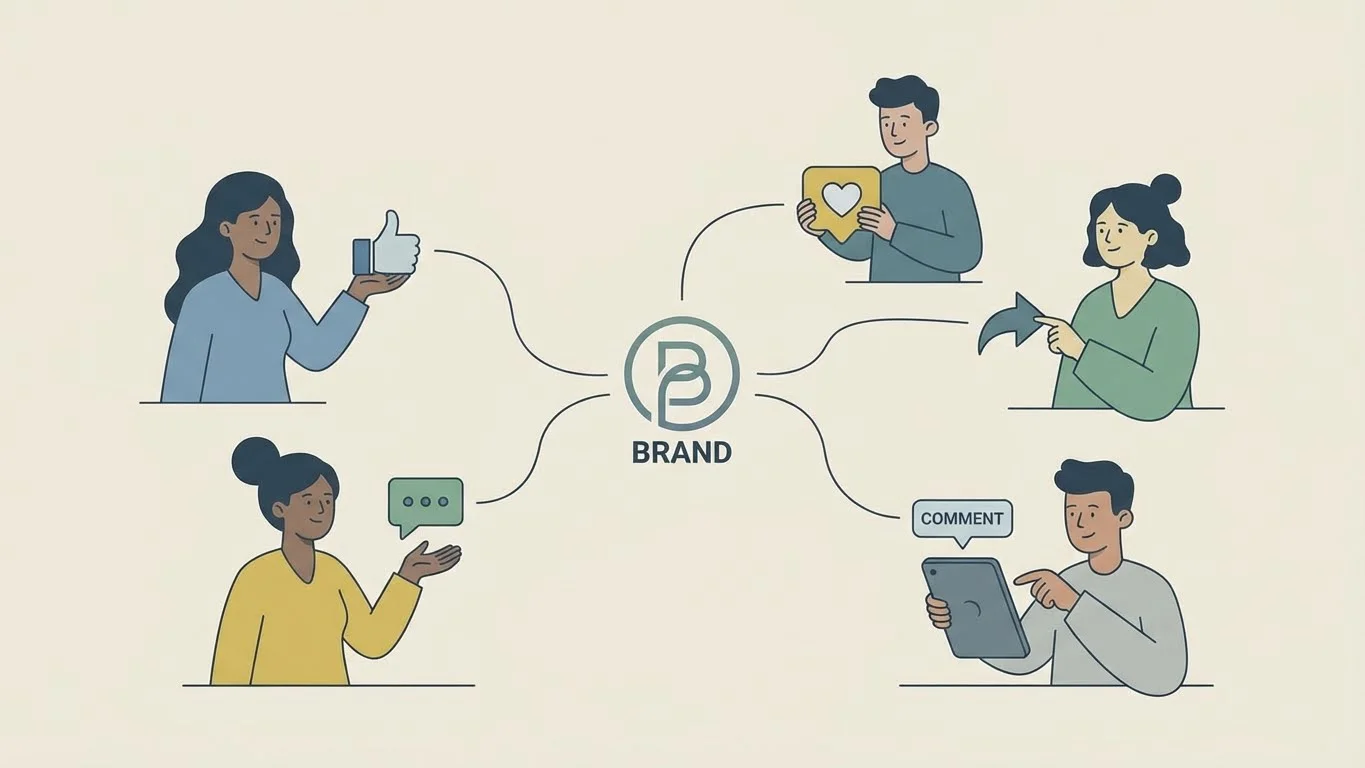
Building an inclusive strategy starts with understanding who your audience truly is:
- Conduct interviews and focus groups across diverse demographics
- Use surveys to understand inclusion expectations and preferences
- Analyze customer data and perform social listening
- Identify underrepresented segments within your audience
- Create an audience inclusion map to highlight gaps in representation
Diverse Representation in Content

Representation must reflect real people and real experiences:
- Feature diversity across race, gender, age, ability, and body type
- Avoid tokenism by telling authentic stories
- Challenge narrow beauty standards and stereotypes
- Reflect the diversity of your actual customer base
- Use real voices rather than stock portrayals
Inclusive Language and Communication
Language plays a critical role in inclusion:
- Use clear and simple language
- Apply gender-neutral terms where appropriate
- Avoid assumptions or stereotypes
- Adapt messaging for cultural differences
- Be mindful of regional and cultural nuances
Accessibility and Design Considerations
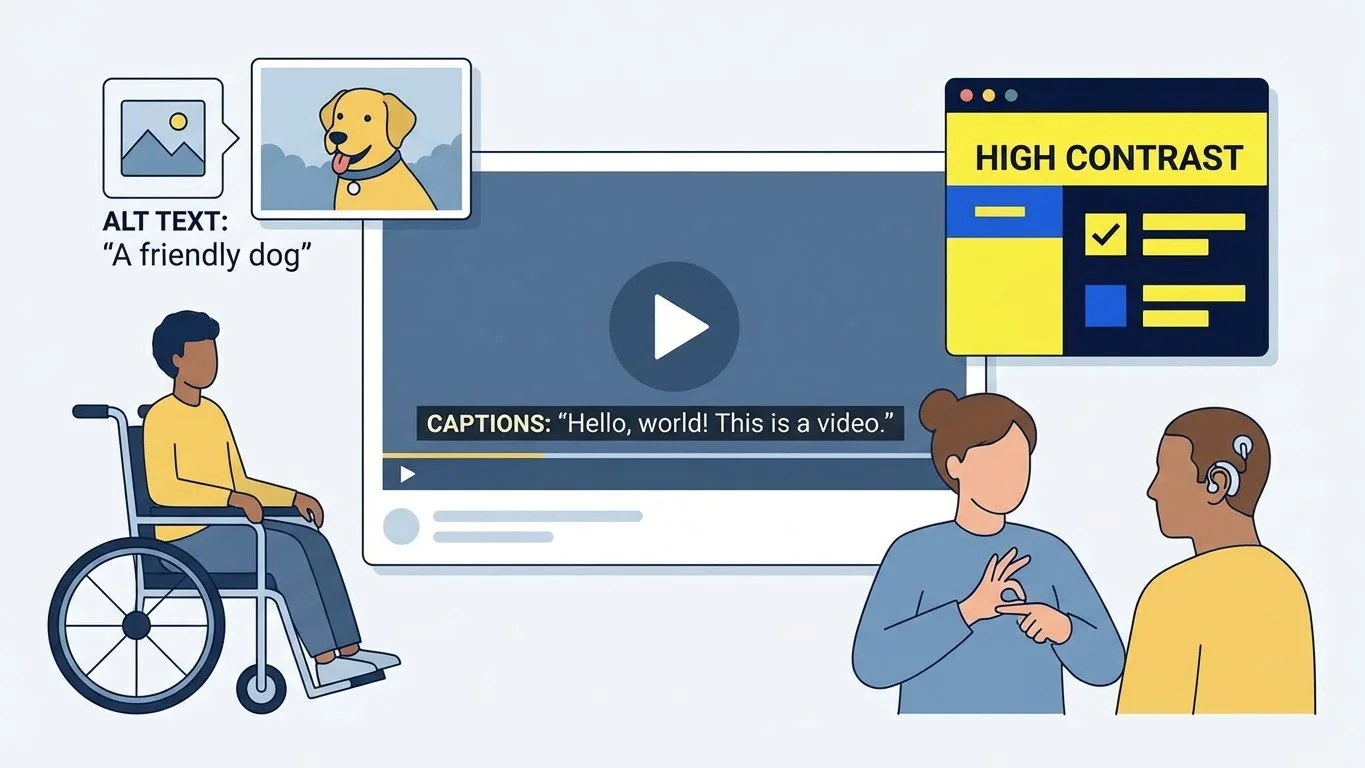
Accessibility ensures everyone can engage with your content:
- Add alt text to images and descriptive labels to buttons
- Provide captions and transcripts for multimedia content
- Ensure readable font sizes and sufficient color contrast
- Offer content in multiple formats such as text, audio, and video
- Provide multilingual support where relevant
- Follow established accessibility standards for digital content
Measurement and Continuous Improvement

Inclusive marketing requires ongoing evaluation:
- Measure engagement by audience segment
- Track accessibility-related KPIs
- Use A/B testing to compare inclusive variations
- Collect feedback from diverse customer groups
- Document learnings and refine strategies over time
- Set clear, measurable inclusion goals
Common Mistakes to Avoid
Inclusive marketing can fail if brands make avoidable mistakes:
- Tokenism: Symbolic inclusion without genuine effort
- Lack of authenticity: Representation without understanding community needs
- Overlooking accessibility: Ignoring captions, alt text, or clear language
- Cultural insensitivity: Failing to research cultural context
- One-time initiatives: Treating inclusion as a campaign rather than a strategy
- Ignoring underrepresented segments: Failing to act on unequal engagement data
Building an Inclusive Marketing Strategy
Create an Inclusive Company Culture First
Inclusive marketing starts internally:
- Authentic internal values lead to authentic external messaging
- Employees who feel included contribute better ideas
- Company culture should align with marketing communication
Engage with Diverse Communities
Long-term engagement builds trust:
- Partner with nonprofit organizations
- Support inclusion-focused events
- Facilitate educational workshops
- Build lasting relationships rather than one-off collaborations
Use Technology and Tools
Technology can support inclusion at scale:
- CRM systems for audience segmentation
- Analytics tools to understand behavior by segment
- Automation for personalized communication
- Tagging and filtering systems to track inclusion efforts
Why Inclusive Marketing Is Essential
Inclusive marketing is no longer optional for businesses:
- Consumer expectation: People expect brands to reflect their values
- Market reality: Global audiences are diverse
- Long-term success: Inclusion drives loyalty and sustained growth
- Social impact: Marketing influences societal perceptions
- Competitive necessity: Brands that ignore inclusion risk losing relevance
Conclusion
Inclusive marketing is not a trend—it is a fundamental part of modern business success. When done authentically, it helps brands build trust, reach wider audiences, strengthen loyalty, and enhance reputation. By focusing on real representation, accessibility, and continuous improvement, businesses can create marketing that resonates with both consumers and employees.
The next step for any organization is to audit existing marketing efforts, identify inclusion gaps, and commit to meaningful, long-term change. Inclusive marketing benefits businesses and society alike by creating a sense of belonging and recognition for everyone.

Passionate about blogging and focused on elevating brand visibility through strategic SEO and digital marketing. Always tuned in to the latest trends, I’m dedicated to maximizing engagement and delivering measurable ROI in the dynamic world of digital marketing. Let’s connect and unlock new opportunities together!