


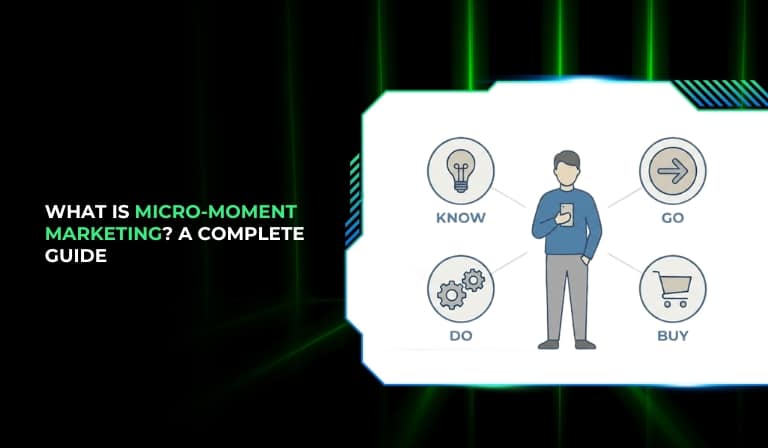
Micro-moment marketing focuses on those split-second interactions when people turn to a device, usually a smartphone, to quickly get answers, decide, or act. These moments shape preferences and purchases across industries, from local restaurants to e-commerce and B2B services, making them essential for modern digital strategies.

What Are Micro-Moments?
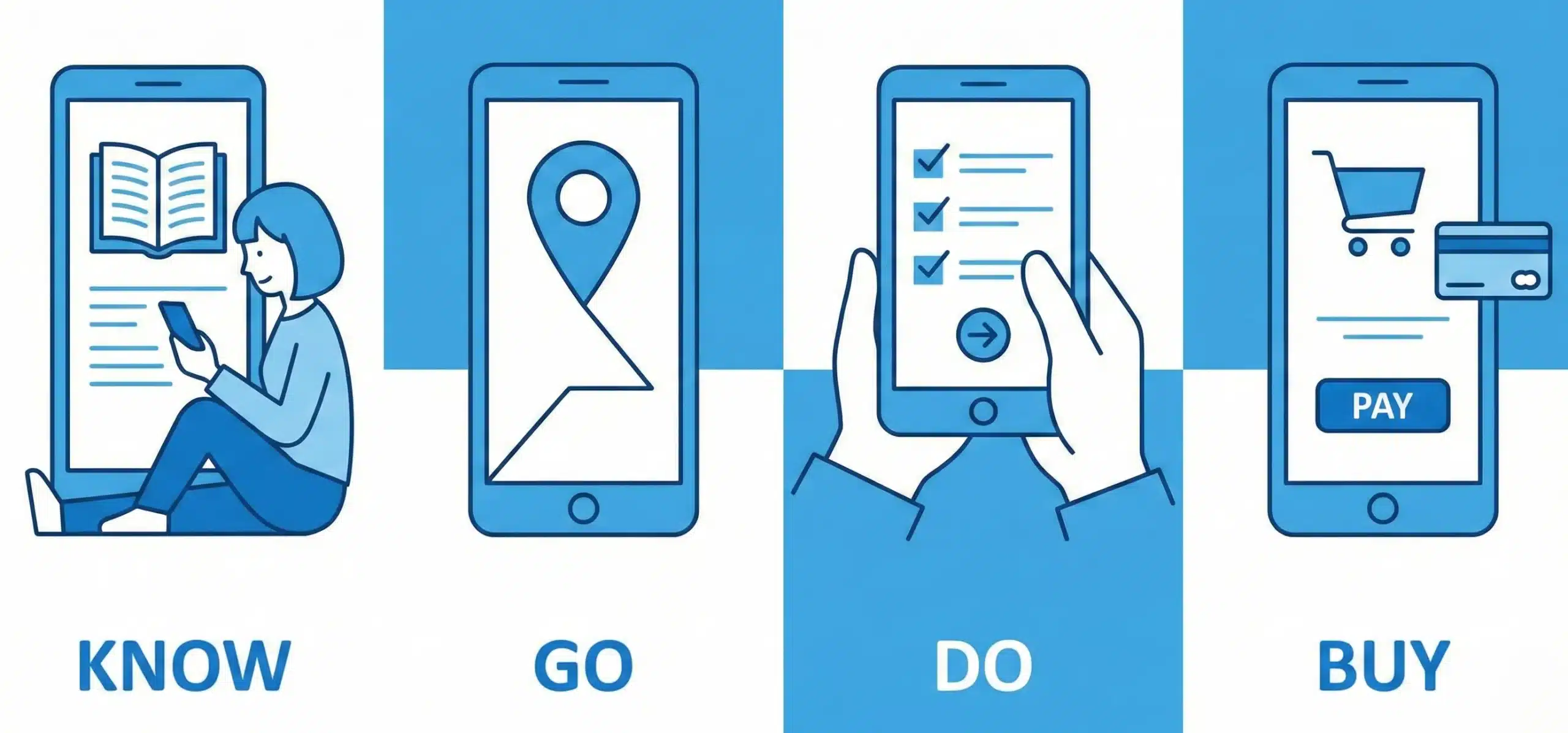
Micro-moments are brief, intent-rich interactions when users instinctively pick up a device to satisfy a specific need, such as learning, going somewhere, doing a task, or buying. They occur throughout the customer journey and often decide which brands users trust, visit, or purchase from.
Search and mobile usage data show that many of these moments happen on the go, with people expecting fast, accurate results that match their context. As a result, brands that respond with relevant, frictionless experiences gain a strong advantage in influencing decisions.
The four commonly referenced micro-moment types are:
- I-want-to-know moments, when users are exploring or researching.
- I-want-to-go moments, when they look for a nearby place or location.
- I-want-to-do moments, when they need help completing an activity or task.
- I-want-to-buy moments, when they are ready to purchase or strongly considering it.
The Growth of Micro-Moments
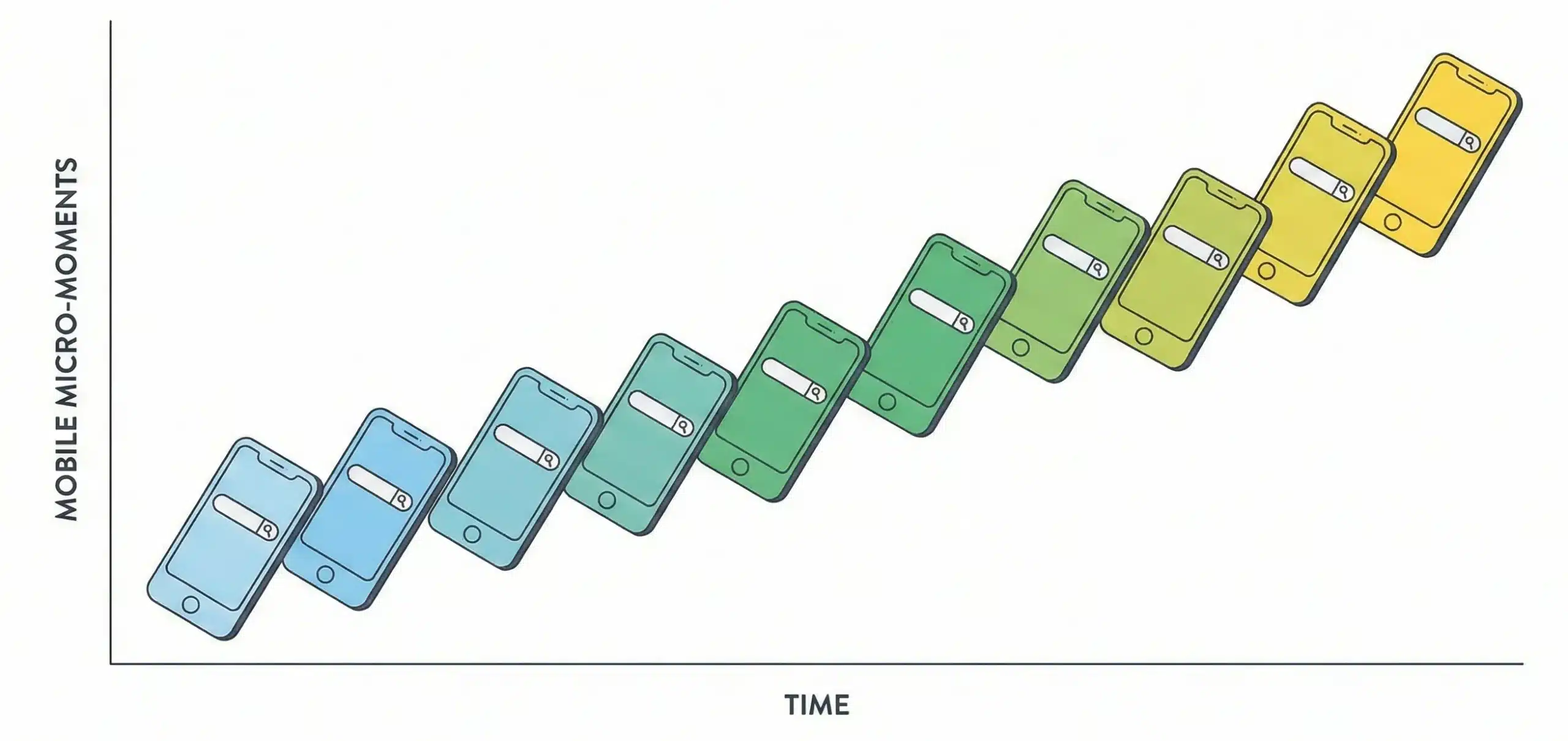
The rise of smartphones and constant connectivity has made people more likely to break their day into many small digital interactions instead of a few long sessions. In these interactions, users expect instant answers and smooth experiences, especially on mobile, and quickly abandon brands that load slowly or feel confusing.
Studies and industry analyses indicate that a large share of mobile conversions now happen in these short decision windows, which is why micro-moment optimization has become a core topic in digital marketing. As mobile search, voice assistants, and location-based queries grow, micro-moments are expected to become even more frequent in 2026.
Why Micro-Moment Marketing Matters in 2026
Shift in User Intent and Search Behavior
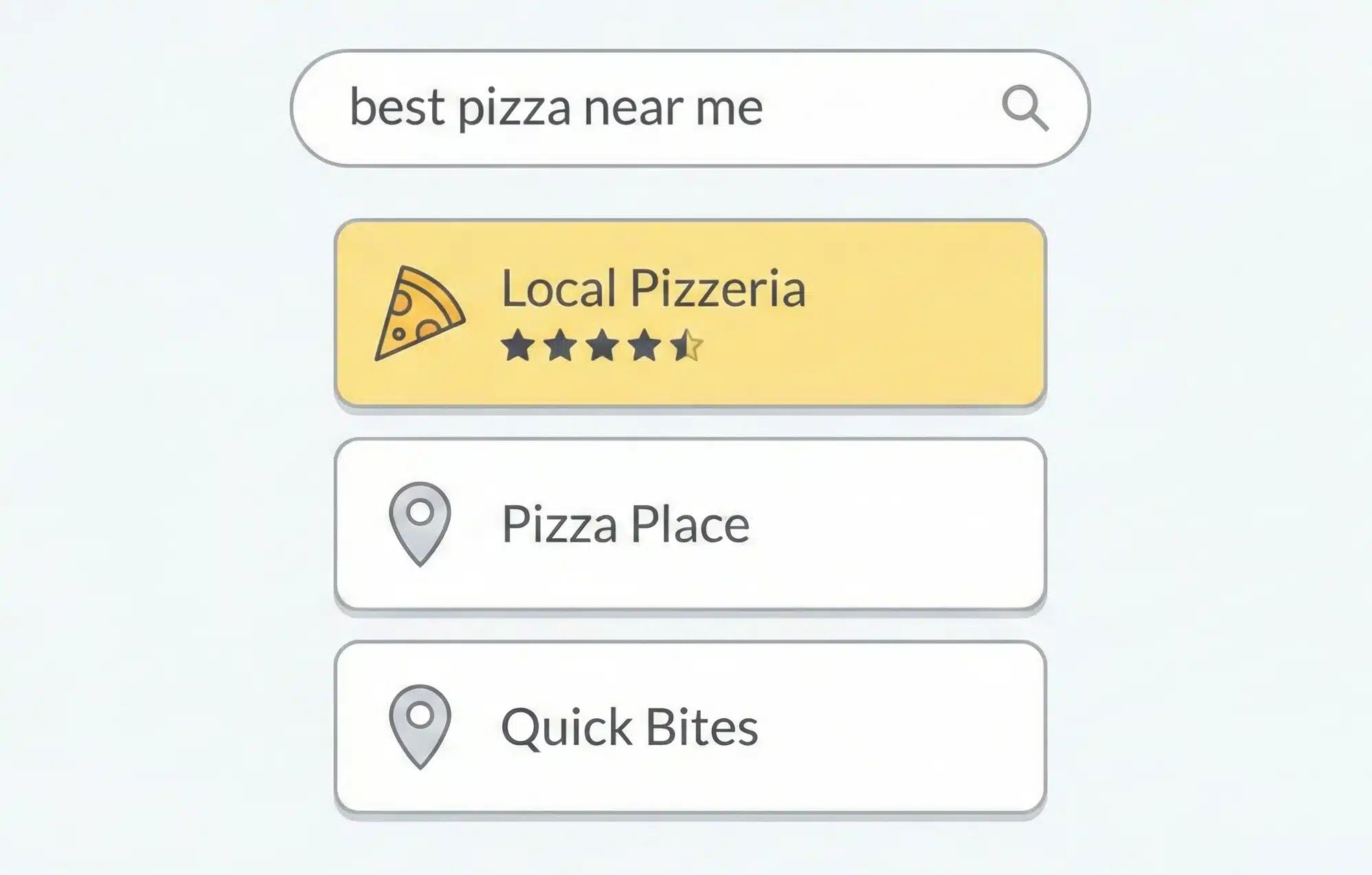
Search behavior has shifted from broad, brand-first exploration to highly specific, intent-driven queries, often including phrases like “near me,” “best,” or “how to.” Users often care less about brand names at the start and more about who gives them the fastest, clearest, and most relevant answer to their immediate need.
Because of this, micro-moment marketing directly influences engagement and conversions: the brand that shows up with the right content and experience in those moments is more likely to earn clicks, store visits, or purchases. This shift rewards businesses that understand intent and context instead of relying solely on broad awareness campaigns.
Competitive Advantages for Early Adopters
Organizations that deliberately design for micro-moments often see better performance across acquisition costs, conversion rates, and customer satisfaction. They use data to anticipate needs, streamline user paths, and connect channels, making it harder for slower competitors to catch up.
In crowded categories, micro-moment readiness—fast sites, local visibility, helpful content, and simplified flows—often becomes a differentiator that customers feel but may not consciously name. This creates a durable competitive edge, especially when combined with ongoing testing and analytics.
The Five W’s of Effective Micro-Moment Marketing
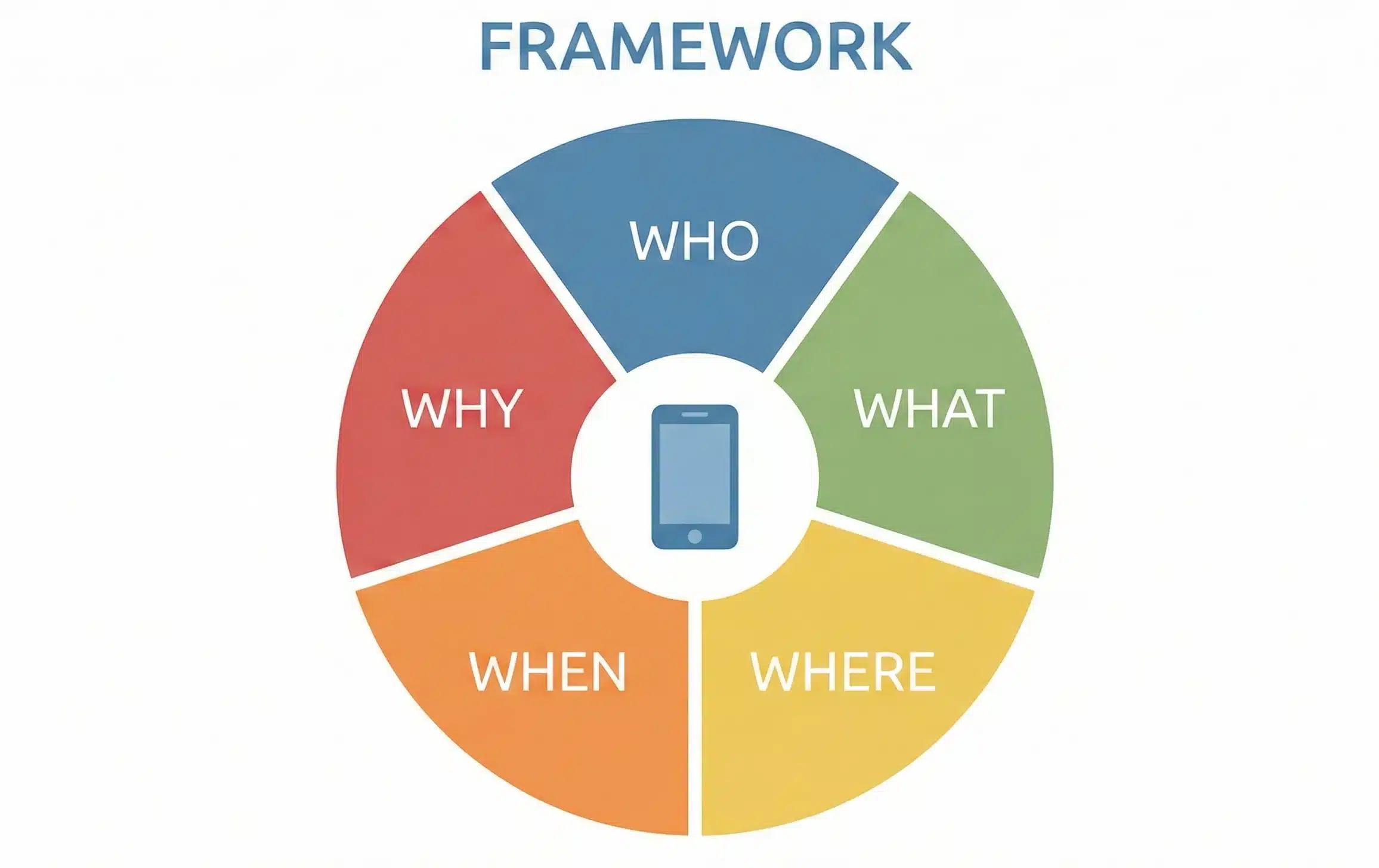
Who: Identifying & Segmenting Your Audience
This step is about understanding which audiences experience which micro-moments and what they care about in each situation. Demographics, location, device type, and behavioral signals such as past visits or purchases all help you define your “who” more precisely.
- Use analytics, CRM data, and survey insights to group customers by needs and behaviors rather than only age or location.
- Build segments around recurring micro-moment patterns, such as new researchers vs repeat buyers, or local visitors vs national searchers.
What: Aligning Content With Search Intent
The “what” focuses on matching your content and messaging to the exact intent behind each micro-moment. For example, I-want-to-know queries respond well to educational content, while I-want-to-buy queries need clear product details, pricing, and frictionless checkout.
- Map typical keywords and questions to each micro-moment type, using search data and query reports from your search and advertising tools.
- Create or refine content assets—such as how-to guides, FAQs, product pages, or local landing pages—so each one directly addresses a specific intent.
Where: Optimizing Key Touchpoints
“Where” is about where users are searching and where they land, both online and offline. Mobile search, maps, review platforms, your website, and your app can all act as entry points into a micro-moment.
- Ensure your site is mobile-friendly, fast, and easy to navigate on small screens, as most micro-moments now occur on mobile devices.
- Optimize local and business listings, such as your Google Business Profile, with accurate information, photos, and attributes so you appear in I-want-to-go and I-want-to-buy moments.
When: Timing Your Engagement
Micro-moments also follow patterns across time of day, day of week, and season, which makes timing a crucial lever. Seasonal businesses, nightlife venues, or on-demand services often see distinct spikes where micro-moment-focused campaigns can be most efficient.
- Analyze traffic and query trends to identify peak times and periods when specific intents (like “open now” or “near me”) increase.
- Schedule ads, notifications, and content promotion to align with those windows, optimizing spend and visibility when your audience is most ready to act.
Why: Understanding and Addressing Decision Drivers
The “why” explores the motivations and objections that shape decisions inside each micro-moment. Users may compare options, worry about price, convenience, or trust, or seek reassurance that they are choosing the right brand.
- Use voice-of-customer data, reviews, and support queries to identify common concerns and decision drivers.
- Address these directly in your messaging—such as highlighting social proof, transparent pricing, guarantees, or unique value propositions—so users can resolve doubts quickly.
Also Read: How Offline Marketing Complements Your Online Campaigns
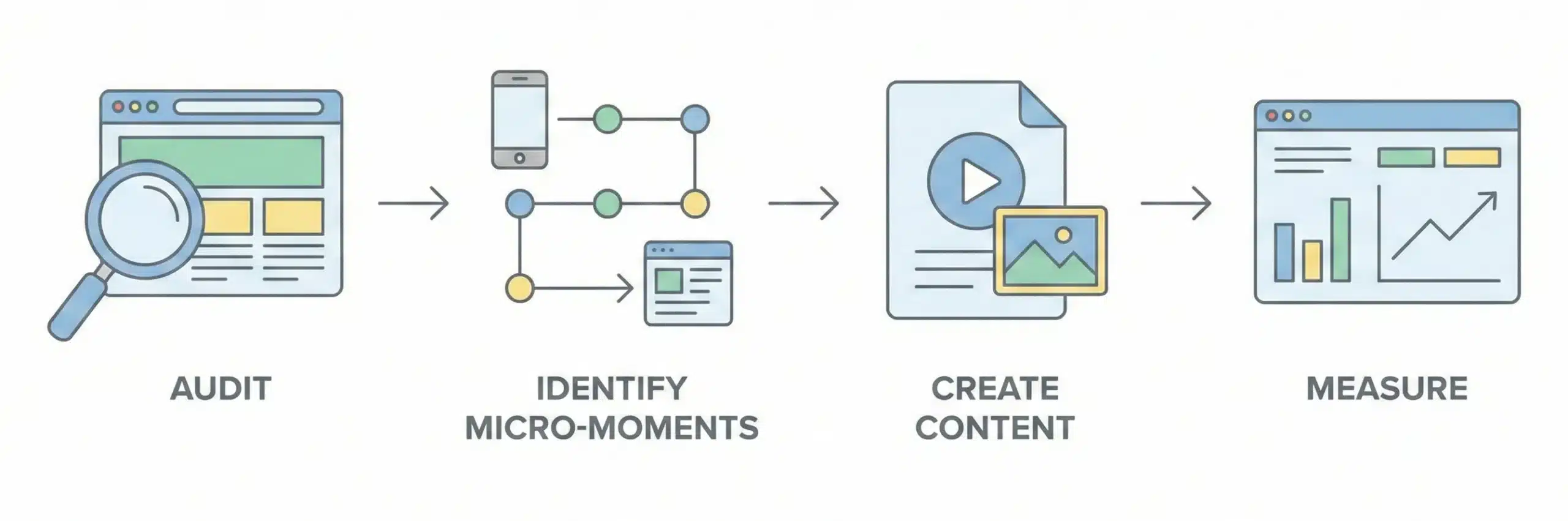
How to Build a Micro-Moment Marketing Strategy
Step 1: Audit Your Current Digital Presence
This step evaluates how well your existing digital touchpoints support key micro-moments. The goal is to find technical, content, and UX gaps that create friction when users come with urgent needs.
- Review mobile performance metrics such as load time, responsiveness, and navigation clarity to see whether users can complete tasks easily on phones.
- Analyze analytics data to identify high-exit pages, slow experiences, or missing content where users might be dropping off mid-moment.
Step 2: Identify Micro-Moments in Your Customer Journey
Once you know your current state, you can map where micro-moments appear along your customer journeys. This involves examining real user paths from initial discovery to repeat purchase.
- Use journey mapping to connect typical queries, channels, and actions, such as search → local listing → site visit → call or purchase.
- Highlight the points where intent is sharpest—like “near me,” “price,” “how to use,” or “open now”—and prioritize those for optimization.
Step 3: Create and Optimize Content for Micro-Moments
Here you design or refine assets so that every key micro-moment is met with relevant, frictionless content and UX. Different moment types call for different formats and levels of detail.
- Develop content such as: educational blog posts and guides for I-want-to-know moments; how-to videos and step-by-step pages for I-want-to-do; optimized local pages and maps listings for I-want-to-go; and clear product, pricing, and offer pages for I-want-to-buy.
- Apply SEO and UX best practices—structured headings, concise copy, prominent calls-to-action, schema markup where appropriate, and intuitive layout—to help users act quickly.
Step 4: Measure and Refine
Micro-moment strategies improve over time as you test and measure their impact. Continuous refinement based on data ensures that your experiences stay aligned with evolving behavior.
- Track metrics such as click-through rate, conversion rate, calls or direction requests, on-site engagement, and bounce rates at micro-moment entry points.
- Run experiments on messaging, layouts, and targeting, then use the results to update campaigns, content, and UX patterns regularly.
Micro-Moment Marketing Best Practices for 2026
Micro-moment marketing in 2026 builds on fundamentals but increasingly benefits from smarter data use and automation. Brands that combine rapid response with personalization and privacy awareness tend to perform best.
- Stay agile by monitoring changing query patterns, device usage, and platform updates so you can refresh content and campaigns as behavior evolves.
- Use AI-driven tools, automation, and predictive analytics to anticipate needs and trigger the right messages or offers in real time while respecting data protection standards.
Common Challenges and How to Overcome Them
Many organizations struggle to operationalize micro-moment marketing because it cuts across content, SEO, UX, analytics, and media teams. Resource constraints and legacy systems can also slow down improvements.
- Address content and technical gaps by prioritizing high-impact pages and journeys first, then building a roadmap for broader optimization.
- Improve measurement and collaboration by aligning teams around shared journey maps, agreed-upon KPIs, and centralized reporting on micro-moment performance.
Conclusion
Micro-moment marketing recognizes that today’s customers make decisions in many small, high-intent interactions rather than a single, linear path. By understanding who your audience is, what they seek, where and when they search, and why they choose one option over another, you can design experiences that consistently show up and deliver in the moments that matter most in 2026.

Passionate about blogging and focused on elevating brand visibility through strategic SEO and digital marketing. Always tuned in to the latest trends, I’m dedicated to maximizing engagement and delivering measurable ROI in the dynamic world of digital marketing. Let’s connect and unlock new opportunities together!