



Sales commission structures are the rules and formulas that govern how salespeople earn variable pay on top of (or instead of) a base salary. They translate performance into compensation using mechanisms like commission rates, quotas, accelerators, or territory-based payouts.
Why they matter:
- They directly influence day-to-day sales behavior.
- They connect business goals (growth, margin, retention) to how people get paid.
- They impact hiring, motivation, and turnover in your sales team.
Understanding Sales Commission Structures
What is a Sales Commission Structure?
A sales commission structure is a formal framework that defines:
- What is rewarded (revenue, margin, renewals, activities).
- How it is rewarded (percentages, flat amounts, multipliers).
- Under what conditions (quotas, thresholds, territory rules, clawbacks).
Key components usually include:
- Base salary (fixed pay).
- Commission rate (percentage or flat amount).
- Performance metrics (e.g., booked revenue, gross margin, MRR).
- Rules and timing (when deals count, when commission is paid).
Why Sales Commission Structures are Important
A well-designed commission structure:
- Motivates reps by clearly linking effort and pay.
- Aligns sales activity with strategic business goals.
- Helps attract and retain talented sales professionals.
- Controls compensation cost while enabling upside.
A poorly designed structure can:
- Confuse and demotivate the team.
- Encourage the wrong behaviors (e.g., over-discounting).
- Create constant disputes and administrative headaches.
Key Factors That Influence Commission Structures
When designing your structure, consider:
- Industry norms and expectations.
- Product pricing and profit margins.
- Sales cycle length (short transactional vs. long enterprise).
- Company size and risk tolerance (startup vs. enterprise).
- Sales role type (SDR, AE, account manager, channel, etc.).
- Territory or market conditions.
Types of Sales Commission Structures (With Examples and Benefits)
Below are ten widely used commission structures, with definitions, formulas, examples, and typical use cases.
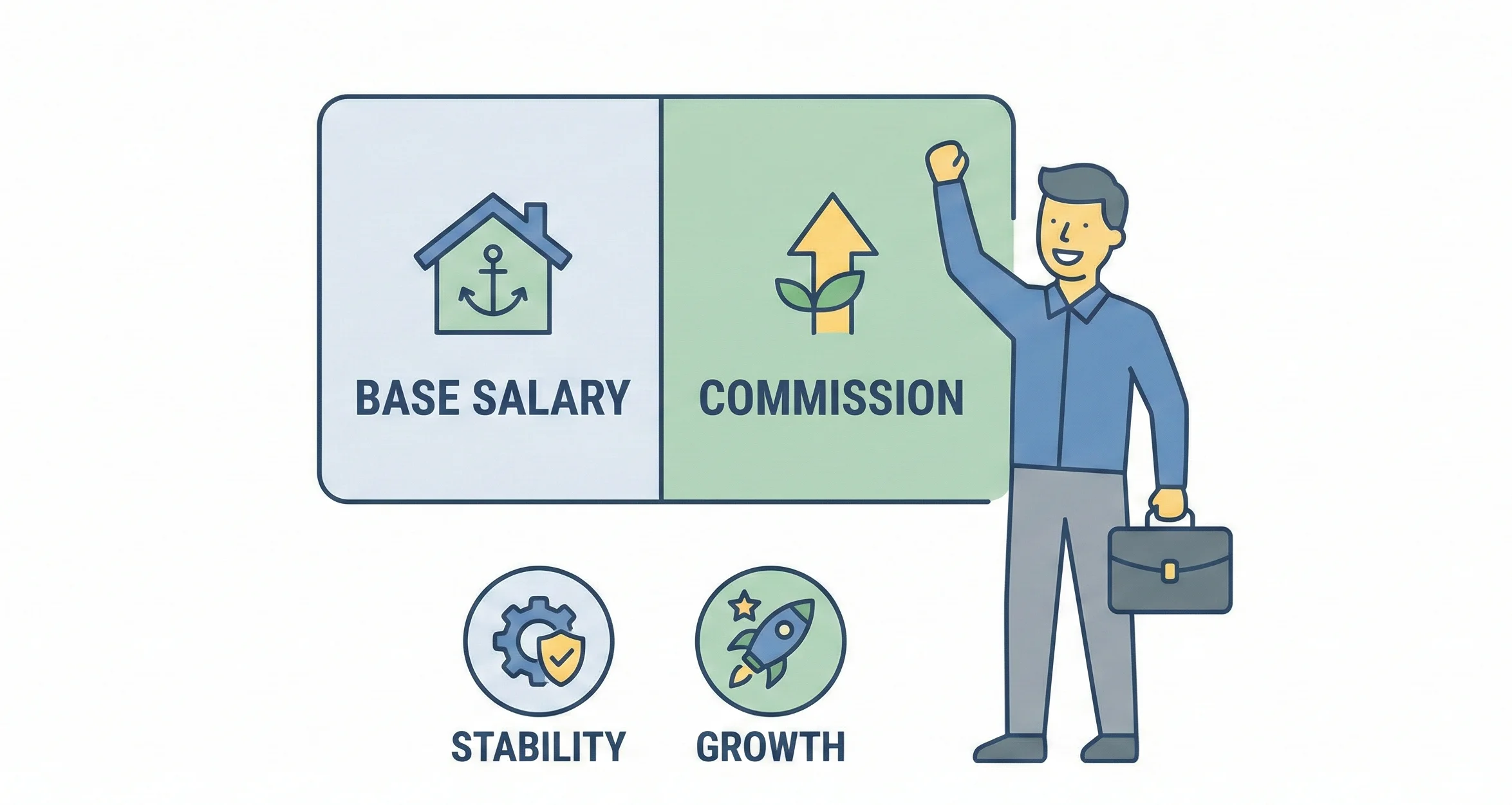
Type 1: Base Salary Plus Commission
This is one of the most common structures, especially in B2B and SaaS. Reps receive a fixed salary plus variable pay based on performance.
How it works:
- Reps earn:
- A base salary for stability.
- A commission on each sale.
Simple formula:
Total Compensation=Base Salary+(Sales Revenue×Commission Rate)
Example:
- Base salary: 50,000
- Sales revenue: 200,000
- Commission rate: 10%
Commission=200,000×0.10=20,000
Total Compensation=50,000+20,000=70,000
Benefits:
- Income stability plus performance upside.
- Attractive to strong but risk-averse candidates.
- Reduces turnover, especially in longer sales cycles.
Best for:
- B2B sales.
- SaaS and tech.
- Roles with moderate or long sales cycles.
Pros:
- Balanced risk between company and rep.
- Easy to understand and communicate.
Cons:
- Higher fixed payroll cost.
- If commission is too small, it may weaken motivation.
Type 2: Commission Only (Straight Commission)
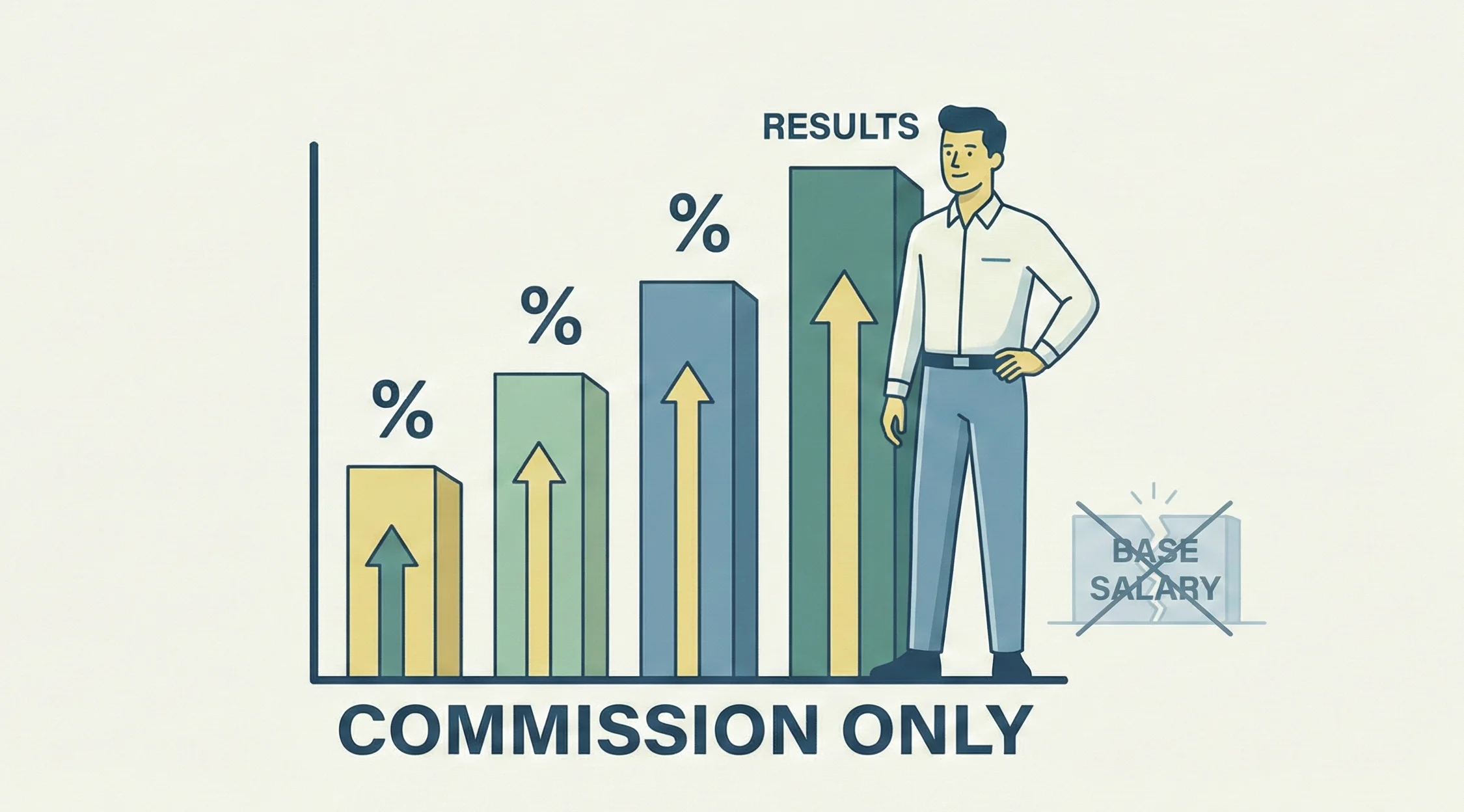
In a commission-only plan, reps earn no base salary. All income comes from commissions.
How it works:
- Reps are paid a percentage of each sale.
- No guaranteed pay.
Formula:
Total Compensation=Sales Revenue×Commission Rate
Example (real estate–style):
- Sale price: 400,000
- Commission rate: 3%
Commission=400,000×0.03=12,000
Benefits:
- Very strong performance incentive.
- Low fixed cost for the company (payout only when revenue is generated).
- Attractive for experienced, entrepreneurial reps.
Best for:
- Real estate.
- Some insurance models.
- Independent reps and agencies.
Pros:
- Very high earning potential.
- Clear link between results and pay.
Cons:
- High income volatility; not ideal for new reps.
- Can increase pressure and stress.
- Risk of aggressive or misaligned selling if not controlled.
Type 3: Tiered Commission
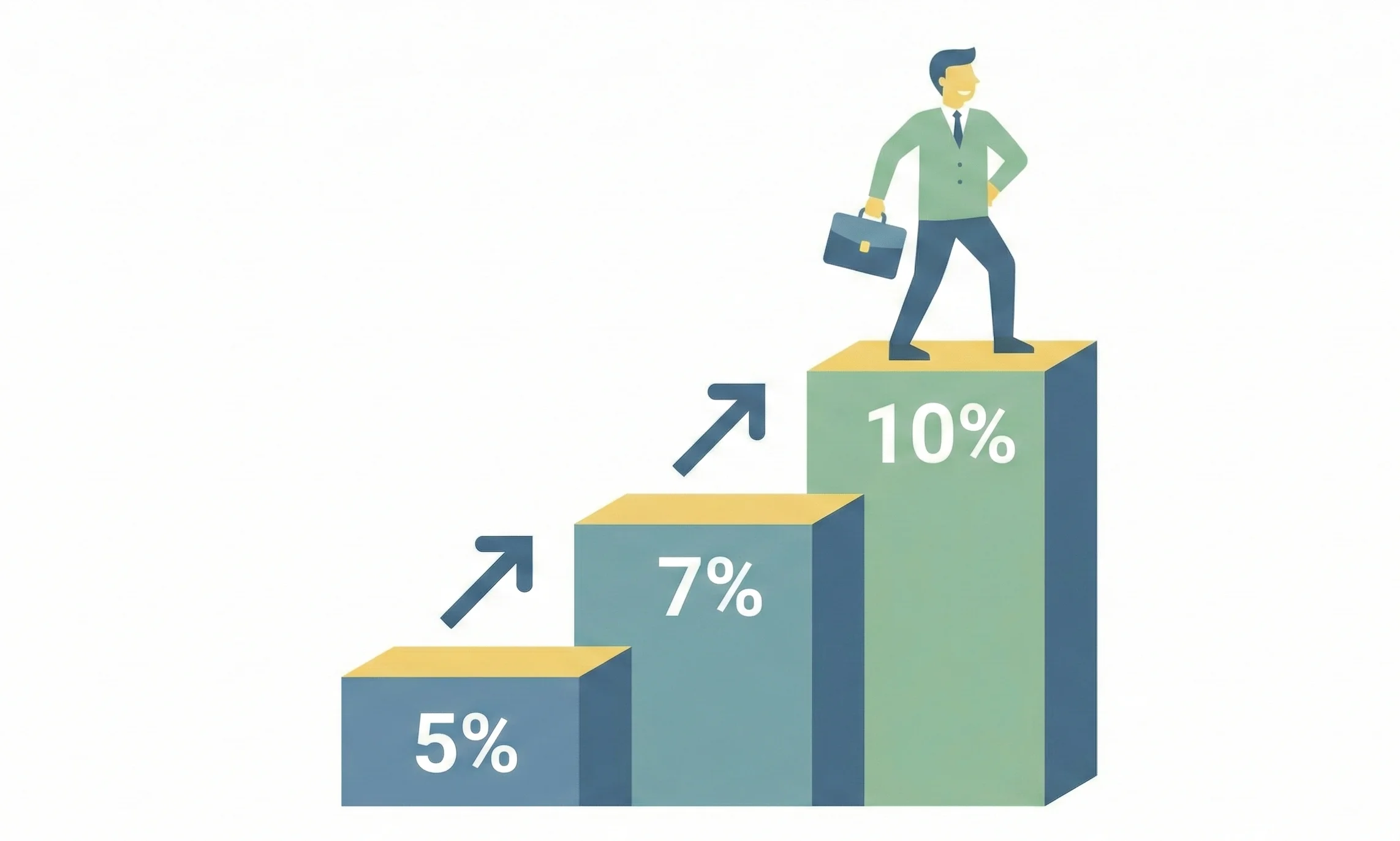
Tiered commission pays different rates for different performance levels, usually aligned to quota attainment.
How it works:
- Lower rate at lower performance tiers.
- Higher rate once certain thresholds are reached.
Formula:
Commission=(Tier 1 Sales×Rate 1)+(Tier 2 Sales×Rate 2)+…
Example:
- Tier 1: Up to 10,000 at 5%.
- Tier 2: 10,001–20,000 at 7%.
- Tier 3: Above 20,000 at 10%.
- Rep sells 25,000.
(10,000×0.05)+(10,000×0.07)+(5,000×0.10)=500+700+500=1,700
Benefits:
- Strong incentive to exceed quota.
- Rewards top performers more without overpaying on initial volume.
- Encourages end-of-period pushes to higher tiers.
Best for:
- SaaS and tech.
- High-volume B2B or B2C.
- Organizations that need to highlight overperformance.
Pros:
- Clear path to higher earnings as performance increases.
- Flexible and scalable.
Cons:
- More complex to calculate and explain.
- Requires careful quota and tier design.
Type 4: Draw Against Commission
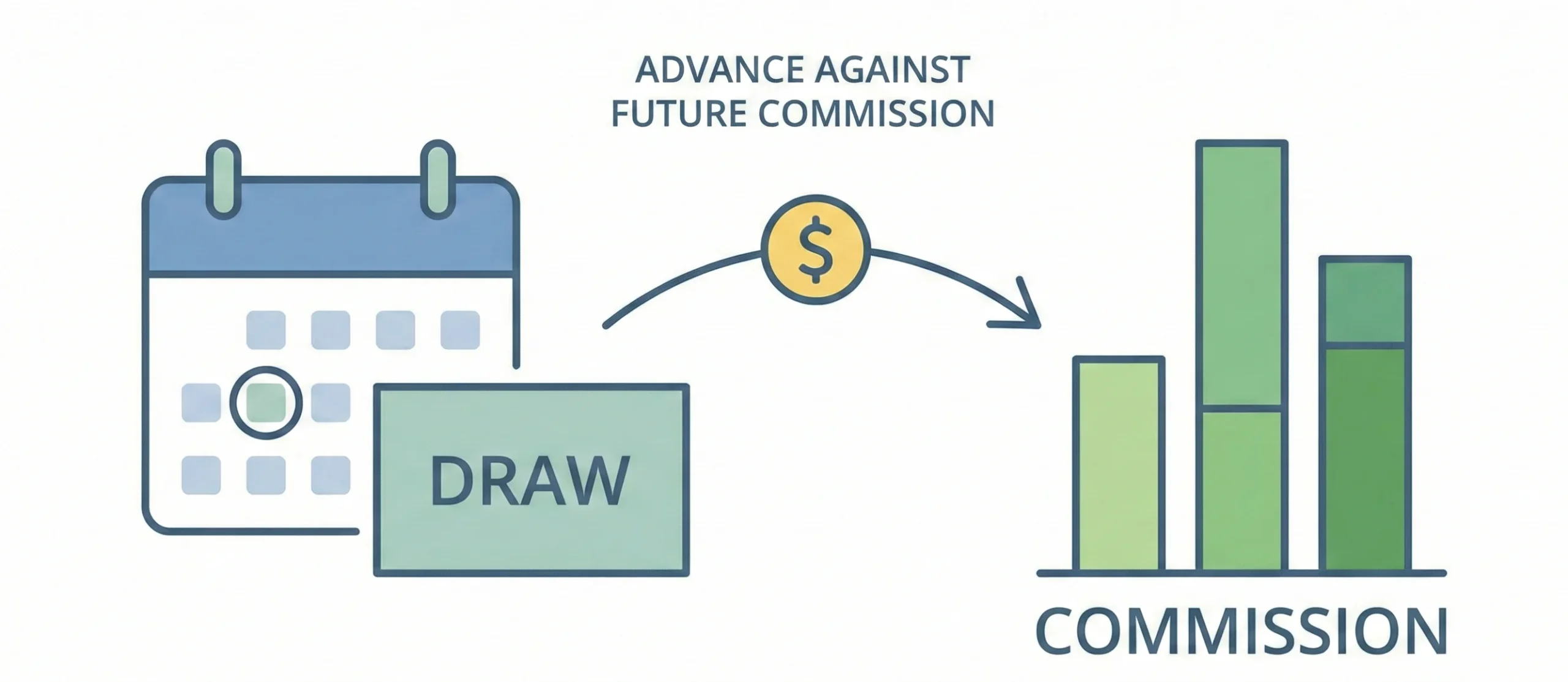
A draw against commission gives reps an advance (draw) against future commissions.
How it works:
- Company pays a guaranteed draw regularly (e.g., monthly).
- When commissions are calculated, the draw is subtracted.
- Draw can be:
- Recoverable: shortfalls are repaid from future commissions.
- Non-recoverable: company absorbs shortfalls (usually temporary).
Example (recoverable draw):
- Monthly draw: 3,000
- Month 1 commission: 4,000
Net Payout=4,000−3,000=1,000
- Month 2 commission: 2,000
Shortfall=3,000−2,000=1,000 (carried forward)
Benefits:
- Provides income stability while pipeline ramps.
- Especially helpful for:
- New hires.
- Roles with long sales cycles.
Best for:
- New sales reps.
- Enterprise/complex sales.
- Seasonal or ramp-heavy businesses.
Pros:
- Bridges the gap until deals start closing.
- Maintains performance-based pay in the long run.
Cons:
- Recoverable draws can be confusing or feel like “debt.”
- Non-recoverable draws can be costly if used too long.
Type 5: Territory Volume Commission
Territory volume commission pays based on the performance of a shared territory rather than strictly individual results.
How it works:
- Total sales in a territory are calculated.
- A commission pool is created and split among reps in that territory.
Formula (simplified):
Commission per Rep= Number of Reps/Total Territory Sales×Commission Rate
Example:
- Territory sales: 90,000
- Commission rate: 10%
- Reps in territory: 3
Total Commission Pool=90,000×0.10=9,000
Commission per Rep=9,000÷3=3,000
Benefits:
- Encourages collaboration and team selling.
- Good when account coverage is shared and attribution is tricky.
Best for:
- Territory-based field sales.
- Situations with shared accounts and team selling.
Pros:
- Reduces internal competition.
- Focuses everyone on territory growth.
Cons:
- Risk of “free riders” benefiting from others’ work.
- High performers may feel under-rewarded.
Type 6: Residual Commission

Residual commission pays reps on recurring revenue (e.g., subscriptions, service contracts) over time.
How it works:
- Reps earn on the initial sale.
- Then continue to earn as long as the customer pays (often with a time cap).
Formula:
Monthly Commission=Monthly Recurring Revenue (MRR)×Commission Rate
Example:
- MRR: 2,000
- Rate: 5%
Monthly Commission=2,000×0.05=100
Benefits:
- Strong incentive to:
- Sell good-fit customers.
- Support retention and expansion.
- Aligns rep behavior with customer lifetime value.
Best for:
- SaaS and other subscription businesses.
- Agencies and recurring service providers.
Pros:
- Builds a “book of business” for reps.
- Reinforces long-term, relationship-based selling.
Cons:
- Ongoing payout liability if not capped or modeled.
- More complex tracking across time.
Type 7: Gross Margin Commission
Gross margin commission pays based on profit rather than just revenue.
How it works:
- Commission is calculated on gross margin:
- Revenue minus cost of goods sold (COGS).
Formulas:
Gross Margin=Sales Revenue−COGS
Commission=Gross Margin×Commission Rate
Example:
- Sale: 10,000
- COGS: 6,000
- Margin: 4,000
- Rate: 10%
Commission=4,000×0.10=400
Benefits:
- Protects profitability.
- Discourages heavy discounting.
- Encourages selling high-margin products.
Best for:
- Manufacturing.
- Distribution.
- Any business with significant direct costs.
Pros:
- Aligns rep incentives with company profit.
- Encourages healthy pricing and product mix.
Cons:
- Requires transparency around costs.
- Slightly more complex to explain and calculate.
Type 8: Multiplier Commission
Multiplier structures apply a performance-based multiplier to a base commission rate.
How it works:
- Start with a base commission rate.
- Multiply by a factor based on performance (e.g., quota attainment, discount level, product mix).
Formulas:
Final Commission Rate=Base Rate×Multiplier
Commission=Sales Revenue×Final Commission Rate
Example:
- Base rate: 10%
- Multiplier:
- 0.8 if below 80% of quota.
- 1.0 between 80–100%.
- 1.5 above 110%.
If a rep exceeds 110% of quota:
Final Rate=10%×1.5=15%
On a 100,000 sale:
Commission=100,000×0.15=15,000
Benefits:
- Flexible and powerful.
- Can incorporate multiple KPIs (margin, retention, product mix).
Best for:
- Mature sales orgs.
- Complex selling environments.
Pros:
- Rewards consistent high performance.
- Adjusts for quality and strategic value, not just volume.
Cons:
- Needs very clear communication.
- If opaque, can feel arbitrary to reps.
Type 9: Absolute (Flat/Per-Unit) Commission
Absolute or flat commission pays a fixed amount per sale or per unit sold, regardless of sale value.
How it works:
- Each sale earns a predefined flat amount.
- Total commission scales with volume, not ticket size.
Formula:
Commission=Number of Units/Deals×Flat Amount
Example:
- Flat commission: 50 per sale.
- Units sold: 40.
Commission=40×50=2,000
Benefits:
- Extremely simple to understand and administer.
- Predictable cost per sale.
Best for:
- Standardized, lower-ticket products.
- High-volume sales motions.
Pros:
- Easy for reps to self-calc.
- Easy for finance to forecast.
Cons:
- Poor fit where deal sizes vary widely.
- May push reps toward easy, low-value deals.
Type 10: Base Salary Only
In a salary-only model, reps receive no variable pay tied directly to sales.
How it works:
- Fixed salary only.
- No commissions or bonus tied to revenue.
Formula:
Total Compensation=Base Salary
Benefits:
- Maximum income stability for employees.
- Predictable payroll for the company.
- Good where:
- Sales are highly consultative.
- Individual impact on outcomes is hard to measure.
Best for:
- Some pre-sales, consultative or support-heavy roles.
- Roles not primarily measured on closing revenue.
Pros:
- Simple, low admin overhead.
- Can reduce “hard sell” pressure.
Cons:
- Weak direct incentive to overperform.
- Risk of stagnating sales if not balanced with other motivators.
How to Choose the Right Sales Commission Structure
Assess Your Business Goals
Start by clarifying what you want to drive:
- Rapid new-customer acquisition.
- Profitability and healthy margins.
- Recurring revenue and renewals.
- Expansion within existing accounts.
Then match structures:
- Aggressive growth: higher variable, tiered or accelerators.
- Stable retention: residual and margin-based components.
Consider Your Sales Cycle
Think about:
- Short cycles (days/weeks):
- Simple percentage or flat commissions.
- Long cycles (months/quarters):
- Base + commission or draw plans for stability.
Align payment timing with:
- When deals are realistically closing.
- How long it takes a new rep to ramp up.
Evaluate Your Industry Standards
Use your industry as a reference:
- SaaS/tech: base + commission with strong variable and quotas.
- Real estate: mostly commission-only.
- Retail: base plus small commission per sale.
- Manufacturing: margin-focused commissions.
Your plan doesn’t have to match competitors exactly, but it must be competitive enough to attract talent.
Factor in Product Margins and Deal Size
Ask:
- What margin can we afford to share.
- How variable are deal sizes.
Use:
- Higher percentages where margins are strong.
- Margin-based or differentiated rates where margins vary.
- Modeling to ensure profitability across small, average, and large deals.
Align Commission with Company Culture
Consider:
- Do you want a highly competitive or collaborative team.
- Are you a risk-tolerant startup or a process-heavy enterprise.
Examples:
- Competitive culture:
- Strong accelerators, tiered plans.
- Collaborative culture:
- Territory or team components layered on top of individual pay.
Sales Commission Structure Best Practices
Keep It Simple
Aim for:
- A plan that can be explained in a few sentences.
- Reps being able to estimate their commission on a deal quickly.
Avoid:
- Too many special rules and exceptions.
- Nested conditions that only finance can understand.
Set Realistic and Achievable Quotas
Use data to set quotas:
- Past performance.
- Pipeline and conversion rates.
- Territory potential.
Guidelines:
- Quotas should be challenging but achievable.
- Most of the team should land in a band where hitting quota is realistic with solid performance.
Ensure Transparency and Communication
Do:
- Provide written plan docs.
- Define key terms clearly.
- Show sample calculations.
Communicate:
- Plan changes before they take effect.
- Where reps can see their numbers and payouts.
Align Incentives with Business Objectives
Connect incentives to goals:
- Profit focus:
- Margin-based commissions.
- Penalties for heavy discounting.
- Retention focus:
- Residual pay.
- Renewal bonuses.
Check:
- Are high earners also your strongest contributors to long-term value.
Test and Iterate
Before rollout:
- Run your plan on last year’s data.
- Model:
- Low performance.
- On-target performance.
- Overperformance.
After rollout:
- Gather rep and manager feedback.
- Review payout distribution and attainment quarterly or annually.
- Refine as products and strategies change.
Provide Real-Time Performance Data
Give reps:
- Dashboards for:
- Quota attainment.
- Closed deals.
- Estimated commissions.
Benefits:
- Reduces disputes.
- Helps reps self-correct mid-period.
- Saves time for sales ops and finance.
Include Accelerators and Bonuses
Consider:
- Accelerators when reps exceed quota (e.g., higher rate above 100%).
- Short-term bonuses/SPIFs for:
- New product launches.
- Strategic accounts.
- Specific behaviors (e.g., multi-year deals).
These keep energy high and focus aligned with timely initiatives.
Avoid Common Pitfalls
Watch out for:
- Overly complex plans.
- Unattainable quotas.
- Ignoring non-selling work that matters.
- Delayed or inconsistent payments.
- Never revisiting your commission design.
Common Sales Commission Mistakes to Avoid
Mistake 1: Manual Calculations and Spreadsheet Reliance
Risks of manual/spreadsheet-only processes:
- Human errors in formulas and data.
- Slow, labor-intensive workflows.
- Frequent disputes and corrections.
Better approach:
- Use specialized systems or tools as complexity and team size grow.
Mistake 2: Overly Complex Structures
Problems with complexity:
- Reps can’t easily understand how they earn.
- Harder to manage, audit, and explain.
- Demotivating when payouts feel unpredictable.
Aim for:
- A small number of core rules.
- Optional add-ons that are simple and well-documented.
Mistake 3: Setting Unrealistic Quotas
Consequences:
- Consistently missed quotas.
- Disengaged, demoralized reps.
- Increased turnover.
Fixes:
- Use data and realistic assumptions.
- Adjust for territory differences.
- Review quotas at least annually.
Mistake 4: Lack of Transparency
When reps don’t understand:
- How deals are credited.
- How numbers are calculated.
- Why payments differ from expectations.
They:
- Lose trust in leadership.
- Spend time chasing finance instead of selling.
Solutions:
- Clear documentation and FAQs.
- Visible calculations and statements.
- Consistent, proactive communication.
Mistake 5: Failing to Align with Business Goals
Signs of misalignment:
- Reps chase low-margin or churn-prone deals.
- Short-term spikes but poor long-term performance.
Solutions:
- Embed:
- Margin thresholds.
- Retention/renewal metrics.
- Product mix targets.
So reps win when the business wins long term.
Mistake 6: Ignoring Non-Sales Activities
Critical but often unpaid activities:
- Customer onboarding support.
- Cross-functional collaboration.
- Relationship maintenance.
Options:
- Include:
- Team-based components.
- Retention metrics.
- Qualitative objectives in reviews.
Mistake 7: Not Reviewing and Updating Regularly
If your business changes but your plan doesn’t:
- Incentives pull in the wrong direction.
- Legacy rules reward outdated behaviors.
Best practice:
- Annual (or more frequent) commission-plan reviews.
- Data-driven updates aligned with new strategies.
Mistake 8: Delayed Commission Payments
Problems:
- Reduced motivational impact.
- Frustration and distrust.
Better:
- Clear payout schedules (monthly/quarterly).
- Automated calculations to stay on schedule.
Mistake 9: Offering Commissions on Low-Margin Products
Issue:
- Reps flock to low-margin offers if pay is the same.
- Profitability suffers.
Fixes:
- Margin-based commissions.
- Different rates by product line.
- Lower pay on highly discounted deals.
Mistake 10: Using Flat-Rate Commissions for All Deals
Risk:
- Treating all deals equally can:
- Deprioritize big or strategic deals.
- Overreward easy, low-impact deals.
Solution:
- Tiered, multiplier, or differentiated rates for:
- Larger deals.
- Strategic segments.
- High-margin offerings.
Tools and Technologies for Commission Management
Importance of Automation
Automation helps:
- Reduce calculation errors.
- Save time for finance and ops.
- Pay reps accurately and on time.
As the team and complexity grow, manual processes become risky and expensive.
Key Features to Look For
Useful capabilities:
- Flexible plan configuration (percentages, tiers, margins).
- Integrations with CRM and billing systems.
- Real-time dashboards for reps and managers.
- Clear, auditable calculation breakdowns.
- Reporting and analytics to evaluate plan effectiveness.
Popular Commission Software
Types of tools you might consider:
- Dedicated commission/ICM platforms.
- Revenue operations suites with commission modules.
- CRM add-ons or custom-built internal tools.
Selection criteria:
- Company size and complexity.
- Budget.
- Existing tech stack and integration needs.
Conclusion
Sales commission structures translate sales performance into compensation and are among the most powerful levers companies have to influence sales behavior. Different models—such as base-plus-commission, commission-only, tiered, draw-based, territory volume, residual, gross margin, multiplier-based, flat-amount, and salary-only—each come with distinct advantages and trade-offs suited to different contexts.
Selecting the right structure depends on business goals, industry norms, sales cycle characteristics, product margins, and company culture. When well designed, commission plans drive revenue growth, support profitability, and help attract and retain high-performing sales talent.
FAQs
1. What is the most common sales commission structure?
Base salary plus commission is widely reported as the most common structure, especially in B2B and SaaS, as it balances income stability with performance-based upside.
2. What is a good commission rate?
Appropriate commission rates vary significantly by industry and margin, but many roles fall in the 5–20% range of revenue or gross margin, with SaaS often in the 10–30% of annual contract value band for certain roles.
3. How do you calculate sales commission?
The basic calculation multiplies a relevant metric, such as revenue or margin, by a commission rate, with some structures adding tiers, multipliers, or draws; the specific formula depends on the chosen plan.
4. What is the difference between tiered and flat commission?
Flat commission pays a single percentage or amount on all sales, whereas tiered commission increases rates as reps hit higher performance thresholds, offering greater rewards for overachievement.
5. Should I use commission-only structures?
Commission-only structures can work in high-margin, high-ticket, or independent-agent models, but they increase income volatility and may be unsuitable for long sales cycles or less-experienced reps.
6. How often should I review my commission structure?
Many organizations review commission plans annually, and sometimes more frequently in rapidly evolving markets, to ensure ongoing alignment with strategy, profitability, and market conditions.
7. What industries pay the highest commissions?
Industries such as enterprise software, financial services, and some medical or high-end B2B sectors often offer higher commission potential due to large deal sizes and margins, though structures and regulations vary.
8. What are accelerators and decelerators?
Accelerators increase commission rates above certain performance thresholds, rewarding overperformance, while decelerators reduce rates below minimum performance levels to limit payout on underperformance.

Passionate about blogging and focused on elevating brand visibility through strategic SEO and digital marketing. Always tuned in to the latest trends, I’m dedicated to maximizing engagement and delivering measurable ROI in the dynamic world of digital marketing. Let’s connect and unlock new opportunities together!