

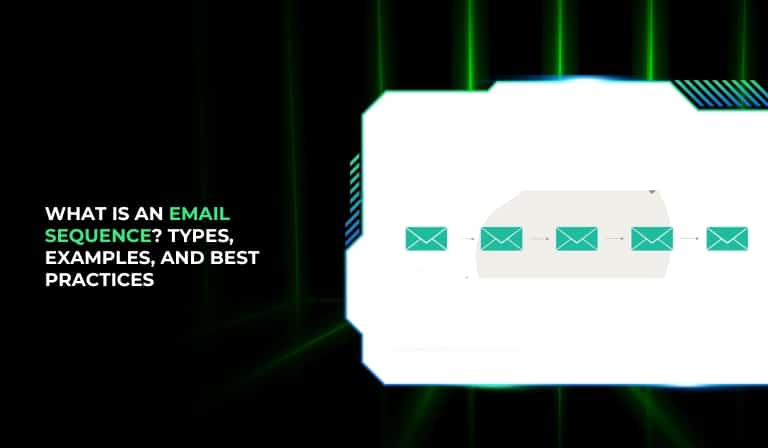
Email marketing remains a dominant channel for engaging customers, with 59% of people stating that emails influence their purchasing decisions. A highly effective strategy within email marketing is using email sequences—automated series of emails that build relationships and guide prospects through conversion.
This blog will explain what email sequences are, detail the main types, provide real-world examples, and share best practices for crafting sequences that work.
What Is an Email Sequence?
An email sequence is a pre-planned series of emails sent automatically to individuals based on specific triggers or timed intervals. These sequences keep engagement consistent, nurture leads, and help drive conversions without manual effort.
How Email Sequences Work
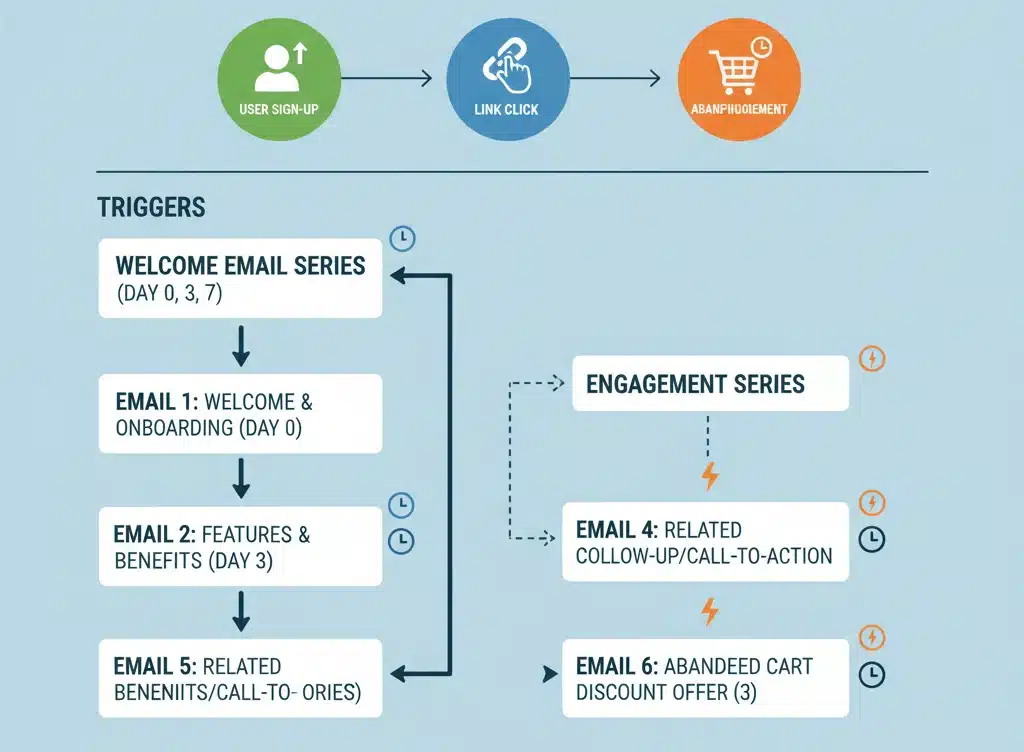
Email sequences typically operate in two ways:
- Time-delay sequences: Emails are sent after fixed time intervals, such as right after signup, a few days after a purchase, or on anniversaries.
- Trigger-based sequences: Emails are sent when a user performs or fails to perform an action, like clicking a link, abandoning a cart, or registering for an event.
Why Use Email Sequences?
Benefits of email sequencing include:
- Automation that saves time
- Higher engagement rates than one-off emails
- Ability to guide prospects along a conversion path logically
- Consistent communication that nurtures trust and brand recognition
Types of Email Sequences
1. Welcome Email Sequence
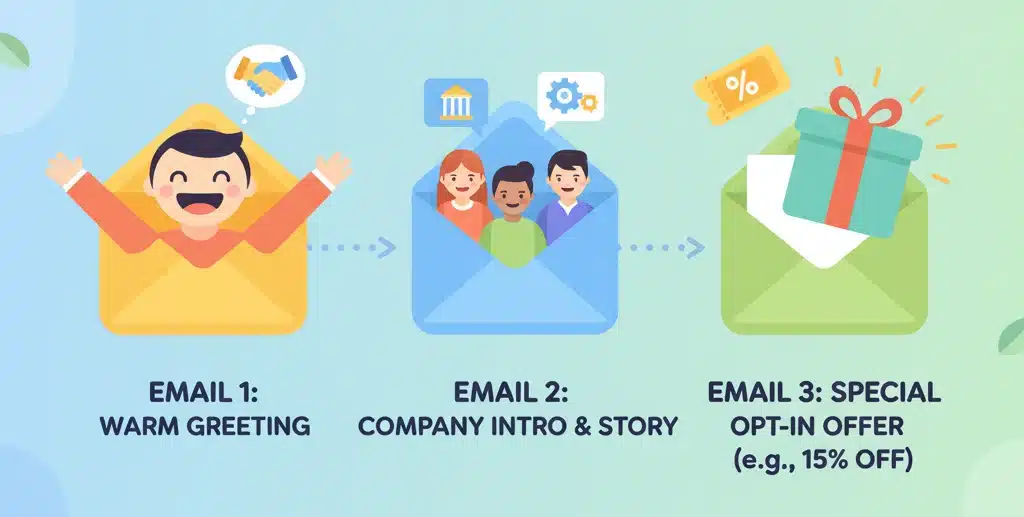
This sequence greets new subscribers and introduces your brand’s voice and offerings.
- Sent immediately after sign-up (trigger-based)
- Sets expectations for future emails
- Often includes an opt-in bonus such as a coupon or free resource
- Example: Golden State Warriors’ friendly welcome email explaining email frequency and offers
2. Engagement Email Sequence
Designed to develop stronger relationships by encouraging smaller actions that lead to larger goals.
- Can be time or trigger-based
- May highlight new features, personalized recommendations, or exclusive content
- Example: Netflix sending personalized show recommendations based on viewing history
3. Abandoned Cart Recovery Sequence
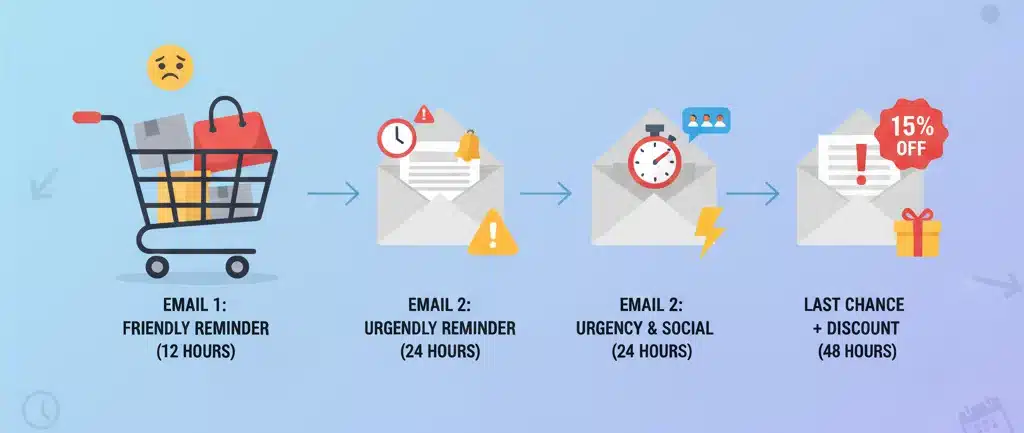
Targets shoppers who have left items in their cart without completing a purchase.
- Triggered soon after cart abandonment
- Includes reminders, answers to objections, and sometimes discount offers
- Example: Peel’s abandoned cart emails prompting users to complete checkout
4. Conversion Email Sequence
Focuses on driving prospects to take final steps like purchasing, booking demos, or signing up for events.
- Often time-delay based
- Uses incentives such as limited-time discounts or price drop notifications
- Example: Columbia’s emails notifying price reductions on wishlisted items
5. Follow-up Email Sequence
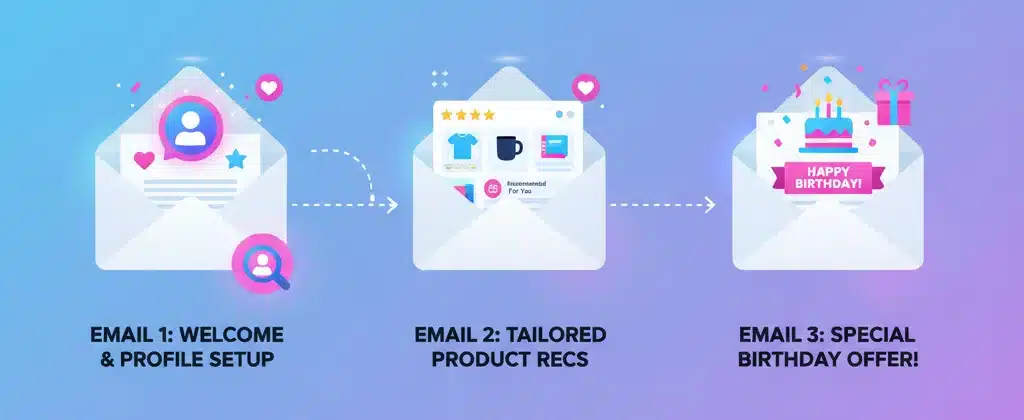
Sent after a user completes an action (purchase, event attendance) to maintain engagement.
- Typically time-delay triggered
- Requests product reviews, promotes related products, or invites referrals
- Example: Target’s post-purchase review request emails
6. Onboarding Email Sequence
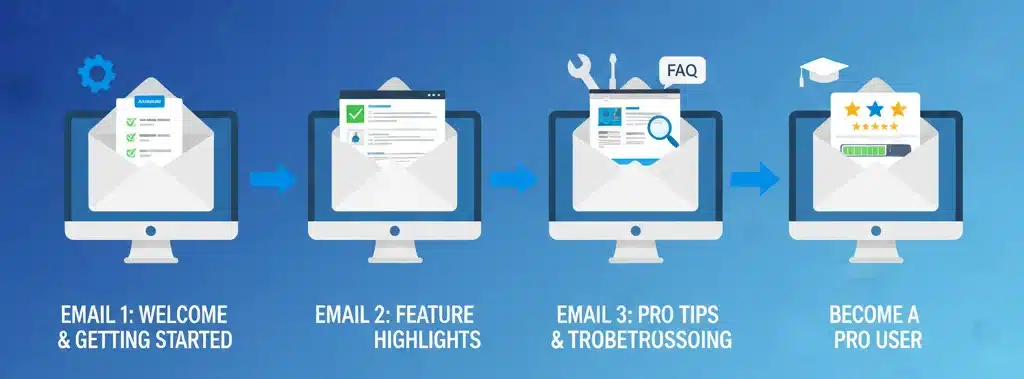
Helps customers get started with a product or service, aiming to reduce confusion and increase satisfaction.
- Sent after purchase or signup (trigger-based or time-delay)
- Includes how-to guides, tips, and troubleshooting information
- Example: Allergy Buyers Club’s instructions on setting up air purifiers
7. Re-engagement/Renewal Email Sequence
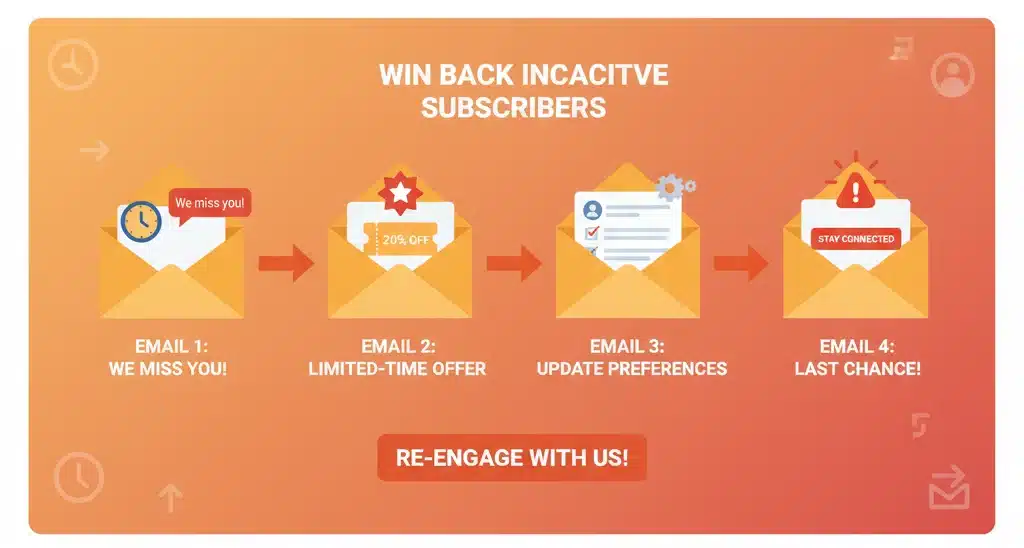
Aims to win back subscribers who have stopped interacting with emails.
- Sent after periods of inactivity (typically months)
- Includes “We miss you” messages, preference updates, and exclusive offers
- Example: Animoto’s email inviting subscribers to update their email preferences to receive more relevant content
Best Practices for Email Sequences
1. Planning and Strategy
- Define clear, measurable goals (e.g., increase sales, nurture leads)
- Segment audiences for relevance
- Map emails to customer journey stages
2. Content Best Practices
- Write evergreen, concise, and valuable emails
- Craft compelling subject lines
- Include clear, actionable calls-to-action (CTAs)
3. Personalization and Segmentation
- Use recipient data to tailor content
- Segment lists based on behavior, demographics, or purchase history
- Trigger emails based on interaction
4. Timing and Frequency
- Send emails at optimal days/times
- Space emails to avoid overwhelming recipients
- Monitor engagement to adjust frequency
5. Testing and Optimization
- A/B test subject lines, content, and sending times
- Track opens, clicks, conversions
- Optimize based on data insights
6. Technical Setup
- Choose email marketing software with automation capabilities
- Set up correct triggers and conditions
- Define exit points to avoid over-emailing
Related Read: Choosing the Best Email Marketing Platform in 2025: Top 10 Picks
Tools for Creating Email Sequences
1. Popular Platforms
- Mailchimp: Beginner-friendly with automation templates
- HubSpot: Advanced workflows and CRM integration
- ActiveCampaign: Robust marketing automation options
- Others: ConvertKit, Klaviyo, Sendinblue
2. Features to Look For
- Customizable templates
- Segmentation and tagging support
- Workflow automation and triggers
- Reporting dashboards
- Email deliverability monitoring
Common Mistakes to Avoid
- Over-emailing leads causing fatigue
- Lack of personalization making emails generic
- Poor timing leading to missed engagement
- Vague or missing calls-to-action
- Ignoring performance metrics for optimization
- No segmentation limiting email relevance
Getting Started: Step-by-Step Guide
- Define Your Purpose: Clarify goals (e.g., conversions, engagement)
- Know Your Audience: Research and segment
- Map the Journey: Outline email flow aligned with customer path
- Plan Content: Design emails targeting each stage
- Write Emails: Focus on value, clarity, and engagement
- Automate: Set triggers and timelines in your email tool
- Test: QA emails and workflows before launch
- Monitor and Adjust: Use data to refine and improve
Measuring Success
- Track key metrics: open rates, CTR, conversions, ROI
- Analyze what works and what doesn’t
- Pause or optimize underperforming emails
- Continually iterate based on engagement data
Conclusion
Email sequences form the backbone of any automated email marketing strategy that seeks to nurture leads, engage customers, and increase sales. With the right planning and execution of types like welcome, engagement, abandoned cart, and re-engagement sequences, businesses can build stronger connections and more predictable revenue streams.
Get started today by mapping out your first email sequence and watch your email marketing become more effective and efficient.

Passionate about blogging and focused on elevating brand visibility through strategic SEO and digital marketing. Always tuned in to the latest trends, I’m dedicated to maximizing engagement and delivering measurable ROI in the dynamic world of digital marketing. Let’s connect and unlock new opportunities together!