


Manufacturers in 2026 are under pressure to shorten quote-to-cash cycles, manage multi-stakeholder deals, and deliver reliable after-sales service while keeping teams aligned across sales, ops, and service. A manufacturing-ready CRM centralizes customer data, connects to ERP/MRP, and automates repetitive workflows so teams can forecast accurately, reduce errors, and boost win rates. This guide compares seven top CRM options for manufacturers, explains must-have features, and offers a practical selection and implementation playbook tailored to manufacturing use cases.

What makes a manufacturing CRM different?
Manufacturing CRMs must handle longer sales cycles, complex quotes, multi-level approvals, and tight handoffs between sales, production, logistics, and service. They stand apart from generic CRMs by supporting:
- Configure–Price–Quote (CPQ) with product variants and BOM-driven pricing.
- ERP/MRP/MES integrations for inventory, production, and fulfillment visibility.
- Dealer/distributor workflows and territory/channel management.
- RMA, warranty, and field service scheduling for after-sales.
- Multi-stakeholder, technical sales with engineer involvement.
Essential features checklist
Use this checklist to qualify platforms quickly:
- Lead, account, and opportunity management mapped to your RFQ-to-delivery stages.
- CPQ or native quoting, with discounts, approvals, and version control.
- Order and fulfillment visibility via ERP/MRP integration.
- Service management: tickets, warranties, RMAs, and field service.
- Custom objects/fields for SKUs, parts, machines, and installations.
- Role-based dashboards, forecasting, and margin visibility.
- API/iPaaS connectors to ERP, PLM, e-signature, and BI.
- Mobile for field teams and dealer networks.
- Automation: tasking, approvals, escalations, and notifications.
- Data governance: permissions, audit logs, and compliance.
The 7 Best Manufacturing CRMs in 2026
Below are seven widely adopted CRMs that map well to manufacturing needs, spanning enterprise-grade to SMB-friendly options. Pricing and fit are directional; confirm latest plans and industry bundles during evaluation.
1. Salesforce Manufacturing Cloud
-
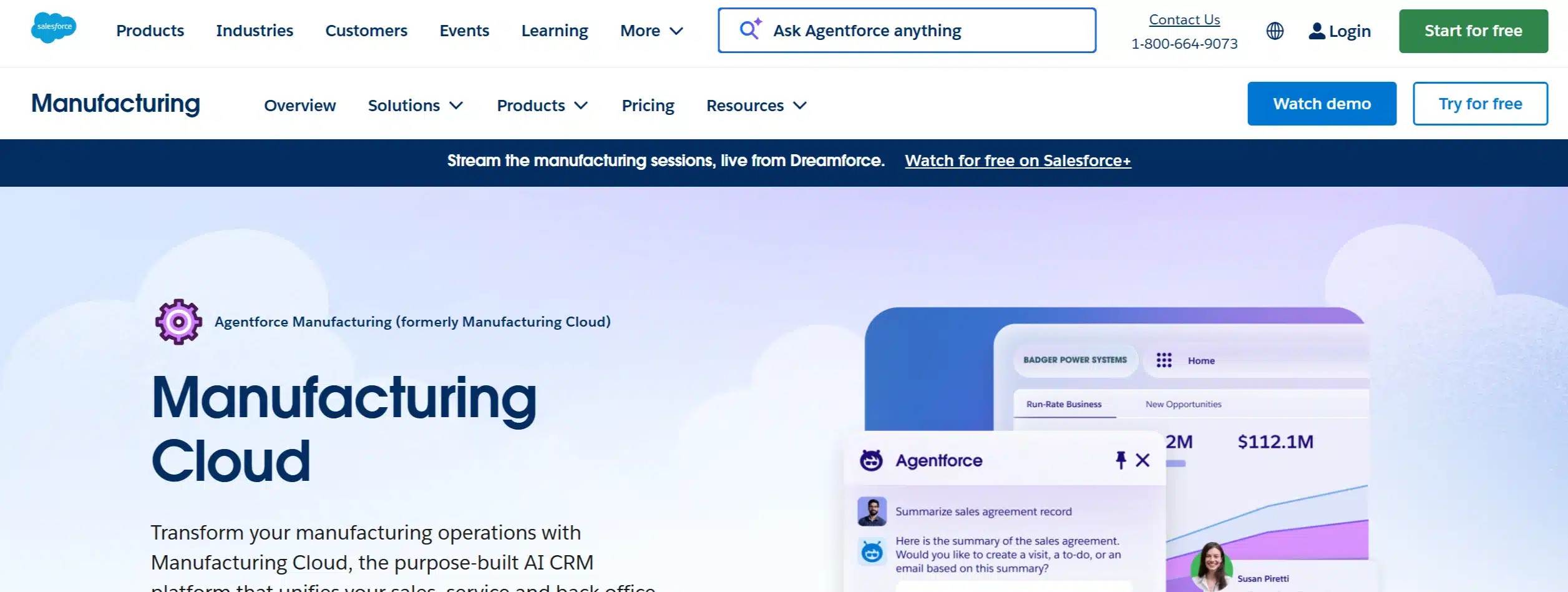
- Why it stands out: Deep manufacturing modules, robust CPQ/Revenue tools, and a mature integration ecosystem suitable for complex enterprises.
- Best for: Large manufacturers, multi-plant operations, global sales and service teams.
- Strengths
-
-
- Manufacturing Cloud for sales agreements, forecasts, and run-rate business.
- Powerful CPQ, entitlement, and service capabilities.
- Extensive connectors to major ERP/MRP systems.
-
- Considerations
-
- Higher TCO; requires dedicated admin/partner support.
- Change management and phased rollout are critical.
2. Microsoft Dynamics 365 (Sales + Business Applications)
-
- Why it stands out: Tight alignment with Microsoft stack and ERP options, strong extensibility for manufacturing workflows.
- Best for: Manufacturers invested in Microsoft ecosystem and needing ERP-CRM synergy.
- Strengths
-
-
- Native interoperability with Business Central/Finance & Operations.
- Robust process automation and role-driven workspaces.
- Flexible data model for parts, assets, and service.
-
- Considerations
-
- Licensing design matters to control costs.
- Success hinges on Dynamics 365 CRM services providers and solution design.
3. HubSpot CRM
-
- Why it stands out: Ease of use, quick time-to-value, and strong marketing-to-sales alignment for dealer and distributor pipelines.
- Best for: SMBs to mid-market manufacturers seeking simplicity and fast adoption.
- Strengths
-
-
- Clean UX, quick setup, strong marketing automation.
- Good ecosystem of integrations; growing ops features.
-
- Considerations
-
- Advanced service/CPQ needs may require add-ons or third-party tools.
- Data model customization is simpler but less granular than ERPs.
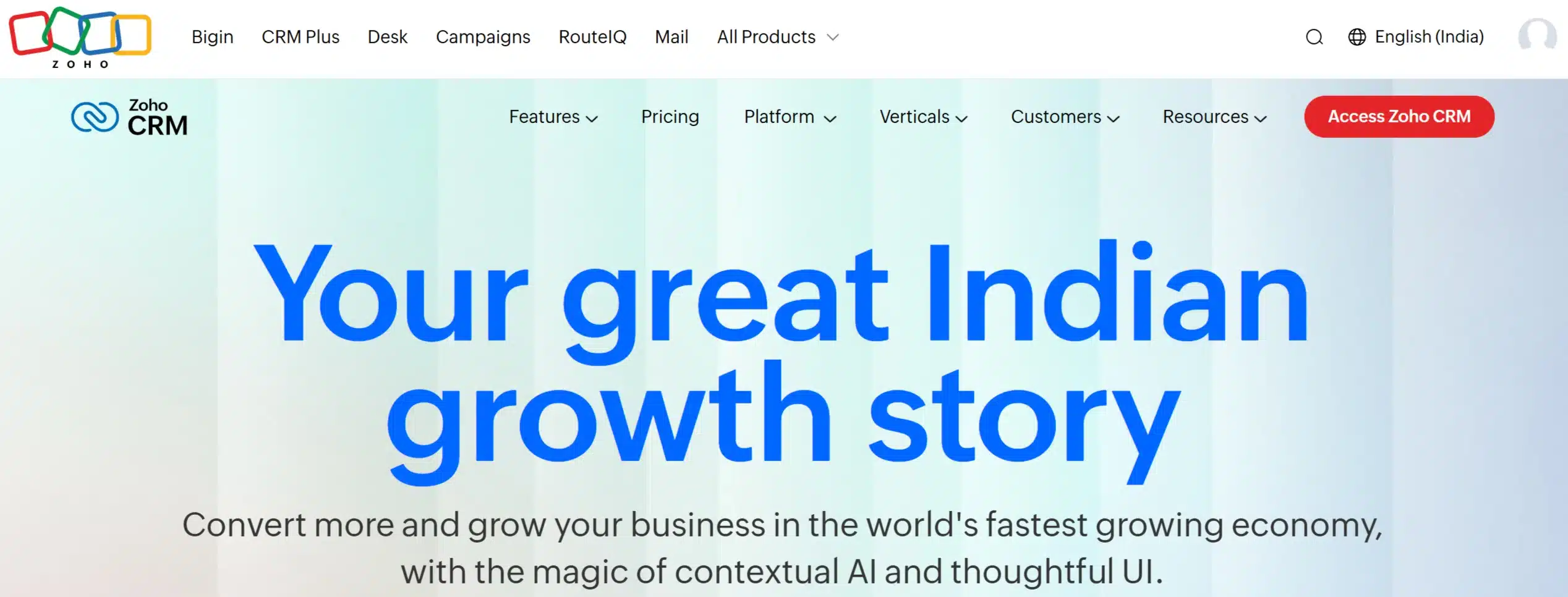
4. Zoho CRM
-
- Why it stands out: Cost-effective, highly customizable stack with adjacent apps for inventory, projects, and service.
- Best for: Cost-conscious SMBs and mid-market teams with in-house admin capability.
- Strengths
-
-
- Extensive customization and automation at a competitive price.
- Broad app suite (Desk, Inventory, Analytics) for end-to-end workflows.
-
- Considerations
-
- Complex integrations may need middleware.
- Governance and solution design discipline recommended.
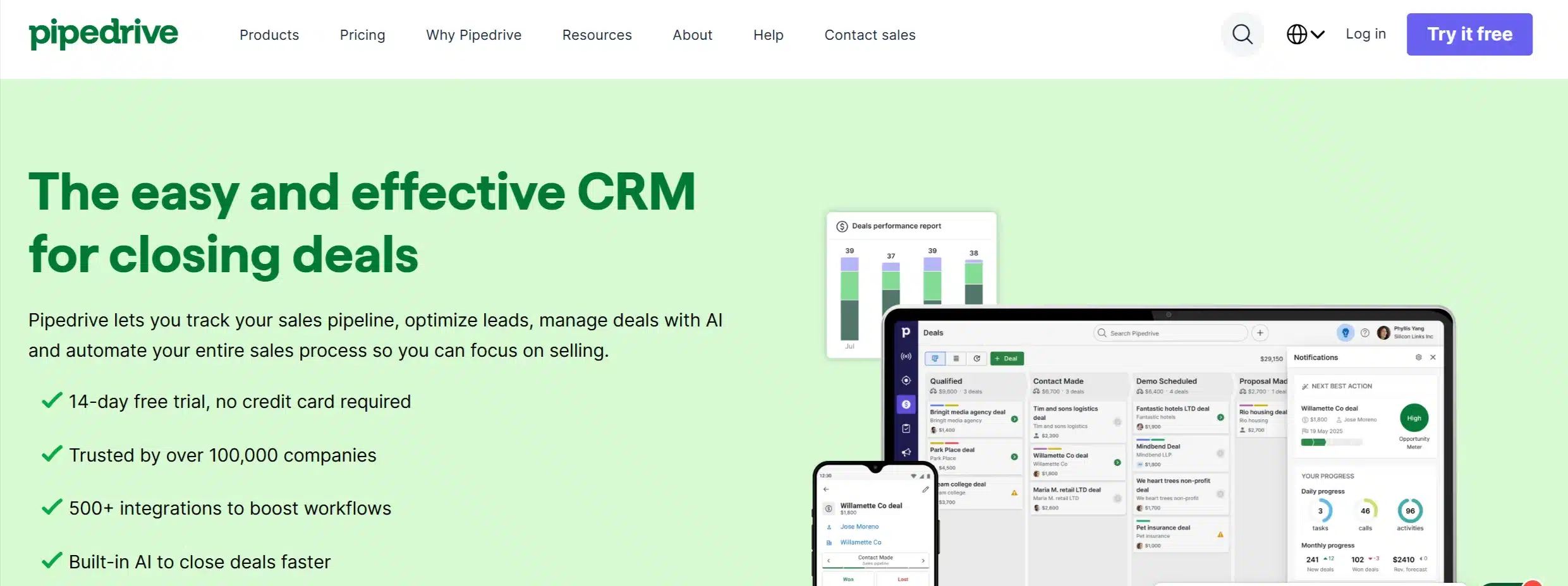
5. Pipedrive
-
- Why it stands out: Sales-first pipeline clarity, activity discipline, and straightforward automation.
- Best for: Smaller manufacturers with sales-led processes and simpler service needs.
- Strengths
-
-
- Intuitive pipelines, activity tracking, and reporting.
- Marketplace integrations for quoting, e-signature, and invoicing.
-
- Considerations
-
- Limited native service/RMA and manufacturing-specific objects.
- ERP/MRP visibility achieved via integrations, not natively.
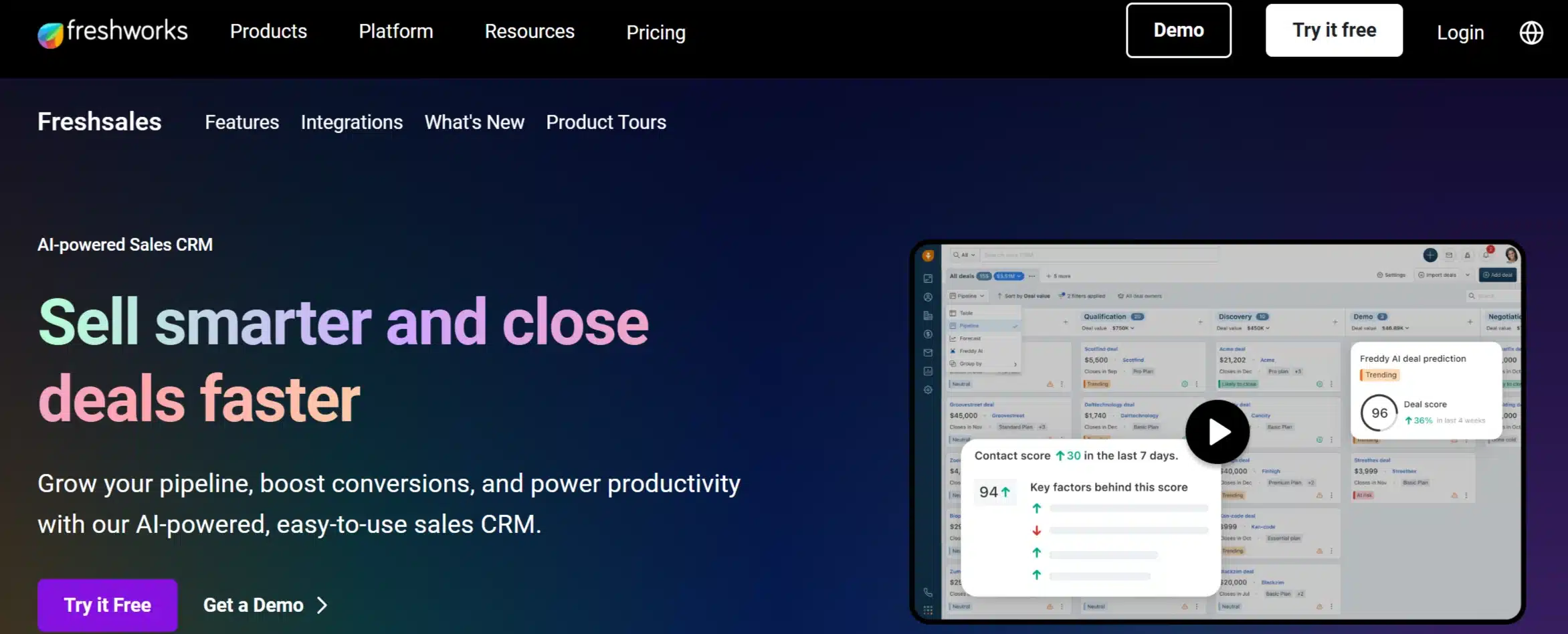
6. Freshsales (Freshworks)
-
- Why it stands out: Modern UI, built-in telephony and email, plus AI features at approachable pricing.
- Best for: SMB manufacturers standardizing on a unified, simple sales stack.
- Strengths
-
-
- AI lead scoring, communication tools, and automations included.
- Value-for-money entry with upgrade path across Freshworks apps (service, ITSM).
-
- Considerations
-
- Manufacturing-specific modules are lighter than enterprise suites.
- Complex quoting often requires extensions.
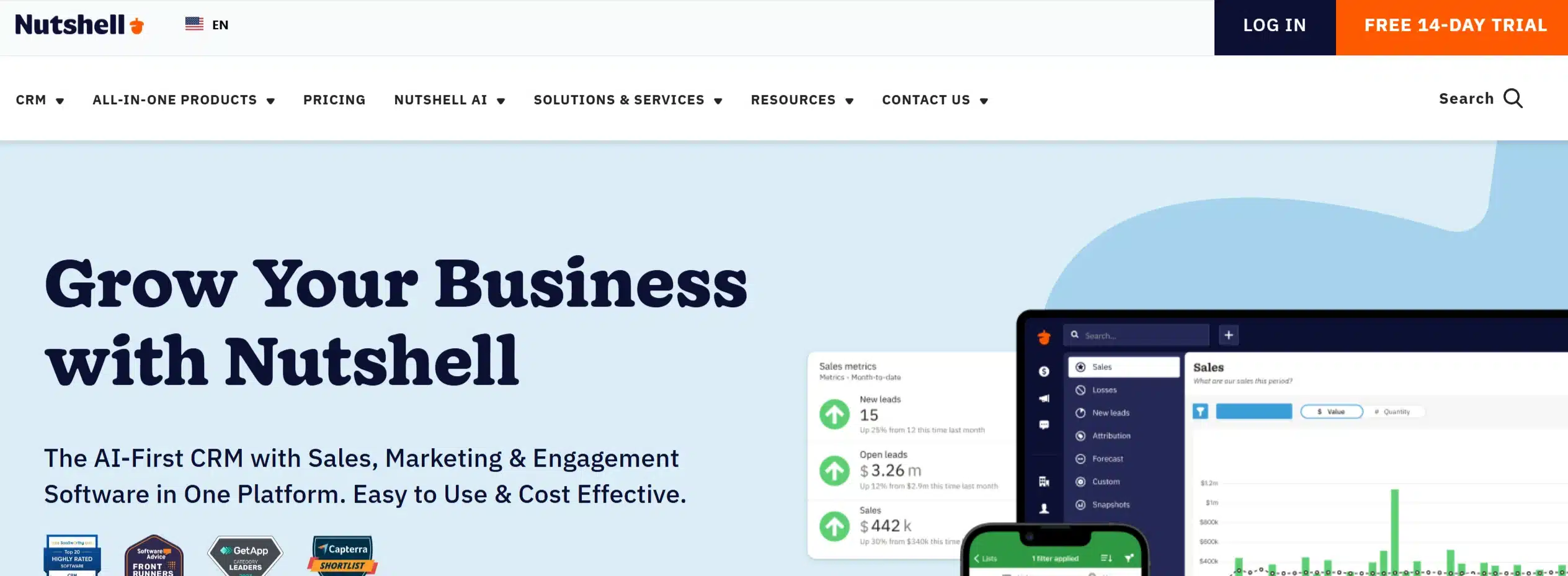
7. Nutshell
-
- Why it stands out: B2B-friendly pipelines, collaboration, and simplicity without heavy admin overhead.
- Best for: Small to mid-sized manufacturers prioritizing adoption and clarity.
- Strengths
-
-
- Clear deal views, straightforward automation, and team collaboration.
- Reasonable pricing with rapid onboarding.
-
- Considerations
-
- Advanced CPQ, service, or ERP-grade needs require add-ons/integrations.
- Less suited for highly complex, global operations.
Comparison table
| CRM | Best for | Standout strengths | Key considerations |
| Salesforce Manufacturing Cloud | Large, complex manufacturers | Deep CPQ, Manufacturing Cloud, service scale | Higher TCO; partner-led deployment |
| Microsoft Dynamics 365 | Microsoft-centric orgs | ERP synergy, process automation | Licensing/partner selection critical |
| HubSpot | SMB–mid-market | Ease of use, marketing + sales | Advanced CPQ/service may need add-ons |
| Zoho CRM | Cost-conscious SMB–MM | Customization, broad app suite | Complex integrations may need iPaaS |
| Pipedrive | Sales-led SMBs | Pipeline clarity, simplicity | Limited native service/RMA |
| Freshsales | Unified SMB stack | Built-in comms + AI, value | Lighter manufacturing modules |
| Nutshell | SMB–MM teams | Adoption, collaboration | Advanced manufacturing needs via add-ons |
How to choose the right CRM
1) Map your complexity
- Low-to-moderate complexity, short-to-medium sales cycles: HubSpot, Pipedrive, Freshsales, Nutshell.
- High complexity, engineered products, multi-plant, global service: Salesforce, Dynamics 365.
- Cost-sensitive with customization appetite: Zoho CRM.
2) Integration requirements
- Identify systems of record: ERP/MRP, PLM, MES, CPQ, service, finance.
- Confirm native connectors; plan for iPaaS (Make, Boomi, MuleSoft, Zapier) where needed.
- Define near real-time vs batch sync needs for inventory, orders, and service history.
3) Budget and TCO
- Include licenses, implementation, integrations, training, admin, and change management.
- Model 3-year TCO with growth assumptions and add-on modules.
- Prioritize ROI levers: faster quote turnaround, higher win rates, fewer returns, better renewals.
4) Security and governance
- Role-based access for dealer networks and partners.
- Audit trails, data residency, SSO/MFA, and compliance.
- Data quality strategy (validation, dedupe, enrichment).
Also Check: 11 Best AI Tools for Businesses in 2026
Implementation best practices
Pre-implementation
- Document current vs future-state: RFQ-to-cash, service loops, dealer workflows.
- Align data model: customers, sites, machines, SKUs, warranties, contracts.
- Clean and normalize data before migration; define owners and SLAs.
Build and rollout
- Start with a minimum lovable product: core pipeline, quoting, dashboards, and integrations that unblock delivery.
- Configure automations: approvals, escalations, activity cadences, and alerts tied to manufacturing milestones.
- Pilot with one product line/region or a dealer cohort; iterate before global rollout.
Adoption and measurement
- Train roles to their dashboards and playbooks; embed CRM steps in SOPs.
- Track KPIs: quote cycle time, forecast accuracy, win rate, on-time delivery, first-time fix rate, service response time, churn/renewals.
- Establish an admin center of excellence to manage changes and governance.
Benefits manufacturers can expect
- Operational excellence: faster quoting, fewer manual handoffs, clearer production alignment.
- Commercial lift: improved forecasting, higher win rates, and more profitable deals with CPQ guardrails.
- Customer experience: proactive service, warranty tracking, and reliable communication.
- Data-driven decisions: product-line profitability, territory performance, and service cost-to-serve insights.
FAQs
1. What’s the difference between a manufacturing CRM and a generic CRM?
Manufacturing CRMs add CPQ, ERP/MRP visibility, warranty/RMA, and dealer workflows needed for complex, engineered sales and after-sales service.
2. Do manufacturers still need CRM if they have ERP?
Yes. ERP manages resources and fulfillment; CRM orchestrates relationships, pipeline, quoting, and service interactions—together they close the loop.
3. How long does implementation take?
SMBs can go live in 6–10 weeks with a focused scope; complex enterprise rollouts often phase over 6–12 months.
4. What does it cost?
SMB stacks can start a few hundred dollars per month; enterprise programs run into six figures annually including licenses and services—model 3-year TCO.
5. Which CRM is best for small manufacturers?
HubSpot, Zoho, Freshsales, Pipedrive, or Nutshell, depending on required integrations and service depth.
6. Which CRM fits complex enterprise needs?
Salesforce Manufacturing Cloud or Microsoft Dynamics 365 with the right partner and ERP alignment.
Conclusion
Selecting the right manufacturing CRM hinges on process complexity, integration depth, and the change-readiness of teams. As a quick rule: choose Salesforce or Dynamics 365 for complex, global operations; HubSpot, Freshsales, Pipedrive, or Nutshell for fast, user-friendly SMB deployments; and Zoho for cost-effective customization. Start with the highest-impact workflows—pipeline, quoting, core integrations, and role-based dashboards—then iterate toward service, analytics, and AI to capture full value.