


In today’s fast-paced and highly competitive business world, having a clear business strategy is no longer optional—it’s essential. Studies show that about 70% of businesses fail due to poor strategic planning, highlighting the importance of a well-crafted strategy that serves as a roadmap for success. A sound business strategy helps organizations allocate resources efficiently, anticipate market changes, and stay ahead of competitors.

This comprehensive guide dives into what a business strategy truly means, why it is critical for success in 2026, and ten proven strategy tips tailored to the ever-evolving business landscape. Whether launching a startup or scaling an existing business, understanding and applying these principles will increase your chances of thriving in this dynamic environment.
By the end of this blog, you will have a deep understanding of business strategy fundamentals, actionable tips for crafting your plan, and insights into successful strategy execution. The focus keyword “business strategy” is seamlessly integrated throughout to ensure optimal clarity and focus.
What Is a Business Strategy?
A business strategy is a comprehensive blueprint that outlines the strategic and operational initiatives an organization must undertake to achieve its overarching goals. Unlike a business plan, which primarily focuses on the “what” and “how much,” a business strategy emphasizes the “how”—how the business will compete, grow, and create value in the marketplace.
It serves as the organizational backbone, aligning teams and departments toward unified objectives and guiding decision-making across product development, marketing, budgeting, and talent acquisition.
Why Business Strategy Matters More Than Ever in 2026
The business climate in 2026 is characterized by unprecedented market volatility, technological disruption, and intense global competition. Organizations that lack strategic clarity struggle to adapt, resulting in missed growth opportunities.
A well-designed business strategy helps navigate these challenges by providing:
- A clear path for differentiation amid crowded markets
- A framework to harness technology and innovation
- A mechanism for efficient resource allocation
- The ability to anticipate and respond quickly to change
Studies show companies with formal strategic planning processes outperform their peers in revenue growth and profitability.
Business Strategy vs. Tactics: Understanding the Difference
While business strategy sets the long-term vision and goals, tactics are the specific actions taken to execute that strategy. Strategy focuses on positioning and competitive advantage, while tactics involve day-to-day operations.
For example, a strategy may prioritize customer-centric innovation, while tactics include launching new product features or targeted marketing campaigns aligned with that vision.
Netflix: Pivot from DVD Rental to Streaming
- Initial Model: DVD rental-by-mail service offering convenience and eliminating late fees.
- Strategic Pivot: Transitioned in 2007 to a streaming platform, fundamentally changing the delivery and consumption of entertainment.
- Key Actions: Heavy investment in streaming technology, acquiring content rights, and expanding device compatibility.
- Outcome: Established itself as a global digital entertainment leader by continuously innovating and focusing on personalized customer experiences.
- Takeaway: Agile pivoting aligned with technological advances and customer expectations is critical to sustained success.
Essential Components of a Winning Business Strategy
Vision and Mission Foundation
A compelling vision statement articulates your company’s ultimate purpose and future direction, serving as the inspiration for strategic decisions. The mission statement defines the organization’s role, values, and core purpose.
For 2026, align your vision and mission with emerging market trends such as sustainability and digital transformation to stay relevant.
Comprehensive Market Analysis
Effective strategies are grounded in thorough market analysis using tools like:
- SWOT Analysis: Identifying internal strengths and weaknesses along with external opportunities and threats.
- PESTLE Analysis: Examining political, economic, social, technological, legal, and environmental factors impacting the business.
- Competitive landscape mapping to understand rivals’ positioning and market share.
Target Market Definition and Customer Segmentation
Clearly defining your target audience is critical. Use data-driven customer profiling and segmentation to tailor your offerings and marketing efforts. Mapping customer journeys helps design personalized experiences that resonate and convert effectively.
Competitive Advantage and Unique Value Proposition
Identify what sets your business apart—be it product innovation, price leadership, superior customer service, or niche expertise. Craft a unique value proposition (UVP) that communicates these strengths clearly to your customers.
Resource Allocation and Budgeting
Strategic resource management involves prioritizing investments in people, technology, and capital that yield the highest returns aligned with your business goals. Apply robust budgeting frameworks to ensure funds are efficiently allocated toward strategic priorities.

Implementation and Execution Framework
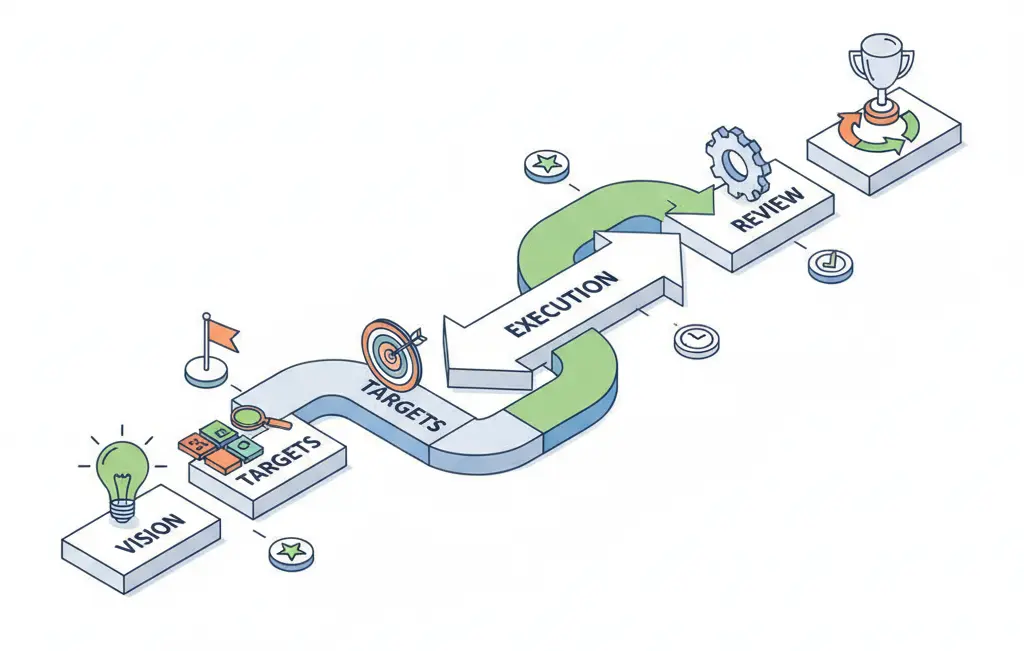
Translate your strategic vision into detailed operational plans with clearly assigned responsibilities, timelines, and milestones. Ensure organizational alignment through effective communication and change management practices.
10 Proven Business Strategy Tips for 2026
1. Embrace AI and Automation Integration
Leverage artificial intelligence and automation technologies to enhance decision-making, improve operational efficiency, and innovate product offerings. Develop a technology roadmap for systematic adoption.
Amazon: Customer-Obsessed Culture Driving Growth
- Core Focus: Relentless dedication to improving customer experience through convenience, speed, and trust.
- Growth Strategy: Expansion into diverse markets such as cloud computing, entertainment, and logistics.
- Key Actions: Continuous innovation in service delivery, operational efficiency, and anticipating emerging customer needs.
- Outcome: Achieved market leadership by embedding customer obsession at the heart of all initiatives.
- Takeaway: Placing customers first is a proven strategy for diversification and long-term growth.
2. Prioritize Sustainability and ESG Initiatives
Integrate environmental, social, and governance (ESG) goals into your strategy to meet growing consumer and regulatory expectations. Demonstrating corporate responsibility also builds brand trust.
3. Develop Hybrid and Remote-First Strategies
Adopt flexible work models with digital collaboration tools to attract top talent and maintain productivity regardless of location, shaping the future of work post-pandemic.
Tesla: Innovation and Sustainability as Competitive Edge
- Business Vision: Combine technological innovation with sustainability to disrupt the automotive industry.
- Strategic Approach: Vertical integration, continuous R&D, and strong branding focused on electric vehicles and renewable energy.
- Key Actions: Manufacturing own batteries, controlling distribution, and rapidly evolving product offerings.
- Outcome: Created a differentiated brand with robust competitive advantage reshaping consumer expectations globally.
- Takeaway: Integrating sustainability into core strategy fuels innovation and differentiates in competitive industries.
4. Focus on Customer Hyper-Personalization
Use advanced data analytics to deliver tailored customer experiences across all touchpoints, increasing engagement and loyalty in an era of heightened consumer expectations.
5. Build Data-Driven Decision Making Capabilities
Invest in analytics infrastructure and train teams to utilize data insights for predictive modeling, trend analysis, and real-time performance monitoring to guide strategic moves.
6. Create Agile and Adaptive Strategic Frameworks
Develop strategies that allow quick pivots in response to market changes through scenario planning and iterative reviews, fostering resilience in times of uncertainty.
7. Invest in Strategic Partnerships and Collaborations
Forge alliances and partnerships to access new markets, share resources, and co-innovate products, boosting competitiveness and expanding ecosystem influence.
Apple: Innovation and Ecosystem Integration
- Core Strategy: Combines cutting-edge product design with seamless integration of hardware, software, and services within a proprietary ecosystem.
- Vertical Integration: Controls the entire value chain—from product design and software development to retail distribution—ensuring quality and user experience.
- Key Elements: Focus on product functionality, strengthening the Apple ecosystem (e.g., iPhone, Mac, iPad, Apple Watch, plus services like iMessage and iCloud), and reducing reliance on any single product.
- Growth Strategy: Continuous innovation via R&D investments, creating differentiated products that encourage user loyalty due to ecosystem lock-in.
- Outcome: Sustained competitive advantage, high brand loyalty, and strong revenue growth.
- Takeaway: Building a tightly integrated product and service ecosystem can create immense value and differentiation.
8. Enhance Digital Marketing and Social Commerce
Deploy omnichannel marketing strategies that integrate social commerce to capitalize on evolving consumer purchasing behaviors and increase market reach.
9. Implement Continuous Learning and Innovation Culture
Promote organizational learning, nurture innovation, and dedicate resources to research and development to maintain competitive edge and adapt to new opportunities.
10. Develop Robust Risk Management and Crisis Preparedness
Establish comprehensive risk assessment and crisis response protocols to ensure business continuity and minimize disruptions in volatile environments.
Starbucks: Premium Experience and Localization
- Core Strategy: Offers a premium customer experience emphasizing quality products and a welcoming “third place” atmosphere distinct from home and work.
- Customer Experience: Personalized service with highly trained baristas, premium coffee sourcing, and attention to detail creates strong customer loyalty.
- Technology Use: Invested in digital enhancements like mobile ordering and digital payments to improve convenience.
- Global Expansion: Adapts to local tastes and cultures through menu customization and strategic partnerships (e.g., joint ventures, franchises), allowing deep market penetration while maintaining global brand consistency.
- Employee Investment: Focus on employee training and development to maintain service quality.
- Outcome: A strong global brand synonymous with quality and experience, driving repeat visits and premium pricing.
- Takeaway: Combining premium quality, personalized service, cultural adaptation, and technology can secure a loyal, global customer base.
Business Strategy Implementation: From Planning to Execution
Creating Your Strategic Implementation Plan
Develop a detailed step-by-step plan that includes timelines, resource allocations, and milestones. Assign clear ownership to ensure accountability throughout execution.
Measuring and Tracking Strategic Success
Define KPIs aligned with strategic objectives and implement performance dashboards for real-time monitoring. Regularly review progress and course-correct as needed.
Common Implementation Pitfalls and How to Avoid Them
Avoid common challenges such as communication gaps, resistance to change, and resource misalignment by fostering transparent dialogue and inclusive decision-making.
Business Strategy Frameworks and Tools
Popular frameworks like SWOT, Balanced Scorecard, and Porter’s Five Forces help in structuring strategic analysis and planning. Leverage digital tools such as strategy mapping software and collaboration platforms to enhance efficiency.
Frequently Asked Questions (FAQs)
Q1: How often should a business strategy be updated?
A: Ideally, annually or whenever significant market shifts occur.
Q2: What’s the difference between corporate strategy and business strategy?
A: Corporate strategy concerns overall company direction; business strategy focuses on competing successfully in individual markets.
Q3: How much should small businesses invest in strategic planning?
A: Investment should be proportional to business size and growth ambitions but never overlooked.
Q4: What are the biggest business strategy mistakes to avoid in 2026?
A: Ignoring market realities, poor communication, and lack of flexibility.
Q5: How do you align team members with business strategy?
A: Through clear communication, goal setting, and participation in planning processes.
Q6: What role does technology play in modern business strategy?
A: It is central for innovation, efficiency, and customer engagement.
Q7: How do you measure business strategy effectiveness?
A: By tracking KPIs aligned with strategic goals regularly.
Q8: Can startups benefit from formal business strategy planning?
A: Yes, it helps allocate scarce resources and build a path to sustainable growth.
Conclusion
Developing a clear, actionable business strategy is crucial to thriving in 2026’s evolving market landscape. By understanding what a business strategy entails and applying the ten proven tips shared, organizations can build resilient, competitive, and future-ready enterprises.
Start by defining your vision, conducting thorough market analysis, and embracing the strategic priorities relevant to today’s business challenges. Regularly measure progress, remain flexible, and involve your team to bring your strategy to life.