


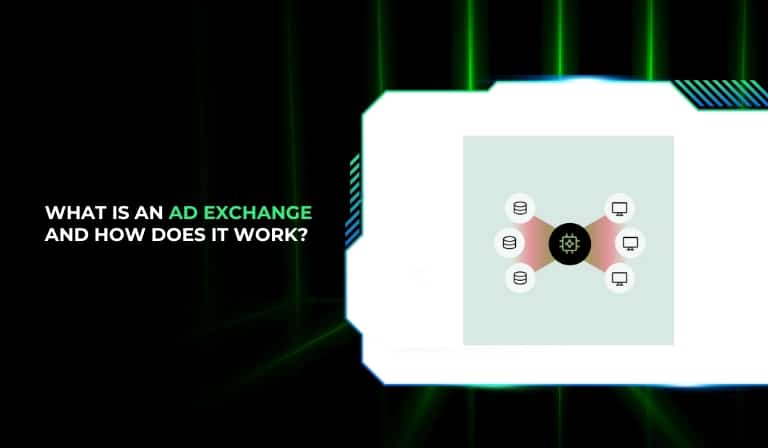
Digital advertising can feel overwhelming, especially when new terms pop up everywhere. But here’s the good news: understanding ad exchanges doesn’t have to be complicated. Think of them as digital marketplaces where websites sell advertising space to companies who want to promote their products.

What Is an Ad Exchange?
An ad exchange is simply a virtual marketplace where two groups of people meet: website owners (called publishers) who have space for ads, and businesses (called advertisers) who want to show their ads to potential customers.
It’s like a busy bazaar, but instead of selling fruits and vegetables, people are buying and selling digital billboard space on websites, mobile apps, and other online platforms. The beauty of this system is that everything happens automatically and incredibly fast – we’re talking milliseconds.
Publishers can offer different types of advertising spots including banner ads, video ads, mobile ads, and native ads that blend naturally with website content. Meanwhile, advertisers get access to millions of websites where they can showcase their products to exactly the right people.
How Does an Ad Exchange Work?
The process behind ad exchanges might sound technical, but it’s actually quite straightforward when broken down into simple steps :
Step 1: Publishers List Their Space
Website owners put their available advertising spots up for sale through the ad exchange platform. They basically say “I have this space available on my website, and here’s what I want for it”.
Step 2: A Visitor Arrives
When someone visits a website, the system immediately knows basic information about that visitor (like their general location or interests) through cookies.
Step 3: The Auction Begins
Here’s where it gets exciting. The ad exchange instantly notifies all interested advertisers that there’s a visitor who might like their product. Multiple advertisers can then place bids on that advertising space.
Step 4: Quick Decision Making
The system checks which advertisers meet the website’s requirements and picks the highest bidder who qualifies. This entire auction happens faster than you can blink.
Step 5: Ad Goes Live
The winning advertiser’s ad appears on the website for that visitor to see. The whole process completes before the webpage even finishes loading.
Who Should Use an Ad Exchange?
Ad exchanges work well for different types of users :
- Website Owners and Bloggers can use ad exchanges to make money from their websites. Instead of finding advertisers one by one, they can automatically sell space to the highest bidders. Popular blogs, news sites, and online magazines especially benefit because they attract diverse audiences that many advertisers want to reach.
- Businesses and Marketers use ad exchanges to get their products in front of potential customers across thousands of websites at once. Rather than negotiating with each website individually, they can reach their target audience wherever they browse online.
- Advertising Agencies also participate by buying advertising space in bulk and then reselling it to their clients, often adding their expertise in creating effective ad campaigns.
Types of Ad Exchanges
Not all ad exchanges work the same way. There are three main types, each with different rules and benefits :
1. Open Ad Exchange
This is like a public marketplace where anyone can participate. Advertisers can bid on any available advertising space, but they don’t get detailed information about where their ads will appear. While this offers the most options, it also comes with higher risks of encountering fraudulent websites or poor-quality placements.
2. Private Ad Exchange
Think of this as an exclusive club. Website owners personally invite specific advertisers to bid on their premium advertising spaces. This gives publishers more control over who advertises on their sites and often results in better relationships and higher prices. However, the negotiation process typically takes longer.
3. Preferred Deals
This is the most straightforward approach. Publishers and advertisers agree on a fixed price ahead of time, removing the auction element entirely. Both parties know exactly what they’ll pay or receive, making budgeting much easier.
Also Check: Cross-Network Advertising Strategies: Going Beyond Google With Bing And Facebook
Ad Network vs. Ad Exchange
Many people confuse ad networks with ad exchanges, but they serve different purposes :
1. Ad Networks
Ad Networks act like middlemen who buy advertising space from ad exchanges and then resell it to advertisers at higher prices. They’re essentially retailers who mark up the cost but don’t always provide complete details about where ads will appear.
2. Ad Exchanges
Ad Exchanges are the original marketplaces where the buying and selling actually happens. They offer more transparency because advertisers can see exactly where their ads will appear and have more control over their campaigns.
The main difference comes down to transparency and control. Ad exchanges give you direct access to the marketplace, while ad networks serve as convenient but less transparent intermediaries.
Advantages and Disadvantages of Ad Exchanges
Like any advertising method, ad exchanges have both benefits and drawbacks :
The Good Stuff:
- Better Targeting: Advertisers can reach exactly the right people at the right time based on browsing behavior and interests
- Cost Control: The bidding system means advertisers only pay what they think the advertising space is worth
- Efficiency: Everything happens automatically, saving time for both publishers and advertisers
- Wide Reach: Access to thousands of websites and apps through a single platform
The Challenges:
- Fraud Risks: Especially in open exchanges, fake websites and bot traffic can waste advertising budgets
- Complexity: The technology can be overwhelming for beginners
- Less Personal Relationships: The automated process means less direct communication between advertisers and publishers
Getting Started with an Ad Exchange
Whether you’re a website owner looking to earn money or a business wanting to advertise, getting started is more accessible than you might think :[4][10]
For Publishers:
Start by ensuring your website has decent traffic and quality content. Most ad exchanges have minimum requirements, so focus on building your audience first. Then research different exchanges to find ones that work with sites like yours.
For Advertisers:
Begin with a clear understanding of your target audience and budget. Start small to test different ad exchanges and see which ones deliver the best results for your business. Many platforms offer beginner-friendly interfaces and customer support.
Success Tips:
- Research the reputation and requirements of different ad exchanges
- Start with smaller budgets to test what works
- Monitor your results regularly and adjust your strategy accordingly
- Consider working with experienced professionals if the process feels overwhelming
Frequently Asked Questions
1. How much does it cost to use an ad exchange?
Ad exchanges typically charge a small percentage of each transaction, usually between 10-20% of the winning bid amount.
2. Do I need technical expertise to use an ad exchange?
While some technical knowledge helps, many platforms now offer user-friendly interfaces designed for non-technical users. However, larger operations often benefit from professional assistance.
3. How quickly can I see results?
Unlike traditional advertising that might take weeks to set up, ad exchange campaigns can start showing results within hours of launching.
4. Are ad exchanges suitable for small businesses?
Absolutely! The ability to set your own budget and target specific audiences makes ad exchanges accessible for businesses of all sizes.
Conclusion
Ad exchanges have revolutionized digital advertising by making it faster, more efficient, and more targeted than traditional methods. They provide a win-win situation where website owners can maximize their advertising revenue while businesses can reach their ideal customers more effectively.
The key to success with ad exchanges is starting small, learning from your results, and gradually scaling up as you become more comfortable with the process. Whether you’re looking to monetize your website or expand your business’s online presence, ad exchanges offer powerful tools to achieve your goals in today’s digital marketplace.

Passionate about blogging and focused on elevating brand visibility through strategic SEO and digital marketing. Always tuned in to the latest trends, I’m dedicated to maximizing engagement and delivering measurable ROI in the dynamic world of digital marketing. Let’s connect and unlock new opportunities together!