


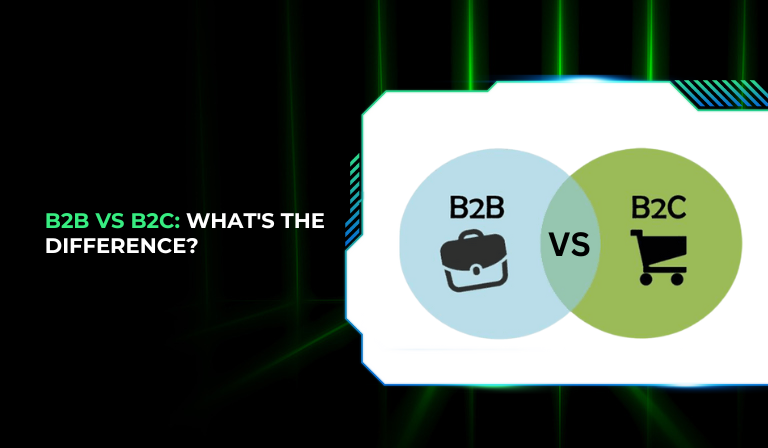
Businesses operate in different ways based on their target customers. Two common models are B2B (Business-to-Business) and B2C (Business-to-Consumer).
Understanding these models helps businesses make better decisions about marketing, sales, and customer service. This guide explains the differences between B2B and B2C, the challenges of each, and whether a business can operate in both markets.
What Is B2B?
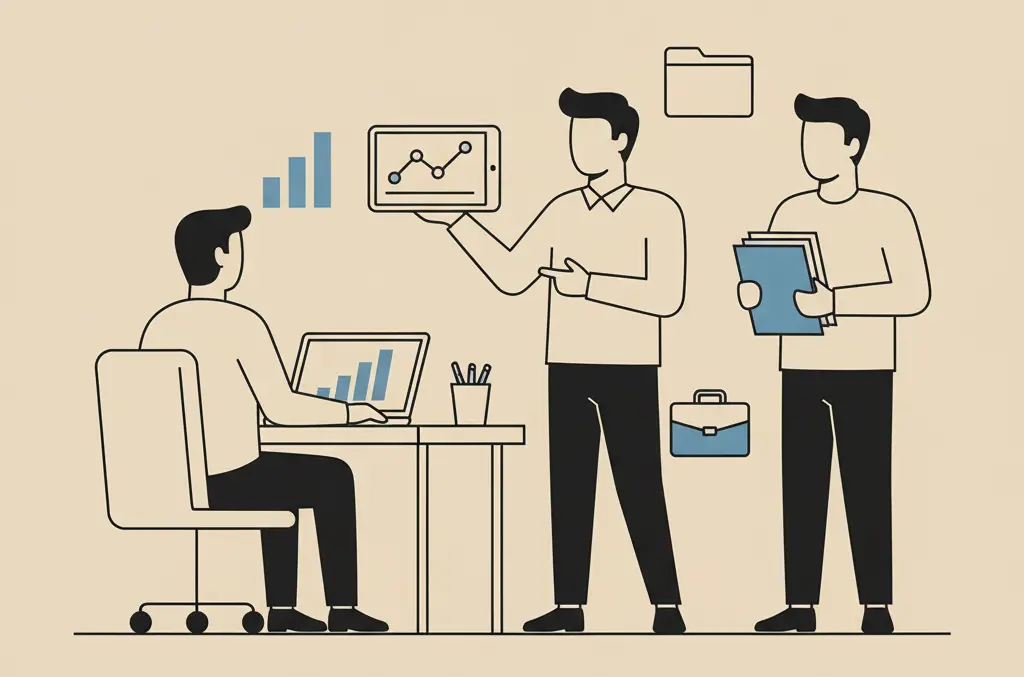
B2B (Business-to-Business) refers to companies that sell products or services to other businesses instead of individual consumers. These transactions often involve bulk purchases, long-term contracts, and professional relationships.
Examples of B2B Businesses
- Software Companies: Selling project management or CRM tools to companies.
- Manufacturers: Supplying raw materials or equipment to other businesses.
- Marketing Agencies: Providing branding, advertising, or SEO services to companies.
- Wholesale Distributors: Selling products in large quantities to retailers.
Common B2B Industries
- SaaS (Software as a Service)
- Manufacturing
- Wholesale and supply chain
- IT and cybersecurity services
- Business Consulting
What Is B2C?
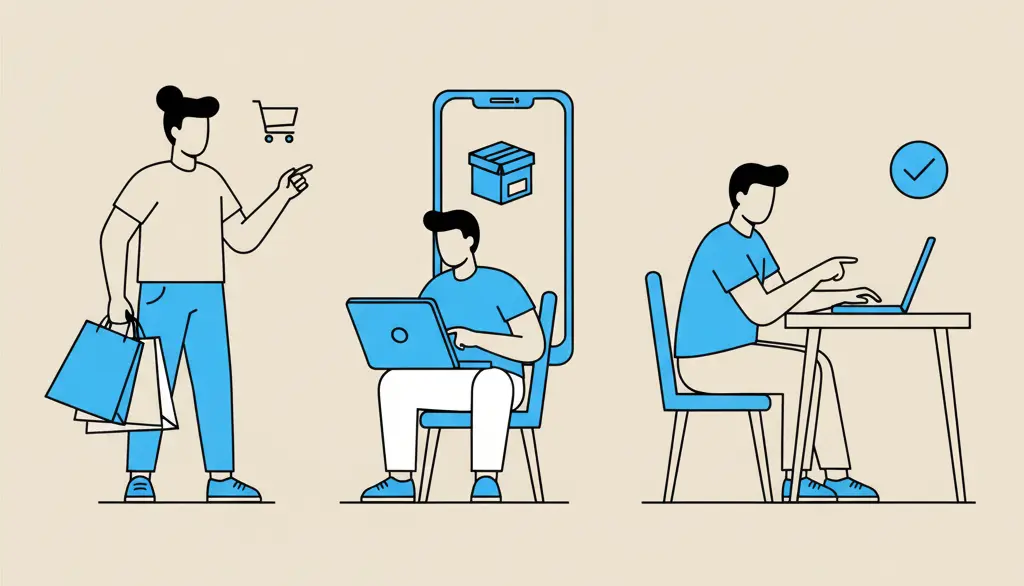
B2C (Business-to-Consumer) refers to businesses that sell directly to individuals. These businesses focus on providing fast, convenient, and enjoyable buying experiences.
Examples of B2C Businesses
- Retail Stores: Selling clothing, electronics, or household items to customers.
- E-commerce Websites: Online marketplaces like Amazon or fashion stores.
- Streaming Services: Offering movies, music, or TV shows to individual subscribers.
- Restaurants & Cafes: Serving food and beverages to walk-in customers.
Common B2C Industries
- Retail and e-commerce
- Hospitality and travel
- Entertainment and media
- Consumer electronics
- Personal care and beauty
Key Differences Between B2B and B2C
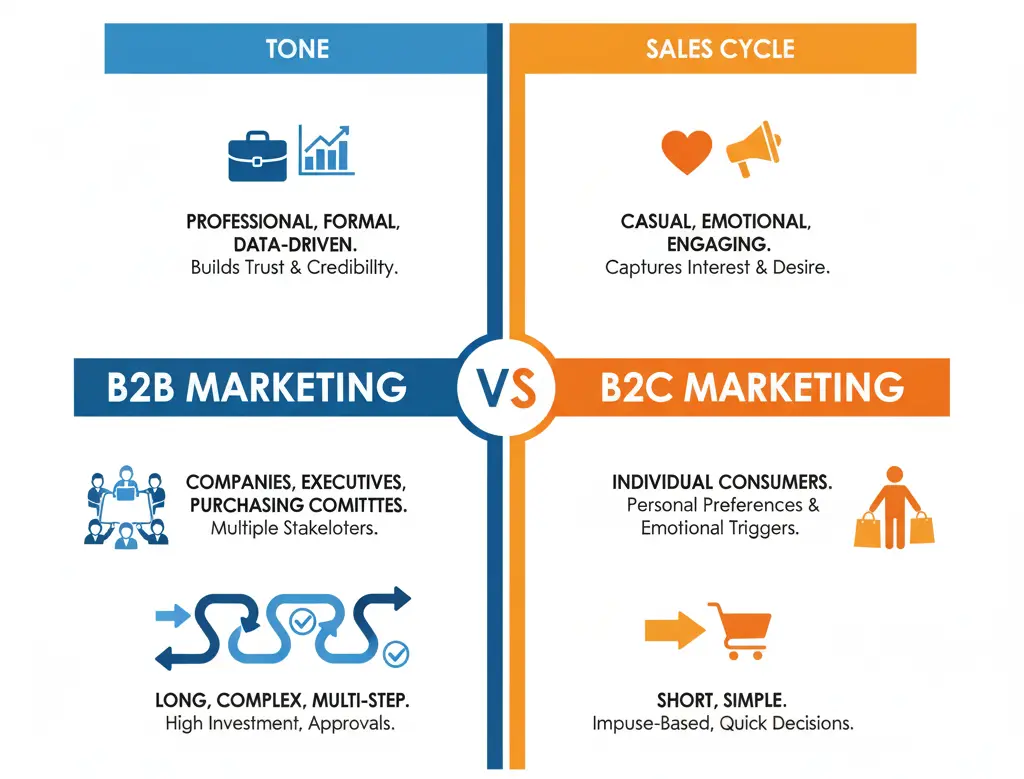
1. Target Audience
- B2B: Sells to business owners, decision-makers, and purchasing managers.
- B2C: Sells to individuals looking for personal-use products or services.
2. Sales Cycle
- B2B: Longer sales process involving multiple approvals, meetings, and negotiations.
- B2C: Shorter buying process, often driven by emotions, promotions, or impulse decisions.
3. Marketing Strategies
- B2B: Focuses on building relationships through content marketing, webinars, and direct outreach.
- B2C: Uses social media ads, influencer marketing, and seasonal promotions to attract buyers.
4. Pricing and Transactions
- B2B: Involves custom pricing, bulk orders, contracts, and payment terms.
- B2C: Fixed prices, smaller purchases, and instant transactions.
5. Customer Relationships
- B2B: Builds long-term relationships with repeat clients.
- B2C: Focuses on one-time purchases but encourages brand loyalty.
Also Check: 7 Best Tips To Improve Your Regional Seo Strategy
How to Choose: Is B2B or B2C Right for Your Business?
Choosing between B2B (business-to-business) and B2C (business-to-consumer) depends on a clear understanding of your market, audience, and resources. A structured decision framework can help you identify the right model.
Decision Framework:
- Market Analysis: Study the demand, competitors, and industry trends.
- Target Audience Assessment: Define whether your primary buyers are businesses or individual consumers.
- Resource Requirements: Assess your team, budget, and marketing expertise.
Key Considerations:
- Product/Service Nature and Complexity: B2B often involves technical or high-value solutions, while B2C typically serves simple, consumer-ready products.
- Target Market Size and Accessibility: B2C generally targets larger markets; B2B focuses on niche, high-value accounts.
- Investment and Resource Requirements: B2B usually requires higher upfront investment in relationship-building, while B2C often demands continuous spending on ads and promotions.
- Scalability Potential and Growth Trajectory: B2C may scale faster with volume sales, while B2B offers sustainable long-term contracts.
Market Research Methods:
- Customer interviews to understand pain points.
- Competitive analysis to see gaps in the market.
- Pilot programs to test feasibility.
Risk Assessment:
- Market volatility and economic shifts.
- Competition intensity in your sector.
- Regulatory or compliance requirements.
Success Metrics:
- Revenue potential.
- Market share growth.
- Customer acquisition costs and retention rates.
B2B vs B2C Content Marketing: Strategy and Execution
Content marketing differs widely between B2B and B2C due to variations in audience behavior and decision-making.
Content Types by Model:
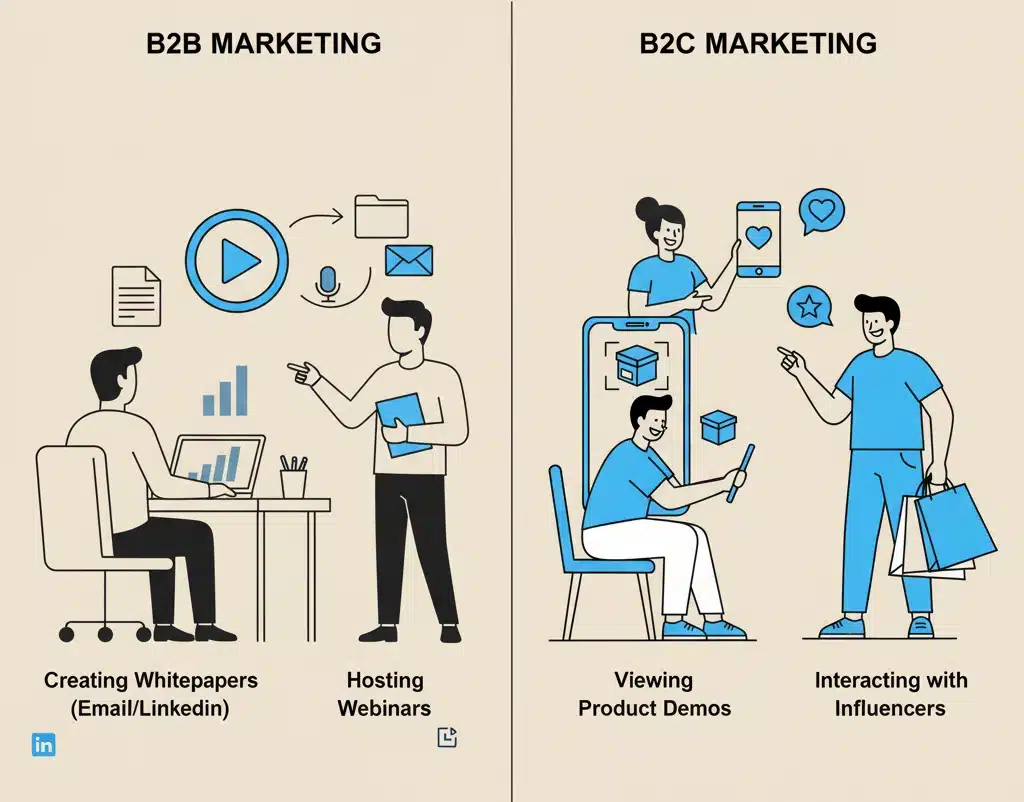
- B2B: Whitepapers, case studies, webinars, industry reports, and thought leadership articles build authority and trust.
- B2C: Social media posts, influencer collaborations, user-generated content, and product demos capture attention and drive impulse purchases.
Distribution Channels:
- B2B: LinkedIn, industry publications, and email campaigns are the primary platforms.
- B2C: Social media, YouTube, and retail/brand partnerships dominate.
Measurement Metrics:
- B2B: Lead generation, sales pipeline influence, and client retention.
- B2C: Engagement (likes, shares, comments), brand awareness, and direct sales conversions.
Content Lifecycle:
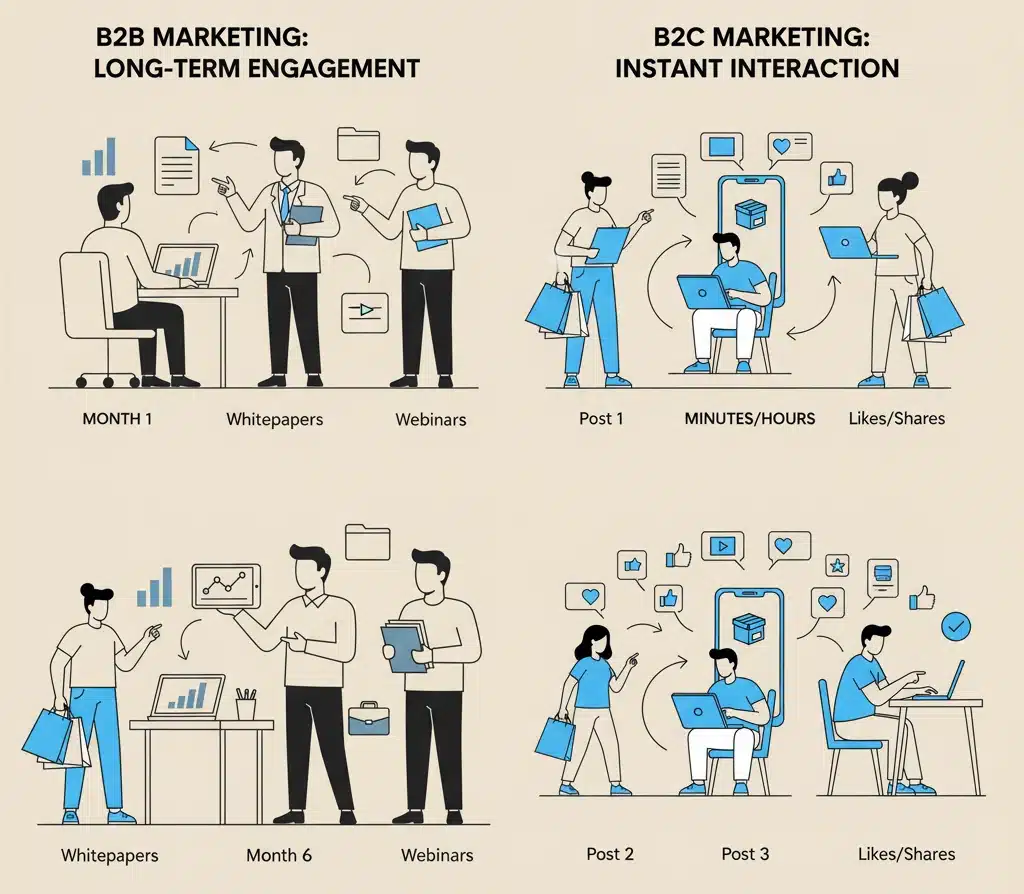
- B2B: Content has a longer shelf life, as reports or case studies stay relevant for months or even years.
- B2C: Content needs frequent updates to match fast-changing trends and consumer interests.
Budget Allocation:
- B2B: Budgets lean toward fewer but high-quality, research-driven assets.
- B2C: Budgets spread across multiple platforms and formats for broad reach and frequent engagement.
Challenges in B2B and B2C
B2B Challenges
- Longer decision-making process: Purchases require approval from multiple stakeholders.
- Relationship management: Businesses must build trust over time.
- Smaller target audience: B2B companies often serve a niche market.
B2C Challenges
- High competition: Many businesses sell similar products, making differentiation difficult.
- Changing customer behavior: Trends and consumer preferences shift rapidly.
- Customer service demands: Consumers expect fast responses and hassle-free shopping experiences.
Can a business be both B2B and B2C?
Yes, some businesses serve both B2B and B2C customers.
Examples of Businesses Operating in Both Models
- Amazon: Sells products to individual consumers (B2C) and offers bulk purchasing for businesses (B2B).
- Microsoft: Provides software for individual users (B2C) and enterprise solutions for companies (B2B).
- Automobile Manufacturers: Sell cars to individuals (B2C) and fleets to businesses (B2B).
Businesses that target both markets need separate strategies to address each audience’s unique needs.
Conclusion
B2B and B2C businesses differ in their target audience, sales processes, marketing strategies, and customer relationships. While B2B focuses on long-term partnerships and high-value transactions, B2C emphasizes quick sales and customer experience.
Understanding these differences helps businesses refine their approach, choose the right strategies, and grow successfully in their respective markets.
Frequently Asked Questions (FAQs)
1. What is the main difference between B2B and B2C business models?
B2B focuses on selling products or services to other businesses, while B2C targets individual consumers directly.
2. What are examples of B2B and B2C companies?
- B2B: Salesforce, HubSpot, IBM.
- B2C: Amazon, Nike, Netflix.
3. How do B2B and B2C marketing strategies differ?
B2B emphasizes relationship-building, in-depth content, and long sales cycles. B2C prioritizes emotional appeal, quick decision-making, and mass marketing.
4. Why is the sales cycle longer in B2B compared to B2C?
B2B deals involve multiple stakeholders, higher costs, and more complex decision-making, whereas B2C purchases are often individual and immediate.
5. What customer segments do B2B and B2C focus on?
B2B targets businesses, executives, and decision-makers. B2C focuses on everyday consumers segmented by demographics, lifestyle, and behavior.
6. How do pricing strategies differ between B2B and B2C?
B2B pricing is often negotiated, customized, and based on long-term contracts. B2C pricing is standardized, promotional, and driven by market competition.

Passionate about blogging and focused on elevating brand visibility through strategic SEO and digital marketing. Always tuned in to the latest trends, I’m dedicated to maximizing engagement and delivering measurable ROI in the dynamic world of digital marketing. Let’s connect and unlock new opportunities together!